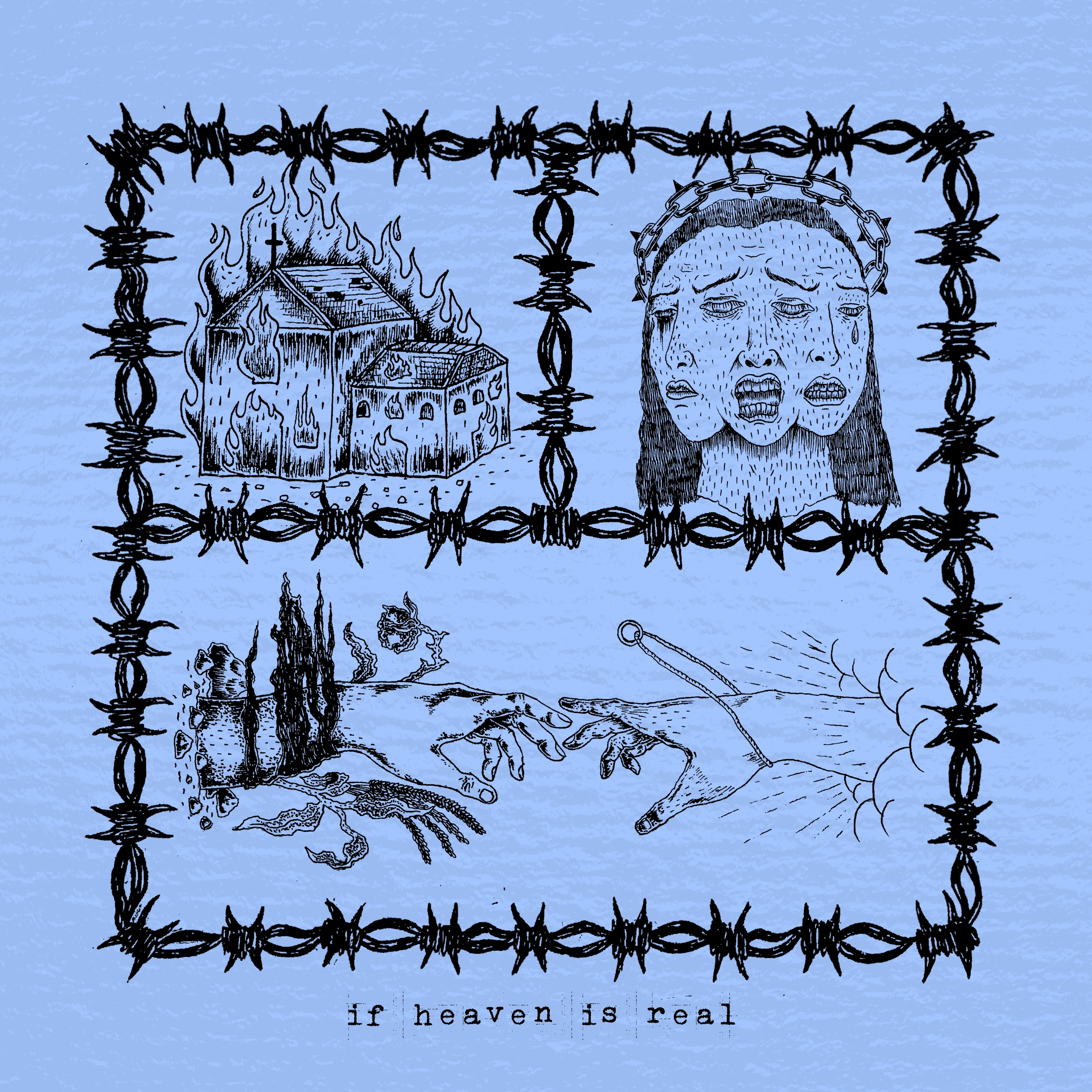
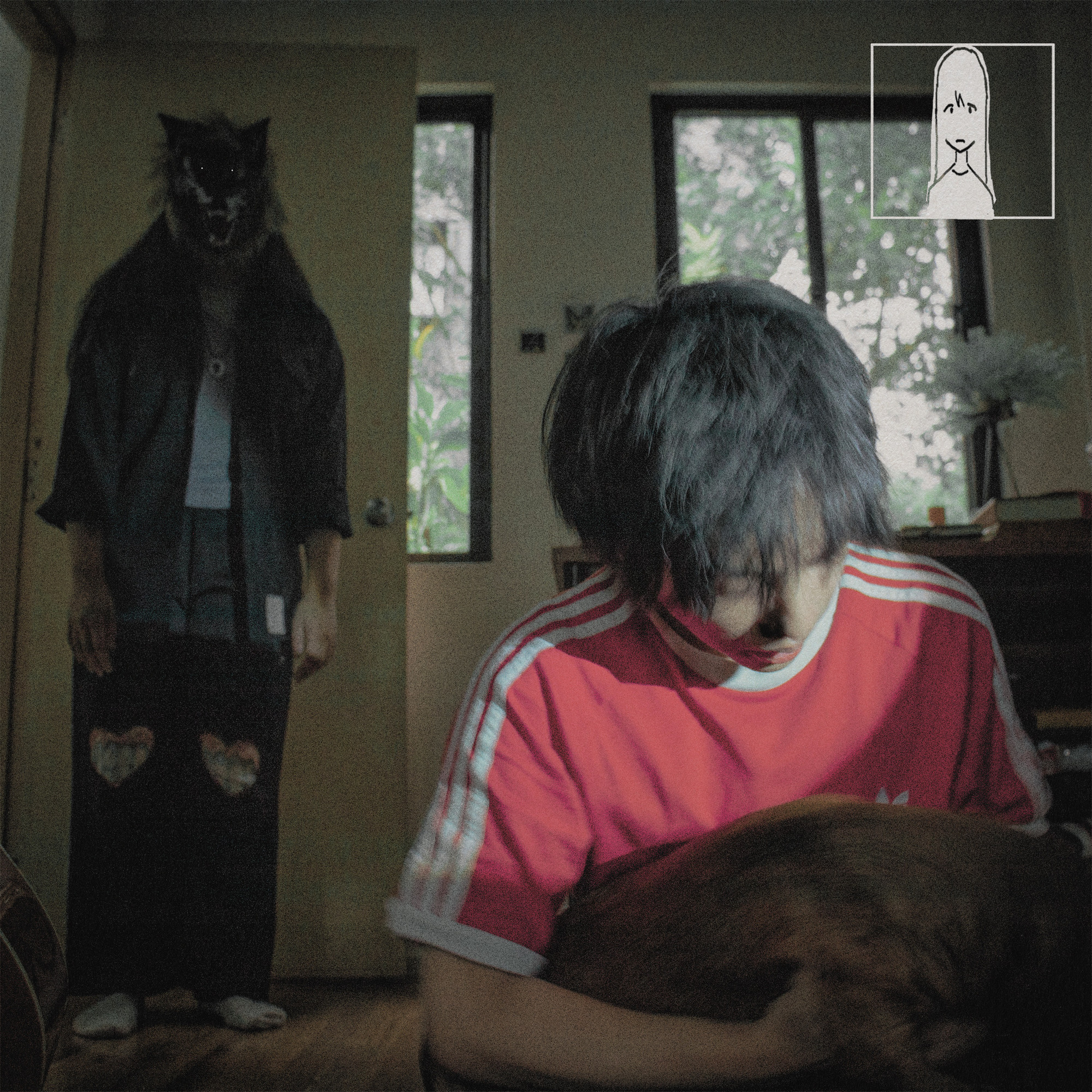
Batangas just left a mark in Filipino shoegaze, a scene that is already defined by the formidability of many growing talents and its steady embedding into OPM ubiquity. Cementing the region’s place this time around is the Lipa-based, emo- and grunge-adjacent shed, with the release of their debut album ‘if heaven is real’.
Following their self-titled project and a few singles here and there, a template to the band’s overall sound identity is traced. ‘if heaven is real’ serves as the band’s proving ground, an opportunity to bury the nail planted by earlier songs like ‘mahika’ and ‘forgotten song’—songs that exemplify the band’s penchant for a certain blossom in their sound, where the viscous rhythm section envelopes the bright, manic wails of the lone guitar riff.
The challenge for their debut album was not to exceed what was first established, but rather to prove that the ingenuity in their earlier releases was not a sleight-of-hand trick you cannot show the same audience twice.
shed overcame this challenge on ‘if heaven is real’ thanks largely to the variety of execution throughout the track list. Given their proclivities for roughness and sonic punching power, depth is no longer a question in shed’s toolbelt. And instead of trying to reach greater heights with their sound, the band focused on expanding their emotional range—more specifically, the applied use cases for their already honed affinities.
As a result, we get pent-up anguish expressed in a smorgasbord of ways. For one, an unwitting listener may pass off “easy” and “tangerines” as blackgaze, while “relapse” and “susi” are more akin to the classic shoegaze sound of the mid-’90s. Though genre influences and mood are intermingling, the unrelenting attitude is the glue that holds every element in place.
But most notable of all is ‘blue’, a returning track from a past project that serves as the album closer. This song takes the best trait from every song in the album and amplifies them to great heights: dense layers of heavy guitar riffs at odds with each other, a tempo of almost breakneck speed, the hope-filled ecstasy of a well-executed melody, and themes of endless yearning that rival the tragedy in tales of old. This is easily a highlight not only on ‘if heaven is real’, but in shed’s journey thus far.
In contrast to the band’s dead-set dedication to carving their identity through loudness, songs from ‘if heaven is real’ derive their thematic shoegaze melancholy from the unmoving. Songs like “moths,” “easy,” and “heaven” share this common thread, usually depicting human trepidations that are rather still than tumultuous.
For instance, “moths” plays around its own metaphor in its depiction of the tragic paradox of affection and avoidance; “easy” reads like a lullaby sung by a seemingly grieving narrator; and “heaven” is a claustrophobic sketch of a narrator trapped in the stasis of loss. The tone of shed’s overall pen work in the album stems from this decaying monotony that blossoms into a dissonant harmony to the unyielding chaos that is their sound. This can only be achieved by shed’s innate ruthlessness, which they have proven time and again.
‘If heaven is real’ is best described as a storm. Its relentless pressure lays waste to everything it touches, having gathered plenty of force from shed’s past projects and coverage through the band’s persistent experimentation. Yet through it all, shed remains steadfast, unmoving, and in full control amid the chaos.
Shaun Alina’s Metro Manila-based alt rock outfit Panjia returns with their second EP ‘Astroboy,’ a sharper, more focused follow-up to their 2023 EP ‘all the colors that make you!!!’ Across the four-track project, the band paddles deeper into the waters of shoegaze and noise rock with a dense, feedback-heavy sound that feels both abrasive and vulnerable. The result is an EP that perfectly captures the kind of exhaustion that comes from living in a crowded city where everything feels too loud, too fast, and emotionally distant all at once.
From the explosive, almost-cinematic intro that is “Rat Attack on Metro Manila!!!” to the relentless onslaught of drums on “Nauubusan Nanaman Ng Pagmamahal Si Belinda,” Astroboy is clearly built on a foundation of tension. And this is most evident when guitars crash through layers of distortion to create textured riffs that feel like the sonic equivalent of running your hands across concrete—which is exactly what makes the EP work. The distortion isn’t just there for aesthetic or shock value, it’s actually embedded into the storytelling itself.
The use of repetition, feedback, and grating instrumentals all come together to stage a sonic atmosphere that feels suffocating in a way that mirrors the emotional and physical fatigue of the urban day-to-day experience. But even at its most chaotic, the EP never feels directionless because the three-man group understands how to control momentum, allowing tracks to swell, collapse, and breathe without losing any weight. At times, the songs even feel like they’re on the verge of imploding or falling apart, but that instability is exactly what makes Astroboy exciting.
It’s also no surprise that underneath all the noise and texture is a generous amount of vulnerability. Whether through melodies or personal lines buried underneath rough riffs and distorted strings like “Can’t you see / That I am not / Whoever you / Must think I am”from the closing track “Astroboy,”Panjia consistently finds a way to make chaos feel human by injecting softness and vulnerability into the harsh walls of sound they create.
For a project with a run time of just over 13 minutes, ‘Astroboy’ is remarkably cohesive. Panjia captures the overwhelming nature of modern life without overexplaining it, trusting texture and atmosphere to communicate what words often can’t, creating an EP that’s loud, restless, and emotionally worn down—but also deeply alive.
A debut album would typically symbolize an artist’s effort to mark a creative turning point in the medium from which they can branch off, or mark a point in time at which they were at their most unfiltered and relentless.
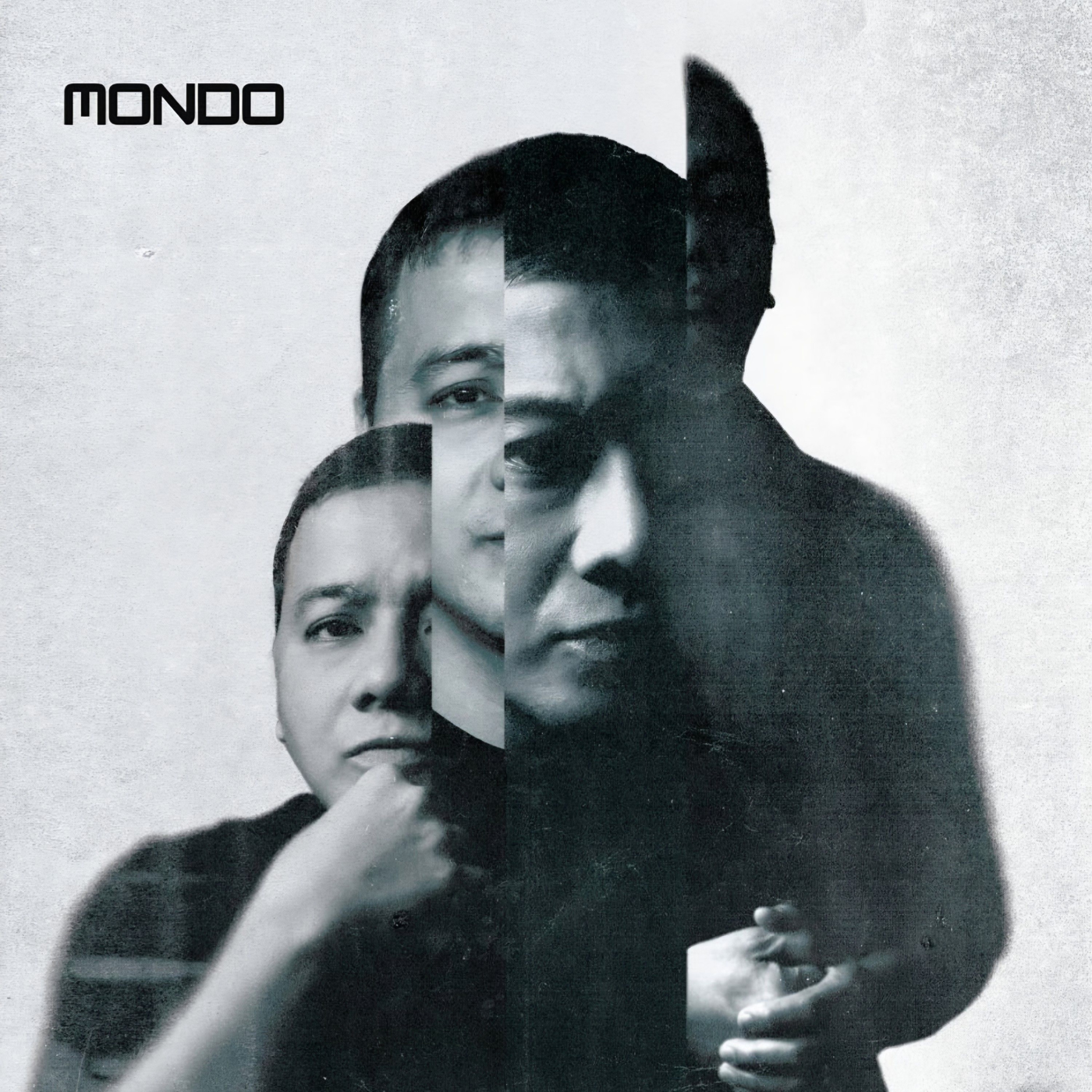
But it’s a different case for Mondo de Castro, the man behind the eponymous band MONDO and its eponymous debut album, who decided to flip the script and turned his debut album into an imprint of his creative assemblage. To him, who staked his name on this album, is what all his 20+ years of work in the industry have been leading up to.
As an artist, Mondo has been in the industry for several decades, having played for The Pinup Girls and collaborating with heavy hitters like Francis Magalona, Diego Mapa, and Kitchie Nadal. E Nick Lazaro is involved in the production side of things
All this to say that Mondo’s resume is a decorated one, and his grasp of the technical side of songwriting and music production is out of the question—all that’s left to mull over from ‘MONDO’ is in its ethos and creative process.
On his debut album, Mondo leans toward British rock and Britpop, with Gospel themes as the occasional thematic hook. His faith is most apparent in “A Thousand Voices,” in which he shares the spotlight with Kitchie Nadal and Diego Mapa. On the one hand, an electronic track with an ambient trip-hop feel, and on the other, an acoustic ballad that serves as the penultimate album closer rather unceremoniously, especially since the closing track is a rendition of another song on the album.
On the other side of the tracklist is “Fire Buns Brighter” and “Awaken,” a pair of upbeat rock ensembles that do not hold back from evoking kinetic energy. Besides sharing a similar stylistic makeup in its employment of a modern take on the British invasion of the late ‘60s, these two openers are indicative of what aspect of the creative process Mondo prioritizes most (sometimes to the benefit of his work, sometimes to its detriment): risk aversion.
The biggest fetter in ‘MONDO’ above all is its overreliance on tried-and-tested formulae, especially on a genre that is already known for its steady progression tropes. While such an approach is not inherently at fault per se, the lack of unpredictability in a song (or rather an air of excitement brought to the fray by fresh, unconventional ideas) and excessive sanitizing of sound may make for material that is seemingly uninspired. The album’s more raw outputs resonate more with the artist’s core intent.
In contrast, ‘MONDO’ shows a lot of competency in its lyrical output. The aforementioned “Fire Burns Brighter,” while overshadowed by its heavy composition, shows Mondo’s spiritual side in a tasteful way, making use of imagery to add mystique to the song. The same can be said about “The Second Coming,” but with a better (and slightly more subdued) melody to accompany it.
But the album’s highlights are seen in the middle, with “If I Tell You Why” (both versions) and “The Second Coming” being the biggest highlights of ‘MONDO’. This is in large part because of Mondo’s penchant for sheen not getting in the way of his intuition for making good riffs and emotionally potent melodies—a feat that is apparent throughout the album, but is neutered in its weaker moments. “Isang Libong Araw” is another well-composed song that strikes a better balance between the explosiveness and restraint of a rock anthem meant to uplift the audience, at least when compared to its faux-sibling, “Fire Burns Brighter.” ‘MONDO’ is fundamentally a showcase of the artist’s well of knowledge in his decades-long journey as an artist. Now with the resources to operationalize his songwriting process like one would a client brief, he is keen on getting the best people on board to make it happen—a highly ambitious endeavor, one that is hindered by the smorgasbord of ideas left unregulated, and can be improved on by having a clearer sense of direction, regardless of who is involved in the making of his work.
The beginning of the year is programmed for a personal reset. People eagerly work on their resolutions or, at least, plan the next step. But it’s not always how it’s set out to be. Some are still reflecting on the past year, revisiting old wounds to process what needs to be left behind. inanotherworld’s latest single, “airfrying chicken nuggets for 10 minutes at 200°C,” lets us linger in this period of reflection before release.
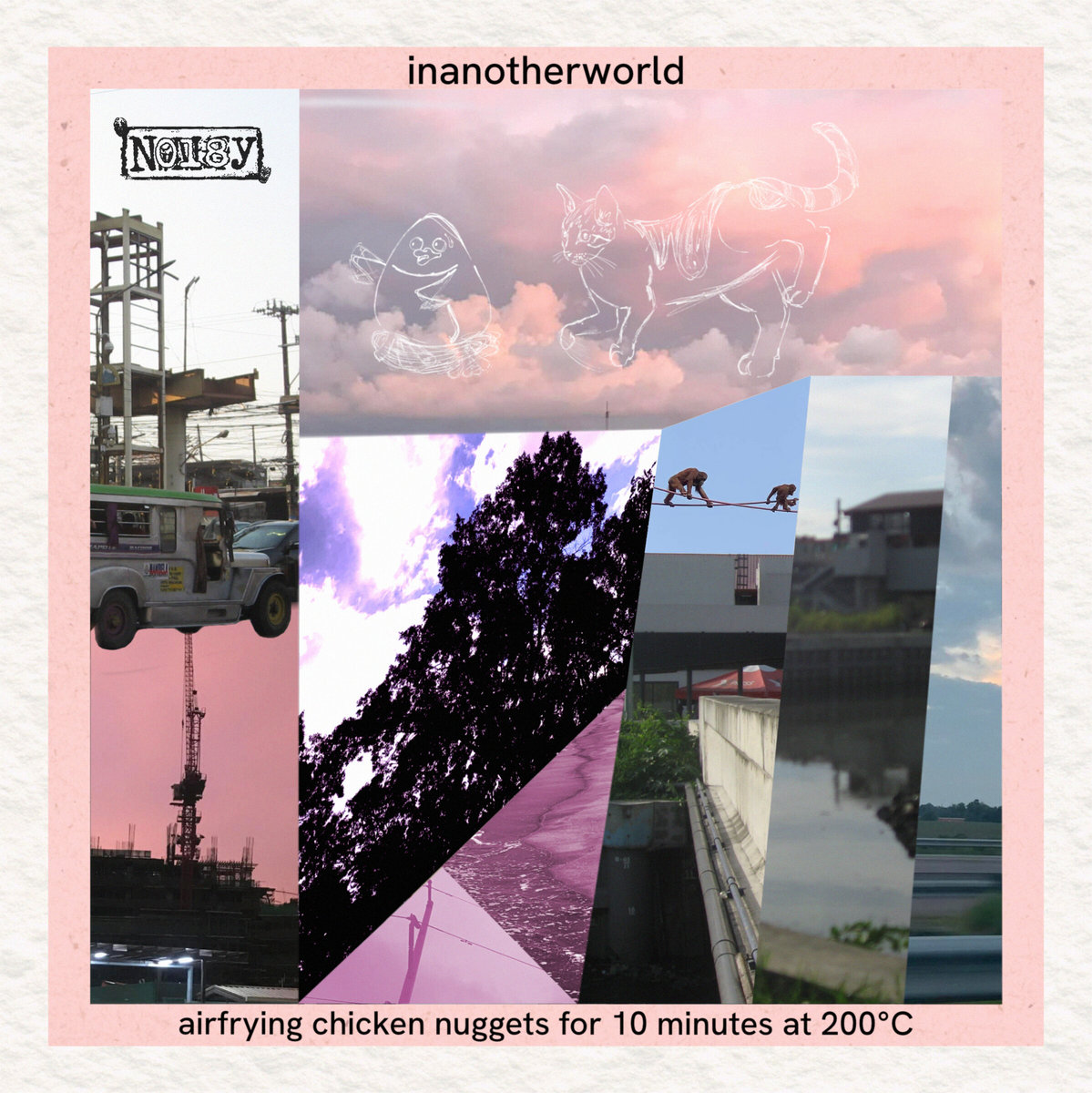
This five-minute track blends the heavier sound of shoegaze with the slacker tempo and somber composition of slowcore to capture the dissonance of existing in a world that rewards constant movement over stillness. It starts with a chaotic frenzy of drums, pedal distortions, and glitchy frequencies that seem to echo an initial frustration. But it’s nothing that a long walk can’t subdue. This is what the first half of the song feels like. A long walk around the city after coming back from school or work after the holidays. The gloomy tone of the guitars pulls the listener out of their reality to observe what lies beyond the concrete jungle and urban sprawl. Even with melodies meant to evoke a melancholic mood, the track ironically inspires the listener to romanticize life and find serenity amidst the chaos. With beautiful, ghostly vocals accompanying sparse instrumentation, the experience is stretched out into a hundred blissful moments. As seen in the track’s cover art, snippets of the cityscape feel like a much-needed pause to take everything in.
By the second half, “airfrying chicken nuggets for 10 minutes at 200°C” unfurls into a euphoric outburst, bringing banging snares and heavier riffs forward. During this prolonged sequence, a sense of comfort is instilled through sound rather than emotional lyricism. The repetition of downbeat melodies is meditative, healing almost. In this track, inanotherworld morphs common themes of slowcore — defeatism and somber slow burns — into a calm renewal. It turns a normal evening walk into an introspection while everything else moves in linear time.
What would inevitably become an interesting talking point later down the line is how the next generation – in this case, the Gen Alphas – will eventually carve their paths through a lot of the music spaces thriving right now. While it is early to say how they will respond and evolve past the local indie and mainstream music zeitgeists, observing how they’d touch upon the sounds and tones to assess their craft is enough to look into. At least for the time being.
Case in point, the past few releases that 15 year old mrt has released last year immediately pull a lot of the alternative rock and screamo influences – think acts like Sintasan, North Sentinel, and Walktrip – that swerved into lo-fi, raw fidelities. Those two EPs – ‘hermosa’ and ‘bokeh’ – certainly tiptoed towards those tones, from mrt’s attempts to sing and scream across shambling production, to post-breakup wallowing that is peppered across his lyrics.
Now, what “all roads lead to cubao (or wherever my grave may be instead)” does is sharpen his melodic instincts amidst an exercise in dynamics. It starts off with a lilting guitar passage contrasted with his composed screams, then the song breaks out into fuzzed-out shoegaze while mrt leans more on moodier singing. It effectively reinforces the emo-tinged emptiness that is buried in this track.
All in all, mrt still has ways to go before he eventually hammers down the strengths in his songcrafting, yet the intrigue to do a bit more in this song does show some promise. The projects that he has currently pulled off might not blow things away, especially with how the alt-rock and hardcore scenes have only developed into fascinating nooks and crannies; there’s nothing wrong with testing things out. At the very least, he’s familiarizing himself by trying, and that’s good enough for now.
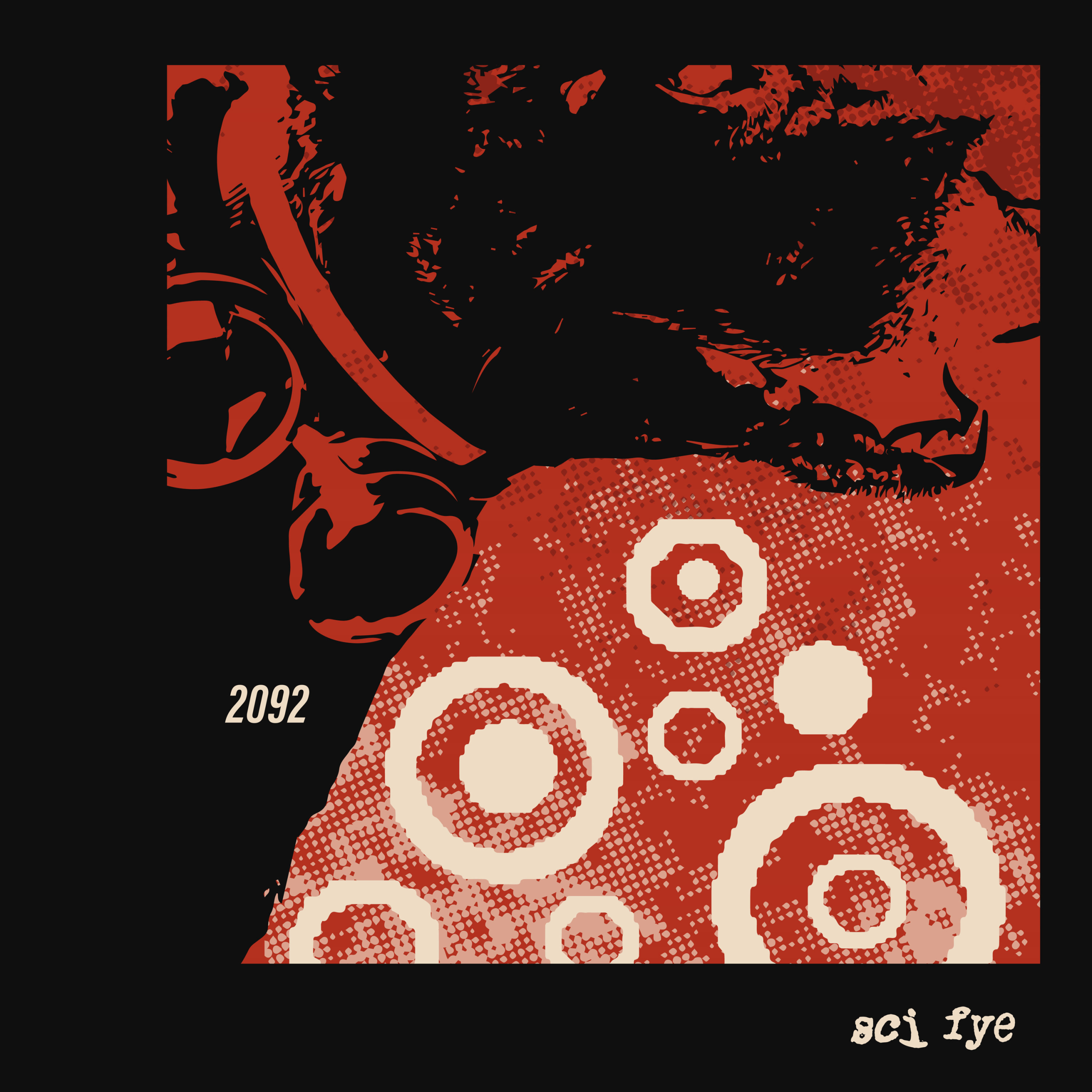
Who can tell the future? Sometimes there’s no point in finding conjectures to predict what can happen five, ten, or a hundred years from now. Sometimes all you need to do is imagine. One year after who knows?, Pasay-based rock band sci fye continues its formula of punk-ish, catchy rock mixed in with a lot of other elements. Since its inception, sci fye’s main proposition has been an interpretation of a subset of music acts that ended up bundled together in the ‘90s: Nirvana, Pearl Jam, Green Day, Pink Floyd – you get the idea – all influential and worth remembering when listening to sci fye. It’s almost like they swiped off the dust from a CRT television set and examined it through a microscope. These influences flow off of each other in a way that outpaces their novelty while binding them to a sound sci fye can call its own.
For one, it’s the technical know-how: the recording is precise, and more importantly, audibly clear, as we have come to expect from their work. Let me be clear: a bulk of sci fye’s tracks are at its most potent when heard live (always a pleasure to see them in the marquee of a gig poster) , but easy listening – say, while in a car – doesn’t diminish sci fye’s angular approaches to music. “Bastard,” a lyrical and thematic standout from the whole project, was worth an immediate re-listen after first contact, its concussiveness, borrowed from its more hip-hop elements, bouncing off the windows of the car stereo. Second, the composition of each song leaves little to be desired, and I say this in the best way possible. ‘2092’ as its individual tracks feel complete, or at least well considered, for it to go on, break down, or stop.
What has been said about their previous EP could also be said of ‘2092’: while their individual tracks feel fully formed, the Album as a whole is a mixed bag, rife with textures and sounds that point towards different directions. The 4-piece has yet to transcend from its past work, but maybe transcendence is not the point. “Intro,” Good morning, ‘2092’!,” and “Western Corprorate Standoff” act as interludes between tracks but come in more as flavor text that can be excavated to find meaning, or not. It’s like laughing at the mouth of the abyss. After their EP launch on Halloween, the band thanked their collaborators and friends in an Instagram post. “We still got one more in us,” the band says. Maybe we can expect another project a year from now. At the speed they are going, music making appears to be a pressure valve they turn clockwise every now and then to let out some steam. Steam, and a lot of angst, some anger, a little bit of melancholy. A lot of anxiety.
I’m not sure if I enjoy being comforted by the fact that I relate to the anxieties of the generation, as told by sci fye, to a tee: feelings of belonging (“Alien”), fraught relationships (“Drown It Out”), but mostly the dread of living in the Philippines in 2025. The title track, “’2092′,” and its frenetic fuzziness exude warmth, but the lyrics come as a lingering shadow. We all want to escape this hellhole we call the present day. What’s 2092 minus 2025? 67. Do with that information what you will.
If you’re willing to rock with the supposed abject aimlessness sci fye presents themselves, it would be more interesting to see them as a prism of the present condition we see ourselves in, and ‘2092’ as yet another layer to their humor.
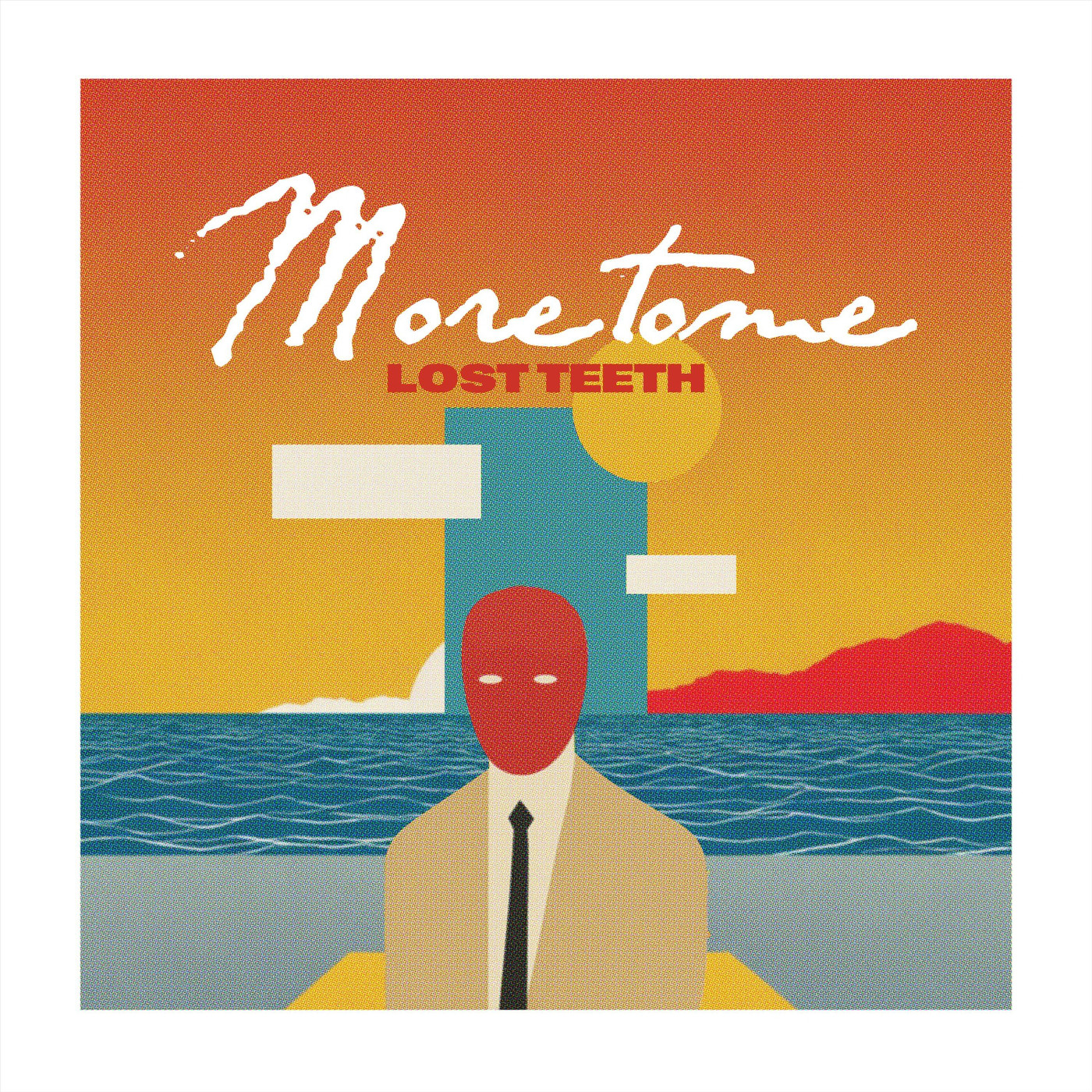
Melodic hardcore never died; it just evolved. In the 2020s, bands are putting their own spin on the genre by fusing it with new influences. In the local music scene, More To Me is stepping in to push the genre forward. Composed of vocalist Dale Diongzon, lead guitarist Paolo Owyong, rhythm guitarist Mickoy Mariano, bassist Lee Mendoza, and drummer Francis Yuri De Jesus, the band recently launched their debut EP, Lost Teeth, with six tracks that blend emo and hardcore elements.
The EP begins with a short introduction track that segues into “Cleansed,” an aggressive four-minute track with an explosion of crunchy bass lines and dynamic drum beats colliding with layered screams and clean vocals. The heavy guitar riffs echo rage and disappointment as evocative as Circa Survive and Balance and Composure’s older sound. “Cleansed” and “Lost Teeth” also seem to be twin tracks in this EP, sharing similar melodic traits and structure. The title track, however, is much more subdued in its angst. Instead of pointing fingers, the narrator seems to be facing the mirror after avoiding it for so long. Much like how losing teeth symbolizes change, this track signals a turning point in the record from a thematic point of view.
Most projects that lean towards emo and hardcore are often emotionally charged, but Lost Teeth channels this rawness through its introspection meets intellectualism lyricism. In “Echoes,” Diongzon transforms pain into a shared catharsis. “In this world apart, where love was strong, we’ll keep holding on…” emphasizes community and its ability to soothe amidst suffering. While “Echoes” pushes listeners to a point of reflection, “By Design” is the kinetic force that propels us to achieve this sense of togetherness. The chorus “Inside our hearts, where love and pain collide… In silence, we sacrifice for better lives…” prompts us to look out for people in our community and choose love above all else. It’s an invitation to come together, to mosh, dance, and scream with new and familiar faces in the scene.
As far as hardcore goes, Lost Teeth doesn’t disappoint. Diongzon’s vocals are inundated with tasteful guitar work; textured riffs that synthesize and serrate to make way for clean vocals that haptically switch to abrasive screams. Meanwhile, the mix of pounding drums and punchy bass riffs grounds the chaos before it lands in grittier hardcore territory. With this softer approach, the record sounds more melodic than traditional, pulling more from emo influences. As the EP finishes with “Whole Again,” the overlap of both genres is set in stone. The spur of melody and metaphors propped with heavy technicality underscore this harmonious intersection. However downcast it may sound, it leaves us in a tranquil state. “And if I’m a ghost, I hear you calling through the walls. Let’s set fire to these empty halls and make you whole again…” reminds us that we’re never truly alone in our silent battles.
Lost Teeth doesn’t build up to a grand climax but shines in standout moments. Every intro sets the listening experience and each line reveals a personal truth. It won’t send us to a thought spiral nor let us sulk on familiar anxieties, but every melodic breakdown captures a cathartic feeling enough to resurrect millennial hearts from the grave of the mundane. After going through a phase of animosity, the EP matures into a self-realized record that hinges on the very thing that keeps melodic hardcore alive: vulnerability.
Hazylazy, Laguna-based virtuoso Jason Fernandez’s solo project, is an indie darling. His first EP, ‘The Resentment Segment’ in 2020, has since become a classic that captured the stark isolation brought upon by the pandemic blues. In the following years, the soloist had everyone’s ears on him, waiting for another release. What’s next, we collectively wondered. It wasn’t until 2025 that we finally heard a response, culminating in Hazylazy’s debut album ‘ANTAGONISMS.’
‘ANTAGONISMS’ thrives within its lush instrumentation. Experimenting further on that hazy, dreamy sound, the album is a spiritual successor to the 2020 EP, but given more space to grow. If ‘The Resentment Segment’ bordered claustrophobic territory at times, ‘ANTAGONISMS’ flourished in its own peculiar world. Hazylazy’s vocal performance here remains static and unchanged, but he’s never been one to focus on one component more than his overall sound direction. The DIY elements of the production carry a fuzzy nostalgic sound; bringing up scenarios of indoor plastic playgrounds, liminal neon arcades, and vast green valleys under vibrant cerulean skies, only existing within its hazy, fever-dream-like wall of distortion-heavy guitars and reverberating drums.
Over the course of the album, the tracks center around Hazylazy’s internal struggles. Perhaps this is another understanding of the album title ‘ANTAGONISM,’, a play on the indifference of airing out one’s inhibitions. For example, the track “WAKE AND FLAKE” talks about escapism from the mundane life and the unbreakable cycle it creates. The rest of the album operates at the same tone, glum yet desperately hopeful. A few lines from “CHASING MY TAIL” sum it up the best: “No sight of reason—No right demeanor, Believing there’s no one to hold onto. ‘Cause I wanna get my whole life together”.
A record like ‘ANTAGONISMS’ happens whenever a 1:1 rendition of an artist’s idea is executed. It’s an accomplishment when an artist creates their own worlds, but to convey it in its purest form is a feat that only a few can do. In this case, it works because the album is by far the most potent version of Hazylazy. A release so personal and unapologetic, it created a portal to a land that used to only exist within his mind. Transcendental and mystical, it’s clear from the start that ‘ANTAGONISMS’ does not belong in the world we reside in.
What is fascinating about acts that produce music in their bedroom or home studio is the limitation that comes with it: they rely on spare equipment, the ideas in their head, and the sheer will to put something out while letting the raw essence of their music come to life. A common occurrence these days, especially once you dig into a site like Bandcamp, but there are times when the music that was made is filled with intriguing ideas, both in the composition and the writing.
Formed through a 10-year-old rusty MacBook, their love for rats, and their set of guitars, koto, and violins, Djuno spawns ‘Moonrats,’ a record that tousles within homespun spaces, tapping into indietronica, folk, and alternative rock that is cobbled together by Djuno’s dedication to create something out of their resources. Creating ramshackled compositions that their voice plays into really well, sounding like a singer-songwriter that came out of the ’90s. “Maura Crushed” plays into this in a straightforward direction, with fingerpicked guitars nestling their bare vocals within a coddling atmosphere.
But things get interesting once Djuno starts toying around with production. Modifying their voice to sound more blurry, synths and samples chop off or pop into the mix, playing with the mixing in sync with the lyrics; an intended effect that adds more across Djuno’s well-considered melodies and performances. “Beak” comes through with gentle strings and acoustics, but gets sonically interjected everytime they proceed to a certain phrase; “Mentol Song, Dead Horse” submerges into indie rock rubble before letting the synths take over, their voice always shifting throughout, same case goes for “Otkah” that wades across a raw start accompanied by a digital organ, a burly guitar passage that cuts off into choppy vocal stutters, just before ending things off with a string section; “Slump” takes things on a off-kilter segway, layering spare melodies on top of this uneasy text to speech audio, until noisy guitars rupture and then interestingly sampled to tie the song together; and “Prarie Dogs” finishes the record with its 8-minute climax, starting with simple acoustics gradually going through its rush of highs and lows, implementing pummeling drums, wheeling violins, and boiling riffs along the way.
The intent for the mix eventually pinpoints their conflicting identity with Mina that stirs within their writing. Djuno’s love for singer-songwriters—inspirations such as Elliott Smith or Cameron Winter definitely show in spades—shines through in how they write words and phrases, filling the arc with macabre imagery on one hand and metaphors that flow with absence and emotional decay. It’s a characteristic that keeps following Djuno and Mina, where at first, the shift in voices interprets who is singing. The bare vocals represent Djuno, and the processed vocals come from Mina. A back and forth in trying to separate from one another and travel to a place where Djuno and Mina can be safe and sound.
Yet, in reading between the lines, it becomes clear that Djuno and Mina are the same person. Mentions of reflections and limbs make it clear enough: a push-and-pull between identities that care deeply and who push themselves down. It creates the eventual insight where they can’t separate one another because they need each other. To be Djuno or Mina doesn’t matter; what’s important to them is to be elsewhere. Never lying dormant in one space, the process of leaving for somewhere unknown can be scary, but worthwhile. They do have themselves in the end, after all.
With this much thought, it lights up ‘Moonrats’ with so much detail that’s worth looking into, where every bit and piece across its songwriting, sonic palette, and performances become purposeful as a whole. Despite still carrying the singer-songwriter inspirations that can still be refined upon, there’s no denying that Djuno has something going for it in the long run, even despite their initial struggles that come from working on the album on a decade-old MacBook. Just like the moonrat, it may be easy to catch what’s going on, but listen closely, and you’ll find more rawness that’s worth looking into.
The singular author of his work, Jason Fernandez, is a textbook solo artist. His brainchild, Hazylazy, remains his closest collaborator, revisiting the Antagonisms demos he released from his bedroom years ago.
Written by Hannah Manuel
Born in the post-internet age, Hazylazy is the project of Tagalog native Jason Fernandez. An indie rock internet secret of the early 2020s, Jason made waves in the (then online) scene as the solo mind behind The Resentment Segment. Tracks like Ultrawanker and Juxtapose were the lockdown anthems that eventually funneled crowds new and old back into dive bars and in-person gig venues. With Antagonisms, Hazylazy reemerges transformed, putting together years of musical exploration into a cohesive and deeply personal thesis.
The genealogy of Hazylazy precedes the act itself. Spending his formative years in Laguna, Jason found his first audience performing with his five schoolmates at fairs in the local Catholic school circuit as Serotonin. In step with the rise of indie bands all over the country, led by the likes of Autotelic and Ben&Ben, the six-piece Biñan-grown band had the classic OPM toolkit at their disposal while somehow still maintaining impressive individuality for an adolescent outfit. Part of this ought to be due to Jason, who composed the original pieces they performed in between covers. Initially writing songs in the drum seat of the band, Jason first made his way to the mic when the band’s vocalist quit. This late 2010s indie rock sensibility transforms into something more atmospheric toward the latter part of Serotonin’s lifespan. When the band quietly dissipated into college and work, the singer-songwriter took to SoundCloud for a new solo project, where a trajectory of his work remains in view today.
From chillwave to jangle pop to neo-psychedelia, Hazylazy is heavily inspired by the wild array of musical inspirations Jason holds dear. A multisensory and multidisciplinary trip, Antagonisms is the matured mastery of Jason’s exploration project years in the making. The singular composer and producer of the album, Jason’s closest collaborator is himself. Many of the tracks are years older than they let on, beginning as demos back when Hazylazy was still in its seedling stages. With an ethos of total authorship and a creative control of the acoustic environment he molds, the indie rock auteur revisits old compositions and converses, eventually completing a years-spanning project long awaited since his last release four years ago. He orchestrates his listening experience down to a T. From the warm decay of lo-fi synthesizers, to drumlines—a channel he is well acquainted with—like heartbeats in their earnestness, the time it has taken to get him here is a reward made even riper for those who were there with him from the start.
Back in time, it was impossible to imagine Hazylazy as real. The adulterated frequencies of the real world were seemingly not the place for Jason’s ethereality. The boundlessness of the net—its lack of physical constraints, its endless archives, its potential for anonymous reinvention—serves Jason well, so well that it is easy to conflate it with the separate and equally boundless entity that is his mind. As time and a return to on-site gigs permitted, the underground bore witness to a new master. From an etiology of melancholy, Antagonisms arrives noisily and unapologetically, not giving a fuck about what the world thinks, blazing a trail through it anyway. A storied creation and a boundless frontier, Antagonisms is something to look forward to on the live stage.
**This interview has been edited for clarity and brevity.
HM: There are songs in Antagonisms and related to antagonisms written with years in between them and the final album. Specifically, the tracks “Another Self-Loathing Demo” and “ANTAGONISMS” which were released four and three years ago, respectively.
Hazylazy: Yes, which is funny ‘cause “ANTAGONISMS” did not make it to the album. But “antagonisms”, it latched on as a name. Nagkaroon pa nga ko ng iba’t ibang album names in mind, and I was trying my best to not use antagonisms because I was telling myself na “Ah may nakarelease na track ng antagonisms, yeah, whatever”. But I figured if that’s the name that works, so be it. I just went for “Antagonisms” even though there already is a song called “Antagonisms” and wala siya sa mismong album.
HM: Is there any relation between the two “Antagonisms”?
Hazylazy: It felt like [the song] started the new sound for me? That’s when I separated from the previous sound, which is the sound that most people have heard from the Resentment Segment, and “ANTAGONISMS” was a big jump from what I usually make. It was a good starting point too, in a way that song started everything. And then lyrically, the album of Antagonisms fits the title. Parang kumbaga the “ANTAGONISMS” as a single, the one on SoundCloud, the sonic aspect and the lyric aspect don’t really fit in the album I’ve made, so I didn’t think to put it in. But looking back, the title really worked with how the lyrics were written: unapologetically saying anything, unapologetically following the sound that you want, not caring about what other people say to me. It’s like being antagonistic in a way, putting yourself first, being selfish quote unquote.
HM: The singly credited composer, writer, and producer of your project. These are songs you’ve written with years in between them.
Hazylazy: Yes, years apart but it’s not as if I’ve been working on those songs for the whole time interval. I just let it sit there and then when I decided I was gonna start recording the album that’s really the only time I revisit the song and there were changes here and there but not so much. I would say just production wise, na may onting adds lang and onting subtraction of things
HM: In a way you’re revisiting a past iteration of yourself as well, in the year you first created those demos. As the sole auteur to your music, what is it like collaborating with a past version of yourself on this album?
Hazylazy: It had a lot to do with self-doubt. I’m pretty sure some artists would find it really difficult and find themselves having second thoughts, na parang “Dapat ba kineep ko nalang yung older version?” or “Am I overdoing it?” It’s more of a struggle in that sense. I would say it’s that. It’s more of a difficult situation rather than a very fulfilling one. But again after finishing the album it was very fulfilling, at the same time the constant push and pull like, “Will you keep the old version?” or after numerous demos, after months pass I’ll think “Did I over do things?” As a solo artist, there’s no one telling you it’s done. Ikaw lang makakasabi na when it’s done. I don’t have bandmates to say na “Tama na yan, you’re overdoing this”. But yes, it’s more difficult than fulfilling, but it doesn’t mean I’m not fulfilled. It’s more struggle than fun. Constant monologue ‘yon, I’d say.
I only feel when a piece is finished is when I’m really happy to listen to it. I am guilty when I say I listen to my songs.
-Hazylazy
HM: Especially for something as multilayered as Antagonisms, I see the difficulty singlehanded authorship of a work can place on you. It must be so pressuring.
Hazylazy: If I must add to your question earlier, of constant struggle and keeping the past self, the past versions of the songs, I would say the best example there would be “SLEAZE PLEASE”. I really struggled telling myself when the song was done. Talagang nahirapan ako. But the idea of that song is really a two-part which I believe I was able to pull off. It’s a prime example of my struggle. I didn’t know how to finish it. Actually at one point pinakinig ko rin sa live bandmates ko. I feel like during the process of making the whole thing, one thing I had to learn is trusting my own gut? That you have to trust your instinct. And what I had to unlearn was asking for feedback way too much. Because being a solo artist, you kinda feel like there is no one else to give you feedback. Ask yourself first. Kasi mas important talaga what I think versus what some other people might think.
HM: You mentioned tracks like “SLEAZE PLEASE” going through multiple iterations during the creation process. When does a song feel finished to you?
Hazylazy: With “SLEAZE PLEASE”, I really had a hard time with the transition of the first and second part. So I had different versions written down, and I tried out different layouts of sound. There was even one version where the spoken word comes in as a standalone with no background music; to me it felt way too long. Yung mga ganun lang. I only feel when a piece is finished is when I’m really happy to listen to it. I am guilty when I say I listen to my songs.
HM: I feel like there was someone that said—I think it was Donald Glover—“I feel like musicians are the only people that can’t benefit off of their own work.” If you’re a chef, you can make your own food, and then people won’t be like, you’re so mayabang.
Hazylazy: During the process of making the whole album, [I usually critique] my own work [like] “Is there anything I can change?” or “Is the flow correct?” I’m just basically judging myself, for lack of better term. Once I’m really happy to listen to it, I feel like I’m going to enjoy listening to this even if as a different person, if I didn’t do this, if I found this album randomly, would I like it? That’s the perspective I get. As a musician, you’re also a music fan. Taking that perspective, would I also feel, as a listener, that it feels finished? Does it feel complete? I guess the main indicator is just how it feels. Very cliche, but if it feels finished, if I feel satisfied with how it sounds. That’s why I said I’ve been listening to the album back and forth a hundred times now. I know it by heart. It’s only because, and I’m not inflating my ego that I’m listening to my album, it’s more of like, what can I change? What can I do differently? What can I do to make it perfect? I also heard this from [Tyler, the Creator].
HM: Were you at Chromakopia?
Hazylazy: Yes.
HM: I’ll ask you about that after the interview.
Hazylazy: As Tyler said, you really have to edit like a scientist. You make music for yourself. That also means that you’d have to enjoy the things you make. Until I enjoy what I listen to, I would tell myself that it’s complete.
HM: And it must be an extra heft of a reward when you take this project on as a solo artist. That must be something that really makes it worthwhile to be working on this as a solo artist.We were talking about it earlier that getting in your head so much maybe you lose the ability to look outside looking in. When you’re not able to escape from the internal monologue.
Hazylazy:. Honestly, it’s just a bit scary working on it by myself. To me, what I’m about to say doesn’t really mean that making this is about feeling some sort of victory. As a solo artist, I just tell myself sometimes if I fail with this record, there’s no one else to blame but me. It’s also a constant struggle as I have that thought in my head while working on the album. At the end of the day, I’m very happy with what I’ve made.
HM: Is the sole burden, is it more of a pressuring thing? Or do you feel maybe a sort of consolation that ‘’I’m not dragging anyone down with me if I don’t do well’’?
Hazylazy: That’s a good question. It’s both, I would say. There are days that I’d be happy to do this alone because I have full control over my time when it comes to production and creative vision. It’s very singular that I have my vision and I just need to follow through. But at the same time, having no bandmates, it’s not really… You know me. I was in a band. During the time creating this album, na miss ko rin. I missed having bandmates. Maybe in the near future, I would like to make new bands probably because I just miss working with people and having ideas from different brains. Probably in the next few years, I don’t know.
HM: You mentioned “Ultrawanker”, Resentment Segment. That era of yours is a step away from Antagonisms. But many people did start their journey with Hazylazy during the Resentment Segment era. I remember watching you early days of the pandemic. I think one year into the pandemic, I remember watching MechaFest 2021.You were performing some of those songs.
Hazylazy: That’s when I premiered “Another Self-Loathing”
HM: I went back to the recording because it’s on YouTube. With [Elev8 Me L8r]. But yeah.There’s a link there. I would describe these words to form a sort of vocabulary of disillusionment. A modern disillusionment.
Hazylazy: You’re right. Lyrically or thematically, the EP shares the same characteristics with the album. Themes of burnout, themes of self-doubt, trust issues, questioning one’s faith. The same themes, basically. But I would say Antagonisms is a more evolved concept. It’s more introspective, I would say.
After finishing the album it was very fulfilling, at the same time the constant push and pull like, “Will you keep the old version?” or after numerous demos, after months pass I’ll think “Did I over do things?”
-Hazylazy
HM: Absolutely. There’s something to say about it. I don’t know if it’s intentional, but there’s a spectrum between resentment and antagonism where resenting is more of an internal act and antagonizing is sort of external. Is the link between the two thematic titles anything you had in mind while you were building the new album?
Hazylazy: I never thought of it that way, but that’s a good catch. Thinking about it, looking back at the EP, you’re right. You’re probably right. The lyrics there would be a bit more inward. Antagonism is more of outward. It involves being selfish and not really caring about what other people think. Some songs could pass off as internal monologue, yeah, but with Antagonisms, it’s more outward when it comes to how it’s written.
HM: How was the creative journey like between those two points in time? And also, with respect to your musical trajectory, what was the creative journey like?
Hazylazy: There was a time that I told myself that I wouldn’t be making music as Hazylazy anymore after Resentment Segment. I just didn’t want to go for it anymore. I’m done with music. I told [my friends] that “Ayoko na, I don’t want to make another EP.” What made me decide that I still want to make an album. The time frame between the EP and the album, it was a constant push and pull. Do I do this? Do I do that? Self-doubting because you’re alone. When I started telling myself when I decided that I’m going to make this album, I really dug deep into my influences at that time. I asked myself what do I want to make? That’s when I decided that I really want to innovate the previous sound. What can I do to create something very original to what Hazylazy is? I’ve been thankful with the amount of music that I’ve been discovering for that time frame. It was a big influence on the music of Antagonisms. It’s funny because the artists that I’ve listened to during that time frame were not even close to indie rock or rock. I became an addict to Tyler, Frank Ocean, New Jeans. That’s why there were those kind of cuts like “OUTFIELD”, the second half of “SLEAZE PLEASE”. It was very much inspired by some of the artists that I’ve been listening to around that time.
As soon as [an idea] pops in your head, just throw it in there and see if it works up until the next day, up until the next week, the next month. Does it still work? That’s one of the principles that I prioritize. Just do it. There’s no cost to being original.
-Hazylazy
HM: You’d say your influences for the album were more… were not explicitly rock or electronic in that sort of area?
Hazylazy: I would say still, a major chunk of it but I feel like the few artists that had a very strong grip on me made its way through the music that I made. New Jeans, Frank Ocean, Tyler. Not necessarily how they sound, but the very principles that they apply to their music is what I’m following.
HM: And on your discoveries about yourself and the Hazylazy principles, do you feel you’ve come to any new revelations along the way to Antagonisms?
Hazylazy: Yeah. One of the best learnings while making this record is just to really… There’s a quote that Tyler said that resonated with me. It just connects to the one I said earlier. He said “create like a child, edit like a scientist.” I keep that to my heart really closely. Especially creating like a child part. One thing I did most during the creation of this album is creating like a child. Just throw in everything. Whatever the idea is, just throw it in. Quickly. As soon as it pops in your head, just throw it in there and see if it works up until the next day, up until the next week, the next month. Does it still work? That’s one of the principles that I prioritize. Just do it. There’s no cost to being original.
HM: The parallel kind of writes itself with what you’ve talked about Antagonisms to be already. I guess it’s not self-serving, but it’s for the self.More about the antagonizing aspect of antagonisms. I wanted to know how you wanted listeners to align. How you wanted them to align themselves to the album. What did you want them to glean from it?
Hazylazy: I’d be more curious to know how they see it. That’s why I was pleased with your observation earlier with inward and outward for receptance, argument, and antagonism. Honestly, there’s no one correct way to look at it. To me, once I have it out there, it’s for everyone to listen to and how they see it. To me, I just want to put a record that I’m happy with and that sounds good, that’s original, that’s never been heard of anywhere, sound-wise. I guess, to everyone who’s going to be reading the article or whatever, I would like to know what they think to all the listeners out there.
HM: Sound-wise, I want to take a break from talking about the album and go back in time into your journey musically. If that’s okay. Correct me if I’m wrong, but I believe crowds first heard your work as Serotonin, a six-piece band from Laguna, self-described on your SoundCloud bio to be “a disappointing multi-layered experience.”I don’t know if that’s updated or not.
Hazylazy: It’s outdated. We were kids and trying to come up with funny descriptions. But yeah, that description, because we have three guitars.
HM: I was going to say, 2016 era is when you started posting your stuff to those music-sharing platforms.But when did you start making music? Did you start 2016 as well?
Hazylazy: Well, as an individual, I’ve been playing with instruments ever since I was 10. Starting with the drums and then eventually guitar. I never really sang up until 2016. But the reason why I started to sing is because the original vocalist of Serotonin left, transferred to another school. I was the original drummer. I was writing the songs back then as a drummer. And then when our original vocalist left, that’s when I went for the vocalist position and guitar as a songwriter. That’s when I met the rest of the band. That’s when we released the songs.
HM: What’s so interesting about Serotonin is that I feel it was very much a product of its time. Starting from 2016, I think, I don’t know, when you guys started releasing music, it really perfectly fit into the zeitgeist of Pinoy Indie post-rock bands. Like the band ensemble outfits from the time. Very much employing the traditional rock band toolkit over programmed instrumentation. I wanted to ask then, how did being in a band inform your later sensibilities on collaboration versus solo endeavors? And on music as a whole. I wonder what being in a band as your first musical pursuit, as you said, did to alter, to rewire your brain musically?
Hazylazy: Well, honestly, being in a band is super fun in itself. Back then, I just wanted, starting Hazylazy, I just really wanted an outlet where I can just do whatever I want. All the ideas that I want, that’s what’s followed. I just wanted another avenue where I can just do whatever the fuck I want. So that’s basically it. That’s how I would differentiate it. I like it when there’s a band or bandmates. I really like bouncing off ideas. But I also enjoy equally being able to follow through with what’s in my head. The fulfillment of being able to make it tangible and actualizing it in song form.
HM: Do you feel that you’ve always been able to accomplish that translation into a listenable track that’s out there? Or do you feel you’ve developed that through the years and with recent releases like Resentment Segment, Antagonisms, you’ve been able to get to that point that this is exactly what you imagined in your head for it to be.
Hazylazy: It’s one of the hard parts of writing for me. Knowing that this is what I really envisioned. I’m glad to say it’s a skill that I’ve learned over the years. At first, it wasn’t really like that. But I feel confident when I say that when I have this creative vision, I already know exactly how I want it to sound like. And being able to translate that into a song, it feels good. Honestly. I would say it wasn’t like that at first, but now, over the years of trial and error, a lot of setbacks, not being satisfied with some of the demos, finding the right sweet spot. It takes time to have that coherence with your vision and the actual piece, right? It’s not instant, I can say. Some songs, fun fact, “Juxtapose” was written in one sitting. And that was one of the very, very, very, I would say, like a blessing to me because some songs would just like churn out, the songs that would churn out, sometimes you would just get super lucky that after doing it in one sitting, you’re satisfied. And some songs would do that. I’m not sure if it’s like that in the album, but I’ll have to get back to you on that. But yeah, it’s not always instant, but there are songs that are really like magic.
HM: SoundCloud, by the way, like a really, really in-depth archive of your transformation as an artist. And I don’t know, I feel, but somehow I feel that, you know, going through your different genres, different outfits with Serotonin, with early Hazylazy, like tracks like “Wordless”, “False Romantic”, “Quicksand”.The time when you had, what’s it called? It’s like logo.
Hazylazy: Yeah. Yeah.
HM: But I was just going to say I feel that even in that, there was this sort of like, ephemeral quality that peeked through. Like not even like Hazylazy, like back in Serotonin, that I felt. And I wonder where that comes from.
I have personal favorite tracks from Serotonin. “She Was”, “Backpacker”.
Hazylazy: Yeah. Oh my God.
HM: Yeah. And I just noticed that there are like atmospheric elements, not that atmospheric, but like elements, textures that you wouldn’t normally see in those sort of like traditional band toolkit setups that you still added into like the studio mix. Same with like “Wordless”.There’s still an electronic ephemera that comes through. And I feel like it really breaks out of a shell and becomes the entirety of, like really develops the sound later in later projects, starting in Resentment Segment.And I just wonder if that came from something, or if like there was something that was always there that inspired you to take that sort of slant, that sort of angle with music production?
Hazylazy: Maybe, not exactly an artist that I’m following. It’s not exactly a sound that I’m trying to go for. But I guess one thing I would say that’s constant ever since. I l always try to make, I always try to find something to make it feel different from what’s currently out there. And like, you know, that’s just my approach. There are musicians out that really hit the bullseye on certain genres. Like some rock bands can pull off the rock sound really, really well and stay through to the genre. And I would say I’m just not that type of musician. I can’t perfect the indie rock sound. I can’t perfect the rock sound. Let me just go on and try to make something different now. And it’s always been the clear reason why I’m still doing Hazylazy. It’s because I really want to find that original sound. So for example, I started a solo project because I’ve been inspired by the solo artists back in 2018, 2019, like Mac DeMarco, Tame Impala. I’ve been inspired with how they’re able to sound like a band, even if they’re solo. They sound different, they sound so original. So I’ve always been in that journey. And I know I’m not there yet, but it’s always been one of my biggest goals. I don’t have to sell out shows. I don’t have to earn a lot of streams. I just feel like I really need to find that original sound. It’s always been like that ever since. That’s why there are elements here and there. That’s very deliberate. I would say it’s a conscious choice to put it there just to have a different feel to it. Just so it doesn’t sound like anything else that’s out there. Because the last thing I want is sounding completely similar to an existing band.
HM: Yeah, where you’d be like, “Oh, you’re like the blah, blah, blah of Manila.”
Hazylazy: Sometimes it’s a fun opener or a fun line to a conversation. But again, if it’s a serious conversation, you just know if a track’s a Hazylazy track. Something like that. It’s the goal. I’m not quite sure if I’m there already or if I’m close, but it’s always been one of the biggest goals.
[The album cover is] very much alike with being a child, where you just don’t really care about the external things. You’re just in there. You’re just in the moment. You’re just creating without any second thoughts.
-Hazylazy
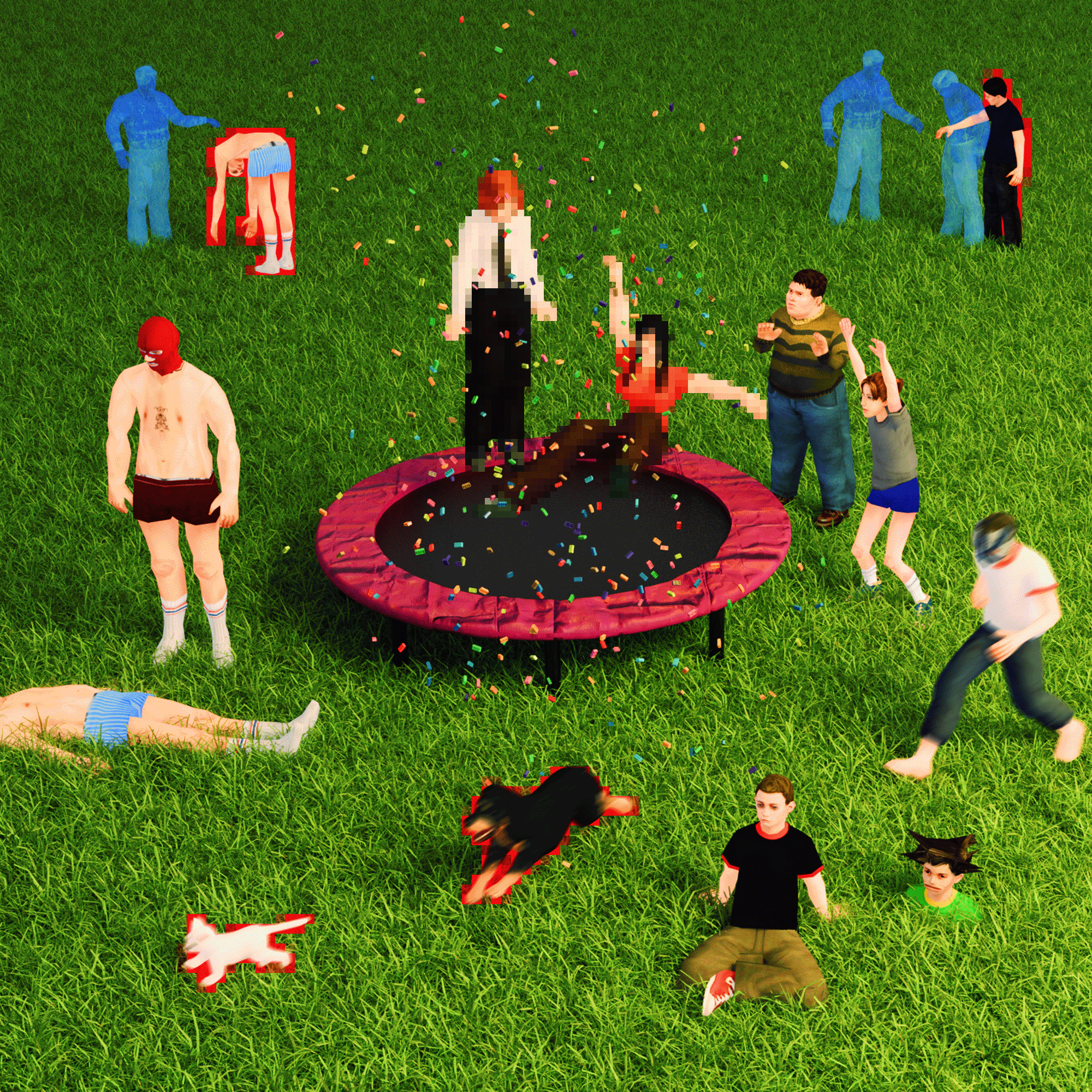
HM: Zooming out and looking at actually the key visuals you put out with your visual artist, Nicolas Salva Cruz, “Cola”. I wanted to know how that collaboration came about because honestly, I first saw the covers for Dreamweaver and the singles you put out leading to the album and I was like, wow, such an interesting album cover. Is that like The Sims or something? So yeah, I wanted to know. Even with Antagonism’s cover, zooming into the pieces, there’s a key visual for each song. Is that right?
Hazylazy: Some of the art that we’ve decided to put there kind of ties closely to the songs but it wasn’t really the main vision at the start. So it’s just a tiny coincidence.
Cola is a really cool guy. He’s super great to work with. Honestly, I saw Cola’s work when I saw Kindred’s album art and also when he made the music video for Toots, Jargon State. But I’ve known Cola from around the scene because I know Cola’s girlfriend, Tamia, way back in college. So I knew Cola in passing. So I just didn’t know that he made 3D art. And honestly, when I was thinking about how to do the album cover, I had this Pinterest board of what I wanted to do. And honestly, at first… My main vision for the album art was supposed to be… It should just be a picture. It should just be a picture. But because of time constraints, I didn’t have time to photoshoot. That’s all that happened. I didn’t have the budget to photoshoot. I didn’t have time. I don’t even want to be in the album art. I just wanted a random picture. A very eye-catching one. That would have aligned with the pegs on my mood board. But for some reason, there were suggestions on Pinterest for 3D, cool 3D art. That’s when I thought, Oh, Cola might be perfect for this. It was a cold message. That’s when I met Cola. We’ve met before at gigs. But that’s just one time. One time or two times. Then I cold messaged Cola. Are you down to do the album art? He’s a super nice guy. The collaboration. We became close friends because of this. We were always on call. But it’s been really fun. The main idea at first is to roll out the singles leading up to the album art. We made characters that would eventually appear in the album art. We decided to do a solid background first. So it’s more in-your-face. The main idea with Cola, I just wanted to feel that the album art looks how it sounds like. That was our goal. We have a base idea of 3D art. Now what can we do to elevate it or make it look how it sounds like? We added the glitch. We added some of the blur. We added the 8-bit. Because there are those elements in the sounds. We wanted to play on the childish characteristics that you can see there. Running around with dogs. Playing by the trampoline. Being curious. To me, the main idea with Antagonisms is more than being selfish. That’s very much alike with being a child, where you just don’t really care about the external things. You’re just in there. You’re just in the moment. You’re just creating without any second thoughts.
HM: Do visual and other sensory elements besides aural come to you as you create your music? Do you see a song?
Hazylazy: When it comes to creating the music, I don’t have other sensory pursuits. But I’d say when producers say different textures to the sonics, I guess that would be it. But that’s still in the hearing.
HM: You definitely have a knack for building lush soundscapes with your music. How would you approach molding the acoustic environment of a track? Because although it’s not intentionally a multi-sensory experience, it definitely is like, wow. It feels like 8D.How do you decide to fill a sound?
Hazylazy: What comes to mind while creating that sound, while creating that song, while producing the song, I just put it in there. It doesn’t have a deep, it doesn’t have a deep meaning. Some ideas that I put there in the album, as in, what’s the right word? As in, like, suddenly, I would say. For example, in “LOUDMOUTH”, the sample there, the beginning sample. I was watching an Alex G live video from YouTube. So that quick talking sample, that was from that video. But that’s because I wanted to sample Alex G. But I ended up sampling the people speaking. And for some reason, the last word he said fit in the sample, “get back”. So I used it for the song. So most of the approach here is like, it just happened out of the blue. And I think it takes a lot of skill to catch that, and to latch on to that, and to say that it’s a good idea. It’s not just random. But I feel like, I can tell myself that I’m lucky, that the idea found its way to me. But I also take myself, being able to catch that, and use those ideas. In fact, a lot of the songs here have samples. And some of these are, as in, it just suddenly came to me.Sometimes while I’m sleeping, or when I’m about to sleep, I would get up from bed, because I was thinking, I just have to write it down. Yeah, there are a lot of those. Believe it or not, the siren things you hear in Loudmouth, that’s from a Pussycat Dolls song. So there are a lot of samples there that really found its way to the tracks, that I really enjoyed creating. But one more, one more I’d like to share. “SLEAZE PLEASE” the lead part. That is from a Beach Boys song.
HM: Oh my God!
Hazylazy: Yeah, so there are a lot. It’s been really fun. I think one of the major instruments that changed the trajectory of the production style of Hazylazy in general, is because of a sampler. In the Resentment Segment, there were no abstract arrangements, none of that quality, but that’s because I didn’t have my sampler then. Now, I’ve purchased one and I’m thankful. Such an ROI, yeah, I would say.
HM: There’s something so boundless about music creation in a post-digital, post-internet era. So I want to ask, how do you plan to translate this sound and concept into a live performance?Is the goal more like a faithful reproduction, or is it embracing reinterpretation through the analog?
Hazylazy: Honestly, at first, while creating the album, I was thinking, how am I going to do this live? Especially with the electronic cuts. I’m so thankful with my live bandmates because we were able to work on the songs and translate it well live, I would say. We’ve tried it out last weekend. And I feel like that’s the magic of Hazylazy shows. You get a different Hazylazy live, and it’s a more powerful experience, I would say, since it’s louder, it’s more compact. Every bandmate just has something to offer skill-wise. I embrace interpretation—but not too far. There are some elements I’d like to keep alive, like some samples that I’d love to keep alive. I guess they’ll see that in the album launch.
HM: I wonder, you’ve been performing since pre-pandemic. I hate saying the word pandemic. It’s a turning point event, and I feel it’s very important to our recent music history.Recent happenings in music. You’ve performed in pre-pandemic venues, like Route 196. I wonder how you would compare gig culture pre-2020s to today, which is a heavily hyper-internet, hyper-digital setting, where everyone has an electronic setup in their sets.People can play samples from their songs, like click tracks and everything. Any particular transformations you’ve observed in the space, and maybe in yourself as a gig-goer, and now with Elev8 Me L8r, an organizer, and sort of creator of the gig, propagator of the gig.
Hazylazy: I admire the evolution from 2019-2018 era to how the music scene is now. Technologically, yes, you’re right. We’ve really evolved. Honestly, way back then, when I used to play Saguijo or Route 196, that’s one of the things I’ve been looking for. How do I make this possible? Way back then, before the pandemic, there were Hazylazy sets. I was always thinking about how do I do the backing track? It wasn’t that accessible. It’s just really hard to communicate in venues. Not really hard, I would say. It’s just not usual. It’s just unusual to communicate. At least, from my experience. I’m pretty sure the other pros out there were already doing that. But me, I don’t have experience with it. I just couldn’t take the first step. But now, well, at least most, where I’m always playing, I’m just thankful that their team, Jude, are very accommodating with these kinds of setups. It really allowed me to feel that what I envisioned my live sets to be is possible—not to say that it wasn’t possible before—I guess venues are more open to it now. I just really admire the evolution. Hyper-digital, as you said. I would say it’s really changed. While back then, social media was already a thing. That’s where you promote your stuff. It needs to be more rapid nowadays. And I’m afraid I’m getting too old to keep up with how rapid everything’s going. With TikTok and everything.
HM: But to give credit where credit is due, I do feel you and the rest of Elev8 were a present and very active community presence during the shift from online to offline. I remember one of the earliest gigs, I feel, coming back IRL gigs. It was Shoplifters United at Motorista back in 2022. You were sessioning for (formerly Maryknoll) back then.
Hazylazy: Yeah, the gigs started after that. I feel like we just really wanted to harp on that momentum coming from the online shows that we’ve been doing as Elev8. Like how we try to innovate online live shows. Back then, we tried to apply that same principle in our live shows. Try to do something different. But yeah, you’re right. We were active. But as Hazy Lazy alone, it’s pretty hard. It’s hard to keep up. Baka naging tito lang ako.
HM: But yeah, I mean, definitely, I feel what’s made, what’s colored this era of gigs is how very post-internet it is. Especially with entities like Elev8 that existed from, was born from the internet. That’s their nesting ground.Yeah. Do you feel that it’s a change for the better? Are you excited looking forward to further evolutions of music and gig culture?Are you going to be there for the ride?
Hazylazy: Yeah, for sure. I’d be happy to see it. We can’t really predict that I’d be present-present. But I’m pretty sure I’d be watching from afar if ever, if ever it happens. I take a break from music. For the future.
HM: Don’t.
Hazylazy: [laughs]But like, I’d be happy to see the local scene evolve. I’m sure we have the, we have a very good foundation right now. Like, we have the right formula to bring us forward, I would say. And they’re also young. Yeah. The young people, they’re so good and very smart with their promotions, I would say.
HM: Okay. What’s next in store for, maybe not even just Hazylazy. Are we gonna see a comeback of Report Error, Serotonin?
Hazylazy: Ooh, that’s a deep cut. Honestly, okay, I miss the band. I miss the boys. I hope we can link up. Link up? Yeah. But, we’re still getting along. Our relationship is still good. We still treat each other as like…
HM: Yeah, I think the last gig wasn’t too long ago.
Hazylazy: Yeah. But we never got to be complete due to personal stuff then. Every band member is doing their own thing. Super proud of them. But yeah, Report Error, probably. Let’s see. I still have the energy. But right now, all I’m thinking about when it comes to what’s next, after the album launch, maybe just take that quick vacation or reward myself with like, you know, video games and travel, probably. But like, Yay! But like, personal life first. If I ever felt like there’s a strong urge within me to write another record, then why not, right? But we’re not sure. We don’t know that yet. We don’t know when. We don’t know how it will sound like. But pretty sure if there’s another Hazylazy record, it’s not gonna be a duplicate of Antagonisms. It’s always gonna be different. Every time. Something different. At least, not exactly the same, but I will always try to make something different.