Within the largest city of Myanmar, Yangon, lie small yet meaningful bands like Soft Things, who are waving the flag towards the dream pop and shoegaze flourishes that echo across the city. Formed back in 2023, this tight-knit band is composed of guitarists Kaung Khant Htun and Nyi Ye Htut, bassist Kaung SI Thu, drummer Thu Ta Aung, and vocalist Thet Htar Zin. Young fledglings finding their groove within the yearning spirit of the sounds they’re pulling from.
They sparked a flash last year with their debut EP, ‘Warm Blue Sea,’ a stirring wave of dream pop that washes over. It acts as a starting point that defines their spirit, a characteristic best represented on the first track of the song, ‘Asleep, Awake’. Punchy drums and serene pedal effects reinforce the tension that Thet writes on record. Looking into a lilting love that is either fleeting or everlasting.
This overall spirit carries through from song to song. ‘Zoo’ very much casts a lot of Cocteau Twins’ soundscape, especially how the guitars phase out in the mix alongside Thet’s vocal backdrops scattering all over the song. ‘I am not the one for you’ tests out its writing intrigues, letting glossy keys cascade over the protagonist’s affections with the women he’s loved in the past. The closer track, ‘Cherry Cola,’ delves into synthpop bits as buzzing synth pads trickle all over the song. It recalls and reflects upon the saccharine moments that can end up so bitter, like an unforgettable aftertaste
Of course, as heard through Thet’s delivery, the brute forces his vocal limits to a flinching degree on ‘I Remember You’, they wear their passion in their sleeves and embrace all its ups and downs as much as possible. Soft Things know that the world is in a rough shape at the moment, so they may as well hold onto those soft moments from the very beginning, and let it glow as they continue their path, charging their spirits to a much tender future.
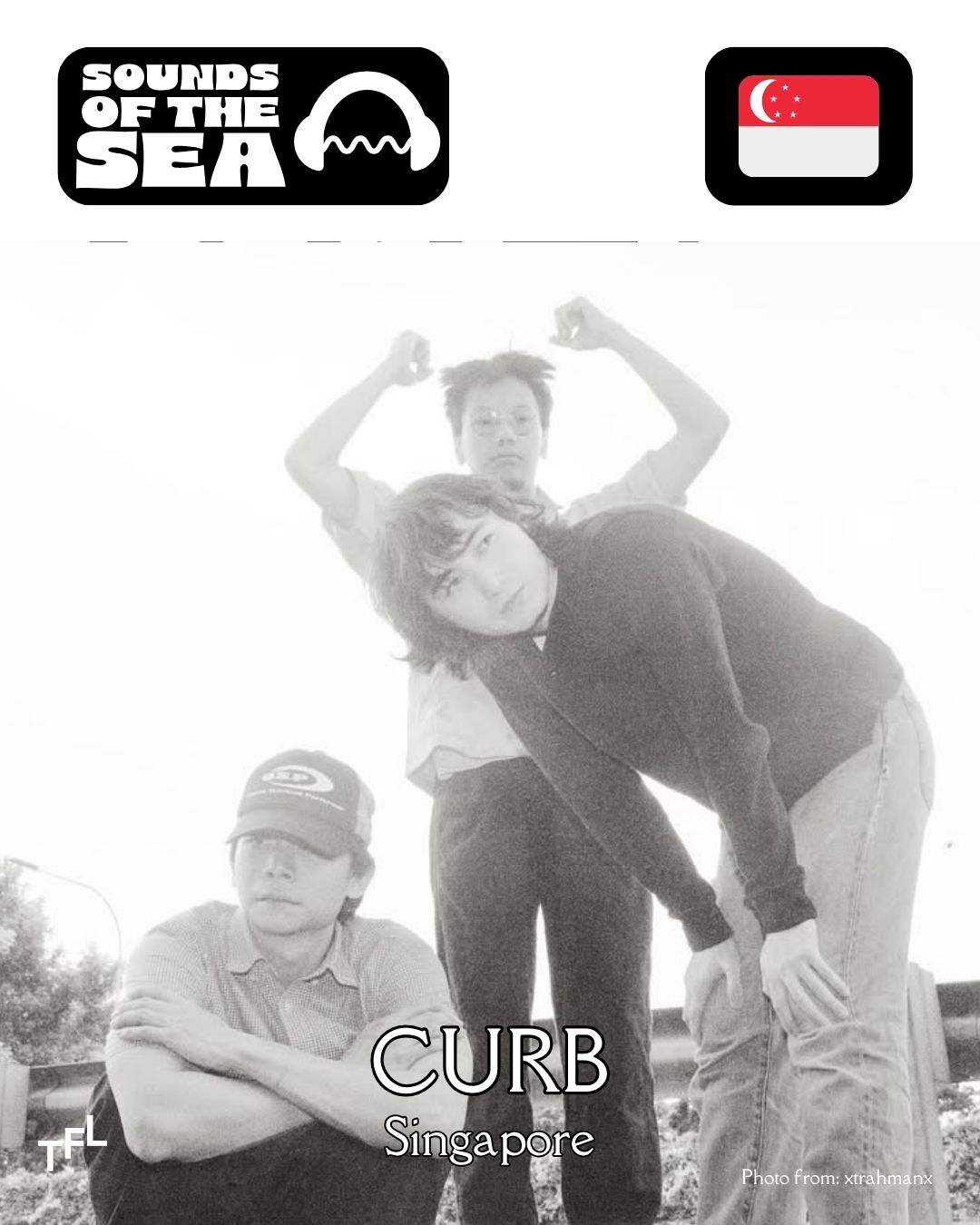
Spelled in full caps, Singapore’s CURB plays emo with a ferocious bite. The city-state has built a strong reputation in the genre since the mid-2010s revival, with bands like Terrible People, Xingfoo&Roy, and Forests helping push the scene into cult territory. CURB arrives from the same ecosystem, sharing creative ties with the indie lineage surrounding Subsonic Eye.
The trio — guitarist Lucas Tee, bassist Sam Venditti, and drummer Farizi Noorfauzi — first met as diploma students at LASALLE College of the Arts. In their early days, they bonded over the precision of math rock and the intensity of emo’s technical side but eventually grew to appreciate more styles later on. Their debut album Hope You’re Doing Well, Michaella (2022) captures that shift. The record leans on blunt, diaristic lyrics and the kind of guitar crunch associated with bands like Title Fight, yet it resists emo’s more theatrical tendencies. Instead, songs such as “7AM” and “Insult Through Injury” thrive on tight, direct hooks. “Become Again,” one of the album’s heaviest moments, highlights the band’s collaborative dynamic, with all three members trading vocal lines over restless, back-and-forth grooves.
By the time they reached the 2024 EP benjabes!, the group began stretching that formula. The record opens with a surprising detour: slurred half-rap verses delivered by rapper-producer Mary Sue, a longtime collaborator of Noorfauzi. From there, the band gradually slips back into the guitar-driven sound listeners recognize.
For CURB, emo remains a starting point rather than a boundary. The band sees genre labels as temporary signposts rather than a fixed identity. In that sense, Hope You’re Doing Well, Michaella reads almost like a diary — a record of someone confronting their own contradictions while trying to move forward.
Noisier, punk-leaning riffage surfaces in songs like “You’re Me But Worse” and “Blake & The Surf.” Both tracks seem more interested in the pull of friendships and fleeting fascinations than in the anxieties of growing up. In that sense, CURB taps directly into emo’s lineage, where immediacy and youth carry a kind of strange timelessness.
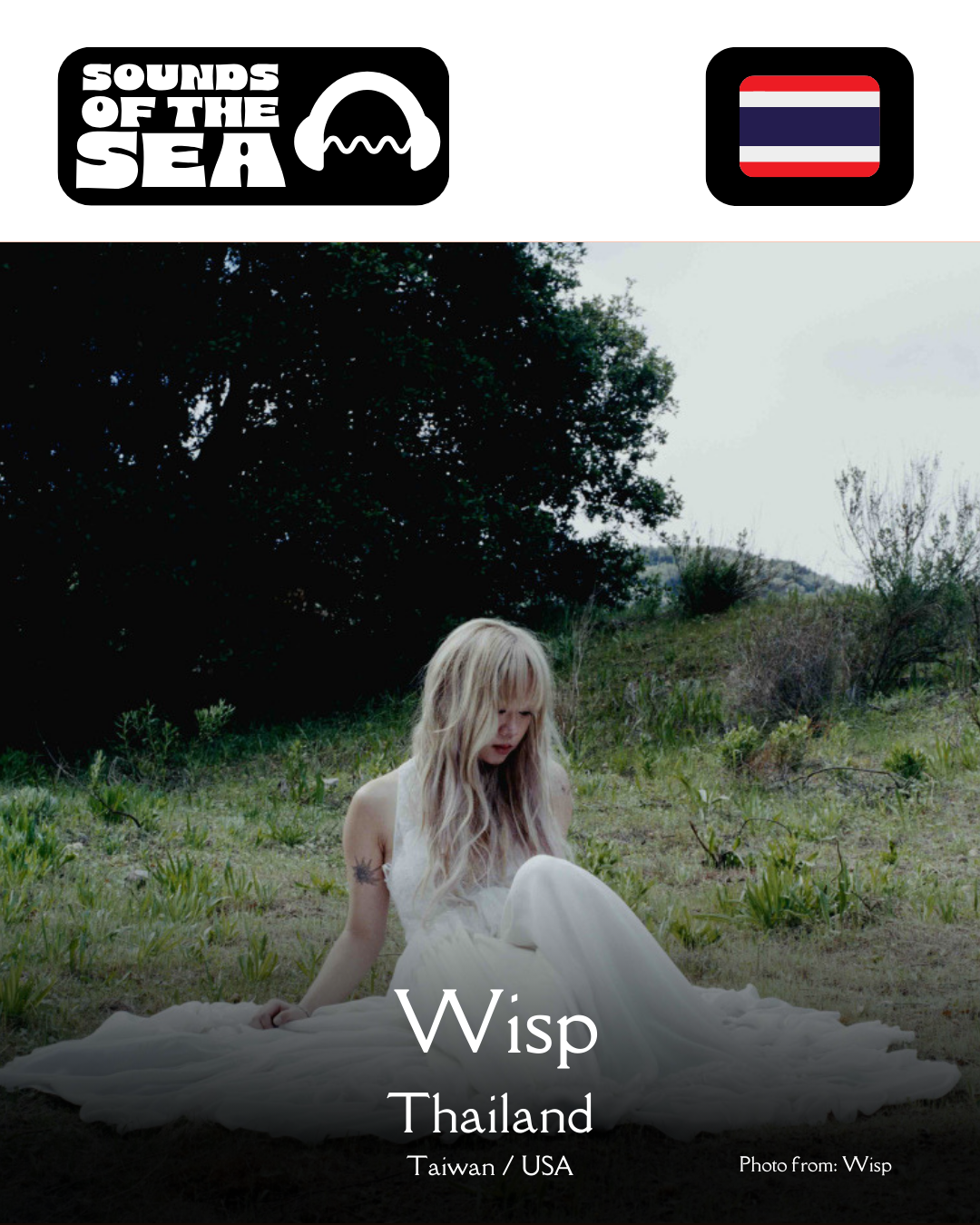
In the middle of the vast ethernet lies a genre that has been stretched, flattened, recycled, and reborn more times than anyone can reasonably count. Shoegaze, once tied to distortion pedals, rehearsal rooms, and subcultural isolation, has since found a second life online, where riffs circulate as presets, moods become templates, and entire scenes form inside comment sections. Out of that churn emerged Wisp, a Thai-Taiwanese American musician whose rise traces how shoegaze slipped from niche fixation into one of the most accessible sounds of the 2020s.
Wisp’s earliest material, dating back to 2023, lived where many young artists now begin: alone in a bedroom, posting short instrumental clips online. Her early TikTok uploads leaned into shoegaze “type beat” structures, dense guitar layers looping into themselves, melodies hovering for the majority of the track. These clips spread quickly because her contemporaries understood how it could function in a compressed, scroll-first environment. Shoegaze became texture first, atmosphere before statement, something listeners could step into alongside a rich story that traces back to influences of noise rock and post-punk in the 80s.
That clarity carried into her first EP, Pandora released in 2024, which marked a shift from small snippets to fully formed songs. Tracks like “Pandora” and “Mimi” expanded her sound, pairing blown-out guitars with soft, hushed vocals that rarely rose above a whisper. Her voice became one of her defining traits, dreamy and lo-fi, sitting low in the mix as another instrument rather than a focal point. It gave the music a sense of closeness, as if the listener had stumbled into something private. At times, stepping into Wisp’s worldbuilding as the wall of noise envelopes the listeners one at a time.
As her audience grew, so did the scale of her work. Wisp’s songwriting eventually sharpened her sensibilities in writing more melodic pieces of music; Her arrangements thickened, and her live presence followed suit. What began as solo bedroom recordings translated into full-band performances capable of filling festival stages, all while keeping the grimy, internet-bred edge intact. Shoegaze, in her hands, did not lose its heaviness as it grew louder. It simply became easier to step into.
That evolution continues on her debut album If Not Winter released in 2025, where newer songs like “Black Swan” or “Sword” lean further into contrast. The guitars hit harder, the structures tighten, and the emotional palette darkens without drifting into excess. The whispery vocals remain, floating over walls of sound that feel heavier and more deliberate than before. It is music shaped by online beginnings yet no longer confined to them.
Wisp’s career reflects a broader shift in how shoegaze functions today. Detached from strict lineage and carried by platforms that reward immediacy, the genre has opened itself to a new generation. Through texture and a clear sense of mood, Wisp helped make shoegaze feel less like insular and more like a shared space for a wider audience, one that listeners could enter from anywhere and stay as long as they liked.
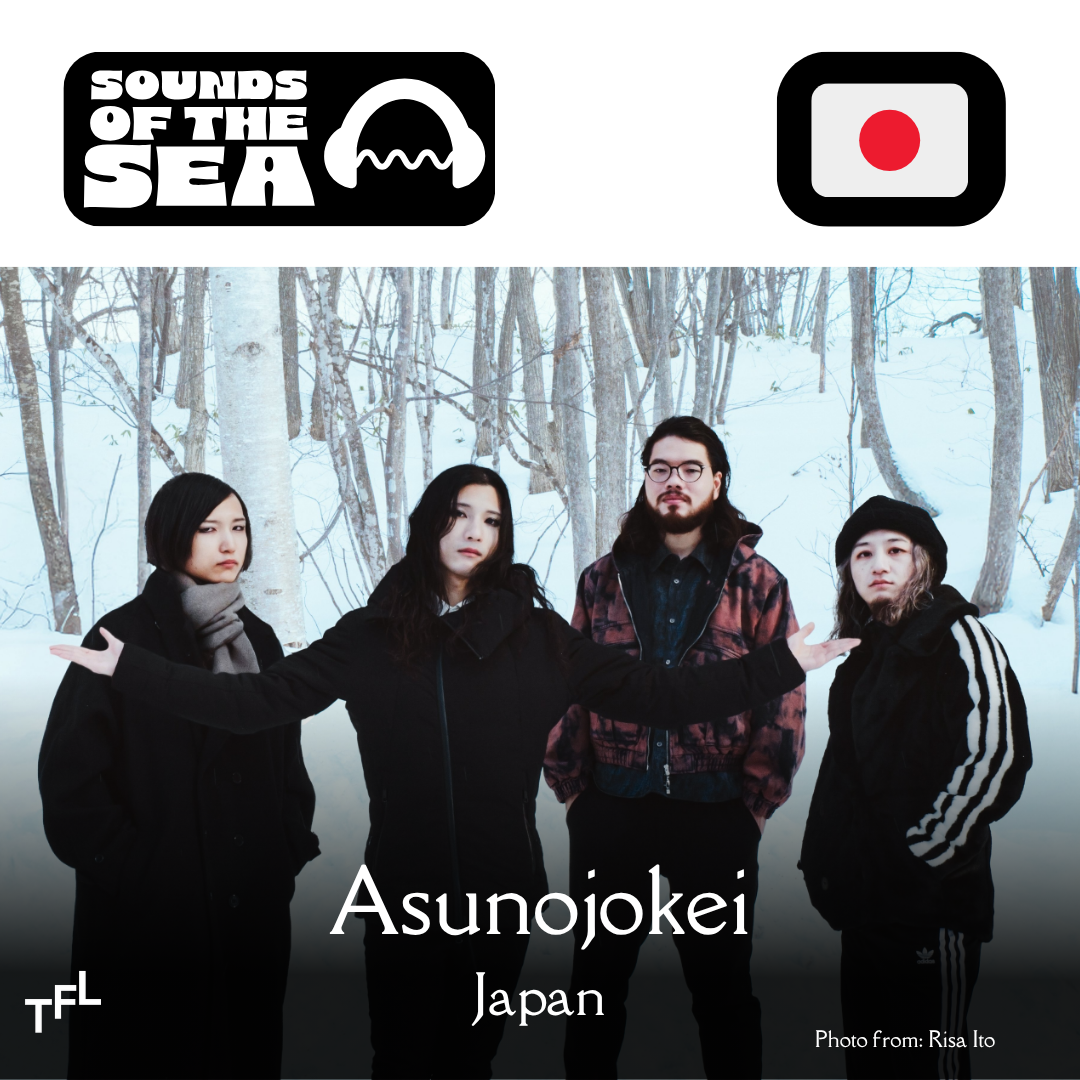
Within the populated stretches of Tokyo, Japan, lies the flood of acts and bands that start by crafting music, pursuing their own identity that continues to grow year by year. Coming from such a place is a band named Asunojokei, a four-piece blackgaze band that was formed back in 2014. Takuya Seki (bassist), Kei Toriki (guitarist), and Seiya Saito (drummer) were close friends since their teenage years, only meeting up with their vocalist, Daiki Nuno, through social media after watching a video of him covering a Converge song. Since then, they stuck together, starting their musical journey that will continue to break their limits.
While they started with a two-track demo release back in 2015, it is through their first EP in 2016, ‘A Bird in the Fault,’ that informs the start of what soundscape, melodic tone, and writing style they’ll keep building up into. Howling screams; pummeling streaks of blackgaze, post-hardcore, and other metal stripes; and numbed melancholic poetry are immediately attached to this band’s palette. Songs like “Silent Tears” go through their post-metal motions with these solemn guitars, just before Nuno starts shrieking and the wail of blast beats and stormy riffs that come afterward. And “Easy” tips the line within depressive black metal, most notably with the gloomy first few minutes, cultivating this downbeat atmosphere that continues getting more cavernous and stinging.
Two years later, their 2018 debut album, ‘Awakening’, amplifies what the band showcased beforehand and expands upon melodic prowess that caters to more potent songcrafting, with writing that consists of pushing past dour emotions despite feeling hopeless and lonely within a momentous city. Leaner cuts like “Double Quotation Mark” and “Ugly Mask” indulge within thunderous black metal passages on the former and shimmering rock tones on the latter, carving out Nuno’s ability towards spoken word, singing, and screaming. “Bashfulness of the Moon” and “Thin Ice” maximize their post-rock structures to a different level, where lilting cooldowns lead to explosive blackgaze turmaturges, with Nuno sounding guttural and snappy in his wails.
After releasing a couple of EPs throughout 2019 and 2020, they eventually took a bit more time before putting together ‘Island’, their sophomore record, which took a different direction in the way they compose their tunes. Said direction comes in the manner of implementing J-rock progressions to their post-hardcore and blackgaze roots, a blend of sound that this band manages to synergize in a big way. “Chimera” and “Diva Under The Blue Sky” simultaneously sound harrowing and magnetic all at once, bleary riffs and crushing screams become a bit brighter amid the accompanying J-rock melodies. There is happiness and company that’s worth looking forward to: A sign of forward momentum that is essential to the album’s songwriting, gently realizing that, despite the internal gloom that the protagonist is overwhelmed by.
That is not to say the straightforward blackgaze tones are left behind, as cuts like “The Forgotten Ones” and “The Sweet Smile of Vortex” sound more ferocious with the band’s refinement across production and songcrafting. Nuno’s howls and spoken word are crushing and emotive as ever, clawing across frigid blast beats and melodic crescendos that kept building up into a punchy resolution. A characteristic that carries the momentum of this album from front to back, allowing compositions to sound heftier and stickier than ever.
The seeds that came from that specific direction paved the path to their recent record this year, ‘Think of You’. Even moving further into that J-rock and J-Pop influences and leaning more into concise melodic structures, formulating a shorter, winter-themed album where the production and composition refinements are on full display. Said influences overall strengthen their signature blackgaze and post-hardcore bread-and-butter, crystallizing phenomenal melodic earworms that this band lands with gusto. “Magic Hour,” “Angel,” and “Stella” are invigorating as it is showstopping, with Nuno pulling out all the power into screams and the rest of the band pulling off dazzling melodic throughlines. “Dogma” still shows that, despite going in this direction, the band doesn’t forget their roots, with that blackgaze wall of sound combusts through its roaring riffs. So does the rampant rhythms of “In The City Where Cobalt Falls” with the soaring guitar passages and blast beats piercing through the skies.
This level of vigor proceeds to how frosty and brighter the album sounds, a tone that complements the yearning, thoughtful sensibilities that are plastered on its songwriting. Always finding hope and confidence, an uplifting energy that echoes through “The Farewell Frost” and “Tomorrow is Your Day”. Utilizing gleaming atmospherics, cavernous vocals, and fiery compositions to drive that tender optimism higher.
With each passing record, Asunojokei keeps flapping their wings and gradually crafting their own unique identity amidst Japan’s historic background towards its circulation of black metal and post-hardcore bands. Never leaving behind what they used to be in the past, just taking new steps to find a space that is their own. With an optimistic thoughtfulness being embraced that keeps shining brighter, the way that they’re going is up, flooding the skies with howls that put everyone awake.
The hip-hop scene in Singapore only continues to grow with every passing moment. Groups such as Construction Sight, Triple Noize, and Urban Xchange marked their impact in the 90s and the 2000s, yet it took quite some time before the culture flourished throughout the country. In the 2010s, more artists such as Akeem Jahat, Yung Raja, THELIONCITYBOY, ShiGGA Shay, and Masia One eventually made their name in the mainstream, carrying and shaping what is there to be shown in Singapore’s Hip-Hop space.
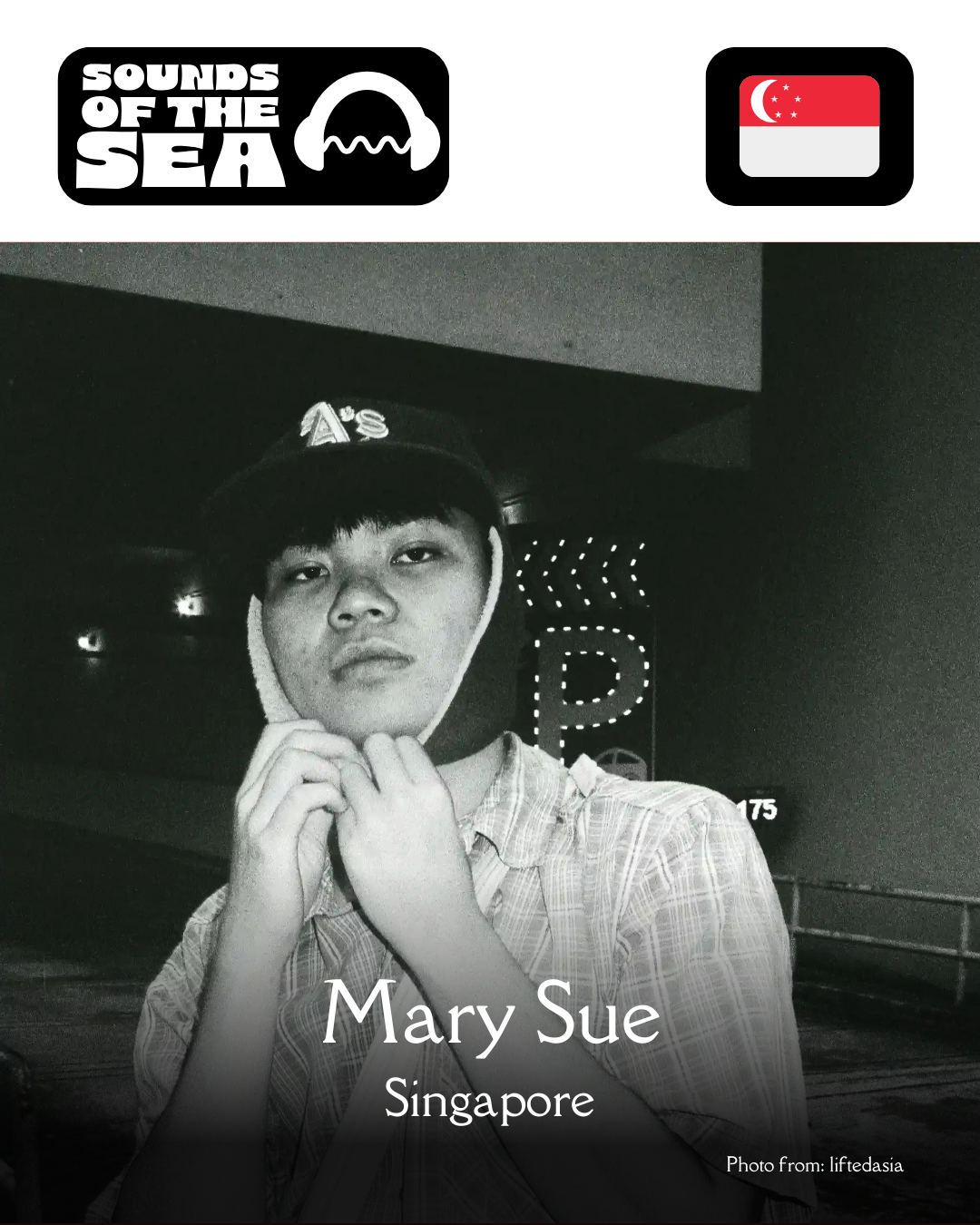
Once the 2020s hit the surface, there came an artist who struck an abstract niche within the underground. Due to the isolation brought back in the pandemic, Siew Png Sim – with his love for acts like MIKE, Earl Sweatshirt, MF DOOM, and Navy Blue – dons the Mary Sue moniker and starts to illustrate his sound. Rougher beats, decisive flows, and pensive storytelling are the name of the game. He slowly shaped those foundations through EPs across 2020 to 2021.
Those EPs are just a preparation for what he will be putting out since then. In 2022, he dropped his debut record, ‘KISSES OF LIFE’. Here, Mary Sue, alongside the insane row of producers and features across the world, establishes his creative tendencies in full as he lets loose personal experiences of grief and recovery, wading through the loss of his grandfather and the struggle with his grandmother’s dementia. It’s a reflection with memories that pulls him back and pushes him forward, swirling around production that’s simultaneously light and dark. “Moving On!” and “Spirits/Name” stretch out samples to a distressingly glitchy degree, whilst “Cavalry” and “Paper Generals” stall in muted but lighter beats. A juxtaposition that Mary Sue’s weathered delivery passes through without any trouble at all, like a conflicted spirit going through shades of grey.
The following year sees him expound on his creative streak, with three albums that were released within a few months of each other. ‘For Sure’ replaces abstract collages with tangible instruments, a backdrop that soothes the ragged introspection he evokes in his bars. ‘OK!’ follows suit, a collaborative effort with other South East Asian beatmakers and musicians (Cravism, ABANGSAPAU, etc) to construct a breezier record, adorned with boom bap and pop rap to set the vibe. In contrast, Mary Sue’s collaboration with UK producer Psychedelic Ensemble flips into experimental territory on ‘CACOPHONOUS DIGRESSIONS, A RECORD OF MOMENT IN TIME,’ where the beats blare and crackle in every space, yet never smother Mary Sue’s presence on the microphone.
His constant work ethic is showcased even further through the “Voice Memos” releases that he pushes out, where even in the midst of traveling to a foreign place, his knack for writing never stops. Recording 2022’s ‘VOICE MEMOS ACROSS A COUPLE BODIES OF WATER’ when he was in New York City for two weeks, and 2024’s ‘Voice Memos From A Winter In China’ when he was on a winter tour in China with Singaporean jazz quintet, Clementi Sound Appreciation Club. His wandering thoughts during those times are now encapsulated within these projects, containing a well of memories that he’ll cherish long-term.
2025 is an important year that shows Mary Sue’s growth as an overall artist. With the help of the Clementi Sound Appreciation Club, these two forces managed to craft a unique spirit that shines within Mary Sue’s overall discography, ‘Porcelain Shield, Paper Sword’. In comparison with most of his works thus far, he wields a keen disposition behind live instrumentation, a distinction that propels Mary Sue’s performances and lyric-making to the next level. Diverting away from his influences and embracing a style that he can call his own.
The album’s major perspective on a time-traveling oracle observing the ambiguous and chaotic histories of the world is greatly reflected in the writing and sound that informs this character concept. Mary Sue’s observant insight and assured delivery resonate with the Clementi Sound Appreciation Club’s burnished melodic contributions. Gentle acoustics nimble across spare horns and keys of ‘Thief and the Bell’, creating serenity curtaining the ignorant thief who stole from the village. Rumbling guitars and drums are emphasized on ‘Haste’ and ‘Minesweeper’, creating stabs of heaviness that unveil the violence unspooling past centuries. ‘Horse Acupuncture’ is swallowed up with haunting gongs around burly guitar passages, fitting Mary Sue, Agung Mango, and Nakama.’s observations of people who are shunned by those who get to control the perception of others.
With the release of this record, it only shows Mary Sue on an upward stream; his craft within Singapore’s underground hip-hop only gets more acknowledgement and refinement. His grounded experiences only give him more to speak about, a hopeful presence that shines amidst the swarm of darkness that surrounds him. With his newfound sword and shield equipped, his thoughtful wisdom leads to wider ground being shown, then gradually explored with a taut mindset.
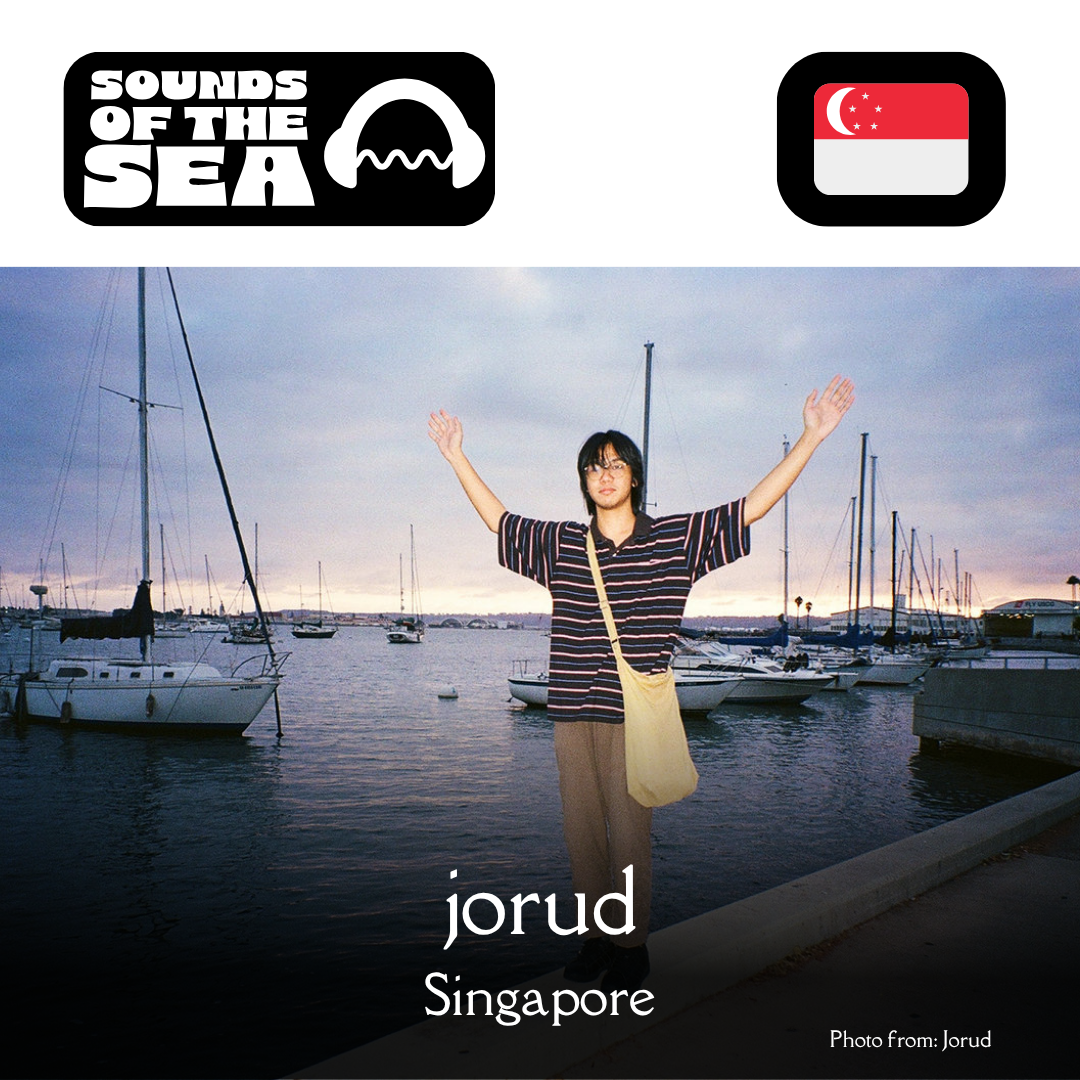
Singaporean musician Jared Lim has been playing a significant role in various mainstay acts over the past couple of years, whether in his local country or elsewhere. Being the guitarist and producer of bands like Sobs and Subsonic Eye, as well as providing production assistance for Blush and The Purest Blue are just some of those notable credits. His ear for production sticks in your ear once you hear it: blissful synth chops, colorful instrumental mixes, and crisp vocal emphasis. A balancing act of sharp melodies and sparkling textures that are never put out of scale. An ability that only comes from very skilled producers who know how to leverage the mix without disruption.
At some point, if he can help produce these songs for these bands, certainly, he can write songs for himself, too. Soon enough, that is what he just did. Donning the solo project Jorud, he pulled together his debut album, aptly titled ‘The Song’. This is Jared Lim expressing the colors that he has brushed over before, now splattered on a sonic canvas that is his own. Whether that be the saturated 80s ambiance on “Am”, speedy waves of breakbeats on “Harm”, chilled out dance beats on “Wannastop”, or the chiptune accents across surfing guitars on “Have It”. He has these soundscapes all layered out.
Of course, it is not just him who gets the play around in these songs. Pauline Rana of The Purest Blue, Cayenne of Sobs, and elo elo provide contributing vocals in most of the album, filling the prismatic space with their friendly presence. Creating this slice-of-life feel where wholesome connections create more smiles along the way—shining the brightest on the title track’s sunny indie pop, “Friend” with its coat of shimmery hyperpop, and the raving, glitchy EDM of “Wideview”.
The word “joyous” is the best way to describe what Jorud has put together with his debut album. A brisk walk in the park is remembered most due to the unabashed display of melodies and textures that are overall jubilant and vivid. These might be just a collection of songs, but once you hear them, you can’t help but turn your frowny days into smiley days.
*The interview is edited with brevity and clarity:
LP: When I hear your artist name, Jorud, I imagine someone who’s chill and lively. What was circulating in your head when you were figuring out the identity of your solo project?
Lim: Actually, this project is kind of the first real music project I ever did when I was 15. I picked a stupid name that I don’t want to change, because I have all the URLs on Bandcamp and SoundCloud or whatever. It started when I was 15, [I was] learning how to use Ableton, and [was] just putting out stuff that I made on SoundCloud. Yeah, [there’s] not much thought to it, but I guess now, it’s been 10 years. So, I just felt like, “Uh, I should kind of do this properly.” See how it feels like to make an album and put it out properly and promote it and stuff like that. Yeah.
LP: You mentioned that you were using Ableton at the age of 15. What invited you to do production work during those times?
Lim: Before I started making my own stuff, I was making chiptune covers of songs. I’ll put them on YouTube. I did a few like CHRVCHES [covers], you know the band CHRVCHES?
LP: Yes!
Lim: Yeah, I did a few chiptune remixes of their songs, and they posted one of them on their Facebook. I was like 14, I was freaking out. Yeah, that’s kind of how it started. I was just making covers for fun, and then it led to making my own stuff.
LP: How long have you been conceptualizing and working on your debut project?
Lim: Some of the songs on it actually started quite a while ago, maybe like a year or two ago. But I didn’t properly think I was making something until, I think, it was December last year. I had the idea to send this instrumental track that I made three years ago to Pauline from [The Purest Blue]. I had that instrumental on my laptop for a few years and didn’t really know what to do with it until I had a sudden spark of inspiration. I decided to send it to her because I thought she would do something cool, and she did. That was December last year, and then from then on, I spent maybe three months combing through old ideas and making new stuff, and I just turned it into an album.
LP:Speaking about those collaborations with Cayenne, Pauline, and Elo Elo. Did you have them in mind while creating the album, or were they a last-minute afterthought?
Lim: [It’s] kind of a bit of both because, honestly, this whole album was like a last-minute afterthought. I made everything really quickly, but I always had those specific vocalists in mind for each song. The song with Elo Elo that actually just came out today [July 10, 2025], [it] originally was a remix I did for fun for this band that I’m working with. And that was more than a year ago. But I liked it too much that I wanted to keep it for myself. And Hui Jun (Elo Elo) heard that remix quite a while ago, and she said she liked it. So when I started working on the album, I was like, “Oh I should reuse that and I’m gonna ask her to sing on it”, and she did.
LP: You said that, for three months, you tried to quickly comb through your ideas for this album. During that process, were you inclined to listen to music a lot, or did you just completely lock in on what you had in mind and never listen to anything that might disrupt those ideas?
Lim: I feel like, generally, just in everyday life, I don’t listen to that much music. For me, my music listening pretty much only happens on a commute. So if I’m not going out [or] if I’m just at home. I’m watching YouTube videos, or working on my own stuff, and listening to my own music, I guess. I don’t really think there was a difference in that time period. I was definitely listening to some things that were inspiring me for specific tracks. But I think in general, when I’m working on something, I’m pretty locked in. I tend to just listen to [what] I’m working on, and when I’m about to go to bed, I export the files, send them to my phone, and listen to it while I’m falling asleep. If I have ideas, I’ll wake back up and work on it again. So yeah, I guess your description was kind of accurate.
LP: Speaking about some of those inspirations, there’s an array of sounds that you’re doing on this debut album. What were some of those sounds that you’re trying to emulate and explore?
Lim: [For] the tracks on the album, there’s 50% guitar indie rock stuff, and then 50% is just like straight-up electronic. I pull from the same inspirations that I have been thinking about with my other projects and stuff. Alvvays, Ivy, AG Cook, of course. This band from France called Tape Worms. Big inspiration. And especially for the guitar songs, I’m also always thinking about my friends’ work and bands like Curb, Carpet Golf, and Subsonic Eye. Seeing what my friends are doing and the kind of instrumentation and things like that. It’s always inspiring to me.
LP: Because you mentioned there’s a lot of music that is 50% guitar and 50% electronic. There’s this observation I have with Rock artists toying with electronica as of recently. Is that the current case for you? Or have you always been embracing rock and electronica for quite some time?
Lim: With my solo stuff, I’ve always tried to make not really like electronic music but electronic music with guitars. That’s always what I’ve been trying to do with my solo stuff, not so much with my other projects, but I feel like with Sobs we’ve lately been trying to do that, combining both things because that’s what we enjoy.
I think it’s also just a circumstance of making stuff by myself at home on my laptop; it’s just easy to make electronic music anywhere on any computer. And the only other tool I have is my guitar and my audio interface, so it kind of made sense to try to do something that feels like both.
LP: Because you basically have those tools for that kind of music.
Lim: Yeah.
LP: How does being in solitude help you out in terms of producing for other acts?
Lim: I think this is a common thing, but I think I do my best work when I’m alone on my headphones with no one around me to hear it hahaha. That’s how I usually mix and arrange for any project I’m in. With Sobs, it’s really just us by ourselves at home working on our individual parts over the internet, so I’m just very used to that workflow. [It] doesn’t help that I get super anxious and second-guess any of my creative decisions when other people are around – I think all this might hinder rather than help me, but it’s worked out so far.
LP: Whenever you play around with your instruments and software, how do you decipher which songs belong to you or to other projects?
Lim: Actually, the title track the one that pauline sings on, I made that track just the instrumental three years ago, thinking that it would be a Sobs song just because at the time it has that same idea of guitar pop, this is what we want to do but it just sat on everyone’s laptops for a while so it didn’t get worked on, so I just decided [that] I’m taking this, I like it too much. If you’re not going to use it, mine! This is like a strange question for me also, because this is the first time I’m intentionally working on solo music and like making stuff with the intention of putting out under my own name. So it’s new to me too.
LP: Once you have the time to listen to music, how does the process make you feel or replicate the sounds that you hear?
Lim: I think there’s always [a] subconscious influence on anything that I do from the music I listen to, but when I’m actively working on it, I try not to think about artists that I like or songs that I like. I’m just sitting down in front of the computer, and I’m making it exactly how I hear it in my head. This is what I want to make right now. There’s definitely influence from everything that I like but when I’m making it, I’m just thinking of how I want it to sound, like how I imagine it in my head. I don’t know if this is a bit cringe, but when I’m working on something right now and I need to go out later, then I’ll listen to the song that I’m working on loop on the way to the thing that I have to go to.
LP: What are some emotions that flow immediately to you once you start wearing your producer hat, especially for this album?
Lim: So, if I’m working on a song for Sobs, I’m thinking about live band arrangements and how we’re gonna play this song live. Trying to make it easily translatable to a live show. I don’t think about that all the time, but it’s in my head. But when I was working on this stuff, I wasn’t making stuff with the intention of anyone else hearing it live or even hearing it in general. I’m just throwing ideas onto the board wherever I can. Literally just whatever idea I have, I’m gonna put it in until it’s a mess. And if I don’t like some stuff, then I’ll take it out. That was the mindset I had going through it.
LP: Do you have a certain plan on performing these songs in a live setting one day? Or is it the kind of project that you’re just gonna keep to yourself in the studio?
Lim: Yeah, I think. I mean, I have done DJ sets and things like that. But, yeah, I think the stuff on this album, apart from the really dancey ones that I can just play at the DJ set, I don’t think I’ll ever do any live thing. I’m not saying never, but it’s not something I think about. Honestly, I was almost just gonna put this all out on SoundCloud and call it a day. But something in me decided to promote it for real. Yeah, I wasn’t thinking about playing. I’m freaked out about that, being by myself.
LP: Unless, Cayenne, Pauline Rana, or Elo Elo are there for the specific songs, right?
Lim: Yeah, yeah.
LP: What track from ‘The Song’ album was most satisfying to complete? Which one of those songs is the toughest to finish?
Lim: I think, Lucky, the eighth track. That song went through quite a long process of the initial demo to where it is now. And I’m really happy with it. Basically, I was working on the title track with Pauline and I was telling her, “I think I’m making an album. I have a bunch of songs.” I sent her a bunch and she really liked this one track that was really unfinished. It was just guitar and drums, and she kind of unprompted, sang stuff for it. And I was like, yes! Her vocals on that song really helped me decide where it needed to go and what it was gonna sound like. When I finished that one, I was like, “Yeah, wow. This rocks.”
LP: It really does, it really does. But back when forums were still a thing, Singapore also had its own music forum called SOFT. What were some of your core memories with that forum?
Lim: Uh, it’s actually still around. I don’t know if it’s really active, but people still go on there to sell gear and stuff. My earliest memory of SOFT was helping my dad sell an old bass guitar that he had. I put up the forum post and everything. Took the photos, uploaded them on Photo Bucket, if you remember Photo Bucket. Yeah, that’s my earliest memory of soft.com.sg. It was doing that. I occasionally still look at the classifieds on there. Cause sometimes there’s stuff that people don’t post on Carousel or stuff like that. All of my first bands growing up [met there]. When I was in school, we’d find each other on SOFT. That’s how I met Celine from sobs. Special website. Awesome website.
LP: Really special one.
Lim: Old internet.
LP: Old internet days, yeah.In your experience, now that you’ve been active within the Singaporean music scene, what’s the special thing you hold dear there?
Lim: I feel like there aren’t that many things that are unique to the specific place that we’re in. But I think it helps that Singapore is so small, and the community of people making music is even smaller than that. So, it’s a lot easier to find the people who make stuff that you align with.
I feel like I’ve been lucky over the years. Joining Subsonic Eye was kind of the start of my whole thing. Meeting a lot of people. People who make similar music and vibe with the same stuff. That’s what I cherish, people around us who are making cool stuff, and I don’t think that’s unique to Singapore. It just helps that it’s such a small scene in a small country. Right now, I think there are, like, three venues.
LP: So, it’s really tightly knit, tightly connected to each other.
Lim: I would say so. Every genre has its group of people. But everyone tends to know each other and hang out at the same places and play shows on the same lineup. That’s what I like about being a musician in Singapore. It’s small, and you can fairly easily find the people who would connect with the things that you do.
LP: What was it with electronic music in general that has captivated so many artists in Singapore?
Lim: This may not be true, but I think it’s also because there’s so little physical space. It’s not like you can form a band and practice in your basement or your garage. Everyone lives in tiny apartments, and it’s pretty easy now to go on YouTube and find a tutorial on how to use the FL Studio or something. I think maybe that might have something to do with it. It’s just that, we are cooped up in our homes.I might not be the best person to ask that because I’m not super familiar with the electronic music scene. Like, I don’t DJ a lot, but I know it’s a thriving thing right now. There are a lot of raves and events and stuff going on. I’m not super tapped in, but there’s a lot of cool stuff happening right now. There’s this collective called Scum Boys. They have a bunch of producers making cool stuff. I think, if you have a laptop, if you have a computer, you can make it. You can just figure it out. And that’s the best part of it. Anyone can do it.
LP: Since this will be the first time that you are releasing your album, what does it say about your identity now that you’re able to have your own voice within the Singaporean music scene?
Lim: I approached this project in a similar way that I approach any other work I’ve done with mixing and producing other artists, so I’d like to think it just reflects what I’m able to provide to others. But I guess I’m also leaning on my direct instinct with the solo stuff in ways that I can’t usually do when working on other projects.
I tend not to think about “the scene” when making stuff because really I’m just used to finishing tracks and immediately uploading them on Soundcloud without the intention of like more than 5 people hearing it. It’s been a weird process putting stuff out under my own name and promoting it, doing the whole rollout schtick when I’m usually so averse to it because I like having people hear my stuff, but I’m still so self-conscious about it. I just try not to think about those things, like my place in the community or whatever
More than anything, I’m glad to have this opportunity to spotlight musicians from other scenes like Pauline and peers like Elo Elo and Cayenne, I feel like it’s just me wanting to make stuff with these people for fun.
LP: Do you consider yourself to be meticulous, or do you let spontaneous ideas carve your work process?
Lim: I think, while I’m making stuff, coming up with ideas and things like that, I’m not super precious about it. I’m just thinking of ideas and putting them down as soon as I can before I forget them. But, when it comes to producing. After the initial idea is done, I’ll get kind of into it.
Cause over the years I’ve been mixing other people’s music and learning a lot of things from doing that. So, when I’m coming back to my own stuff, I’ll get pretty into it, but I wouldn’t say I’m a perfectionist. I just want to get what I imagine in my head. I want to make the song sound like how I imagine it, too. And once I’m close enough, then it’s done. But then again, with other projects that I’ve worked on, I’ll think it’s great [at first]. And then a year later, I’ll listen to it, and [be] like: “fuck, I should have made the kick louder or something.” It’s always like that. But, yeah, I think when I’m in the moment, I tend not to be so particular about that kind of stuff.
LP: If there is a specific sound trend from the past that you want to see get more attention today, what would it be?
Lim: Hmm. Specific sound. I would like to see MIDI strings come back. Just like a long-held midi string note. That’s it. Just one note. Pan a bit to the left. That’s what I want to hear in every genre. Just Midi strings. One note. Weeeee! That’s what I want.
A close look at Indonesia’s rich history reveals specific moments in its music deemed significant in the past. The Pop Kreatif scene in the 70s – 80s, the existence of bands and musicians like Koes Plus and Chrisye, and the distribution of bootleg tapes of foreign music that influenced so much of Indonesian music, are big examples of that. Despite the negative economic effects that came from the harsh political climate throughout the Old Order and New Order regimes as well as shaky record label deals that stifled the proper archival of older Indonesian music, the modern methods of compilations and online uploads of records and songs released in the 60s – 70s still gave them their spot to echo. Once a figment of the past, it is now slowly being brought to the present once more.
In the city of Surabaya, Indonesia – a home to significant names of the Indonesian music scene such as Ervinna and Dara Puspita – lies the band Thee Marloes, signed under the Big Crown Records label. Comprised of Natassya Sianturi (vocalist & keyboardist), Tommy Satwick (drummer), and Sinatrya “Raka” Dharaka (guitarist & producer), the members crossed paths through their passion for music, Natassya’s performances in local shows and Tommy and Sinatrya’s constant band & DJ pursuits have allowed their paths to meet. Natassya’s love for retro soul and pop has established what Thee Marloes will eventually become: classic soul with the city of Surabaya filling its identity.
‘Perak’, their debut album, becomes the band’s firm statement of who they are and what they bring to Indonesia’s musical landscape. Lush soul with scoops of jazz rhythms and pop hookiness, all tied by the fragments of love-driven stories that light up the streets of Surabaya’s cityscape. A combination of local and universal elements held together through warmly cushioned production and especially Natassya’s serene singing. Her voice deftly weaves across English and Malay, bringing such kindling flair to songs like ‘Over’ and ‘Nona’ where she soars around pretty backing vocals, and ‘True Love’ where she opts for an alluring voice that effectively pulls you into the song’s humid atmosphere.
But, of course, the band’s instrumental chemistry is also something to behold. Their flexibility allows more supple charm to be embossed in these compositions. Whether that be the shuffling rhythms shown off in the drum and bass rumbles of ‘Midnight Hotline’ and ‘I Know’, the psychedelic dazzle of ‘Logika’ coming through the organ sounding keys and simmering grooves, and the relaxing affirmation of ‘Not Today’ with the soulful layers of bright keys, simple drum patterns, and gentle guitars. Their melodic variations add more elegance, leaving more color to stew within the record.
The album title, when translated, means ‘silver’. An apt word for what Thee Marloes has displayed with their debut album thus far, approaching the spirit of the city of Sarubaya and the familiar beauty of soul and R&B with malleability, further shaping themselves in the process. ‘Perak’ only adds another page to Indonesia’s vibrant music history. A reminder of soul, disco, and funk music that once permeated their past, giving life for those genres to breathe with excitement today.
Shanghai is a bustling area in China, a dazzling cultural cradle where so much creative artistry has thrived the most. Music, especially, had a prominent presence in the place since the 1920s, acting as the origin place of Shidaiqu – a genre that intertwines Chinese folk and Hollywood film music – as well as the main area for Western jazz to proliferate in the country. Those western influences never strayed, but kept in close distance within so much of Chinese music. Despite the difficulty in opening up people’s perspectives towards Jazz, the jazz scene in Shanghai continues to prosper and branch out into its own territory, letting newer musicians experiment with the genre and bring something unique out of it.
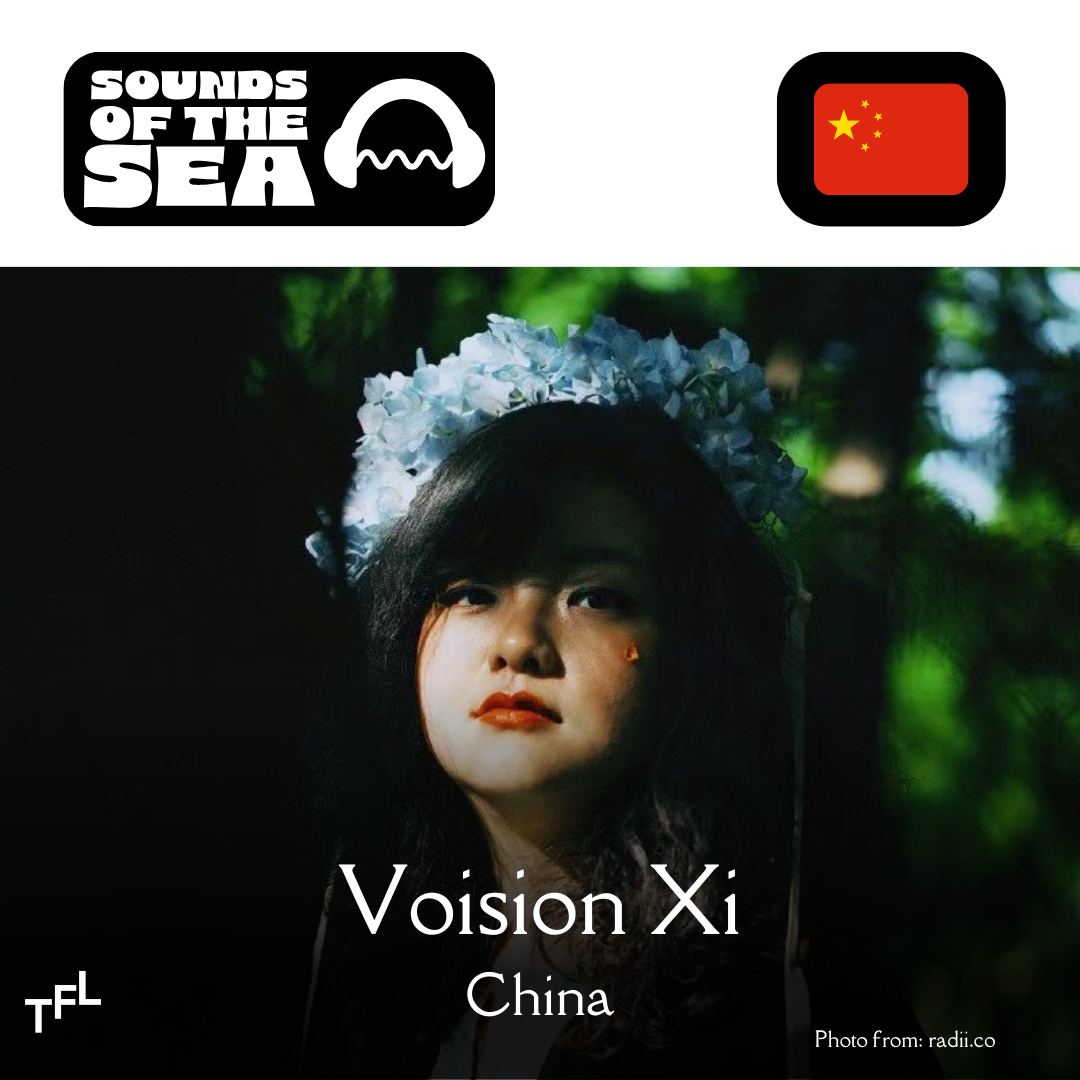
Enamoured with the Jazz scene in Shanghai, Voision Xi has set a mission to immerse herself within it, eventually heading there after college to explore her musical endeavors. Despite being self-taught, meeting various musicians while working behind the scenes of JZ Club has trained and taught her immensely, allowing her to jump out into the spotlight in 2015 with Little Happiness Group, a small jazz band that comprised of her and other jazz musicians such as guitarist Zhang Xiongguan and Xiao Jun, saxophonist Li Shihai, and others more. Working together for 3 years has eventually led to their only release in 2018, ‘DEBUT’. A short EP that twists the melodic foundations of tracks like Nick Drake’s “River Man” and Stevie Wonder’s “Cause We’ve Ended As Lovers” into something vibrant. Brewing these classic songs with a different arrangement altogether, a variation done well by Voision Xi alongside the rest of the fellow jazz musicians that have worked with her on this EP.
That experimentation only goes deeper, following things up in 2021 with the ‘4 loops in her way’ EP that displays her curiosity with ambient soundscapes. Using nothing but the OP-1 synthesizer and the Ableton Live software to create small, yet expressive ambient pieces. A testing point to her progression as an artist, a tease to how she’ll eventually blend her jazz influences with ambient tapestries.
All of this eventually leads to Voision Xi’s debut album in 2022, ‘Lost For Words’. A grand self-expression that pulls so much from her gradual exploration as an artist, bringing so much of her experiences, emotions, and voices that swirl into a lot of fascinating ventures across ambient, folk, and jazz palettes, releasing so many words and expressions worth hearing. Further accompanied by various musicians – names like Kaidi Tatham, ILL MO, and Little Happiness Group being some of them – that amplify the album’s thematic concept. Providing so much distinctive moments across the otherwise impeccably rich record, from the vocal thrills that’s accompanied by nimble guitars and delicate woodwinds on “Monday Spirit”, Voision Xi’s spoken word and ILL MO’s rap flow blending immaculately across the lush jazz flourishes of “Butterfly, A Hyaline Beauty”, the soaring rock crescendos that gives “Magnetic Field” its pulsing rhythm and “Turn on the Planet” a spacious expanse across its lilting ambience, the jazzy freakout that occurs on “Hypnotist”, the lilting samba jam on “Ladders”, and the hypnotic ambient escapades that opens up on “Wolverine (Silent Chaos)” and “Crystalline Improv”. Skyrocketing Voision Xi’s artistic potential into the stratosphere. Her unique experimentation holds no bounds.
Her approach to her sound continues to flourish two years later, following up with her sophomore album, ‘Queen and Elf’. It’s a record that still embraces her jazz roots, but there’s more focus on soothing walls of ambient electronics that colors the melodies with quaint pensiveness, one that makes sense within Voision Xi’s introspection surrounding holding onto our overall emotions amidst the process of letting go and coming back, a constant experience that inevitably comes with getting older. It’s a tangled emotion, yet Voision Xi manages to create a clear picture of that feeling through the set of lively electronica and gorgeous Bjork-inspired a cappella that blushes up the tender jazz compositions. Songs like “Birdling”, “Prelude To A Fortune”, and “Southern Shanghai” are trickled with liquid soundscapes, with electronic bits and swells adding more to their ethereal aura. Jazz leaning cuts such as the Bossa Nova of “Leaf Sheep”, the sweeping instrumentation of “No.8 Signal”, and the buoyant rhythms of “Muse (For Joyce)” are vivid in their melodic compositions, Voision Xi’s masterful production work amplifies the organic texture that the melodies bring to the table.
The most entrancing moments in the album are the slow-building ambient tunes that open to an even evocative section. “How Do You Hold A Moonbeam?” is laced with cooing harmonies, accompanied by bright pianos and grooves just before Voision Xi’s vocalizations push further into the forefront. “We Could Be Shy” brings along woodwinds and pianos that gently accompany the drawn-out vocal lines, leading to the back half where the jazz restraint breaks apart into this post-rock progression with plenty of bright crescendos and soaring vocals. And “Kagi” takes its 6-minute excursion to explore, with cascading synths and pianos enveloping the vocals into a mystical cocoon, giving the path for the woodwinds to swoon. Eventually lifting up the grooves and the vocal harmonies to a heavenly sway.
Voision Xi’s overall discography can only come from someone whose passion for jazz and electronica is treated in a way where experimentation and thoughtful observation are a must. An expression of her unique creative spirit that passed through so many experiences working in the Shanghai jazz scene and learning with jazz musicians in the local and international scenes, finally giving her the confidence to voice out her extraordinary talent and pulling together some of the vibrantly impressive jazz records in the 2020s. Constantly playing and touring, Voision Xi never stops exploring enticing soundscapes, opening more ears to what Shanghai’s jazz scene has to offer.
Amidst the lunge in the 2020s, the alt-rock scene has been slowly pulling all the stops in the corners of South Korea, slipping itself knee-deep in the various alternative rock facets such as shoegaze, dream pop, and especially post-rock. Through tightly-knit connected dreamers and nugazers like Parannoul, Brokenteeth, and Della Zyr, you see how they piece together those influences into their personal musical avenues. For Parannoul, he embraced cutthroat, massive walls of shoegaze flair in his breakthrough project To See the Next Part of the Dream which has now been simmered down for a delicate air on his 2023 project, After the Magic, just before he embarked once more on that massive soundscape for his 2024 record, Sky Hundred. For Brokenteeth, he emphasized the power of that shoegaze sound to create a saturated dredge in his albums. Della Zyr stretches apart more of her dream pop embellishments across her debut and her EP, filling in more atmosphere within that floating expansion.
In the year 2024 comes another dreamer that expands that compositional complexity and scale into their debut project that just came out in the early days of January through every listener’s favorite activity: scouring through Bandcamp. Within Yo’s affirmed debut album, 희망열차를 타고 우주로 가요 (Hopetrain to Universe), he glides through the vastness of the universe and delves his alt-rock influences closer to progressive rock, full of entrancing bright tones and ascending progressions with the accented gleaming pianos, organs, wurlitzers, and trumpets offering an enthralling listening experience across the entire record. These imbue Yo’s raw performances, knacks for melodic swells, and diaristic songwriting approaching pain, nostalgia, and hope in the spaces of love with spacious scale where that yearning is launched across the grand kaleidoscopic beauty of the universe, brimming more light and color as it travels at farther distances. On songs like “Tilikum” and “Hopetrain to Universe,” there is a blazing flair from the keys, drums, and guitars paired with their ascending compositions that erupt and bloom into their joyous forms. Yet the scale on certain cuts takes on a different scope entirely. “3:16” takes a bumpy trek on the overall soundscape with its rougher, blown-out bombast as the track’s internal structure starts on a glossy sheen before it succumbs to the bellowing abyss. “Sweetrain” and its riveting coats of impassioned atmosphere put you into a state of skyward excitement, immersed through palpable progressions amidst frothing beds of horns all around. And “God’s Gift” with its glorious stuffy layers of organs, choral vocals, and Yo’s distant yet echoing performance illustrates the essence of what the album is aiming for, shooting for the stars and beyond to clasp a sense of long-lasting hope that paves a lilting way forward.
Another step in branching out South Korea’s fledgling dreamers and nugazers to the mass of alt-rock palettes, Yo certainly takes a shot to reach for the stars and eventually linger within the exciting ventures that he can go across the infinite spaces around him. Through his embrace of progressive rock tapestries, he’s putting another mark on South Korea’s exciting new acts in their growing flock of alt-rock talents thus far, slowly making waves with a live show alongside fellow South Korean act khc back as well as an in-depth interview by poclanos back in February. Don’t forget to get a ticket to a journey of a lifetime, you might also want to take a chance of feeling these glimpses of optimistic hope.