Once known as No Lore (and no, not because they lacked one), members and visual artists Tita Halaman, Kim Escalona, and Carole Lantican begun crafting their audio framework that gained recognition for entry at the 36th AWIT awards and then reintroduced themselves as NEW LORE in late 2024 where they amped up their vibrancy and utilised every facet of multimedia to showcase their art — especially upon the release of their debut album, Grief Cake.
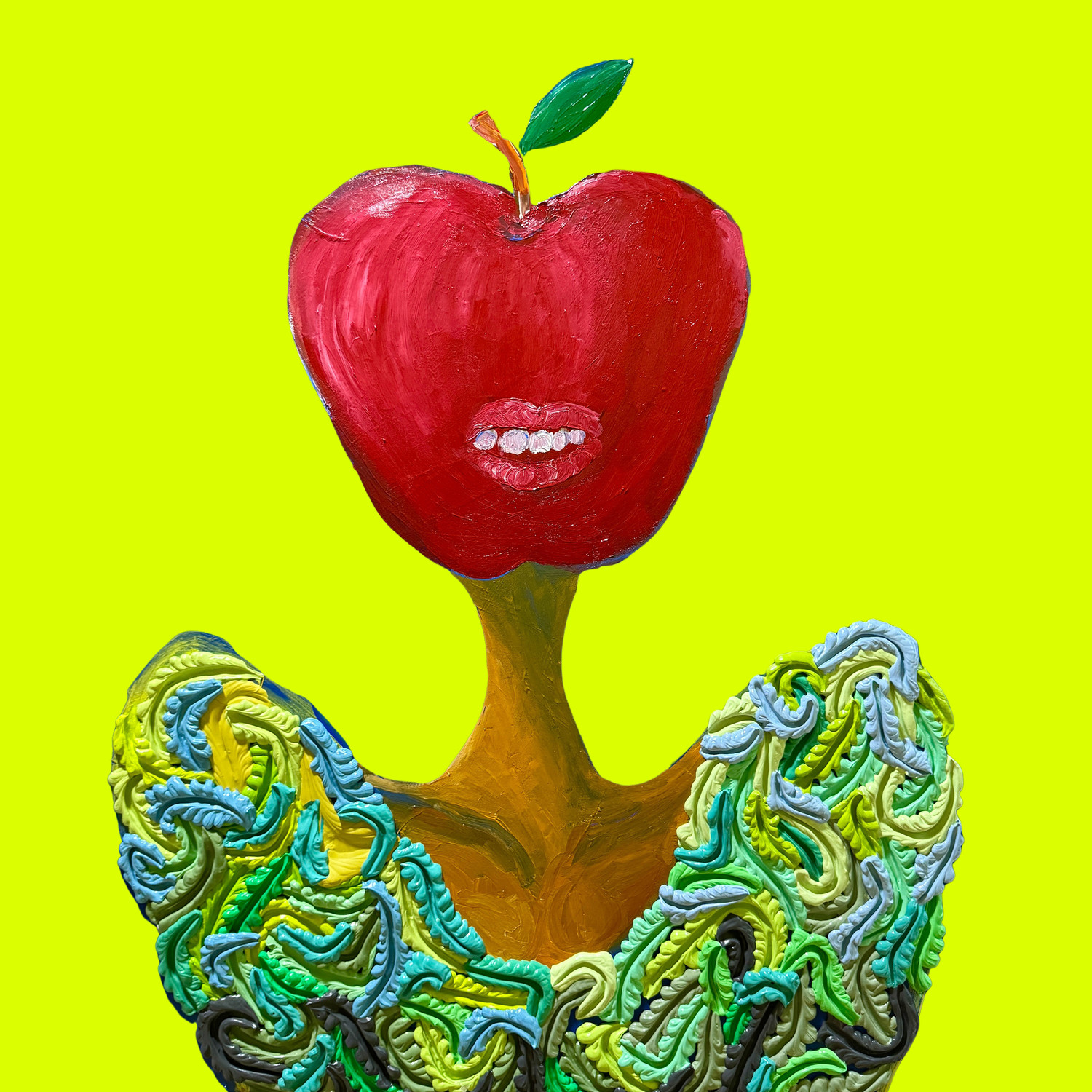
In their latest 2026 single, “Substack Girl,” the tools to a catchy post-breakup song are definitely there; the muffled instrumentals in the first twelve seconds immediately place the listener into a flashback-esque soundscape and looming afterthoughts during the “scheming” period of a breakup.
However, lyrics that circle around that question of “do you still…?” land steep, surface-level, and flat. The song fixates on specific habits that have even been harmfully labelled as “performative” such as going to gigs, reading obscure literature, digging through ukayans; “And are you still A gig goer? Art fair lover? Film enjoyer? Thrift store lover Vinyl seeker? Poetry reader? Soul Admirer Joybaiter?” it begs the question: is this just a checklist of interests turned into buzzwords? Though it’s light-hearted, it’s also reductionist toward real parts of someone’s identity.
To reiterate, sonically, the track does almost everything right. It is indeed catchy, cleanly mastered, and even performs well in relaxing. To add, listening to this track in low-stress environments is surely fun and enjoyable; it can even be what’s now called reaching a “flow state.” Even the music video for “Substack Girl” is quite mellow. It’s the three-piece switching seats for the duration of the track, symbolizing the tranquillity found in the curiosity that the lyrics attempt to highlight.
Of course, people wonder about their exes even through a rose-colored lens or through vibrant colors similar to that of PVC film– the song is very real when it comes to breakup talk, as the listener, it prompts wandering and questioning whether or not an ex thinks about their former lover… but at the same time, as the colors mix and turn grey after a few rounds of listening to the track… does it matter if an ex is thinking about us while reading poetry or flipping through vinyl?
“Substack Girl” is a feel-good track, and New Lore’s discography is certainly one to keep an eye out for. Though they are not the first to utilize the commodification of personality and art to garner interest, they should refrain from that notion if they want to maintain relevance; like breakups, negative attitudes towards identity must learn to eventually fade away. Perhaps New Lore has breakup songs mastered– may they view introspection through art more in depth next time.
There’s a certain adrenaline rush that emanates from the psyche whenever one is en route; it’s a rush that can capture anxiety, urgency, or even the sense of ‘gigil.’ Cream Flower’s ‘Orbital Wound’ EP is exactly what should be queued during moments of movement, whether it’s commuting, traveling, or simply walking down a footbridge. On their third EP release, Celina Viray and Jam Lasin step into a wider sonic terrain, loosening their grip on shoegaze familiarity to explore something louder, stranger, and more expansive. They blend riot grrrl rage with explosive urban paranoia, crafting songs that feel perpetually in motion and perfectly suited for city wandering. Even amid the chaos and noise, the duo injects an unexpected motif: if a stray cat crosses your path, this EP insists you bring it to the vet.
The first three tracks form ‘Orbital Wound’’s most immediate stretch, buoyed by an upbeat momentum and Viray’s vocal effects that sound like it’s being broadcast through an airport PA system. “Cat Distribution System” and “Fever Dream” have a distant, metallic, and half-instructional tinge to them. The choice of turning the voice into the form of a public announcement rather than a private confession shows a sense of urgency that isn’t found in the typical dreampop soliloquy.
The sense of radio transmission becomes even sharper on the second track, “Dahas,” where radio static and intergalactic textures are lured in, giving the impression that the band is trying to communicate across impossible distances. The song is displayed like a broadcast meant for extraterrestrials, only to reveal itself as a message addressed directly to us as the listener. The lyrics cut through the noise to confront the realities, inconsistencies, and outright outlandish absurdities of the Philippine zeitgeist under the government’s rule. It initially sounds alien, but the repetitions gradually sound something more familiar: uncomfortable truths hidden within signal distortion.
Chillingly, the EP turns subtle and dreamy with its fourth track, “Orbs.” There, Viray and Lasin introduce acoustics that were absent from the beginning tracks, and lyrically, they tap into more introspective lyrics. In “Orbs”, Viray warps time and perspective as she describes being “engulfed in a fever dream.” The lyrics suggest a fractured sense of self, as if the speaker is watching their own thoughts from a distance and turning into never-before-seen shapes and geometric patterns.
What’s interesting is that the last track of the album, “A Violent Cry”, beheads all forms of stillness from the previous track, and the listener is put right back in that state of adrenaline that was introduced in “Cat Distribution System”. It’s loud in every sense of the word, but not flashy or indulgent, where it becomes an earache. By the time the EP moves beyond its opening run, it’s clear that ‘Orbital Wound’ is both an experiment in sounds and a tool in communication through noise, humor, and paranoia. The urge of wanting to hear more after the last track is ever-present, but in the meantime, aggressively slamming the repeat button will suffice.
Janine Berdin’s ‘LAB SONGS NG MGA TANGA’ is hopeful and seemingly glaring. She blends pop punk, pain, and the performance of “Alternative” in a way that centers the strong female lead vocal back into revival with her new debut album. Within the sonic punches she throws, Berdin’s voice also sits somewhere between early 2000s OPM angst and modern TikTok confessional pop. If there was a word to coin mainstream artists diving down the alternative route as their breakfree moment and entrance to their own creative autonomy, it’s ‘Hugot Alternative’.
‘LAB SONGS NG MGA TANGA’ opens like a Pandora’s box of every detailed situationship debacle that has been discussed, debated, and dissected in sleepovers and passive-aggressive Instagram stories. “HAYUP KA” and “SITWASYONSHIP” hit with unapologetic energy that evokes the comfort that comes from the rawness of rage. Tracks like “Miskom” soften the edges as Berdin’s vocals glide gently over percussion that recalls praise and worship patterns, before a tempo change in the bridge jolts you back into the time where women in OPM like Yeng Constantino confronted and made heartbreak sound holy.
There’s no cattiness in “Pretty Pretty Bird,” it’s Berdin’s “Lacy” by Olivia Rodrigo. It’s where girls sit in front of the mirror and fight with their reflection. It’s where Berdin sings “You love her but make love to me/She’s a pretty pretty girl and really I’m no one” that the confession of, “Well, I wanted it to be me” is effortlessly relatable. Meanwhile, “ANTOXIC” captures Berdin at peak raspiness and rawness, and becomes reminiscent of a tragic TikTok edit of the Twilight Saga Series. This track channels the emotional punch of Hugot Alternative, bringing back the early OPM sincerity but reimagined through a grittier, modern lens. The third track, “Ayos Lang,” offers another emotional highlight that cements her vocal prowess and vulnerability. The track stands out among others because of how Berdin turns blunt with potential lovers being oh-so clueless, seen in lyrics like “Tamang patama lang sa story ko/ Palibhasa, ikaw palagi unang viewer ko,” a common detriment in the age of courtship dying down.
While ‘LAB SONGS NG MGA TANGA’ starts off strong in the former half of the tracklisting, the momentum dips in its latter half. The slower tracks are simply misplaced, as the pacing and thematic flow couldn’t balance out the emotional weight and adrenaline carried out in the first few tracks.
And then there’s the question of authenticity. When you already have access to a full production setup, a massive following, and creative freedom as a young woman in music, how do you escape the polished mold built for female pop stars? Berdin toes that line. She’s edgy enough to reject bubblegum pop, but not quite immersed in the alternative subculture she seems to gesture toward. Is she playing it safe? Maybe. Perhaps, she doesn’t have to carry the burden of reinventing what “alt OPM” means.
If there’s one thing that doesn’t land, it’s that there is this unnecessary depiction of what the alternative is. The music videos, particularly the one where Rufa Mae Quinto appears as what seems like a Morticia Addams cosplay while playing fake bass, feel nothing but disconnected from the album’s emotional core. The aesthetic choices made don’t match the soundscape’s sincerity, leaving the visual narrative oddly hollow, almost forgettable, like a 15-second TikTok.
Despite its inconsistencies, ‘LAB SONGS NG MGA TANGA’ is a thrilling start especially as a debut album from Janine Berdin. It’s snippets from an artist still defining her space in the post-idol landscape. Berdin may still be finding her balance between authenticity and aesthetic, but if this debut proves anything, it’s that she rocks the distinct OPM blend of yearning and grit that was dearly missed in the new age of strong female voices.
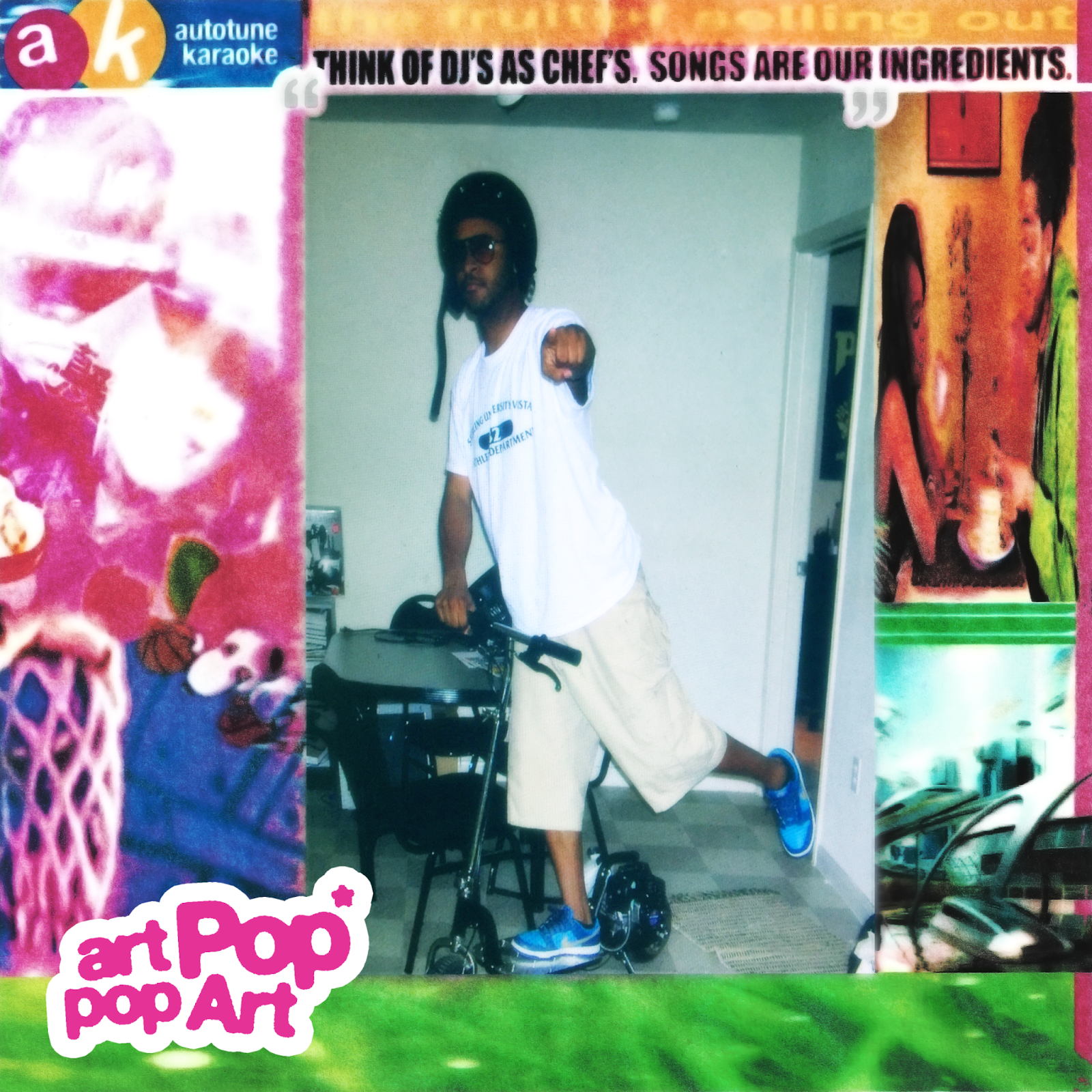
If the very peak days of MYX were still around, zayALLCAPS would take that television channel by storm with his musical endeavors, but in this era of DIY, the listening experience of ‘art Pop * pop Art’ is more than enough. In his third studio album, zayALLCAPS seems fun but careful; It’s camp, it’s arbitrary, and it isn’t indulging in the Y2K music nostalgia for the solemn sake of doing so. Zay couldn’t be more clearer: It’s art, and it’s pop. Simple as that.
On shuffle, ‘art Pop * pop Art’ is as if your ears are tuning in on different circles of people whom you’ll find at a gig with an hour-long DJ set: “MTV’s Pimp My Ride” is playing when guys in loose jersey shirts are rolling their bodies near the turntable, presumably having the time of their lives. In tracks like “PROCESS,” multiple rhythmic melodies come in like a triple threat – the threat being that Zay stays true to his Instagram username, “Swagalog101”. Dare I say, he has the full potential to bring back the term “Jeproks/Jeprox” through his amalgamation of Jodeci influences in his more sensual sounds.
zayALLCAPS pays no cap on that production. Who knew aggressive autotune that sounds like a talk box blended with smooth harmonies into a foamy mic could sound so orgasmic? The thing is, autotune discourse is so overtly tired, but tracks like SATURN (ft. Anto The Wayward) bring plus points to those who simply don’t care about the “correct” usage of autotune. Zay oscillates between tracks through the velvety theatrics of autotune without sounding too hazy or, for lack of a better word, monotone. It’s not a watermark that defines his artistry; however, through the funky textures of “rWm”, this track proves that autotune can be an extension of his persona, bringing prismatic bursts into the listener’s ears without drowning in reverb or harmonies that sound like a repeated Coca-Cola burp.
The only downside is that lyrically, Zay keeps it rather dull; “Friendz U Can Kiss” (ft. Frizzy) tries to juxtapose well with the sharp engineering of the album’s seductive yet upbeat production, but the rhythms from the rhymes that match the melody seem to be its only saving grace.
In tracks like “Love In U,” lyrics like “Minimizing my synonyms I incentivize a new beginning/Who said I couldn’t? Regrouped I’m super in it/I run the ship like a troop and I’m the new lieutenant/ Had to switch it up staged a coup that’s how I reinvented” bring that campiness element to the song and the album because visually, it seems impossible to mentally illustrate these lyrics in a more retrospective sense, since the synths already provide the fun, lighthearted atmosphere. Nevertheless, the lexis and rhythm bring out the colors within its blues.
At its best, ‘art Pop * pop Art’ is a kaleidoscope and a rotating disco ball where sparkly theatrics cast a bright reflection and bursts zayALLCAPS’ sheer personality. The recycling of nostalgia doesn’t exist in any part of his art and succeeds at making art very pop.
Nostalgia has countlessly been labelled as the key ingredient to dream-pop, but how does the power of friendship and utter passion from the DIY heartthrobs of Matoki give meaning to the music?
Written By Faye Allego
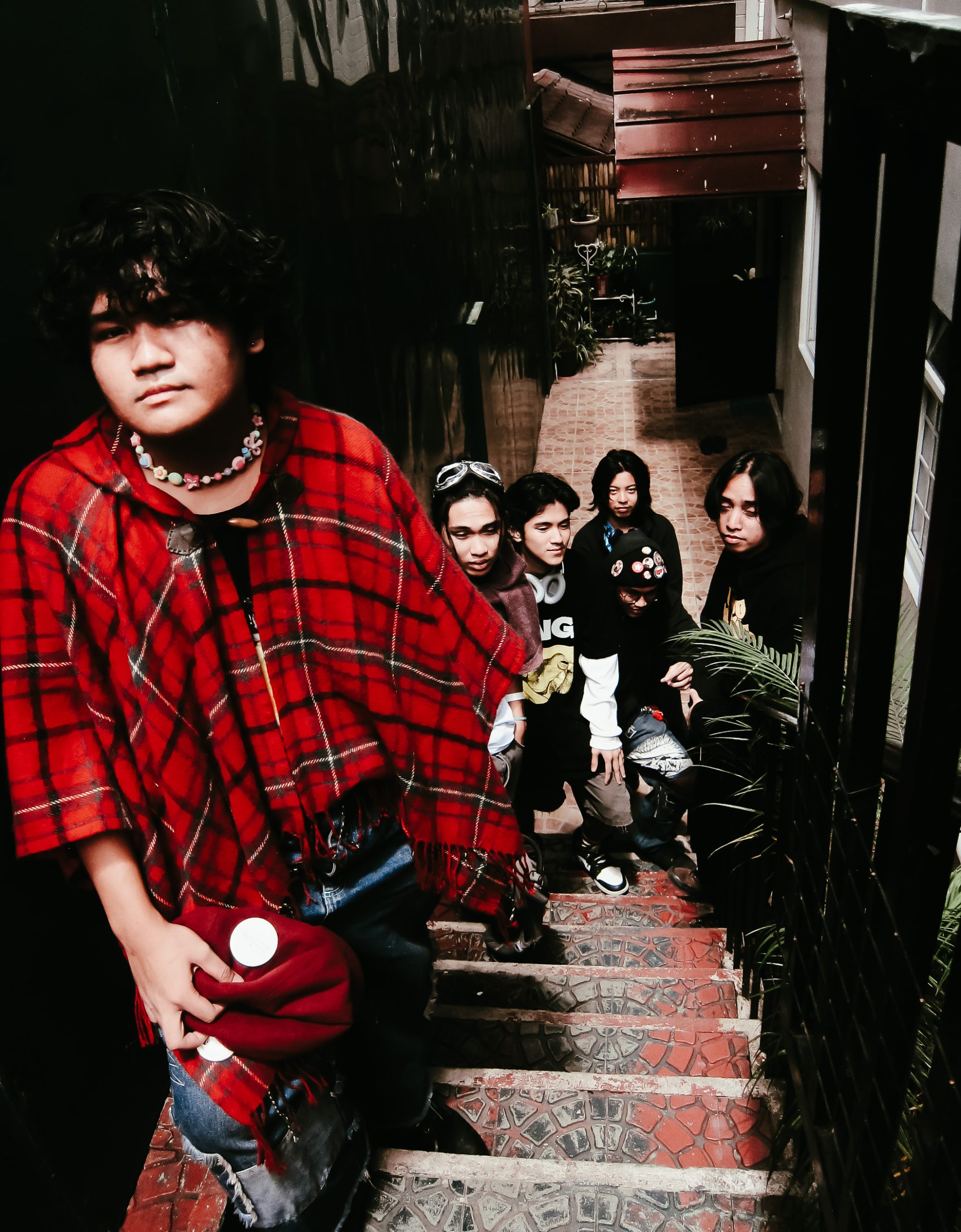
When they were just teenagers, Vladymir Estudillo, Yancy Yauder, and Emmanuel Acosta formed MATOKI originally as a three-piece band. As the roaring 2020s rose to uncertainty, they found identity through the alternative scene and beyond the confines of their bedrooms – their stylistic sound of choice? Shoegaze that is desired to pour out dreampop melodies that send the listener into a Sputnik-like orbit of nostalgia. The trio then decided that three could turn into six, and thus entered Ivan Casillano on drums, Kiyan Leal on tambourine/vocals, and Kendrick Tuazon on rhythmic guitar.
Recently, a Facebook post from the page “Local Music Watch New England” circulated across my newsfeed. It says something along the lines of: “They’re not ‘just’ a local band. They’re the soundtrack to your town. Support them like they’re already famous.”
Throughout the trajectory of their journey, MATOKI has amassed over 8,000 monthly listeners and more than 300,000 streams of their singles, “Strawberry Girl” and “The Streets,” both of which belong to their debut album, And Mend All Your Broken Bones.
Achieving these big numbers independently with no attachment to any big company or label and strictly relying on their authenticity and community within the underground music scene, the band captures the true essence of DIY through touring in and outside Metro Manila. Their live performance not only differ in stylistic choices of whatever they desire that day but they also differ in the range of venues they play whether its at your local venue in QC, Makati, performing at Marikina Heights during dinnertime, capturing the hearts of students at RTU, PUP, UP Diliman, UP Baguio or even supporting causes from ARPAK KMP, SAKA, and many more college gigs. Through their dreamy echo chambers of polyrhythmic guitars seen in tracks like “Sarado Na Ang Makiling Trail (At Wala Na Kaming Mapuntahan)”, coming-of-age anthems like “Lemon” and heightened senses of wonder in “Paotsin”, MATOKI stays loyal to their DIY manifesto.
**This interview has been edited for clarity and brevity.
FA: What’s it like touring outside Metro Manila (especially the Under My Skin tour), and what makes it different from performing in venues like Mow’s?
Vlad: Sobrang kakaiba yung excitement everytime na tutugtog kami na malayo sa usual at unfamiliar sa amin. Yung thought talaga na “nasa lugar ako na ‘to dahil sa music namin”, sobrang powerful nya para sa akin. As a DIY band din gustong gusto ko palagi yung challenge, kung paano pagkakasyahin yung resources, yung pera at energy. Sa recent tour, sobrang humarap kame sa challenges financially kaya right there and then pinagusapan namin kung ano ang mangyayari. Ayun, na resolve naman. Palagi kami nagkakaroon ng lessons kung ano ang mga bagay na effective at hindi kapag touring outside Manila.
Yancy: Personally, magkakaiba kami pagdating dito eh, ako kailangan ko tipidin yung energy ko, mula sa byahe palang kailangan ko na tipirin yung energy ko, hanggang bago tumugtog. May excitement oo, pero alam kong kailangan ko limitahan yung energy. Laging may bubulong na “Oop, wag muna magkulit!” unlike sa Mow’s, mas sanay kami sa environment. Usually mga kakilala rin nakikita namin dun. Nakikita ko kase sila Vlad kaya nila mag kulit kahit wala pa kami dun sa pupuntahan eh. Tapos naiingit ako kasi di ko kaya yun.
Ken: As a DIY Band that has to, well, do everything by ourselves, we could definitely say that it’s financially, mentally, and physically draining. We just always make the most out of our very minimal resources and just doing everything with raw, pure, and unending passion. What makes it different from performing in venues that are close to home is that it’s always an experience. It’s always a mixture of excitement, anxiety, and serenity. But it’s a good thing that anywhere we go, the support from our friends and supporters are also there.
Kiyan: Syempre excited ako parang looking forward ako sa ibang culture at eksena tyaka sa mga bagong taong makikilala. Isa pa yung pinaka favourite ko yung kulitan sa biyahe, papunta palang andami mo ng ma experience agad.
FA: Yancy, may mga panahon bang naisip mo na sana lumaki ka sa ibang lugar o panahon yung mas buhay pa ‘yung mga music subculture?
Yancy: Madalas namin yan mapagkwentuhan dati ni Vlad eh, bago pa ata mabuo ang banda. Hindi ko lang sure sa kanya, pero ako ‘di ko talaga naiisip yung sana lumaki ako sa ibang lugar o panahon, kahit pa mostly ng pinapakinggan ko at influence na din talaga dati e galing isa ibang lugar at ibang panahon nga, I can say na iaadmire ko sila pati na din yung buhay na eksena nila noon pero never ko naisip na sana lumaki ako dun sa lugar nila or sa panahon nila.
FA: Naapektuhan ka rin ba ng mga alaala sa paraan ng pagtugtog mo ng bass?
Yancy: Yes, kapag nagrerecord ako ng bass sa mga tracks namin, sinisikap ko lagi ipicture yung sarili ko na andun sa setting nung kanta, or ifeel yung ineexpress nung kanta, nakakatulong yon para ma-tap ko yung ilang alaala na kung hindi man kahawig e eksaktong katulad nung gustong iexpress nung mga kanta namin, tapos ayon mula don kung ano lang din yung maramdaman ko sa mga alaala na yun isasalin ko lang din sya sa bass
FA: When composing a song, which members think of a melody first? Do you all have to be present IRL in the writing process?
Vlad: Most of the time talaga sakin nanggagaling yung main idea ng songs, katulong ko si Kiyan madalas, then we build from there. May time na si Emman nagsusulat din ng kanta tulad nung “For Choco“, pero ngayon ayaw niya na eh. Joke lang haha. Pero usually talaga pag may naisip akong idea, kukunin ko yung gitara, tapos sabay ko bubuuin yung melody at chords. May times rin naman na magkakasama kami, tapos may mabubuo rin. Tulad nung unreleased namin na “Patiently“. Depende talaga sya sa motivation at araw kung makakabuo ng song.
FA: Emman, Paano mo nade-develop ‘yung sariling style mo sa pagtugtog?
Emman: Siguro malaking bahagi yung mga influences pagdating sa style ko. For the past few years na-solidify sa akin bilang main inspiration yung post-rock guitars na tingin ko ay bagay sa sound ng Matoki. Pero kung sa totoo lang masasabi kong main influence rin talaga sa style ko yung mga kabanda ko lalo noong nag-uumpisa pa lang kami, noong hinahanap pa namin yung magiging sonic identity namin. Malaking bahagi ng style ko ay nabuo mula sa mga music recommendations nila.
FA: Whenever you perform live, paano niyo nakakapa kung saan kayo mag lalagay ng improvised riffs that differ from yung original recording?
Emman: Pagdating naman sa live performances, sa totoo lang, malayo talaga kung icocompare yung live at recorded versions ng mga kanta namin lalo na yung mga older songs. Masasabi kong magkaibang realm yung live at recorded sound namin (compare Fine Lines vs. Fine Lines (Redone)), siguro dahil totally different environment at methods yung nag-eexist pag nagrerecord kami at pag nag-jajam live (dahil nga DIY recording lang maraming limitations lalo sa drums). At siguro dahil di rin namin strictly sinusundan yung recorded version kapag nagjajam sa studio. Malaya lang kami gawin kung ano trip namin idagdag pag live.
FA: Paano niyo isinasalin o ipapahayag ang komplikadong anyo ng pag ibig sa mga layered at textured na tunog ng musika ninyo? tulad ng riff mo sa “Fine Lines”
Emman: Sa tingin ko, nagmamatch yung songwriting ni Vlad sa mga soundscapes na nagagagawa namin. In the first place, pansin ko sa ethos ng Matoki, ay ayaw niya maging complicated, simple lang, barefaced at raw. Kahit pa di naman necesarily simple per se yung mga themes ng mga kanta. Kaya nagtatranslate din yung ethos na yun syempre sa tunog ng banda, simpleng riffs na melodic; parang galing sa isang “honest young heart”. Minsan droning reverbs, atmospheric na patong-patong na guitars, malaki yung sound pero di naman siya complicated, tunog “wandering young mind”.
Tingin ko [‘yong Scrapyard ay isa] sa magiging iconic na lugar pagdating ng araw. Napaka-modest at rugged, napaka-Filipino, kaya sobrang disctinct din talaga ng mga lumalabas na mga art doon. Meron talagang characteristic ng pure passion for music and community.
-Emman Acosta
FA: Paano naging tahanan para sa Matoki ang bahay ni Vlad sa Pasig? Assuming na marami kayong nabuong mga kanta, album, ep, etc. Doon, ano mga core memories niyo while mastering mga productions niyo kina Vlad?
Yancy: Mas effective na makapag work, sabihin na natin sa isang track, para sakin, kailangan maramdaman ko muna yung cozy na pakiramdam, o makomportable doon sa space namin kela Vlad. In a sense na pwede ka abutin ng umaga. Tapos di ka pa mag aalala sa pagkain, kase mejo sentro yung location ng bahay nila eh, malapit sa mga sari-sari store sa mga talipapa ganyan. Core memory ko palagi yung mga times na mag bbreak time kami sa pag gawa, tapos kakain kami sa almusalan na malapit o kaya bibili pandesal sa umaga, tapos everytime na ganun habang kumakain pinaguusapan parin yung kanta.
Vlad: Core memory ko talaga yung nag record kami ng “Lemon” tapos pinagkasya lang namin yung buong drumset sa kwarto ko na halos isang dipa lang yung lapad. Sobrang init nun tas shirtless kami lahat. Isang core memory din yung nilabas ko yung setup ko sa dirty kitchen namin sa likod ng bahay, kasi bumabaha sa kwarto kapag umuulan. DIY!
Kiyan: Kung may core memory ako syempre yung pinaka una pa, noong mga first time ko sumama sa kanila. Naging comforting siya sakin lalo noong mga times na hindi ako okay sa bahay tapos dito ako nagste-stay kila Vlad. Tapos gumagawa lang kami ng mga demo. Dun na rin ako natutulog. Naging core memory yun kasi dun na ako nakakapag cope.
Emman: Kakaibang space talaga yung bahay nila Vlad. ‘Di lang exclusive sa Matoki yung lugar na yon, naging iconic center rin siya ng iba’t ibang DIY artists at collectives at naging venue ng mga full band shows, film screenings pati mga educational discussions. Bilang member ng Matoki nakita ko yung evolution ng bahay nila Vlad bilang creative at community space. Dati tawag pa namin don ay Volzak studios noong kami-kami pa lang hanggang sa naging Scrapyard at Dinosaurs in my Studio nang mabuksan na siya sa mas maraming tao. Tingin ko isa yon sa magiging iconic na lugar pagdating ng araw. Napaka-modest at rugged, napaka-Filipino, kaya sobrang disctinct din talaga ng mga lumalabas na mga art doon. Meron talagang characteristic ng pure passion for music and community.
Isa ring bagay yung kapag trip na trip mo yung genre ng banda mo natural siya na lumalabas e, lumalabas lang kusa yung mga ideas minsan habang tumutugtog o kaya sa studio o kaya minsan sa pag buo ng kanta.
-Ivan Casillano
FA: Ivan, bilang drummer ng Walktrip bago ka naging bahagi ng Matoki, paano mo hinubog ang sarili mong role bilang drummer ng bagong banda?
Ivan: Bago pa ako maging member ng matoki soundtrip ko na rin talaga sila, naalala ko unang house show kela Vlad tumatak sakin yung kantang “Strawberry Girl” na-LSS ako lalo na yung bass part ni Yancy ang ganda lang kase pakinggan tumatak yon sakin. Simula nun soundtrip ko na siya hanggang sa na iimagine ko na siya kunware ako pumapalo. Masasabi kong masaya at di naman ako ganon nahirapan mag adjust kase trip ko din talaga yung pinaggagawa namin sa Matoki, tsaka kusang lumalabas yung pagiging creative makabuo ng part ko bilang drummer sa mga song writing lalo na pag iisa kayo ng naiisip at nag kakasundo kami. Isa ring bagay yung kapag trip na trip mo yung genre ng banda mo natural siya na lumalabas e, lumalabas lang kusa yung mga ideas minsan habang tumutugtog o kaya sa studio o kaya minsan sa pag buo ng kanta.
FA: Anong mga pagbabago o adjustment ang kinailangan mong gawin sa style o mindset mo sa pagtugtog?
Ivan: Siguro ano, iniisip ko lang na wag makuntento ganon, kailangan practice lang nang practice para di rin mawala yung gigil mo kada gig tsaka maging healthy din tinatry ko talaga umiwas mag bisyo kase nakakapagod maging drummer sa totoo lang nakakahingal [laughs]
FA: Para sa inyo, ano’ng pinaka-masaya o pinaka-fulfilling sa pagiging DIY at sa pagkakaroon ng buong kontrol sa galaw ng banda?
Vlad: Sobrang fullfilling maging DIY band dahil sobrang genuine ng lahat ng lumalabas sa amin. Kahit sa sound mismo ng music, yung technicals, yung mixing and mastering, sobrang rough around the edges kasi kami lang gumagawa nun. It could be better, of course, pero that quality is just us being honest about what we have. Still, nag-strive parin naman mapaganda pa yung music quality-wise. Fullfilling din kapag may natatanggap kami na support, kasi I just know na genuine din yun. And we also feel more connected as a community, rather than having a definite line between artist and listener, mas bineblend yun ng DIY underground scene kasi honestly, we’re just like them, no different. Mahilig din kami sa music, at most of the time, we stand by the same issues and advocacies. Speaking of, sa pagiging DIY din, we can say what we want nang walang nag hoholdback, so we can voice out our opinions about things that matter in our society freely.
Photo from Ian Arevalo/505
Yancy: Isa sa pinaka masaya at fulfilling para saken ay yung mismong ideya ng DIY na kayo bahala sa lahat, kung paano kalalabasan dapat ng isang track at kung ano yung gustong sabihin sa kanta na yun, walang naghhold back at syempre walang external factors na galing sa ibang tao bukod sa amin. Feel ko mas nagiging malaya at genuine kami sa ganung paraan, isa na din yung pagkakaroon ng buong kontrol nga sa galaw ng banda, sa ganong paraang mas nagiging malapit kami sa mga tagapakinig kasi kami mismo most of the time gumagawa ng paraan para mailabas sya sa streaming platforms, matugtog yung mga kanta namin sa mga gig, hanggang sa pagse-sell ng mga merch at ng mismong kanta, fulfilling sya lalo nakakatanggap kami ng suporta mula sa mga kaibigan namin sa eksena sa DIY underground. Naaalala ko dati kami kami talaga nila Emman nagbuburn ng mga CDs sa kanila, tapos kasama namin sila Yones sa pagaayos nung mga lalamanin ng CDs (tracklist, artprints, stickers) may mga times din nun na pag around Pasig lang ang order ng mga merch sila Vlad at Kiyan mismo tumatagpo sa mga nagoorder.
Kiyan: Isa sa pinaka naging core memory ko ay nung mismong ang pag produce ng mga merch namin ay isa sa naging bonding namen ng team, mula sa pag hahanap ng raw materials hawak namin CD case, CD, brand ng shirt at sa mismong pag quality control kami narin.
Ken: Fulfilling sa pakiramdam na meron kaming control sa galaw ng banda. I mean, yun rin naman yung essence ng pagiging creative. Siguro yung masayang pakiramdam na nakukuha namin dito is, yung feeling na nakikita namin nag wowork paunti-unti yung mga bagay na gusto namin na ini-envision lang na mangyare, Although madalas di yun yung ineexpect na result. Pero, at the end, we are making something happen with the help ng bawat isa. As the latest member lang ng Matoki, siguro mag didiffer ang core memory nila saken pero para saken yung Under My Skin tour. Ramdam talaga lahat ng emotion. Inside Out core memory talaga.
Nadevelop namin magkaintindihan sa mga bagay bagay, nagkakaron ng shared love sa ilang specific na approach at arrangement sa paggawa ng music.
-Yancy Yauder
FA: You started out as just three members in a band, and now you’re a six-piece, all growing together as young adults with different personalities but all sharing a love for music. How has that shift in time affected how you move as a group?
Yancy: Nung tatlo pa lang kami, early post-pandemic hanggang early 2023 sabihin na natin na we spent time together talaga as a band most of the time, posible sya noon kasi online classes pa yung school sa amin tatlo e kagagaling lang pandemic, nagagawa naming magsama sama pa din kahit may pasok yung isa sa amin tapos asa 1st year pa lang kami nun 2nd year ganyan, nung mga time na yun din mas nagiging posible yung bonding na paggawa ng music, pagpunta kung saan saan, pagkain at pagtulog ng magkakasama sa isang kwarto.
Tapos ayun, dahil nga madalas magkakasama, nagkakaron kami ng shared thoughts or minsan kanya kanyang reflection sa mga nangyayari sa amin bilang magkakabanda, malaking tulong din yun sa creative process namin kase nadevelop namin magkaintindihan sa mga bagay bagay, nagkakaron ng shared love sa ilang specific na approach at arrangement sa paggawa ng music, isang halimbawa na lang ay yung sa creative process ng “Ayoko Ono”, lahat kami nung time na yon, gusto lang gumawa ng shoegaze track na mabigat pakinggan at taglish yung lyrics pero at the same time ay less is more yung pagkakasulat, tapos ayon na, may track na agad. Pero syempre as time goes by, bukas naman kami dun na unti unti pabalik na ulit yung “new normal” na routine ng buhay natin around early 2023 din, nagkaron na ng mga onsite na klase, nagkaron na din ng oras para sa hustle para kumita ng pera at masuportahan yung sarili at yung craft na ginagawa namin, as in dami na nagbago din lalo sa creative process dahil nagkaron na din ng limitasyon yung band time, may mga times na online na lang kami nagkakaron palitan tatlo nila Vlad at Emman, unti unti din nun nadagdagan na kami sa banda, andyan na Ivan at Kiyan, nagkaron ng mas malaking pagbabago sa banda at kung paano sya nakakapag work pa din as a group, siguro sa kasalukuyan ang pinaka naging itsura nya ay ganito, madalas mas si Vlad na lang ang nagsusulat at naglalapat ng guitars tapos minsan din share sila ni Kiyan sa isang track, medyo naging limitado na yung makapag input ako or si Emman sa songwriting process, bihira na din mabuo pag may recording, recently si Ken pinaka bagong member namin sya na katulong din ni Vlad sa pag iinput ng ilang guitar parts sa ilang tracks na ginagawa namin ngayon as a band.
FA: Do you ever fear yung mismong oras na lumilipas?
Yancy: Oo siguro, may fear sakin sa bawat araw eh– na pano kung lumipas lang ulit tong araw na to na wala ako masyadong nagawa para sa mga bagay na gusto kong ginagawa at gusto kong maging hahahah, may fear oo, kasi lagi pa nga din akong may baon na pang soothe sa sarili na “ayos lang yun kailangan lang din natin huminga sa oras na to para sa mga susunod na araw mas kayang higitan yung dati”
FA: Kiyan, ang creativity, skill siya na kailangan talagang alagaan kasi once mawala siya, mahirap na siyang balikan. Sabi mo nga, ang dami mong nakikilala at nakakasama tuwing may tour. Paano ka nananatiling inspired sa creative side mo, lalo na’t ang dami mong roles in and outside of the band?
Kiyan: Sa totoo lang, may mga oras paden ng burn out, hirap ako sa pag handle ng creative side ko at madalas na uuwi ako sa pag self isolate, pero everytime naman makikita ko yung needs at struggles ng banda at mga kabanda, onti-onti kong nahihila yung sarili ko pabalik, sa simpleng pag tulong lang kase kagaya ng pag ayos ko sa gitara ng mga kabanda nakakaramdam na ulet ako ng spark kase alam kong nakakapag express ako ng art ko sa ganong paraan.
FA: Pati din mga fashion style ninyo, parang pwede na ata kayo mag karon ng cover sa Oz Magazine nung 70s era eh… do you pay attention to certain fashion identities dito sa eksena?
Kiyan: Wow, sa totoo lang, diko alam eh. Madalas naman kung ano lang yung masuot namin, saaken non dati basta black tapos nag evolve sa “ay gusto ko to kasi cute” sa simpleng uniqueness ng isang damit na appreciate naman na namen, floral patterns, zipper sa kung saan mang parte, skulls, cute na skulls, kulay purple.
When i first started trying music i always had this inner thought na better gear equals better music, although i know deep inside na hindi naman, i always strive to get better gear imbes na mag start ako gumawa ng mga kanta. When i saw the process of Matoki face to face naging malaking sampal saken na they were able to create something from nothing na parang big bang.
-Kendrick Tuazon
FA: Kung may masasabi kayo sa mga sarili niyo noon, ngayon, at sa hinaharap tungkol sa takbo ng career niyo, what would you say to them?
Vlad: Masasabi ko sa sarili ko dati, “Wag mo masyado ipressure yung sarili mo sa mga bagay bagay. Take it easy, okay naman dito. Saka mag practice ka mag mix araw araw.” Sa ngayon, di ko alam eh. Sa future self ko naman, “Wag mo kakalimutan kung bakit ka gumagawa ng music.”
Yancy: Sasabihin ko sa noon na ako, “Tama yan, pinili mo yung mas gusto mo kesa sa tingin mo na mas dapat gawin ng mga kaedaran mo dati.” Sa ngayon naman, “galingan mo lang palagi, YG!”. Sa future na ako, “Kahit ano mangyare, proud sayo yung batang ikaw.”
Ken: Sa sarili namin noon, masasabe ko lang na marami kayong regrets ngayon pero alam kong sinubukan yan i-handle ng mabuti ng kayo ngayon. Sa sarili namin ngayon, kailangan natin kayanin para sa hinaharap natin. At siguro “kamusta?” nalang sa hinaharap namin.
Kiyan: Yung sasabihin ko sa noon na ako, alam ko sobrang nakakaligaw diyan, wag mong kwestyunin din yung pinili mong landas kase lagi mo namang trinatry na umokay yung kalagayan mo. Sa ngayon naman na ako enjoyin mo pa yung proseso at wag kang mag sawang tumuklas ng bago kase lagi kapaden nag tatry. Sa future na ako sana hindi kapa pagod mag explore at gumugusto ka paden subukin ang limits mo.
FA: Ken, Sabi ni Vlad dati na ikaw yung missingpiece ng Matoki, bilang pinaka-bagong miyembro, ano ang mga inspirasyon (or emosyon) ang tumama sayo habang pinapanood mong gumagawa or tumutugtog mga kaband member mo/ paano mo naramdaman na parte ka na talaga ng grupo? Narereflect ba yun sa mismong rhythmic style whenever you’re performing with them live?
Ken: Sobrang laki na inspiration ng Matoki sa paggawa ko ng kanta, na kahit miyembro na ko neto masasabi ko na big fan ako ng Matoki. when i first started trying music i always had this inner thought na better gear equals better music, although i know deep inside na hindi naman, i always strive to get better gear imbes na mag start ako gumawa ng mga kanta. When i saw the process of Matoki face to face naging malaking sampal saken na they were able to create something from nothing na parang big bang. Dun sa sinabi ni vlad na missing piece ako sa banda, I think the same applies to them for me, sila yung push na hinahanap ng utak at katawan ko sa paglikha. binago ko yung playing style ko to blend in (which i enjoy). Pero naramdaman ko lang na naging part ako ng banda nung pinaramdam nila saken na nahihirapan sila na maging kabanda ako. but thats for another story 🙂
FA: Do you find any pressure or freedom in being seen as a “Heartthrob” or figure in the scene? Does it affect your musicianship, if at all?
Ken: HUWAAAAT MAY GANUNN…buong Matoki heartthrob, boi… Ang nakakaapekto lang sa musicianship ko ay ang hindi pag practice 💔🥀
FA: Vlad, paano mo pinagkaiba kung alin ang dapat gawing kanta at alin ang mas bagay manatiling personal na tula?
Vlad: May something sa mga sinusulat ko na bigla nalang mag cclick e, may bulong sakin minsan na gawing kanta ang mga random na sinusulat ko, ganyan nagsimula ang ilang kanta namin, example nun yung Ohana. Yung kantang yun, tula siya, nasulat ko siya sa notes app ko, tapos naalala ko lang siya nung patulog na kami sa bahay ni Emman after mag record ng isang kanta. Nirecord ko yun habang tulog sila. Ganun na rin yung sa ending part ng “…Makiling Trail”. I’ll say na walang pinagkakaiba ang mga tulang sinusulat ko sa mga kanta, parehas sila ng pinanggagalingan at most of the time, pareho ding di nagrrhyme. Pero kung meron man, siguro if it’s simpler or more brief to fit into a melody, or recite into rhythm, I guess it’s a song. Minsan di rin sa tula nagsisimula e, sa mga simpleng kataga lang, katulad nung sa kanta naming “Malimit”, ang coda na “Nandito lang ako, sorry kung malimit maglaho” that just started out as that phrase and we developed it into a song. For me, poems and songs take the same route, but of course writing a song needs to have that musical charm to it.
FA: Sino ang songwriting Jesus mo?
Vlad: Marami akong tinuturing na messiah ng songwriting spirit ko, honestly it varies from time to time, like asking me my favorite bands, I’ll say it’s complicated. But if I could answer specifically right now I’ll probably say Sam Ray of Starry Cat and specifically on the Julia Brown project. I liked how they say simple things and turn them into songs. I always say it’s the simplest things that hit the hardest, the most mundane things most interesting. Runners up that come to mind are the various, mostly local pinoy artists who were the reasons I cherish my soundcloud account, one of them being my favorite Heavenly Nobody.
Tingin ko ang pagmamahal ay tungkol sa connections that we make with different people kahit na fundamentally we are all different beings. When we find something that we bond with together. It’s like they’re filling empty puzzle pieces you didn’t know you had until you feel it.
-Vladymir John
FA: What can you say about your songwriting or instrumental muses? Do they bring the music to you, or do you express your love to them through music?
Yancy: Kapag inilalaban mo parin na maglabas ng something or magexpress gamit music, diba parang nag pe-payback ka narin sa mga taong naniniwala sa ginagawa niyo at syempre sa sarili mo na din na dapat unang maniwala na posible yung mga bagay?
Kiyan: contradiction sya para sa akin. Minsan kahit sa pag express ko ng thoughts ko, ang naiisip ko agad eh kung maiintindihan ba to ng makakabasa? tapos nag lilinger lang yung thought na yon saakin, kahit mag express ako ng para sasarile ko, feel ko may manifestation nadon ang pag isip ko sa ibang tao.
Ken: Siguro both. Sometimes, sila nag bibigay ng inspiration for us to create something out of what we think of them, and vice versa. We sometimes express our love for them through music. Though, di naman siya nag rerevolve sa significant other lang. It could be our friends, the music scene, yung crush mo nung highschool, sa aso mo, sa mapang aping estado, kahit hanggang sa paborito mong inumin. The good thing about songwriting muses is never yan mawawala.
FA: With that being said, ang pagmamahal ba ay mas tungkol sa koneksyon sa ibang tao o sa pagiging mag-isa/solitude?
Vlad: Primarily, kapag nagsusulat ako, it’s also my way of letting my thoughts flow out of my head. Lalo na kapag overwhelming. Swerte lang rin ako na naeentertain ng bandmates ko yung thoughts ko kahit ang corny minsan. Tingin ko ang pagmamahal ay tungkol sa connections that we make with different people kahit na fundamentally we are all different beings. When we find something that we bond with together. It’s like they’re filling empty puzzle pieces you didn’t know you had until you feel it.
FA: Kaya bang ipahayag nang buo ang pagmamahal sa pamamagitan ng musika, o palaging may kulang pa rin sa mga salita at tunog?
Yancy: Hindi fully talaga masasabi na maeexpress mo sa salita at tunog yung pagmamahal, palaging may kulang sa mga salita at tunog oo, pero isa sya sa mga paraan para masabi mo in the most simplest way yung “mahal kita”, pero ayun hindi pa din sya dun natatapos lang, hindi sya buo ibig sabihin, palaging kasama pa din yung mararamdaman at masasabi ng nakikinig.
Vlad: Feeling ko sa pag gawa namin ng music, attempt lang yun sa pag express at pag decode ng mga bagay na mahirap ilagay into words. Or, attempt siya to say something in a limited canvas, or the runtime of a song. It will never be enough to express the love I feel for the people I write about, but it’s worth every word I give. Also, it’s like saying, “I love you so much that this came out of it.” Naniniwala rin akong hindi lang sa lyrics ma coconvey ang ibig mo sabihin sa isang kanta. It’s the reason kaya major ang influence sa amin ng Post-Rock at Shoegaze. Most of the time, nag sstick kami sa [mantra na] less is more. It also feels very intimate. Lagi ko sinasabi sa kanila na fan ako ng pagtranslate ng “mahal kita” in the simplest ways. That’s how we always try to write music.
Ken: Oo! palagi. Words aren’t enough, that’s why we made it into a song. If it still isnt enough, isasabuhay namin yang kanta nayan.
Michael Seyer, Do You Have What It Takes To Be A Man?
Interview by Faye Allego
Music has been a diary for songwriters for centuries, and Michael Seyer is no different. But how does a man write his legacy?
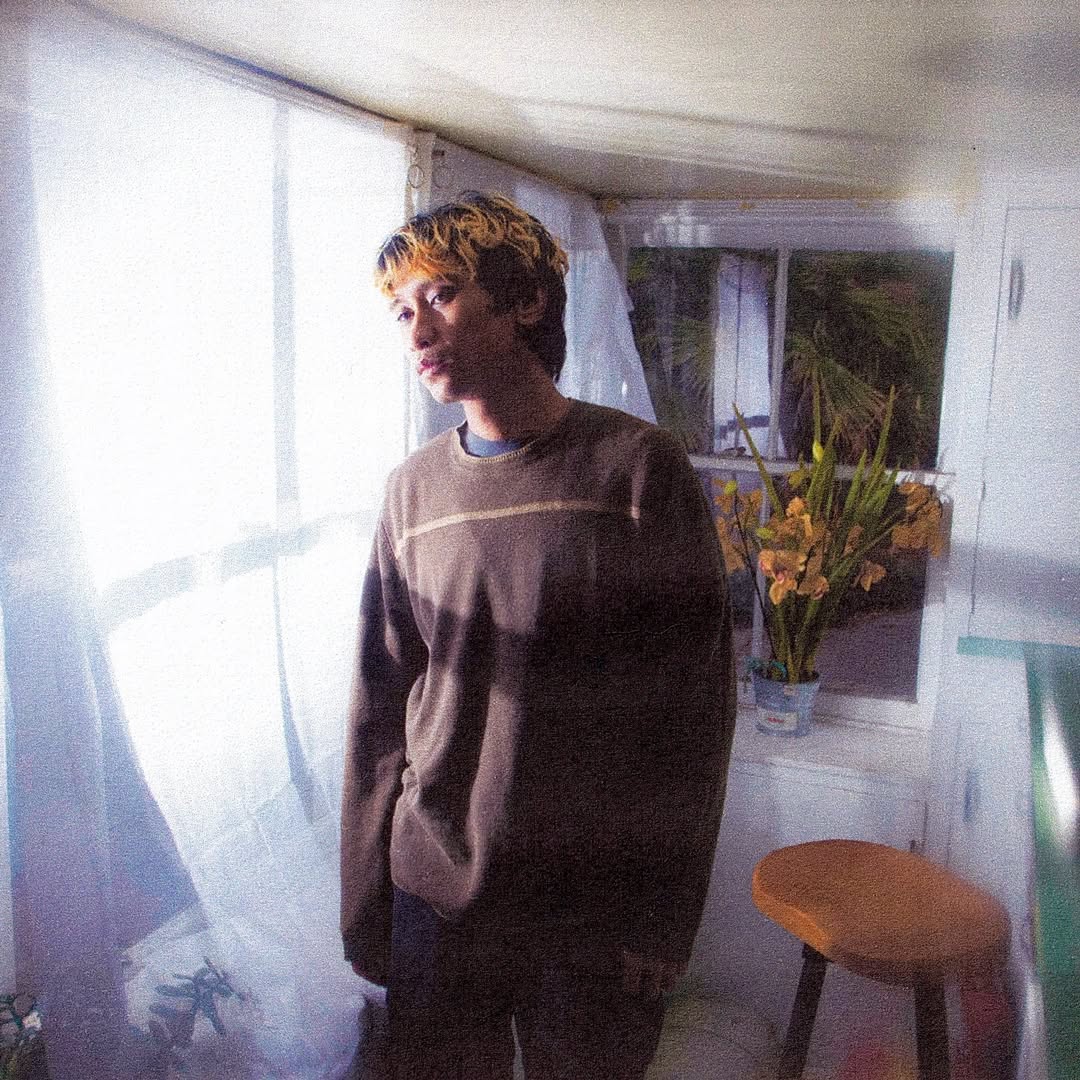
Memory is ever-changing and sometimes fails to hold still. However, when used in music, we can preserve them forever. In his latest release, Michael Seyer introduces an amalgamation of his memories and experiences on boyhood vs manhood, family, love, and ghosts in Boylife. For nearly a decade, Seyer’s rise from the bedroom music scene has been unhurried and steadily paced – his distinct lo-fi, jazz-tinged dreampop and vintage soul sound originated from his 2016 debut album, Ugly Boy, and is further intensified in 2018’s Bad Bonez. Seyer’s diaristic lyricism, as well as sentimental textures of Japanese city pop and the reminiscent glow of early OPM influences in his 2021 album Nostalgia and throughout his discography, he never strays away from an inward gaze of his identity and perception of love. Talking to Michael Seyer from one bedroom to another at different sides of the Earth felt like catching up with an old mentor from high school, you really learn the essence of ‘dudes just being dudes’ who are really in tune with their passion. During the interview, he mentions that music is all he really knows, and it was said in the same way that Alex G thinks he’s a very boring person, from the receiving end of things, it’s honestly far from the truth.
**This interview was conducted in June 2025 and has been edited for clarity and brevity.
FA: Do you know what Lugaw is?
Seyer: That sounds familiar. You know what? I love the Philippines. I was born there, but I left when I was three or four. So yeah, I just, I didn’t do my very best to keep the good look in my mind.
FA: So, Lugaw is Porridge. Where in the Philippines were you born?
Seyer: I was born in Manila.
FA: Is nostalgia a recurring theme in your work? What role does memory play in how you write music or understand yourself?
Seyer: I write about memory for sure, but it’s not the most overtly “themed”. It’s more in the sense that I write [about] my experiences. So, in that kind of really far stretch of my experiences, are my memories. Mostly, I’m writing about me looking back at certain things, how I am now, you know? Memory drives the music. I tend to write songs or do things in a way where it’s the music that I have found the most fond in my memory; I try to make my music sound in that way, that whole nostalgia EP, I was really into a lot of the Japanese city pop and even a lot of OPM music. I have always been listening to that kind of stuff. Even as a kid, I remember listening to it. I would take things from music that have really affected me in the past and then use that as a jumping-off point. I guess for this recent album, I was writing… a good amount. One of the songs on the new album, “1995”, that’s the year I was born, [and] I wrote that song specifically about the Philippines. The way I remember the Philippines is not– I don’t have a very concrete memory of it. I left when I [was] really young, and I came to America. So, a lot of the stuff that I do remember from the Philippines is really just abstract, senses, taste, and maybe the few images that I do remember, they almost feel like an old film reel that’s [a] really colorful and nothing is really graspable. It’s really ethereal. I was trying to write a song about the Philippines with my very limited memory and my really abstract memory about it. So those are a few ways, I guess, nostalgia or memory comes into play.
FA: Are there any Filipino artists that are from the past or present that you’re curious about, in terms of musical influence, and your new record label, Seyerland?
Seyer: Yeah, that’s a tough thing, right? We’re in a kind of an interesting situation with Filipino visibility, right? There aren’t many artists to really pick from, especially in my lane of music [in the West]. We have that Filipino Pride…Once anyone’s a fucking drop of Filipino, we claim it. That being said, there’s nothing there’s not much range that I could pick from. Obviously, I love all kinds of music. So I am always listening to everything, especially with OPM, Hotdog, and Bong Peñera. My parents would always play Parokya Ni Edgar, Eraserheads. Yeah, it’s… A lot of old stuff. I would love to find some artists that are more contemporary in that lane, and we don’t have that many options to pick from. So I’m just always trying to find new music. and I definitely want to encourage Filipino artists to carve out a lane for themselves, and I want to discover more artists who are Filipino [and are inclined to make] great music. Because we’re a fucking–we’re a musical culture. Nine out of ten of us can kill it in karaoke and belt out of nowhere.
FA: You released your new album under your new independent label, Seyerland. Are there any lessons and niches you have gained in the behind-the-scenes process of starting your own DIY label?
Seyer: Well, you know what? I am only a month into it. I’m not sure if I have any lessons to give anyone, but [a] part of the reason why I want to do this is because I’ve been doing [music] for a really long time– almost 10 years now, and through that process of being forged to release on my own [music], because I haven’t really had any connections. I was just someone who threw a project on the internet and then fell into this. I saw maybe a few people appreciate it, and then at the same time, this is what I love doing. I don’t have any skills besides making music. Since I’ve been doing it independently, I at least would really love to step in and give back to locally based smaller musicians and maybe equip them with small tools that help them slowly build a sustainable career that is pretty self-sufficient because I’ve atleast been able to do that, in some way, it might be relatively modest compared to what other artists have put out for themselves, but I can feel confident to say that I’ve done it myself and I own my own music, I hold no allegiance to a record label or any industry thing. And it is hard as fuck, but I think it’s worth it. In my formative years, I’ve met a lot of super impactful artists, who were cut from that same cloth, where they were like “Oh, we’re doing it ourselves, this is how you do it!” And I [am] definitely taking a page from their book in some ways. I’d love to do that for another artist.
I think you should you should always let yourself be. Especially with being an artist or not even being an artist, but being a person, being a human. I don’t think there is a means to an end to justify humanity. I think it’s a means in itself, just by virtue of experience; there is no end goal to experience or humanity. It’s simply to be.
FA:Boylife is an album that doesn’t insist on resolving the chaos of boyhood, but instead, embraces it. What did boyhood or “manlife” mean to you while making this album?
Seyer:When I wrote the first few songs for Boylife, I remember, I think one of the first ones I wrote was “Boylife”, and it had that little chorus around just saying “Boy Life” over and over again. I love that word. I don’t know why. I think it’s really random, but one of my favorite words is “boy” for some reason. I don’t know, it resonates with me, Ugly Boy. Boylife. And then I wrote that song. Usually, at least for my experience, the album process is you write the first few songs and then some of the first few songs inform the sound and the theme, and then from there, it just comes into fruition by itself. [Then,] you start to write about generally the same stuff. So I wrote the “Boylife” song, and I guess I was in a mood where I was writing a lot of stuff that was pretty related to how I see myself from a formative perspective, coming into a much older person. I just turned 30, so it was a big one, and I’ve been doing this for a really long time, so that was on my mind. So I just continued to write about themes of youth and growing up and maturation, which is always a present [theme] in my work. There’s always that recurring theme that an artist always writes about– I’m always interested in writing about how someone’s experiences also informed who they’ve become, really.
FA: Do you ever feel pressure to define who you are as an artist, or do you allow yourself to remain in that space between becoming and just being?
Seyer: Very ethereal question, huh? There’s always pressure for an artist to kind of prove themselves to other people or whatever it is, even not at a non-artist level, we always have something to prove, right? Whether it’s in a workspace or a social dynamic or an existential way, I think just us as human beings, we’re always inherently thinking about our place in the world, and it gets even worse when you’re an artist. Because sometimes your artistry is really just intimately connected with what you think and your purposes. Obviously, that’s the case for a lot of things, but I have learned that that’s not necessarily the best thing. I think you should you should always let yourself be. Especially with being an artist or not even being an artist, but being a person, being a human. I don’t think there is a means to an end to justify humanity. I think it’s a means in itself, just by virtue of experience; there is no end goal to experience or humanity. It’s simply to be. I think we should live our life that way, and it might help us be a little more radically present if we kind of approach it that way.
FA: That’s some George Harrison ass answer, dude. I love that.
Seyer:Yeah, I don’t know, man. I mean, I was, yeah. It’s my college. It’s my college fucking background. It’s fucking critical thinking and shit,
FA: What did you major in?
Seyer:Creative writing.
FA: That’s so cool.
Seyer: I guess, well, I’m not doing shit with it. […] but, yeah, I fucking love college, to be honest. It’s like, you get to meet just the most random fucking people who are just the biggest weirdos! You meet people and you’re like, “dude, what the heck? Why are you this way?” I don’t know. [Laughs] Yeah, and you start to love whatever the hell is wrong with people. It’s great.
Whenever I go into a church, there’s always this sick ass fucking piano and a sick ass organ, and then the ceilings are so high that there’s natural reverb and acoustics that are really good. Even though I don’t believe in religion, I love the overall atmosphere. I think that is the same thing with ghosts. I don’t believe in it, but I love the idea of it.
FA: When you’re trying to translate something so internal into sound, melodies, chords, and rhythms, you mentioned earlier that there is that pressure to it. So, when you’re an artist, that pressure seems to amplify ten times more because it’s also essentially displaying your work in front of people to listen to and see. So, how does your songwriting process look?
Seyer: It’s different every time, really. Sometimes I start on the guitar, sometimes I start on the piano, sometimes I have a phrase or there’s something I want [just] to write about. It really differs so greatly between songs that I really could not tell you one definitive answer. I think it always starts with making the time to do the “thing”, right? So, yeah, I’m pretty good at that. I mean, I was better when I was younger, for sure. Now I’m just like, you get old and you have baggage. But I think, generally, I’ve been pretty good with– no matter what it is–taking the time to allow yourself [to create] a time frame to put yourself in front of whatever it is– the computer, the guitar, the piano, just to do your due diligence and let the thing come out, I guess.
FA: Yeah, practice makes perfect or intense lore! You mentioned a while ago that “boy” is your favorite word and that it’s just something that kind of reappears in your head. I also noticed that one of the people in your comment section on Instagram commented that in your other songs, you use the word “ghost” a lot. Is that on purpose?
Seyer: I mean, I guess it’s on purpose, but it’s not intentional. There’s just some things we gravitate towards, I think most artists have these revisited themes that they go through. And I don’t know. I just, I really love the fucking imagery of a ghost and what it means just on a symbolic level. Or just the iconography of ghosts throughout. Yeah. Just fucking various cultures and shit. It’s just such a potent word.
FA: Do you have any ghost stories that you might want to share?
Seyer: No, actually, I don’t really believe in ghosts. I’m explaining this in a roundabout way, but I grew up Catholic– I don’t want to gravitate towards religion at all. Even when I was young, being brought to mass, I was a six-year-old and already thinking, “this is so fucking boring, I don’t want to be here.” When I entered the church, the air felt heavier. But I love going into churches now as an adult because even though I don’t really believe in Catholicism or Christianity, the iconography of churches, the stained glass windows, and the murals of Jesus on the cross, and the wooden pews. Yeah. All of it, there’s this atmosphere that [now] feels really great. Even being a musician, whenever I go into a church, there’s always this sick ass fucking piano and a sick ass organ, and then the ceilings are so high that there’s natural reverb and acoustics that are really good. Even though I don’t believe in religion, I love the overall atmosphere. I think that is the same thing with ghosts. I don’t believe in it, but I love the idea of it.
Music has always been just this overarching theme of my life that I will always have unconditional love for, but especially in making different albums, I have to constantly remind myself why I fell in love with this. And I think we can do that with a lot of things. And I think it’s a thing to remind yourself that’s worthwhile of why you love these things.
FA: It’s a very Filipino phenomenon to grow up practicing Catholicism. It’s also a very Filipino trait to be family-oriented, and this applies to the family dynamics, too. This is reflected in your discography in songs such as “Father”, “Chemotherapy”, “For Mother”, and even your cover of “Raindrops Keep Fallin’ On My Head”, which was uploaded onto your YouTube Channel. What keeps you grounded with your culture, and how do you think that reflects in your music?
Seyer:Yeah, I mean, yeah, [cultural influences are reflected] in my music because I’ve obviously written songs about my family. I think it’s always been positive. I’m one of the lucky ones. I know there’s a lot of chaos and sadness in the world, where sometimes you don’t get the privilege to say that I have this really great relationship with my family. I really feel for that because I think anyone who is [alive and] living has someone close to them; friends, partners, whatever it is, and they see that come into play very vividly. I don’t take it for granted because I had a really great childhood, and my parents were the best. They loved me. Whenever there was something that I needed, they provided, they worked hard, and I’m truly indebted to them for making me the person that I am. They always encourage me with music, even though they were not really encouraging. They were half and half, where they said, “Okay, that’s cool, do this thing you like, but also go to school.” I think that’s reflected because most of my songs are extremely positive, and they made it pretty easy for me to feel really close to them because they were awesome parents. My parents were always very encouraging, and they made it really easy for me to be vulnerable. Obviously, I can be better. There’s always something. There’s always a next threshold to aim for. And I guess music is the way that I do it.
FA: What has writing boy life taught you about love, not just romantic love, but familial or self or even artistic love?
Seyer: I think even on all levels–whether it’s artistic love or loving another person or a general, platonic idea of love. And this is just speaking for me, everyone has their own philosophy that they could abide to. But I truly think love is active. I think love for anything, whether it’s in someone or an art, I think it is effort. You have to put in effort. You have to put in the time to nurture that love. Obviously, on some level, there is that unconditional love that is just working as a passive mechanism. But I think that only is nurtured when you put yourself in front of it and show up for it and are actively, radically present with giving that love some weight, you know? So, yeah, a lot of the time, making an album for me is trying to remind myself why I love music. Again, you make the thing, and then you fuck off. You go do the other stuff and experience whatever, and then you kind of at some point are, “Oh, I gotta do it again.” And it’s always this process that’s maybe, at least for me, somewhat grueling. And then you have to slowly remind yourself, “Why do I love doing this?” And then you get to this moment where you write a song, and then you go “Oh, I LOVE this, I’m kind of getting high off of this. ” Then you’re making more songs that build off those songs, and then you’re reminded again why you fell in love with this in the first place. So that music has always been just this overarching theme of my life that I will always have unconditional love for, but especially in making different albums, I have to constantly remind myself why I fell in love with this. And I think we can do that with a lot of things. And I think it’s a thing to remind yourself that’s worthwhile of why you love these things.
Where we are at, it’s much harder, especially with a lot of the venues– if you compare how many venues there are now to back then that are operating on a DIY level, we’re [now] living in a post-Live Nation post-Spotify realm.
FA: How do you decipher which mediums to publish your art in?
Seyer:That kind of [medium] asks you to do it a certain way, to be honest. If there’s a song that I write, you can write it in, but I think at some point in making the song, there’s going to be some point where the song is asking you to do it a certain way, right? So I think that’s what dictates what medium or at what certain process the thing needs to be made; I remember there are a few songs that I have in my catalog that were poems, […]I would just write it and I’d think: “This is kind of sucks as a poem”, and I remember taking the poem and just based off of the lyrics and put it onto a song instead. It at least felt to me a little more natural in that place. I think sometimes you can kind of tell, especially if you’re getting a little comfortable with creating art, whether or not something necessarily works in that medium. I guess I just try to trust that intuition of “Maybe it needs this certain thing and it’s not necessarily thriving in this kind of lens, so let’s put it on! If you want to put it on, you can just trash it if you want,” but yeah, I’ve done that quite a bit where it [would start as] poems and then it’s not working out and then I put it in songs or vice versa. So, yeah, just trust it, you’re good.
FA: You once mentioned in an interview that you started making music in your mom’s garage in California. Did you dive into different underground scenes there? How do you compare that to touring?
Seyer:It’s interesting because I kind of grew up in a DIY scene, but I wasn’t as invested as other folks. I [gained] a little taste from DIY scenes, and then I put out my first project, and then from there, it was mostly focused on the internet DIY scenes. But, yeah, just being around music as much as I can, I’ve had the liberty to be in a lot of places and experience other people’s social bubbles. I like so many different ranges. And it’s really cool to see that little bubble and how those people operate in some way. I’d love to just experience that again. In this day and age, there’s not a lot of support, I would say. That sucks to say, right? And maybe I’m not tapped in that way because I’m sure there’s always going to be an underground DIY thing that’s operating. But I feel like, as of right now, where we are at, it’s much harder, especially with a lot of the venues– if you compare how many venues there are now to back then that are operating on a DIY level, we’re [now] living in a post-Live Nation post-Spotify realm. And also, things are just astronomically so much more expensive compared to [DIY]. Even just the idea of touring is not conducive unless you have a lot of I don’t know, support capital or whatever you want to fucking call it. So yeah, I’d love to see [the DIY scene] encouraged a bit more. It’s hard as fuck right now because we’re living in the late-stage capitalist time frame. I’d love to see the scene more encouraged because when you do see it, when you see a self-sufficient underground DIY scene, it’s really special.
FA: What made you want to work with Justin Quinell for the cover art of Boylife?
Seyer:Even before I started making the album, that [image art later used for Boylife] was one of my favorite photo images; there’s something intimate about it, but also really unsettling. It’s almost like it’s something intimate and not intimate at the same time because of how surreal it looks. That image deeply resonated with me. I was almost keeping that image in my head while I was writing these songs: what would the soundtrack to this image sound like? It was a really big help on trying to trying to craft the general sound for the album. Because I always go a little differently every album! We were entering to a more acoustic-oriented folk territory. But yeah, I really love that image, and he’s one of my favorite artists in photography. I remember when I finished the album, I was pretty head set on having that image in there because it felt so formative to what the music was sounding like. I reached out to him, and I guess he was a fan of my work too. I was really happy that he resonated with my music, and I resonated with his photography, and there was a good mutual exchange between artists that are just fucking liking each other’s work. He’s a super cool guy.
FA: Do you still resonate with your lyrics from your previous albums?
Seyer: I like to page through this artist that I really love. A lot of [Boylife] is influenced in certain ways by him. I love Cody Chestnut, and he put out this album called “Boy Life in America”. Or actually, no, that’s the first track in the album. Cody Chesnut put out the album called The Headphone Masterpiece. I remember watching this interview because I love that album, and he was just talking about whenever he listens to it and when he was making it, he just heard a young man who feels that felt lost and is trying to find their place in the world. In a lot of ways, that’s how I feel when I listen back to Ugly Boy. I hear a lost young man trying to just figure himself out. I guess in that journey created some music that maybe resonated with some other folks who felt the same way. In a lot of ways, I guess this new album was a love letter to that of my first album. It’s revisiting that theme of feeling lost, but now that I’m older, I ask myself what other insights can I gain from that same sentiment? because things are really different. But very similar at the same time.
FA: That feeling of being lost is so evident at the end of the 6th track, “Manlife”, I’m sure that’s the interlude portion of the album, and there’s a voice call at the very end that’s, I believe, from your dad. It points out the redefining moment of reassuring yourself that you’re okay, and it’s okay to be lost. When there’s so much rubble and noise around you, there’s that one familiar voice that makes you think, “Oh, okay, I’m safe.”
Seyer: Oh, for sure, because, you know, I think that’s such a fucking, it’s such a loaded question to unpack of what it means to be a man, you know? But at least from my experience, when I try to think about what a man is, there’s very superficial answers to that; a man could be someone who has power. A man could be someone who makes a lot of money. A man could be someone who gets chicks or whatever, I don’t know. And that’s not any of the things that informed what manhood [truly] is. I’ve had to learn that the hard way, being a young, misguided boy who struggled with masculinity and misinforming themselves of, “maybe if I get this,” or “if I do this, it will make me more of a man,” even though that’s not really how I am inside. I’ve had to learn that, and I think most kids had to grow up and realize, and mature. When I think of what a man is, I think of my dad, because he’s just kind. He’s in touch with his feelings. He’s always been really mindful of others. I guess that’s what I was trying to do with the “Manlife” interlude. I see [my dad] as the epitome of manhood in some ways. Hearing that voice at the end is the most grounding thing when you think about such a heavy question that just bounces around in your head.
FA: You mention on your Instagram story that John Lennon’s solo work, particularly the album Plastic Ono Band, heavily inspires Boylife and the rest of your discography. Is John Lennon your favorite Beatle?
Seyer:You know what? I feel on paper, it should be Paul McCartney. I like more Paul songs. But for some reason, just John is the GOAT. That’s all I gotta say. He has that thing in him when he makes a song that just feels really good. Something that an artist would make, right? So, yeah, I think technically, maybe Paul, but I love–really intensely– a lot of John Lennon songs.
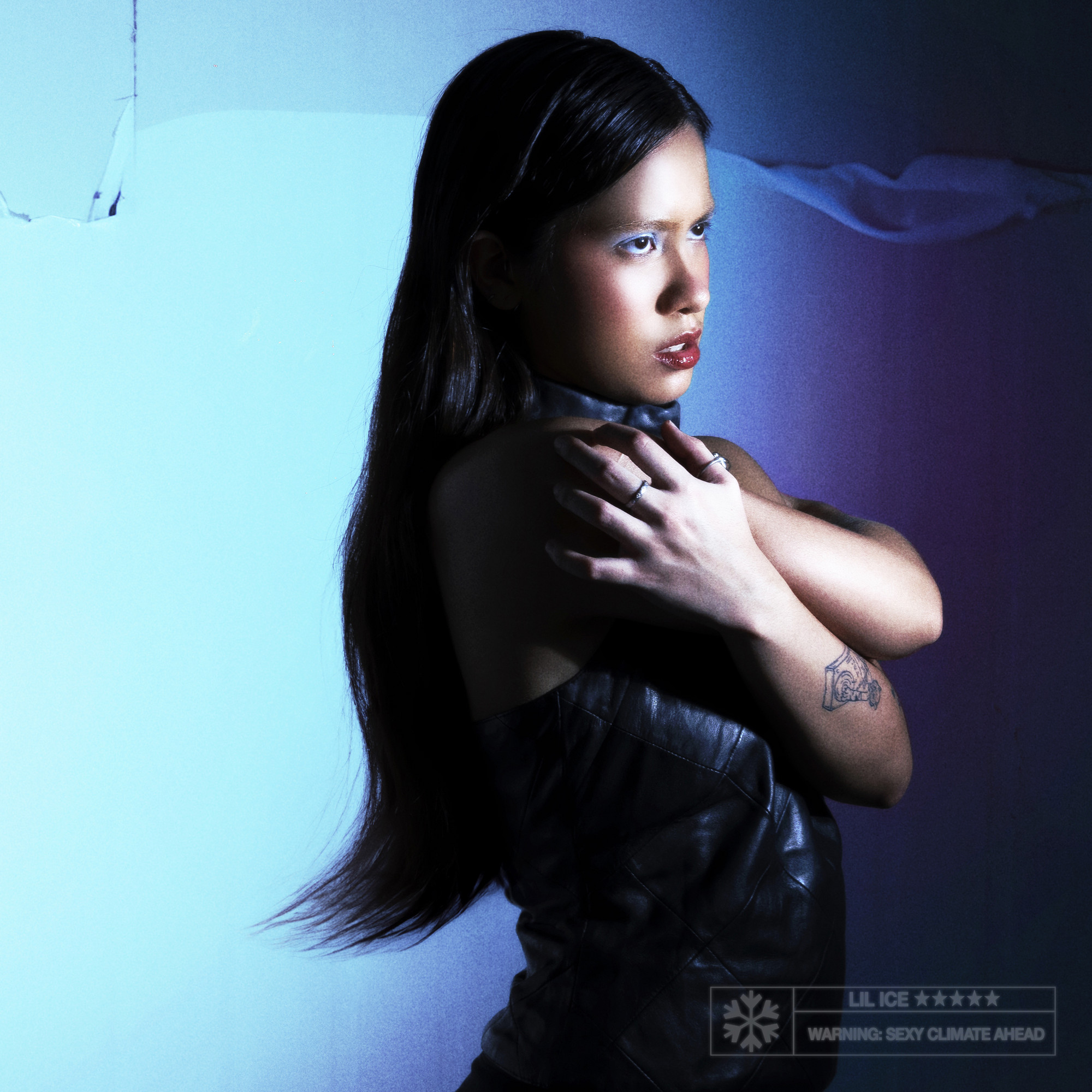
In scorching hot weather and immense humidity, stepping outside the house feels like it’s destined to sizzle your skin. That isn’t the case for Baby Freeze’s new single, “LIL ICE.” Maybe she’s gifted. Maybe it’s Never Paco’s mixing and mastering. Or maybe she knows how to make a bop that’s simple, fun, and well-witted. Produced by NOIR and wearing eyeshadow that screams a metallic Dior shear meets Re-l Mayer from Ergo Proxy in the track cover art, Baby Freeze not only turns daily affirmations into a catchy tune with her latest track, but coldly presses two questions: are short-form, Y2K-inspired tracks just a nostalgic trend, or can it carve into its own genre? And is it still transgressive when a woman who is unapologetically herself wants the drop bars about owning her own starpower?
“LIL ICE” is a fresh example of balancing intuitive songwriting with dance floor appeal; while lots of short electronic hip-hop anthems come to a staggering halt just as the singer is about to reach a lawful bridge, Baby Freeze heatedly affirms the repeat button because every bar like “front row seat and they all fall in line/ and they causin’ a commotion every time they see me smile” bites back without any need for an extension. Perhaps overthinking is unaffiliated with her.
Anything a woman raps about that even has a droplet of braggadocio is automatically subject to being labelled as polemic writing. “LIL ICE” is a clapback or a breezy self-affirmation anthem; her carelessness about being a spectacle of negativity reflects the hater and not her talent. An inkling of risk arises as the track fits into the genre of speedy songs masked with the early 2000s cyber aesthetic; the risk of blending in with the influx of this popular happenstance might cause her talent to go unnoticed.
During the peak years of the Bedroom music era, Michael Seyer was indeed in his bedroom and making music described as “Beachy Stoner Rock,” Alternative Dreampop, and even Hypnagogic Pop. However, his body of work is far from your typical bedroom sound: his debut album, Ugly Boy, is like that one SB-129 episode from SpongeBob in the way that existential longing and loneliness are its primary themes; in “Bad Bonez”, Seyer reconstructs a warm, aching sorrow that would be heard instead of being seen in an Edvard Munch painting; and in A Good Fool, a newer, heavier wave of tenderness that was slightly hinted in his Nostalgia EP tugs your heartstrings with more depth than any of his previous work.
In Boylife, Michael Seyer doesn’t offer a coming-of-age bedroom pop anthem or a grand expedition on the epic highs and lows of navigating masculinity in the Fil-Am diaspora. Released under his brand new, independent DIY label Seyerland, the new album shares the same warm, subtle hues from his previous work through his persistent use of slow-moving percussion, delay effects, a mushy vignette of white and brown noises, and his loosely subdued vocals — only that this time, Seyer’s lair of creativity sheds layers of existential tensions and packs in horizons of growth, reflection, and endless love.
Taking inspiration from John Lennon’s Plastic Ono Band where Lennon randomly adds a Cookie Monster adlib in “Hold On” to make the song more fun, personal, and maybe even hint an inside joke that the listener can’t understand, Seyer surely reflects on these quirks: forming his own knicks and bolts to create an effect in a dozen tracks of pure sound and soul that is 100% his own unique story.
It’s a risky yet intimate act of connection between the songwriter and the listener when the former writes music for their own reflections only. We see Seyer take that risk in Boylife, dissecting boyhood through the overarching theme of his art: nostalgia. His unfiltered essence then transforms into shared emotion, where tracks like “Folktales,” “Taylor,” and “I Want To Be Your Dog” become hymns, choruses, and letters that come from understanding and experiencing.
The first three songs off of Boylife are a Dolly-effect zoom into where Michael Seyer is in his mind: he’s everywhere. The album begins as a sensory experience — it unfolds less like repetitive songs and more like a grounding technique for a young man realising that he has a place in this world, and now questions himself: “Is there something a man is supposed to become?” and even takes a jag at God to realise what love could mean in “Fiend,” where he sings “I need God, God’s not back.”
With each passing track, being worried about Michael Seyer is a non-negotiable. “Don’t Worry” uses a descending melody as Seyer descends into a full-fledged crash-out– an honest yet cannon event for most people. Followed by a messy drum sequence in “Manlife,” the listener is then whiplashed at the very end as a nearly inaudible, muffled voice that is Seyer’s Father reaching out to him: “Hey Migs, it’s Dad, call me.” Perhaps it’s safe to say that sometimes, all it takes is a voice call from a loved one to snap back into the real world, or to look through a lens that isn’t so clouded with grain and distortion.
Speaking of distortion, the latter end of Boylife shies away from the loudness and upbeat songs about growing pains and stays loyal to the Lennon-esque demos and outtakes approach, where the primary instrument is an acoustic guitar that is paired with timeless serenades of love poems and reassurances. The lines “We can be ghosts together/And we’ll disappear/ We can be ghosts together/ When there’s no one near” conclude and showcase Seyer’s most deeply quiet yet distilled form. He isn’t trying to resolve the chaos of Boyhood, he instead embraces it. He embraces the liminality, the softness, the ache.
Michael Seyer gifts a scrapbook of memories through ambient noise, whispered admissions, squeaky yet steady vocals, certainly a Stratocaster of sorts, likely a second-hand synthesiser from the Glam Rock era, and lovesick lullabies that feel so intimate yet so profoundly universal. Michael Seyer doesn’t gift a resolution but more a revelation to himself: the revelation of becoming. Becoming a son, a boy, a man, an artist, a lover, a person, and all the feelings that come with that.
At midnight, gasping for air, wondering where life will take on, emptiness appears in a dreamlike sequence. It’s peculiar, it’s suffocating, but it has always been familiar, like the hand of a lover who swore to hold on tight when diving deep into the trenches. Well, Linger Escape holds a requiem for that feeling in their debut album, We All End In The Same Place.
In the world of nu-gaze, it’s easy to put on a respirator to filter out the fumes of repetitiveness found in shoegaze and other genres that fall under that umbrella; that repetitiveness being the same knobs of emotion being turned on the guitar pedal, the longing, the distortion, the buzzing, the fizzling, the static, the reverb, all of it. Perhaps, things don’t have to sound unique to be good, or the very essence of repetitiveness is not inherently bad, and that is where Linger Escape proves that those fumes aren’t toxic at all:
In “Nothing”, the 2000s Nu-metal riff seeps in and blends with the honesty found in the lyrics. Instead of pairing the growling vocals with a sensual approach, the low-frequency phone call effect used in the primary vocals instead creates a dichotomy of past versus present, or, bringing emphasis to the lyrics “still digging for the bones, of what once was, of what has been”. Their most popular track, “Whisper”, thrusts a knee-jerk response to the listener prompted by the change in atmosphere. The song takes you to outer space where everything is uncertain, and all there is left is to ponder, once the riff glides into climax, the song ends as if the listener is taken through a metaphysical spiral, circling through the axis of experiences, memories, and so on.
We All End In The Same Place is an 8-track album where the first half seems as though the band is hurriedly yet slowly establishing their true voice, presenting their sonic capabilities through varied quirks and sequences in the guitar distortion and the heavier percussion. As the latter half of the album proceeds after the 5th track, Linger Escape progresses and establishes that unflinchingly honest voice and sound. In “Gone”, the longest track on the record, the band unleashes the restraint of complex emotions that are evident in “Kin” and “Vermin”. Unfolding into a slow yet cathartic release with the soft yet stern meddles of the drums and the guitar as raw as the vocals, the listener is almost compelled to feel doom that the song will eventually come to an end. Will they be in the same place as they were before? Only time and the act of submersion into nostalgia can tell. As the album ends with “Bloom”, Linger Escape’s evolution is palpable. A sense of finality hits, and everything makes sense: the very sequence of before, during, and after. Shoutout to all the Life Is Strange fans out there. This is Max Caufield as an album.
Overall, this album paves the way for the Bicol Shoegaze scene. It isn’t just a debut album; it’s a statement of intent. The four-piece doesn’t shy away from merging different sounds into one nostalgia-core mood board, and it doesn’t try to reinvent the genre either– they hold a mirror, albeit smudged and fogged, and let the listener look into its depths and take a deep, long breath.
It’s not unbeknownst that everyone has been stuck amid uncertainty and ultimately seeks comfort in the limerence shoegaze and dream pop emit. Five years of amalgamating ten tracks that challenge the umbrella terms under indie-rock, Lara’s debut album, Disambiguate, intimately transfigures their sonic ability to provide solace amidst uncertainty. A question riddled with intimidation crawls: how intimate can Lara get?
As an introductory instrumental track, “Flight Patterns” defines the essential stylistic sounds of dream pop– it invites the listener to the parameters of psychedelia through its behind-the-pocket drumming, synth work, surging waves of the guitar’s overdrive and modulation, and the mixings in post-production don’t ruin its essence of fuzzy shoegaze. Following the hearty motifs of melancholia in the first track, we are introduced to Jedidiah Tabago’s vocals for the rest of the album. Tabago’s vocals in itself are not bad, perhaps a broader vocal resonance while singing longer notes could help his vocal abilities stand out more. The instrumental tracks of “Ambiguate” are loyal to the artist’s thematic vision of love and loss; “Sonoluminescence” in physics is the emission of light from imploding bubbles. Lara forms cavitations and fulminates an otherworldly auditory panorama, lighting up an entire city in their crystalline song craft and fully understanding the assignment when it comes to instrumental tracks in post-rock albums.
However, the poetic dexterity found in the lyrics all throughout the album is splendid to the ears and further uplifts Lara’s song crafting.
In “Countenance” the lines “Indulgence of each other is our delight / Savor every second if this” use sensory language to illuminate the listener’s auditory experience. The lyrics and its execution hit the brain’s neuron like Cupid and his bow in the way this song elicits lust.
Though the album remains cohesive despite the vouch for experimentality in the spectacles of the Indie Pop/Rock genre, “Peaks” explores the ambiguity of noise haphazardly. Although it is a fairly good track, it isn’t sonically incohesive; the rather unserious approach to the ad lib/sound effects such as “bruh”, “yahoo!”, and Minecraft noises used ruins the flow of the album due to its Aphex Twin-like approach and distance from the limerence the narrator in the earlier and later tracks seems/seem to be going through.
However, the atmospheric endeavors emulated bring justice to the experimental pathway they are in: “Loss” stands out softly. Both versions included in the album exhume a hopeful gesture toward the arbitrary happenings in life but in actuality, it is a story where the narrator follows a path down the “what could have been versus what actually happened” lane. Nearly twelve minutes of both versions combine to answer the question of intimacy these twenty-somethings showcase in their sonic ability, that the passion is ever present and it is engulfed with thought, and purpose, and disambiguates the oneness of life.
Overall, Lara’s debut album is purposive and promising. Their ability to diverge from various sonic fields is frisky yet intimate– although their vocal work could use some improvements to justify their simple yet superb lyric ability.