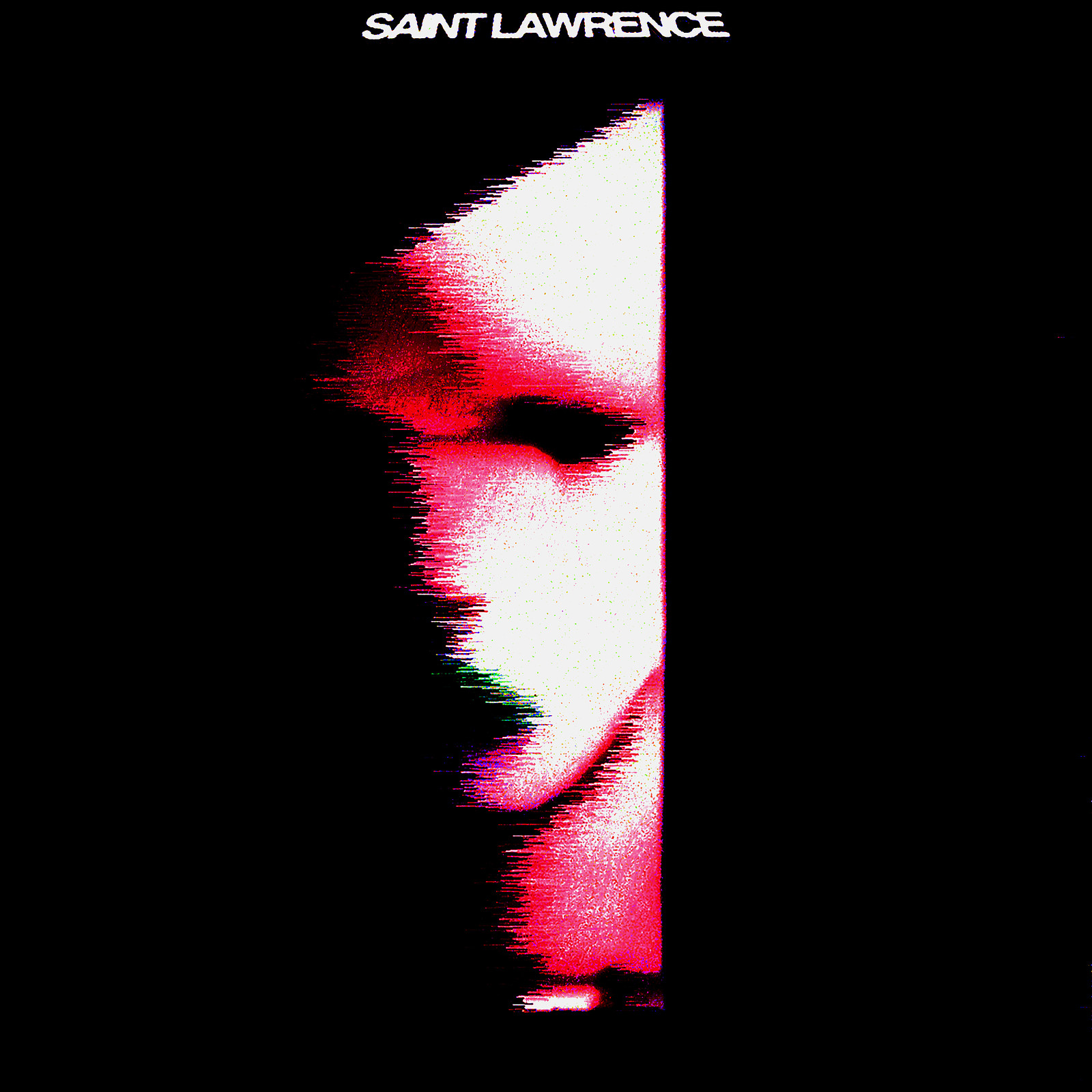
Sometimes, The Best Thing Ever™ disguises itself as something arbitrary. In the case of SAINT LAWRENCE, his debut track “SO U” first came from that familiar itch of needing to create something, despite all limitations. Made out of a awkwardly tuned guitar, a catchy hook, and the feeling of losing your spark, “SO U” is a song about burnout that ironically helped its writer avoid burning out.
Right from the start, nothing could prepare you for the intense wave of emotions. The eclectic drum patterns and rigid glitches convey a sense of helplessness, being bitter at one’s predicament. The production is flawless for a debut track, with little elements like the occasional glitch adding to the steely vibe. Here, SAINT LAWRENCE’s performance is brooding yet intimate, carefully alternating between soft whispers and screaming with all the guts he can muster. Each detail builds into a satisfying breakdown that washes everything along with it.
It’s a once-in-a-blue-moon moment whenever an upcoming artist defines precisely what they want to do with their music, but it’s as if the stars aligned for SAINT LAWRENCE, given how polished his craft is. “SO U” not only provides a backdrop of what’s to come, it shoves you headfirst into the mayhem that is SAINT LAWRENCE.
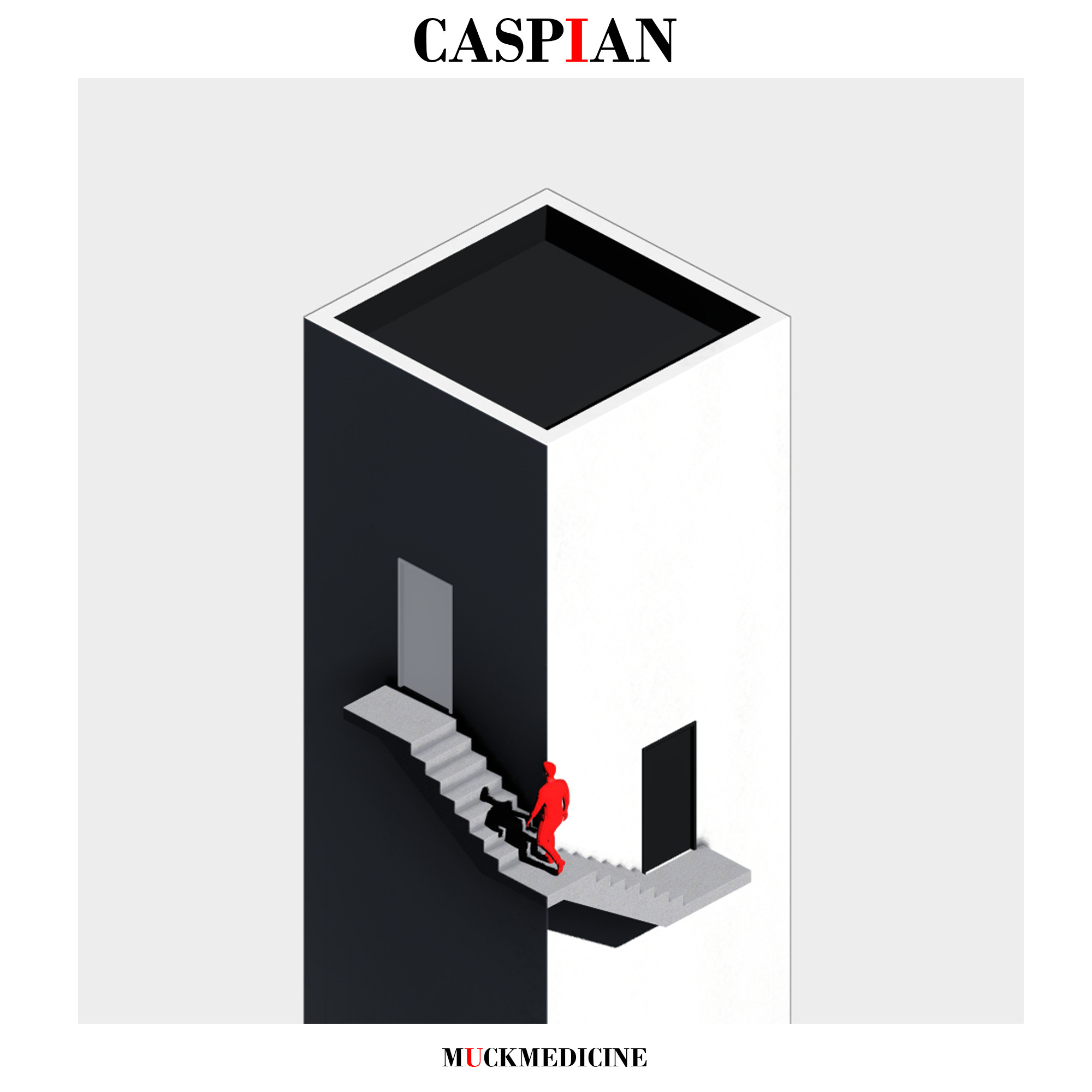
What do you get when you are in a dark bedroom, a Stratocaster, and being deep in the throes of melancholia? That’s what’s in store in muckmedicine’s newest EP “Caspian”. Spanning across 6 tracks are scattered thoughts and confessions left unsaid; a voice echoed through angsty indie rock. This EP is the second long-form release since Migs Tabilin’s debut EP “Inside Enclosures” back in 2020, and with this most recent project, he doubles down on his lo-fi sound. How muckmedicine differs from his sister band Fairview Far — which features more upbeat indie rock and playful lyrics — is that he takes the opportunity in his solo work to indulge in dejection.
With Tabilin’s solo work, he explores his melancholy and puts his inner monologue into song, using the audience as a stand-in for the person he wishes to let into his psyche. It’s intimate lyrically, which is only accentuated by the lo-fi vibe that Tabilin has embraced wholeheartedly. “Warmth” and “Erase Me (I Hope She Listens to Modern Baseball)” feature lyrics directed to a once-loved one. As a listener, it’s akin to reading a letter addressed to someone else, and what’s found in those letters is pining and unreciprocated love. The songwriting varies on other tracks, reading more like vignettes of thought. Scattered ideas similar to ones that intrusively pop up in your head while trying to go to sleep. This is seen in songs like “Please Play Florist At My Funeral” and the intro “Pattern,” which features a monologue from Ice King of Adventure Time. It adds to the DIY aesthetic, harkoning to tiktoks where people put midwest emo riffs on top of random monologues from cartoons.
True devastation is found in the combination of the two writing styles, which is no better showcased in the final track “Cut”. The song takes an even more sullen turn than the previous entries of the EP. It’s an unresolved goodbye led with resentment, and conversely, longing for what still could be. The abrupt and straightforward lines slice deep into the chest: “I don’t ever wanna see your fucking face again, I never wanted to see any of you again”. But the knife finds more purchase with the last line of the EP: “I never made a gesture, but I wanted you to stay”.
The production of the project lends a lot to the intimacy of the overall sound; The lo-fi bedroom rock sound only adds charm to the EP, further emphasizing the vibe of being alone in your room with only your thoughts to keep you company. The vocals are, at times, passed through an EQ filter, reminiscent of hearing a voicemail left late at night, as seen in “Wednesday”. The crunchy distortion of the guitars adds depth to the morose nature of the music and adds to the swell of the breakdowns in tracks like “Patterns” and “Cut”. The sound is evocative of the pandemic-era boom of home music production. When before it was a necessity, muckmedicine uses it as a tool to capture solitude and isolation, both physical and mental.
“Caspian” was an opportunity to say the things folks would never think to say out loud. To finally release the cacophony of thoughts and find closure in the music. The dedication on muckmedicine’s Bandcamp simply states “for our loved ones”, which could not be a more succinct description for the project. It’s an EP for victims of unrequited love and those who struggle to put into words the complex emotions they feel. Muckmedicine’s pandemic era sound was utilised beautifully in this project. As fitting as it was with the themes of isolation of the EP, it does leave the listener wondering if he’ll evolve his sound further in future projects. His style has been consistent to the point of stagnant with this EP sharing a lot of similarities from his initial EP which was released all the way back in 2020. 5 years later, it can be hard to tell if any time has passed at all. Knowing this, it just makes us even more eager to see what muckmedicine can come up with in his next endeavors.
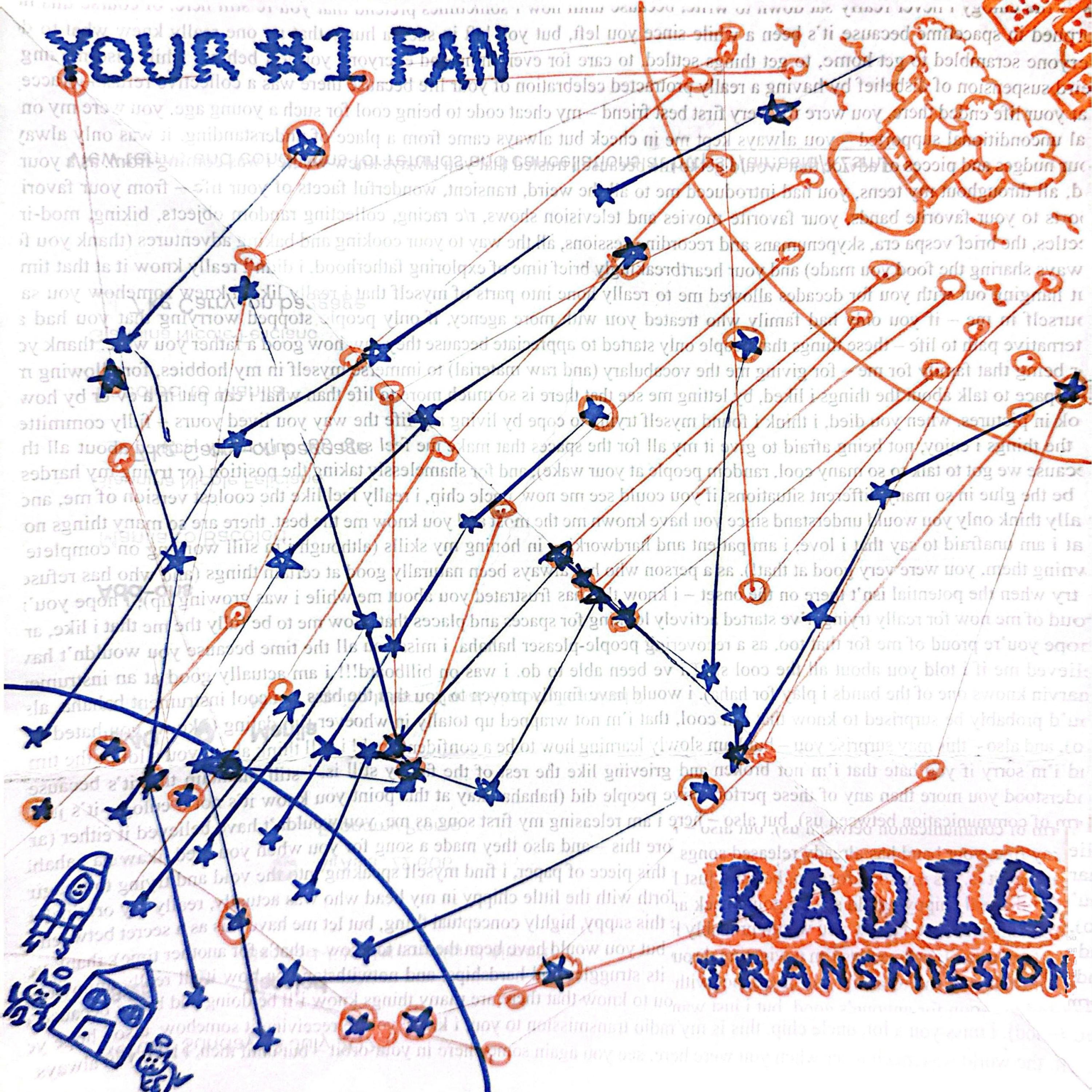
Every artist starts out as a fan. You get exposed to all the ways people express themselves and enjoy it so much that you’d want to take a shot at it yourself. So just as the name “Your #1 Fan” suggests, Nica Feliciano started out living and breathing music – frequenting gigs in the underground music scene; playing bass guitar for bands such as Bird Dens, Thirds, and The Purest Blue; and even putting up her own indie rock shows. It was inevitable that Your #1 Fan would eventually be expanded into a music project; that time has come with the release of her debut single, “Radio Transmission.”
The wonder and curiosity of being a fan is manifested in the music and lyrical themes of this song, a space rock ballad that sails like a probe traversing the cosmos. But the story remains mostly within the Earth’s atmosphere: here, Nica longs to make contact with somebody she loves who’s in another part of the world, wanting to know whether there’s a place for her in their heart even though they’re so far apart. The imagery of satellite communication courses through these lyrics, as it does in the music, with beeps and pulses that sound like incoming signals peppered throughout the song, which plays at a tempo meant to relive the grandeur of space travel.
However, the song picks up speed halfway through as Nica begins to blur the boundaries between the vast distance of two lovers on opposite sides of the Earth and our collective smallness within the universe. It no longer matters that life means we’re all tiny figures tethered to an ultimately tiny place: as long as she makes contact with the one she loves, the concept of dimensions just fades away.
Whenever we define ourselves with the celestial bodies, we often look to the Moon and its chase towards the Sun, or our relation with the stars, or even the depth of the unknown. Therefore, to hear an exploration on the celestial bodies we ourselves have created, and how we used our discoveries of outer space to bring us closer to one another no matter where we are in the world, is refreshing for once.
Which brings us back to the cyclical nature of the making of an artist: we take what we find in the artists that we love and make something from that for ourselves. With “Radio Transmission,” Your #1 Fan has successfully taken that one small step as an artist, and as Nica continues to release more music and plays more shows with this project, people can certainly look forward to the great leaps ahead.
Who knows? You could become Your #1 Fan’s no. 1 fan.
During the peak years of the Bedroom music era, Michael Seyer was indeed in his bedroom and making music described as “Beachy Stoner Rock,” Alternative Dreampop, and even Hypnagogic Pop. However, his body of work is far from your typical bedroom sound: his debut album, Ugly Boy, is like that one SB-129 episode from SpongeBob in the way that existential longing and loneliness are its primary themes; in “Bad Bonez”, Seyer reconstructs a warm, aching sorrow that would be heard instead of being seen in an Edvard Munch painting; and in A Good Fool, a newer, heavier wave of tenderness that was slightly hinted in his Nostalgia EP tugs your heartstrings with more depth than any of his previous work.
In Boylife, Michael Seyer doesn’t offer a coming-of-age bedroom pop anthem or a grand expedition on the epic highs and lows of navigating masculinity in the Fil-Am diaspora. Released under his brand new, independent DIY label Seyerland, the new album shares the same warm, subtle hues from his previous work through his persistent use of slow-moving percussion, delay effects, a mushy vignette of white and brown noises, and his loosely subdued vocals — only that this time, Seyer’s lair of creativity sheds layers of existential tensions and packs in horizons of growth, reflection, and endless love.
Taking inspiration from John Lennon’s Plastic Ono Band where Lennon randomly adds a Cookie Monster adlib in “Hold On” to make the song more fun, personal, and maybe even hint an inside joke that the listener can’t understand, Seyer surely reflects on these quirks: forming his own knicks and bolts to create an effect in a dozen tracks of pure sound and soul that is 100% his own unique story.
It’s a risky yet intimate act of connection between the songwriter and the listener when the former writes music for their own reflections only. We see Seyer take that risk in Boylife, dissecting boyhood through the overarching theme of his art: nostalgia. His unfiltered essence then transforms into shared emotion, where tracks like “Folktales,” “Taylor,” and “I Want To Be Your Dog” become hymns, choruses, and letters that come from understanding and experiencing.
The first three songs off of Boylife are a Dolly-effect zoom into where Michael Seyer is in his mind: he’s everywhere. The album begins as a sensory experience — it unfolds less like repetitive songs and more like a grounding technique for a young man realising that he has a place in this world, and now questions himself: “Is there something a man is supposed to become?” and even takes a jag at God to realise what love could mean in “Fiend,” where he sings “I need God, God’s not back.”
With each passing track, being worried about Michael Seyer is a non-negotiable. “Don’t Worry” uses a descending melody as Seyer descends into a full-fledged crash-out– an honest yet cannon event for most people. Followed by a messy drum sequence in “Manlife,” the listener is then whiplashed at the very end as a nearly inaudible, muffled voice that is Seyer’s Father reaching out to him: “Hey Migs, it’s Dad, call me.” Perhaps it’s safe to say that sometimes, all it takes is a voice call from a loved one to snap back into the real world, or to look through a lens that isn’t so clouded with grain and distortion.
Speaking of distortion, the latter end of Boylife shies away from the loudness and upbeat songs about growing pains and stays loyal to the Lennon-esque demos and outtakes approach, where the primary instrument is an acoustic guitar that is paired with timeless serenades of love poems and reassurances. The lines “We can be ghosts together/And we’ll disappear/ We can be ghosts together/ When there’s no one near” conclude and showcase Seyer’s most deeply quiet yet distilled form. He isn’t trying to resolve the chaos of Boyhood, he instead embraces it. He embraces the liminality, the softness, the ache.
Michael Seyer gifts a scrapbook of memories through ambient noise, whispered admissions, squeaky yet steady vocals, certainly a Stratocaster of sorts, likely a second-hand synthesiser from the Glam Rock era, and lovesick lullabies that feel so intimate yet so profoundly universal. Michael Seyer doesn’t gift a resolution but more a revelation to himself: the revelation of becoming. Becoming a son, a boy, a man, an artist, a lover, a person, and all the feelings that come with that.
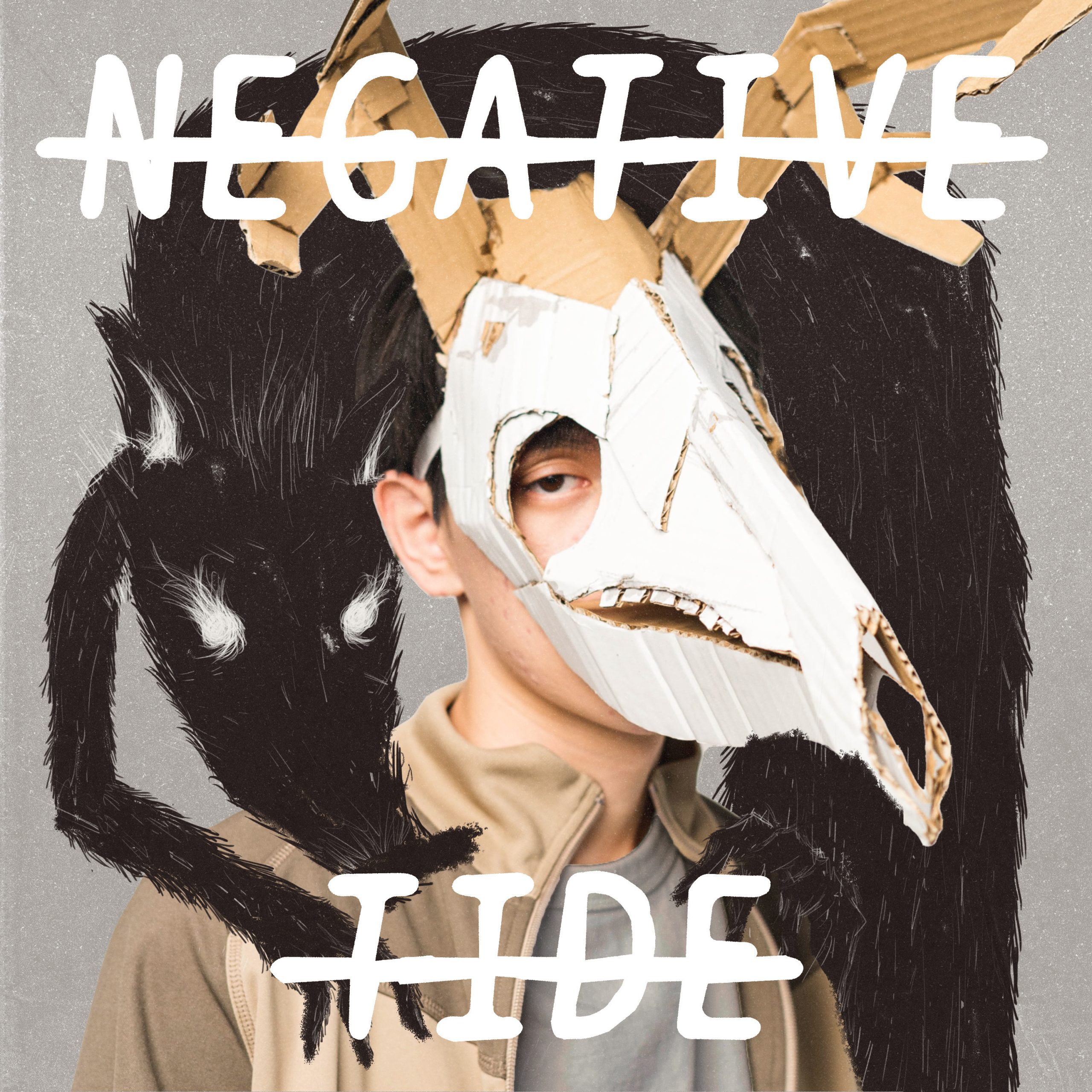
The debut album from Fatigued arrives not with a bang, but with a whisper — yet its emotional resonance is anything but quiet. Nearly five years later, Emilio Gonzales’ solo project approaches to submerge us in the sentimental undercurrent of ‘Negative Tide’.
Fatigued’s ten-track album is an introspective indie pop journey through uncertainty and quiet resilience, reflecting the experiences of the musician during the hectic process of ‘Negative Tide’. The opening track, “Oversized Words,” explores the struggle of articulating emotions and emotional disconnection in presence of hazy guitars, which is a prevalent theme throughout the release.
A notable track “Temples” is a poignant commentary on the difficulty of self-improvement, expressing discontent with social expectations or conventions. Leaning on instrumentation, and the lyrics take a subtler, more restrained approach in “Take the Beating,” establishes the plea of emotional exile the best; the lines “Send me / To a home I used to be / Alone with my thoughts” echoes the theme of the album’s title and tone. What makes the track compelling is its stripped-back approach and emotional honesty holds back just enough to let the listener linger in the tension, the ache, and the silence of resignation. Fatigued channels his influences into something distinctively personal, crafting a sound that serves as a vessel for his ruminations.
“Instant Disconnection” serves as a conclusion to its themes of inner turmoil and emotional exhaustion. While the album as a whole leans into a consistent mood of bleak introspection, it offers a subtle shift: not necessarily toward resolution, but toward resignation or quiet acceptance.
The strength indeed lies in its thematic consistency and emotional honesty. Gonzales does not shy away from exploring discomfort and vulnerability. The lyrical quality is not overly abstract, making the weight of the tracks accessible and relatable to the listener. However, while the songs blend into one another, it lacks further dynamic shifts that could cover more emotional and sonic textures. The middle section of the album lacks space for experimentation; However, its sincerity and homage to the genre is still intact.
‘Negative Tide’ is a compelling indie pop monologue of emotional unrest. Fatigued’s sophomore album doesn’t just express vulnerability but inhabits it fully. The album has an unwavering commitment to thematic consistency and emotional transparency. Gonzales lives in a world where discomfort is explored with sincerity and grit, the band shows no signs of exhaustion — if anything Fatigued’s creative tide is still rising. For an album steeped in emotional unrest, it ends with remarkable clarity.
Following the release of their first single “Imaginary Party”, Bacolod’s budding rock project Novocrane doubles down on their dream pop style with their second-ever single “Safe and Sound”. Studious listeners will remember a bare-bones version of the track being teased a year ago on their Soundcloud under the name “from there,” but now it’s polished with their aesthetic that meshes indie rock and dream pop.
In contrast to their first single, “Safe and Sound” takes an introspective turn and looks inward. The song tackles the conundrum of self-isolation. Kai Sevillano, the band’s lead, gives the listener a front row seat to her thought process, presenting the quandary ruminating in her mind: While one can find refuge in being alone, the suffocating demand for human connection is ever-present. The songwriting adds a layer of candidness to the words that is evocative of an anxiety-induced trail of thought and gives room to showcase her warm and intimate vocals.
The vocal performance and poignant lyrics are only accentuated by the marriage of indie rock and dream pop, which is becoming a defining feature for Novocrane’s overall sound. The way the band coalesces the grungy guitar and high-attack drums with bright, glittery synths drowned in reverb creates an atmosphere of angst that will make you bob your head while you rethink your approach to relationships. In combination with Sevillano’s resonant vocal performance, it yields such a cohesive sound that it’s hard to believe that this is just their second release.
“Safe and Sound,” along with their previous single “Imaginary Party,” lays a promising groundwork for the Novocrane’s growth. Their charming soundscape has once again proven to be a welcome addition to the indie scene. With this track being only their second-ever official release, fans are eager to see how they expand on this fusion of genres in future projects.
Solo artist jucu doesn’t fake it. His latest EP, tanging alaala, plays like a memory dragged into the present—half-faded, half-reconstructed, but it doesn’t pretend to be authentic. The “distant memories” he sketches out aren’t framed through nostalgia but through the raw texture of alternative sounds. These are genres that doubled as both shelter and symptom during the post-pandemic ennui: post-punk, shoegaze, indie-folk, and other guitar-led corners of the scene. It’s a familiar palette for Gen Z’s genre-hopping musicians—the ones who aren’t afraid to twist the template and upload the results straight to the void (for this case, his expansive discography on his Soundcloud account).
tanging alaala reads like a dare. It’s a direct translation: “only memory.” Obvious? Sure. But it works because jucu doesn’t try to cloak honesty in metaphor. The name is a low-hanging fruit, but sometimes, that’s where the sweetness is.
From the opening tracks, “Insomnia” and “Salubong ng Ating Mata,” jucu shoves expectations aside; Drum machines sprint, and the acoustic riffs snap into reverb-heavy guitar washes. The production jolts, but it holds together. “Cookies and Cream,” the EP’s centerpiece, sprawls out at six minutes—a dangerous length for a young artist worth their salt in sticking to one sound—but jucu makes it land. The track meanders through hazy shoegaze into a kind of misted-over noise rock, his vocals ghostly, but it so happens to stay grounded throughout the entire thing. By the time “our love has faded away” hits, the emotional terrain feels more regional than imported, it is transformed into post-punk grown from local soil instead of borrowed from across the ponds of the revivalists of the North Americas (think Beat Happening, Surf Curse or even Voxtrot) or even the cloudy skies of the United Kingdom (think Cleaners from Venus, Joy Division or Young Marble Giants).
No, tanging alaala doesn’t transcend genre—it doesn’t try to. And maybe that’s its biggest strength. jucu knows the blueprint and doesn’t flinch. He stays inside the frame but paints it with a sense of clarity most genre experimenters tend to blur. The textures, the pacing, the commitment to the mood: it’s all consistent. Maybe too consistent, whereas the conventions might act as a detriment if ever they choose to lessen the experimentation and continue to rely on these conventions heavily. There are moments in this EP that beg for rupture or surprise, but jucu plays it straight, showing that sometimes the best way to make a statement is to simply do the thing well.
It’s not anything new, per se, but rather a refinement of the sound. There’s something real forming here—maybe even something worth sticking around for. tanging alaala diamond in the rough waiting to be discovered.
At midnight, gasping for air, wondering where life will take on, emptiness appears in a dreamlike sequence. It’s peculiar, it’s suffocating, but it has always been familiar, like the hand of a lover who swore to hold on tight when diving deep into the trenches. Well, Linger Escape holds a requiem for that feeling in their debut album, We All End In The Same Place.
In the world of nu-gaze, it’s easy to put on a respirator to filter out the fumes of repetitiveness found in shoegaze and other genres that fall under that umbrella; that repetitiveness being the same knobs of emotion being turned on the guitar pedal, the longing, the distortion, the buzzing, the fizzling, the static, the reverb, all of it. Perhaps, things don’t have to sound unique to be good, or the very essence of repetitiveness is not inherently bad, and that is where Linger Escape proves that those fumes aren’t toxic at all:
In “Nothing”, the 2000s Nu-metal riff seeps in and blends with the honesty found in the lyrics. Instead of pairing the growling vocals with a sensual approach, the low-frequency phone call effect used in the primary vocals instead creates a dichotomy of past versus present, or, bringing emphasis to the lyrics “still digging for the bones, of what once was, of what has been”. Their most popular track, “Whisper”, thrusts a knee-jerk response to the listener prompted by the change in atmosphere. The song takes you to outer space where everything is uncertain, and all there is left is to ponder, once the riff glides into climax, the song ends as if the listener is taken through a metaphysical spiral, circling through the axis of experiences, memories, and so on.
We All End In The Same Place is an 8-track album where the first half seems as though the band is hurriedly yet slowly establishing their true voice, presenting their sonic capabilities through varied quirks and sequences in the guitar distortion and the heavier percussion. As the latter half of the album proceeds after the 5th track, Linger Escape progresses and establishes that unflinchingly honest voice and sound. In “Gone”, the longest track on the record, the band unleashes the restraint of complex emotions that are evident in “Kin” and “Vermin”. Unfolding into a slow yet cathartic release with the soft yet stern meddles of the drums and the guitar as raw as the vocals, the listener is almost compelled to feel doom that the song will eventually come to an end. Will they be in the same place as they were before? Only time and the act of submersion into nostalgia can tell. As the album ends with “Bloom”, Linger Escape’s evolution is palpable. A sense of finality hits, and everything makes sense: the very sequence of before, during, and after. Shoutout to all the Life Is Strange fans out there. This is Max Caufield as an album.
Overall, this album paves the way for the Bicol Shoegaze scene. It isn’t just a debut album; it’s a statement of intent. The four-piece doesn’t shy away from merging different sounds into one nostalgia-core mood board, and it doesn’t try to reinvent the genre either– they hold a mirror, albeit smudged and fogged, and let the listener look into its depths and take a deep, long breath.
Fallen angels—once held in the heavens, now cast down, wandering in the aftermath of their descent. .foollstop’s “L” is shaped in a similar sentiment, an anthem of loss, reflection, lost in the reverie of ill-fated romances. San Pablo’s .foollstop has released their initial shoegaze track, a year elapsing since their live debut at Mow’s.
The euphonious mix of the instruments, Huwakin’s and Ice’s vocals are cascading rivers of tears that transcend into sound, echoing throughout the song. A touch of rap alongside shoegaze is featured in the second verse, which is not something you hear in the genre every day; The monologue section before the breakdown of “L” is a bursting bottle loaded with emotions that erupts in the ending, drowning in tremolo-picked guitars and layers of vocals. Taking a glimpse at their “L” demo in Sining Shelter’s compilation “tunes for a true home,” the band slid the key into the right lock in the final version by incorporating more audio tracks in the mix.
“L” weaves biblical metaphors into its narrative, portraying the perspective of a fallen angel caught in a fleeting situationship. Just as the fallen angel once knew the embrace of heaven, the narrator reflects on the short-lived moments of a love that couldn’t last.
You may interpret various words from “L” such as “loss,” “ love,” or “limbo” but you can not associate the band’s debut with “loss.” Unlike the fallen angels, .foollstop’s wings chose to soar and may further introduce something of substance in an uncertain future.
There is something spellbinding about Chinese Garden’s debut single, “In Hiding.” From the first note, the track pulls you into a world that’s haunting and hypnotic. The lead vocalist’s longing, almost yodeling runs are the centerpiece, weaving through a sonic landscape that feels both intimate and expansive. Twisted electronic textures flicker in the distance, while sparse, echoing instruments create a sense of unease. Meanwhile, the loud, fuzzy guitar in the foreground anchors the track, giving it a visceral edge.
The band’s mellow arrangements and poetic syntax feel tailor-made for the yearning hearts and restless souls of “In Hiding.” The production teeters on the edge of collapse, like a glitching computer on the verge of melting—yet it never loses its grip. Instead, it adds a layer of unpredictability that makes “In Hiding” all the more compelling. Bright, shimmering guitar tones cut through the haze while the delays stretch into infinity, creating a dreamlike atmosphere that’s hard to shake off.
“In Hiding” speaks a language that resonates with dive bar scenesters and acoustic purists who’ve embraced the digital age. It’s a track that defies easy categorization, drawing comparisons to Phoebe Bridgers and Snail Mail but ultimately carving out a sound entirely its own. By the time the song ends, it’s clear that Chinese Garden isn’t just another band in the indie crop—they’re a unique force that’s unafraid to blur the lines either from the organic and the electronic, the nostalgic and the futuristic. The track lives in between.