A close look at Indonesia’s rich history reveals specific moments in its music deemed significant in the past. The Pop Kreatif scene in the 70s – 80s, the existence of bands and musicians like Koes Plus and Chrisye, and the distribution of bootleg tapes of foreign music that influenced so much of Indonesian music, are big examples of that. Despite the negative economic effects that came from the harsh political climate throughout the Old Order and New Order regimes as well as shaky record label deals that stifled the proper archival of older Indonesian music, the modern methods of compilations and online uploads of records and songs released in the 60s – 70s still gave them their spot to echo. Once a figment of the past, it is now slowly being brought to the present once more.
In the city of Surabaya, Indonesia – a home to significant names of the Indonesian music scene such as Ervinna and Dara Puspita – lies the band Thee Marloes, signed under the Big Crown Records label. Comprised of Natassya Sianturi (vocalist & keyboardist), Tommy Satwick (drummer), and Sinatrya “Raka” Dharaka (guitarist & producer), the members crossed paths through their passion for music, Natassya’s performances in local shows and Tommy and Sinatrya’s constant band & DJ pursuits have allowed their paths to meet. Natassya’s love for retro soul and pop has established what Thee Marloes will eventually become: classic soul with the city of Surabaya filling its identity.
‘Perak’, their debut album, becomes the band’s firm statement of who they are and what they bring to Indonesia’s musical landscape. Lush soul with scoops of jazz rhythms and pop hookiness, all tied by the fragments of love-driven stories that light up the streets of Surabaya’s cityscape. A combination of local and universal elements held together through warmly cushioned production and especially Natassya’s serene singing. Her voice deftly weaves across English and Malay, bringing such kindling flair to songs like ‘Over’ and ‘Nona’ where she soars around pretty backing vocals, and ‘True Love’ where she opts for an alluring voice that effectively pulls you into the song’s humid atmosphere.
But, of course, the band’s instrumental chemistry is also something to behold. Their flexibility allows more supple charm to be embossed in these compositions. Whether that be the shuffling rhythms shown off in the drum and bass rumbles of ‘Midnight Hotline’ and ‘I Know’, the psychedelic dazzle of ‘Logika’ coming through the organ sounding keys and simmering grooves, and the relaxing affirmation of ‘Not Today’ with the soulful layers of bright keys, simple drum patterns, and gentle guitars. Their melodic variations add more elegance, leaving more color to stew within the record.
The album title, when translated, means ‘silver’. An apt word for what Thee Marloes has displayed with their debut album thus far, approaching the spirit of the city of Sarubaya and the familiar beauty of soul and R&B with malleability, further shaping themselves in the process. ‘Perak’ only adds another page to Indonesia’s vibrant music history. A reminder of soul, disco, and funk music that once permeated their past, giving life for those genres to breathe with excitement today.
Beginning in the pandemic confined inside his bedroom in Quezon City, one must imagine that Oz Kabuhat did not have the premonitory insight of the artistry he was to grow into years down the line.
After all, who possesses a foresight of that magnitude at eighteen?
What Joshua Kabuhat did possess, however, was the guts to experiment with sounds and musical collaborators, providing the musician with a colorful portfolio of projects long before the Oz Kabuhat name was ever uttered. OZO’s own Luis Peczon and Pat Pagsuyuin, along with Joshua himself, once made up Anacreous, a psychedelic rock band that released tracks like “Killer Ape Theory”, “Celestials”, “The Cataract”, and “The Moon from Sicily” from 2020 to 2021. Scrounging the depths of Soundcloud procures __bamm.sakk, Kabuhat’s project with Brennan Ng, who would later come to be OZO’s lead guitarist. The experiential soundscape that “MAMBO” produces is the most experimental release that Kabuhat has put out to date, while traces of the artist’s signature falsetto appear in “All I Feel”. His deliberate nonconformity was impressive, but all the while oblique and aloof toward the listener.
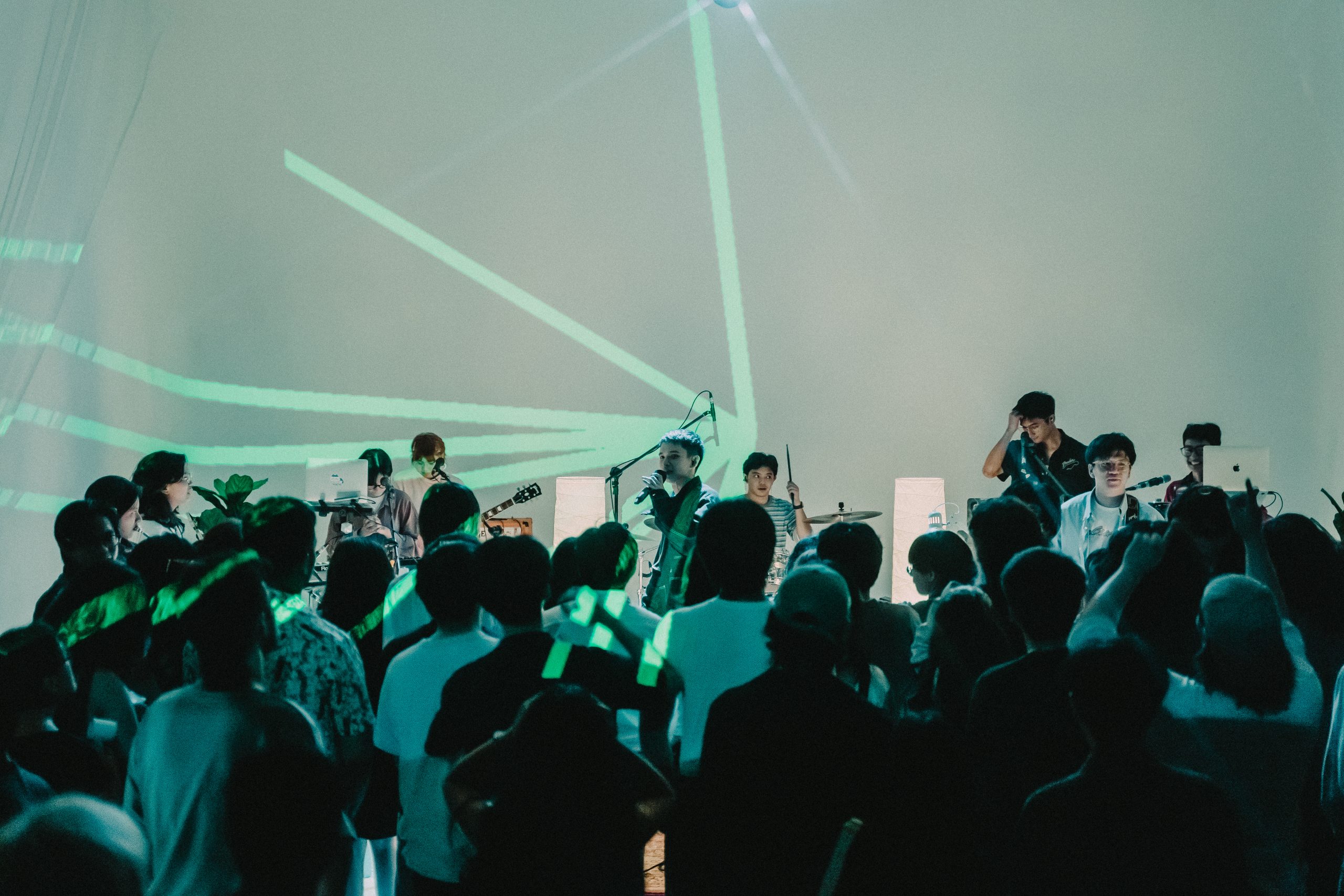
Stepping foot inside OZO’s EP launch of That, I Know, you are immediately hit with a sense of homecoming. Kabuhat is a warm host, greeting guests who come up to him with congratulations as he darts through the venue, getting last-minute preparations ready for the first act of the night. Inadvertently, the collective that gathers on this one rainy evening in Chino Roces takes the shape of a retrospective of a body of work and life;It is this retrospective that Kabuhat and the rest of OZO seem to be continually inspired by. That, I Know is a classically experiential EP and traditionally avant-garde in the way that has since become expected of Kabuhat’s endeavors. But, there is a truthfulness that lives within the entire band, inducing a coming together of musical minds that proves even greater than the sum of its parts.
Kabuhat finally gives way to a simple honesty with OZO, and this honesty speaks for itself in That, I Know. Schoolmates, peers, mentors, and supporters all gather this evening, almost as a visual manifestation of the EP’s thematic core, which is experiencing life as life happens. It all goes to show that no man is an island, but he may be in a swimming pool with his friends, making the best music you’ll hear this decade.
*This interview has been edited for clarity and brevity
Hannah: You’ve shed the solo act in favor of a band—a family, as you’ve called it before. Talk to us through it.
Kabuhat: These songs [started] with me and Luis, our bassist—we write together a lot. That’s the very beginning of the entire process, it starts with songwriting talaga…Hindi siya linear process for me na it has to start with songwriting, but this EP all started talaga with songwriting. I write it, I give a demo, they add their stuff, and then that’s what happens. It’s just as mundane as working on it together and passing it to the next bandmate.
Hannah:Your vocal talents, which have taken us through the best of the different iterations of Oz Kabuhat, are a signature of your sound. How do you work with an asset as distinctly attributed to you while keeping things different?
Kabuhat:I’m not really trying to brag in any way, but the challenge for me or maybe my band as well, is less of making my voice work but more on making sure that whatever experiment we do, is still us. We don’t consider my voice something difficult to apply to experiments; it’s really just more of how truthful our artistry is, no matter the experiment.
Photo from Phoenix
Hannah:OZO is made up of musicians who have paved their own paths in music over the years. Is there any discourse that goes on when sharing creative reign over a song with such a varied mix of musicians?
Kabuhat:We have really different influences. Pat is really heavy on classical piano, Brennan is on the Bossa side, Jaime is a folky drummer, tapos me, experimental and electronic talaga. Honestly, you’d be surprised that there’s rarely any conflict in that creativity sense. As the producer, I think I have the capability to ensure na we have one direction and no matter how diverse the bandmates are, we produce the songs in a way na we can utilize their strengths. If that makes sense. When you think about it, there’s no clash because everyone’s using their skills in the songs, and I think that’s what makes the EP experimental. It’s really just because of the pursuit of our own artistry and being as honest as possible. It’s the umbrella for our music, honesty, and authenticity. It really makes everything work for us, especially since we’re all diverse.
I’m not really trying to brag in any way, but the challenge for me or maybe my band as well, is less of making my voice work but more on making sure that whatever experiment we do, is still us.
Hannah:You’ve also mentioned in the past that your genre-bending is motivated by “serving the song”. How does being nonconforming aid or provide difficulty in distinguishing yourself from past eras of yourself musically?
Kabuhat: There’s definitely some form of anxiety as to whether or not we’re gonna be perceived as a non-conforming band, because truth be told, we’re not. Our goal is not to be fluid in [the] sense that we have no focus. The EP is pretty experimental, and it edges whatever bound of genre the particular songs are in. But genre to us nowadays is just a tool that we utilize, because our main thing is emotion. That’s the genre in our head, if that makes sense. We just utilize genres to help the emotion that the EP is trying to portray, because like what we said, the EP is about life. It’s a general assumption of life, so the journey that the EP takes you is meant to reflect life. So, as much as possible, we really try to prioritize the emotions, and that leads us to experiment a lot. If it’s hard, yes, it’s a bit hard nga. Stripping away the genre of each song, there is one genre we’re following, which is jazz fusion and electropop, but since we prioritize the emotions per song, it tends to go heavier on this subgenre and heavier on that subgenre.
Photo from OZO
Hannah:You’ve described OZO as an act whose creative growth coincides with the band’s personal growth. Talk us through the creation process of “That, I Know” and how OZO grew as people while making the EP.
Kabuhat: I guess it took us almost a year writing and producing everything, the first [track] being “That I Know,” and then the last one we made was “Online”. And it’s six songs so nakakaintimidate, para na ‘tong album. I think kaya matagal din is because we were writing—I was writing—from the freshest emotions, like that was happening to me at that moment. It reflected my life because I was writing at that point in my life, if that makes sense. I wrote “Carefully” during the time my lola was going through something. It reflects our growth because we were writing [the EP] as we were just experiencing life as it happened, we wrote about that.
Hannah:If anything, what is the one track you would pick that would reintroduce the band?
Kabuhat: “Only You”. Before, yes, I was writing from honesty and from the heart, but there were extra steps, so many extra steps I wanted to take because I wanted to sound very, very unique. Now, I just stripped all of that off and I’m just pursuing what’s real and what’s fun to us, and making music that we enjoy while being honest. I think it encapsulates that because that was the most fun I’ve had making a song, and it’s just gonna hopefully be the main priority from here on out, really just trying to make honest music and making music that we enjoy. In that way, I would reintroduce us with “Only You”.
There’s definitely some form of anxiety as to whether or not we’re gonna be perceived as a non-conforming band, because truth be told, we’re not. Our goal is not to be fluid in [the] sense that we have no focus.
Hannah:Emotions are what run the mechanisms behind this EP. What emotions of yours were the loudest leading up to the release of this EP?
Kabuhat: Syempre, from a brand and business standpoint, there was undoubtedly a lot of anxiety and fear as to if this was gonna be received well or not. But I don’t think anyone gave it much thought, din. There was anxiousness, but were all just driven by how honest the work we did was and we were just so glad that we were making music that we truly enjoy and music that’s like wearing no masks on just us and just us enjoying our honest, if you know what I mean, We’re just pursuing our true selves like no matter what happens. So, it was a rollercoaster of emotions, but at the end of the day, it felt better knowing that we were putting out something that was like no masks on, just truth and honesty, and so much more fun than before.
Hannah:How does collaborating with trusted collaborators and close friends unlock a new level of honesty?
Kabuhat: Oh, yeah. That’s something I super duper advocate for, like any day of the week. You have to choose the people you work with on a daily basis. I think it’s common knowledge naman na if you’re really close to a good level with those you’re in a band with, I think it’ll resonate with your art that you guys are making music out of love, and out of joy. And it’s not just a job for you guys, alam mo yun? It’s not just some project, it’s something you guys are enjoying doing together. We try to reflect that specifically in this debut EP na we’re just—like our cover art. We’re just swimming, we’re hanging out. So, you want to be caught candidly living lang. That’s the whole theme of everything, it’s just us, we’re living, and the importance of being with a trusted group of people is something I keep advocating talaga. It’s super duper important for me and I think it shows with the work we put out and how close we are with each other.
It was a rollercoaster of emotions, but at the end of the day, it felt better knowing that we were putting out something that was like no masks on, just truth and honesty, and so much more fun than before.
Hannah:You’ve been making music with your current bandmates as early as senior high. Anacreous and __bamm.sakk, namely, were projects you took on with Luis, Pat, and Brennan, respectively. How do these past sounds and identities contrast with the most recent OZO?
Kabuhat: I’m sure may hatak from my personal life yung mga ginagawa ko before. But yung highest priority ko before was to carve out something so unique and odd and new. No matter what genre I was in, I got into alt rock, I got into pop, a lot of electronic stuff. Before, my highest priority was to carve out something so unique na I’m not comparable to others. And how it contrasts to now, it’s just very different.
Hannah:What did you choose to leave and take with you when you entered this new era with OZO?
Kabuhat: Feeling ko hindi to sinasadya, it was just natural kasi diverse nga kami, pero the experimentalness [of the band]. I involuntarily brought that with me because it’s something we can do to make sure na everyone’s expressing well talaga sa band. Parang, it’s hard to follow a very conventional genre if we’re a very diverse group of artists. I think that’s something we naturally brought along with us in this new era, that experimental fusion of everything which is present in everything ever since bamm.sakk. If there’s something I left—I don’t want to call it pretentiousness eh, it’s just that pursuit of being different, that’s something I really let go. Before, I enjoyed being vague with lyrics, and even if it’s still vague now in some sense, I definitely left the intentionality of being vague and odd. Right now I’m trying my best to communicate talaga.
Photo from Phoenix
Hannah:What was it like taking the EP to the live stage for the first time?
Kabuhat: Disclaimer lang, we’re still learning about everything din. But yeah, we practiced a lot, talaga. And… I think it’s harder for us din because andami nating gear. Kasi ayun nga, very maximalist yung production namin, and we try to reflect that as truthfully as possible, live. All the sound effects, yung DJ namin, Daboy, he’s actually doing it live. It took us a lot of practice, siguro even predating the ones specifically for the EP launch. It’s really just hours of figuring cables… and that is what I would say is the biggest struggle, managing all the electronics. That’s still taking us a long time to optimize. In preparation for the EP show, we tried to make sure we were in a good big space that has all the gear we need to help us optimize our rehearsals and syempre nauna namin yung how loud each person is, which is a big challenge because we’re also a big band. So deliberate runs through the songs lang, and then one by one natin ifeflesh out who should be louder, who should be softer, what should be happening here, and what shouldn’t.
That’s the whole theme of everything, it’s just us, we’re living, and the importance of being with a trusted group of people is something I keep advocating talaga.
Hannah:What is your approach to the inevitable conversation of becoming more marketable?
Kabuhat: It’s really great to feel all of the support, especially being under the radar. And as growth-oriented individuals, it’s a necessary growth for us to hit bigger markets. So, ayun, what I feel about it is that I really wanna do it. And I think we have the capacity to especially now. I feel like we’re gonna speak to a lot more people, we’re gonna inevitably be able to communicate to a bigger crowd, mainly because of a change in our approach. So yeah, I’m excited for it, I’m hopeful for it, and we want it. [laughs]
Hannah:In terms of plans and next steps for OZO, what should people be looking out for?
Kabuhat: We’re just gonna show more of ourselves and the music, really just introduce ourselves in a non-music way talaga. Everywhere else is also just ozo.online, but where we’re gonna reply immediately, most [likely on] Instagram, and we’re gonna be very active there. YouTube is gonna be very active for us as well! Because we’re gonna do a lot of stuff to showcase [ourselves] inside and outside of music.
Hannah:Is there anything left you’d like to say to your listeners, new and old?
Kabuhat: It’s so scary to show your true self on social media with so much stuff happening, but I think it’s our duty as artists not just to create, but to be honest in a world full of so much hate and lies. A lot of bad people think artistry is non-essential. I totally disagree, because I think we have a big responsibility in being honest for the world.
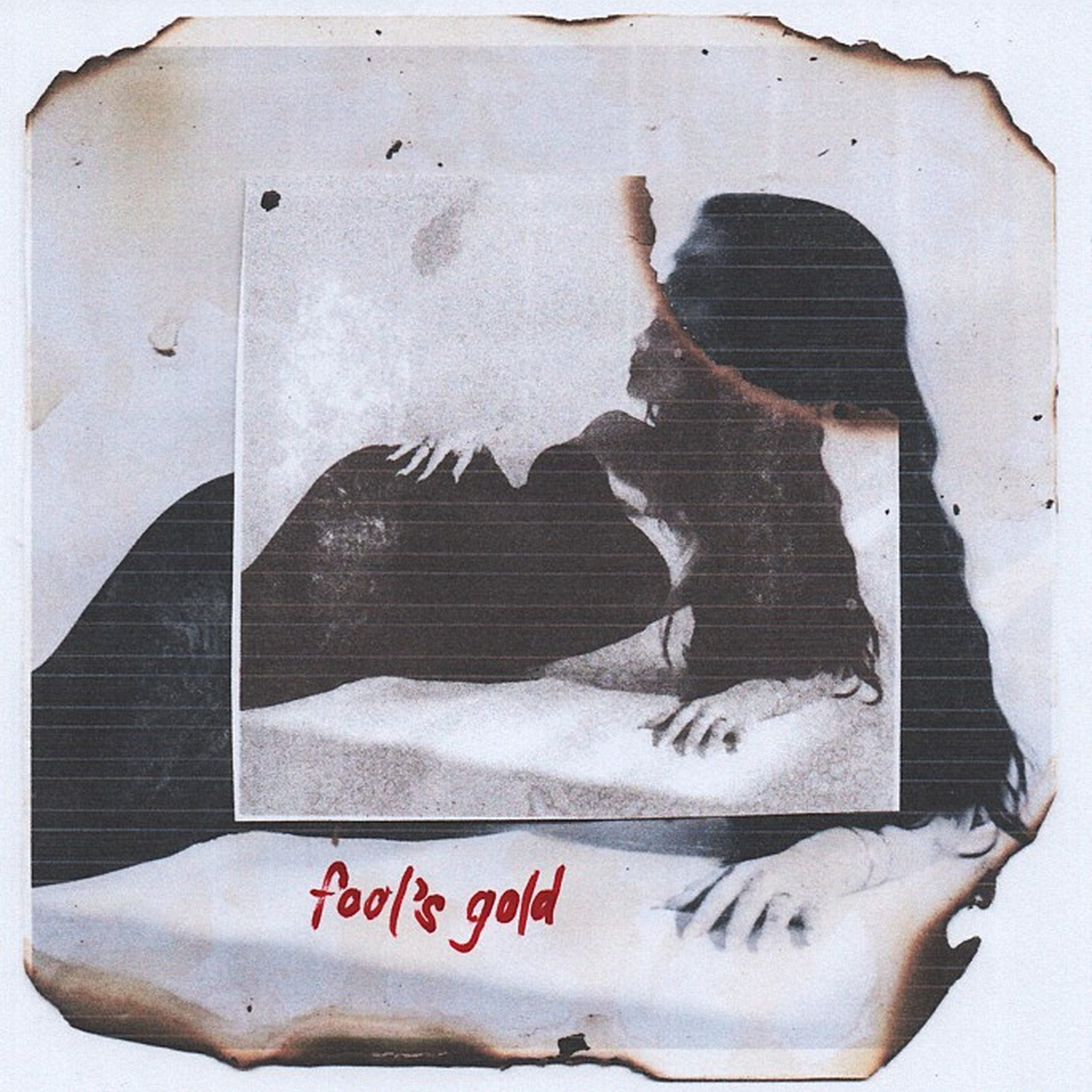
The interlude of “fool’s gold,” the latest EP from R&B singer-songwriter Jess Connelly, is a song that speaks of unconditional love. In under two minutes, she lays down creeds of a committed monogamy with somebody in spite of the vultures circling around them. The lyrics sung are the words we say to a lover when we know there is trust between the two of you, when acts of love need not be asked and feel like they just fall into place.
But putting it another way, these are the things we say to ourselves when we hold on to a stagnating relationship, when complacency sets in, and feelings turn lukewarm. Now you’re desperate to keep the relationship steady, but you know it’s not getting any better, what with the permeating silence and all the lit matches ready to catch a moth. The honeymoon is over, which is why it makes sense that Jess named this track “indelulude.”
This interlude is the turning point that bridges the two halves of a collection of songs in which Jess details the life cycle of a love that’s too good to be true: a rendezvous with a flame too thrilling to pass up on, too selfish to settle down with, but too powerful to forget. “fool’s gold” delivers this story upon a backdrop of class and elegance that we’ve come to expect from a Jess Connelly project, provided here by long-time collaborator LUSTBASS.
The moody atmosphere of the music and the greyscale cover art bring a noir feel to the EP, especially with the live instrumentation of the opening track “flow.” The sense of space brought by recording a live band, drawn particularly from the cymbal-heavy drumming, complements the feeling of wonder and excitement in wanting to get close to someone new, as though we see two people cozying up to each other at a bar. But it doesn’t take long for mischief to set in. On “fool me twice,” we find that this new person has wandering eyes, and we get a feeling that what the two have between them may not be as serious as she had hoped it to be. Nevertheless, she sticks around for a while, spellbound by a one-sided fling with somebody she couldn’t refuse.
But after this hallucination drifts in and out for the last time on “indelulude,” Jess has decided enough is enough. “never fall in love again” talks about the aftermath of this love affair, in which she makes it clear to her former lover that he will feel the absence of her unconditional love. But that doesn’t mean his absence hasn’t affected her either: after getting into a few rebounds, she reveals she might not be able to find true love just yet.
The final stage of grief is acceptance, and in the closing track “let the bird fly,” Jess confesses that the time she spent with this man was unforgettable. Over a jittery drum break, we see her rekindle things with him despite everything she learned about people like him throughout this EP. This is the part where the real delusions set in, where acceptance is taken as a chance to blindly start over with someone who will never change and has taught another to do the same.
Likewise, “fool’s gold,” in its intoxicating drama set to a warm, cozy score, is a project you will come back to again and again. Jess Connelly’s impeccable writing and composition, combined with LUSTBASS’s ear for space and instrumentation, have produced the perfect soundtrack to get you through a failed relationship, where you’re hung up on the things that could’ve been with someone you needed to get away from.
Which brings us to the waltz-like beat at the end of the EP. It goes on for a few bars until it abruptly stops, slowing down like a record no one wants to hear again. Did Jess break the cycle? Were the events in the last song just all in her head? We can only guess the answers to these questions because the story is over.
With worn-out confessions scattered across his discography, unikko ijo’s brand of writing has earned him a special place among yearners who cover his songs on a dying digicam or create intricate lyric art that gets passed around their timeline. But after half a decade of writing unrequited ballads, the solo artist seems to have hit a checkpoint. His latest album entitled “kung ipagdaramot ang nadarama, saan ba tayo mapupunta?” shows a different resolve from the same artist who understands a little more about what it means to love.
“malayo sa lupa ang bituin” starts the album at its lowest point, thematically. The blaring electronic pianos set an alluring backdrop alongside his defeated quips as unikko ijo contemplates whether it’s worth it to keep loving. Amidst its catchy melody that predates virality, the song also asks the most important question yet, “itatago nalang ba ang nadarama sa iyo?”. Throughout the album, he gradually builds up his answer.
Halfway, songs like “kakaiba,” “matiwasay,” and “sapat nang hindi ka magsalita” fluffs up that familiar melding of Manila sound and lo-fi bedroom pop unikko ijo’s known for. The production is much more polished while retaining those intimate imperfections that drive home the sincerity in his words. As always, the solo artist is effective at building choruses that plant themselves in your eardrums. The simple song structure in the form of drum loops and hooky guitar riffs serves not only as a vessel but as the driving force for his talent at infiltrating your emotions with his intimacy and relatability.
In “Hiwaga”, we get unikko ijo’s answer in the form of a question that bears the name of the album. “kung ipagdaramot ang nadarama, saan ba tayo pupunta?” shares the sentiment that fruitless longing gets us nowhere. Those unspoken words, stolen looks, and hidden letters all turn to rot on their own. In hoarding your feelings and creating your own stories, you’ve built an inescapable tower, becoming a reminder that self-contained devotion can be selfish. What good does our silent pining do if it’s not to be seen? To be felt? To be transformed into another thing? Where do these intense emotions linger if not become the catalyst of our self-destruction? It may sound harsh for some and inspiring for others, but this is a truth that most of us have forgotten. After all, what use does love have if not shared?
The key to all this seems obvious. A line in “malayo sa lupa ang bituin” goes “babaguhin ko ang sarili ko”, a phrase that explains how the singer-songwriter sees the shift in his perspective that led to this album. At a glance, unikko ijo may seem like the type of artist who only has one gimmick, but this release reveals how he is capable of pushing the envelopes of his niche. “kung ipagdaramot” is the kind of album that emerges when an artist becomes aware of the clichés that surround his music and evolves along with it.
Another breakout song in the charts, and Imperial Manila is put on notice by the South yet again.
The culprit this time is one Bacoor representative, SAJKA (Sajka Jamaiah Formaran). Though his hit single “Nicotine” is making huge waves in local hip-hop’s algorithmic sphere, SAJKA brings more to the table than TikTok-core bait.
Perhaps SAJKA’s table is one filled with residues between tiny crevices and paper rolls rather than ashtrays because “Nicotine” is thematically the farthest you can get from understanding the artistry SAJKA is trying to achieve in his latest EP, Weed&Melodies.
The EP is a reggaeton project at its core with the occasional nods to afrobeat and funk, courtesy of Southrow Music producer ODMADEIT. There is no fine print. It is mostly weed and all melodies.
Adjacencies to the respiratory system and bad habits aside, the EP is packaged, rolled, and passed along as a THC trip, with explicit references to cannabis use and its effects, and without a single care about the forces under the state’s payroll. SAJKA even takes you on a ride-along in the standout track “Masid.”
While the concept is solid on paper, showing SAJKA’s strong potential as a genre-crossing visionary, the EP sometimes falls flat in execution. As a post-release single, “Bogsame” shows signs of fatigue from its initial run, with the song having offered barely anything that hasn’t already been explored in other tracks released prior (you may also look up tracks “Up and Down” and “Masid” that capture the same vibe but better). Even as an opening track, the candidness mixed with the self-indulgence of the ‘me and my friends are high as fuck’ attitude runs its course as quickly as it was introduced, only to make a better comeback in subsequent songs.
SAJKA, however, stands out when he fully embraces his reggae calling. “Horns” and “Burnin Paradise” are great displays of the artist in his element, paying homage to the genre he’s inspired by without losing authenticity.
There is still the curious case of the EP’s journeyman single. Despite the thematic incongruence already discussed above and the subtle genre shift, “Nicotine” — a hip-hop song first, a reggae song never — is still far from being a black sheep figure in the track list. Its success in the charts is undeniable, and its placement is only to the benefit of SAJKA, as it turns people’s heads to him and his more divergent undertaking. Hence, it plays the journeyman role.
But given the state that it’s in, sticking out like a sore thumb in the track list, it is rather interesting that it even exists in the first place. With just as much grasp of information as a common listener, I can only theorize as to why that is the case, of which I have a handful: First, “Nicotine” is an early prototype of Weed&Melodies before they went full reggae, and it somehow made the final cut. Secondly, reggae — even with its hip-hop overtones — is a hard sell, and “Nicotine” was used as an anchor to make it palatable for their target audiences. Lastly (and on a less serious yet more absurd note), tobacco may simply have a larger revenue share than weed in the Philippine stimulants market with more regulatory backing, thus attracting more potential listeners from a larger consumer base.
SAJKA is on a path of reinventing himself from just another laidback rapper in Cavite’s already saturated scene with like-minded contemporaries to a convention-breaking fusion artist. With a heavy background in hip-hop and a growing appreciation for adjacent genres like reggae, dance, and funk, “Nicotine” may just be part of the equation to a bigger calling that Weed&Melodies alludes to. Who knows? It might take a few more ‘hits’ before SAJKA reaches that eureka moment.
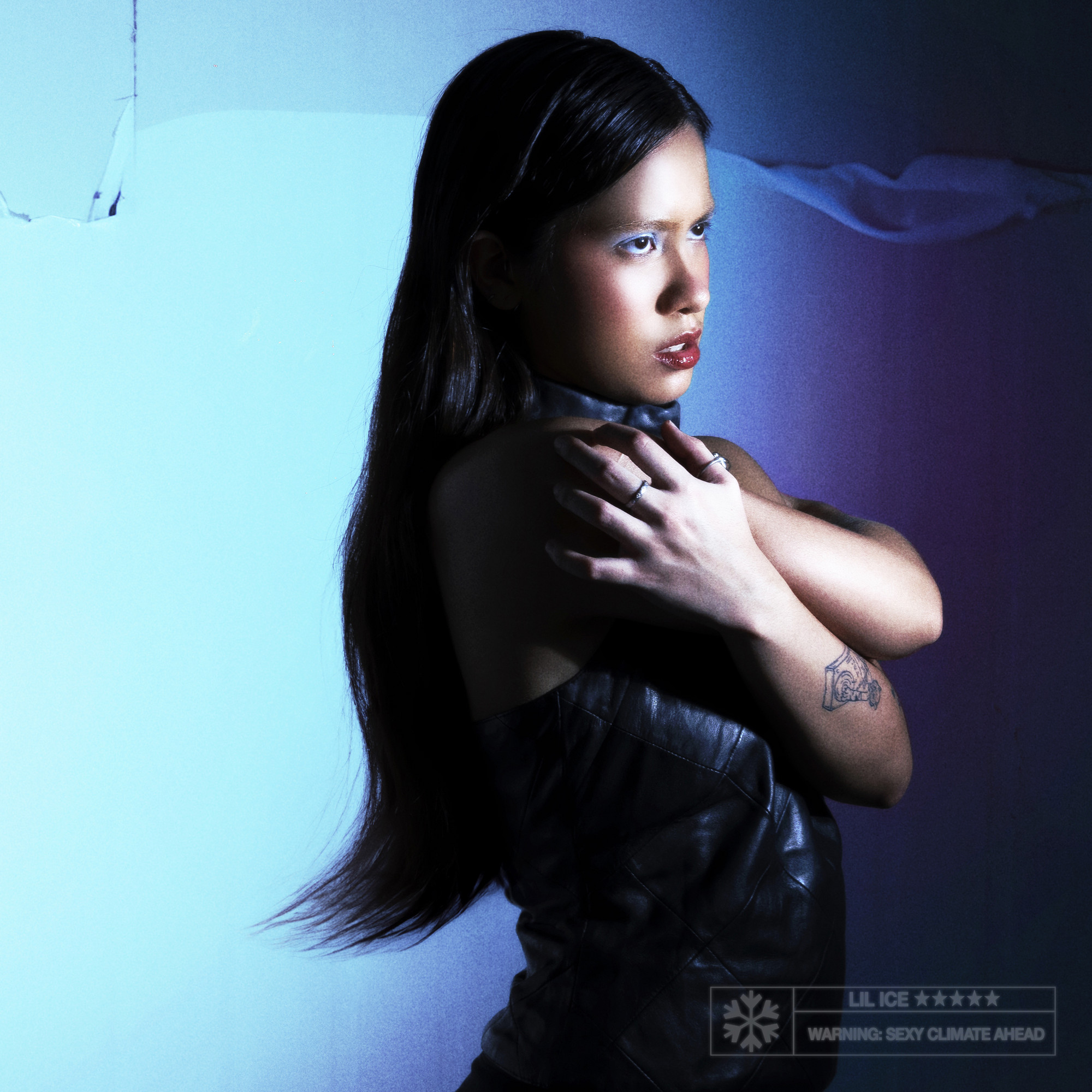
In scorching hot weather and immense humidity, stepping outside the house feels like it’s destined to sizzle your skin. That isn’t the case for Baby Freeze’s new single, “LIL ICE.” Maybe she’s gifted. Maybe it’s Never Paco’s mixing and mastering. Or maybe she knows how to make a bop that’s simple, fun, and well-witted. Produced by NOIR and wearing eyeshadow that screams a metallic Dior shear meets Re-l Mayer from Ergo Proxy in the track cover art, Baby Freeze not only turns daily affirmations into a catchy tune with her latest track, but coldly presses two questions: are short-form, Y2K-inspired tracks just a nostalgic trend, or can it carve into its own genre? And is it still transgressive when a woman who is unapologetically herself wants the drop bars about owning her own starpower?
“LIL ICE” is a fresh example of balancing intuitive songwriting with dance floor appeal; while lots of short electronic hip-hop anthems come to a staggering halt just as the singer is about to reach a lawful bridge, Baby Freeze heatedly affirms the repeat button because every bar like “front row seat and they all fall in line/ and they causin’ a commotion every time they see me smile” bites back without any need for an extension. Perhaps overthinking is unaffiliated with her.
Anything a woman raps about that even has a droplet of braggadocio is automatically subject to being labelled as polemic writing. “LIL ICE” is a clapback or a breezy self-affirmation anthem; her carelessness about being a spectacle of negativity reflects the hater and not her talent. An inkling of risk arises as the track fits into the genre of speedy songs masked with the early 2000s cyber aesthetic; the risk of blending in with the influx of this popular happenstance might cause her talent to go unnoticed.
That’s what He Forgot He Died, also known as Tadako, wants you to do. Proudly bearing the title of slowcore, the artist embraces the qualities confined within the genre. It takes from the definitions and descriptions, but “I’ll Be Fine, I Guess” is far from inauthentic. Running a little over 40 minutes, his musings find shelter and comfort in the classifications of his music.
Like most songs under the slowcore umbrella, those that make up “I’ll Be Fine, I Guess” accompany and encourage introspection; the discovery of your innermost self. Tadako utilizes the thicker strings of the guitar to echo the weight of vulnerability. This release is as raw as it gets. In “night,” the fourth track of the album, his fingers sliding up and down the frets accompany his somber singing; slightly grating, yet comfortably a sign of his humanity. In “2:34 am,” the crickets and raindrops whisper along the sound of contemplation that drones on. The album’s greatest strength is its candidness; it’s like a friend confiding in you and opening up so you can confide in them too.
Though most of the work consists of wandering, with wistful emotions speaking for themselves along the strings of the guitar, it has its moments of upbeatness. They do not reflect vibrance in the traditional sense, though. When there are drums, the ride cymbal and the kick drum are most audibly prominent. They sound more like a heartbeat drumming up during uncertainty; like how the artist admits he doesn’t know where to start in “time.” It’s a skill derived from noticing the littlest details that he’s able to communicate shared anxieties through sound itself.
Tadako’s subdued vocals capture the intimacy of his work. His words are simple and read like diary entries; these thoughts don’t rise above the mix, like how vocals usually would. They float through the weighted soundscapes like thoughts at the most quiet hours of dawn; fleeting and indecipherable, honest and filled with regrets. “I’ll Be Fine I Guess” is so undeniably human that it’s heartbreaking, moving, to face the depths of life head on – ”tell mom I’m sorry,” he sings.
“I’ll Be Fine, I Guess” explores what there is to do and who to become. It’s an album that knows what it is supposed to be by an artist who loyally sticks to the sound he wants to pursue. In a fast-paced world, people discourage staying in their own comfort zones. This album is a comfort zone worth revisiting and relistening to when things get heavy, especially for fellow advocates of the slowcore genre. The trademark simplicity it carries makes it a sonic shoulder to cry on; an effective set of tunes ready to serve as company.
Shanghai is a bustling area in China, a dazzling cultural cradle where so much creative artistry has thrived the most. Music, especially, had a prominent presence in the place since the 1920s, acting as the origin place of Shidaiqu – a genre that intertwines Chinese folk and Hollywood film music – as well as the main area for Western jazz to proliferate in the country. Those western influences never strayed, but kept in close distance within so much of Chinese music. Despite the difficulty in opening up people’s perspectives towards Jazz, the jazz scene in Shanghai continues to prosper and branch out into its own territory, letting newer musicians experiment with the genre and bring something unique out of it.
Enamoured with the Jazz scene in Shanghai, Voision Xi has set a mission to immerse herself within it, eventually heading there after college to explore her musical endeavors. Despite being self-taught, meeting various musicians while working behind the scenes of JZ Club has trained and taught her immensely, allowing her to jump out into the spotlight in 2015 with Little Happiness Group, a small jazz band that comprised of her and other jazz musicians such as guitarist Zhang Xiongguan and Xiao Jun, saxophonist Li Shihai, and others more. Working together for 3 years has eventually led to their only release in 2018, ‘DEBUT’. A short EP that twists the melodic foundations of tracks like Nick Drake’s “River Man” and Stevie Wonder’s “Cause We’ve Ended As Lovers” into something vibrant. Brewing these classic songs with a different arrangement altogether, a variation done well by Voision Xi alongside the rest of the fellow jazz musicians that have worked with her on this EP.
That experimentation only goes deeper, following things up in 2021 with the ‘4 loops in her way’ EP that displays her curiosity with ambient soundscapes. Using nothing but the OP-1 synthesizer and the Ableton Live software to create small, yet expressive ambient pieces. A testing point to her progression as an artist, a tease to how she’ll eventually blend her jazz influences with ambient tapestries.
All of this eventually leads to Voision Xi’s debut album in 2022, ‘Lost For Words’. A grand self-expression that pulls so much from her gradual exploration as an artist, bringing so much of her experiences, emotions, and voices that swirl into a lot of fascinating ventures across ambient, folk, and jazz palettes, releasing so many words and expressions worth hearing. Further accompanied by various musicians – names like Kaidi Tatham, ILL MO, and Little Happiness Group being some of them – that amplify the album’s thematic concept. Providing so much distinctive moments across the otherwise impeccably rich record, from the vocal thrills that’s accompanied by nimble guitars and delicate woodwinds on “Monday Spirit”, Voision Xi’s spoken word and ILL MO’s rap flow blending immaculately across the lush jazz flourishes of “Butterfly, A Hyaline Beauty”, the soaring rock crescendos that gives “Magnetic Field” its pulsing rhythm and “Turn on the Planet” a spacious expanse across its lilting ambience, the jazzy freakout that occurs on “Hypnotist”, the lilting samba jam on “Ladders”, and the hypnotic ambient escapades that opens up on “Wolverine (Silent Chaos)” and “Crystalline Improv”. Skyrocketing Voision Xi’s artistic potential into the stratosphere. Her unique experimentation holds no bounds.
Her approach to her sound continues to flourish two years later, following up with her sophomore album, ‘Queen and Elf’. It’s a record that still embraces her jazz roots, but there’s more focus on soothing walls of ambient electronics that colors the melodies with quaint pensiveness, one that makes sense within Voision Xi’s introspection surrounding holding onto our overall emotions amidst the process of letting go and coming back, a constant experience that inevitably comes with getting older. It’s a tangled emotion, yet Voision Xi manages to create a clear picture of that feeling through the set of lively electronica and gorgeous Bjork-inspired a cappella that blushes up the tender jazz compositions. Songs like “Birdling”, “Prelude To A Fortune”, and “Southern Shanghai” are trickled with liquid soundscapes, with electronic bits and swells adding more to their ethereal aura. Jazz leaning cuts such as the Bossa Nova of “Leaf Sheep”, the sweeping instrumentation of “No.8 Signal”, and the buoyant rhythms of “Muse (For Joyce)” are vivid in their melodic compositions, Voision Xi’s masterful production work amplifies the organic texture that the melodies bring to the table.
The most entrancing moments in the album are the slow-building ambient tunes that open to an even evocative section. “How Do You Hold A Moonbeam?” is laced with cooing harmonies, accompanied by bright pianos and grooves just before Voision Xi’s vocalizations push further into the forefront. “We Could Be Shy” brings along woodwinds and pianos that gently accompany the drawn-out vocal lines, leading to the back half where the jazz restraint breaks apart into this post-rock progression with plenty of bright crescendos and soaring vocals. And “Kagi” takes its 6-minute excursion to explore, with cascading synths and pianos enveloping the vocals into a mystical cocoon, giving the path for the woodwinds to swoon. Eventually lifting up the grooves and the vocal harmonies to a heavenly sway.
Voision Xi’s overall discography can only come from someone whose passion for jazz and electronica is treated in a way where experimentation and thoughtful observation are a must. An expression of her unique creative spirit that passed through so many experiences working in the Shanghai jazz scene and learning with jazz musicians in the local and international scenes, finally giving her the confidence to voice out her extraordinary talent and pulling together some of the vibrantly impressive jazz records in the 2020s. Constantly playing and touring, Voision Xi never stops exploring enticing soundscapes, opening more ears to what Shanghai’s jazz scene has to offer.
Give A Girl A Guitar And She Will Show You Girlhood
An Interview with Barbie Almalbis
by Faye Allego
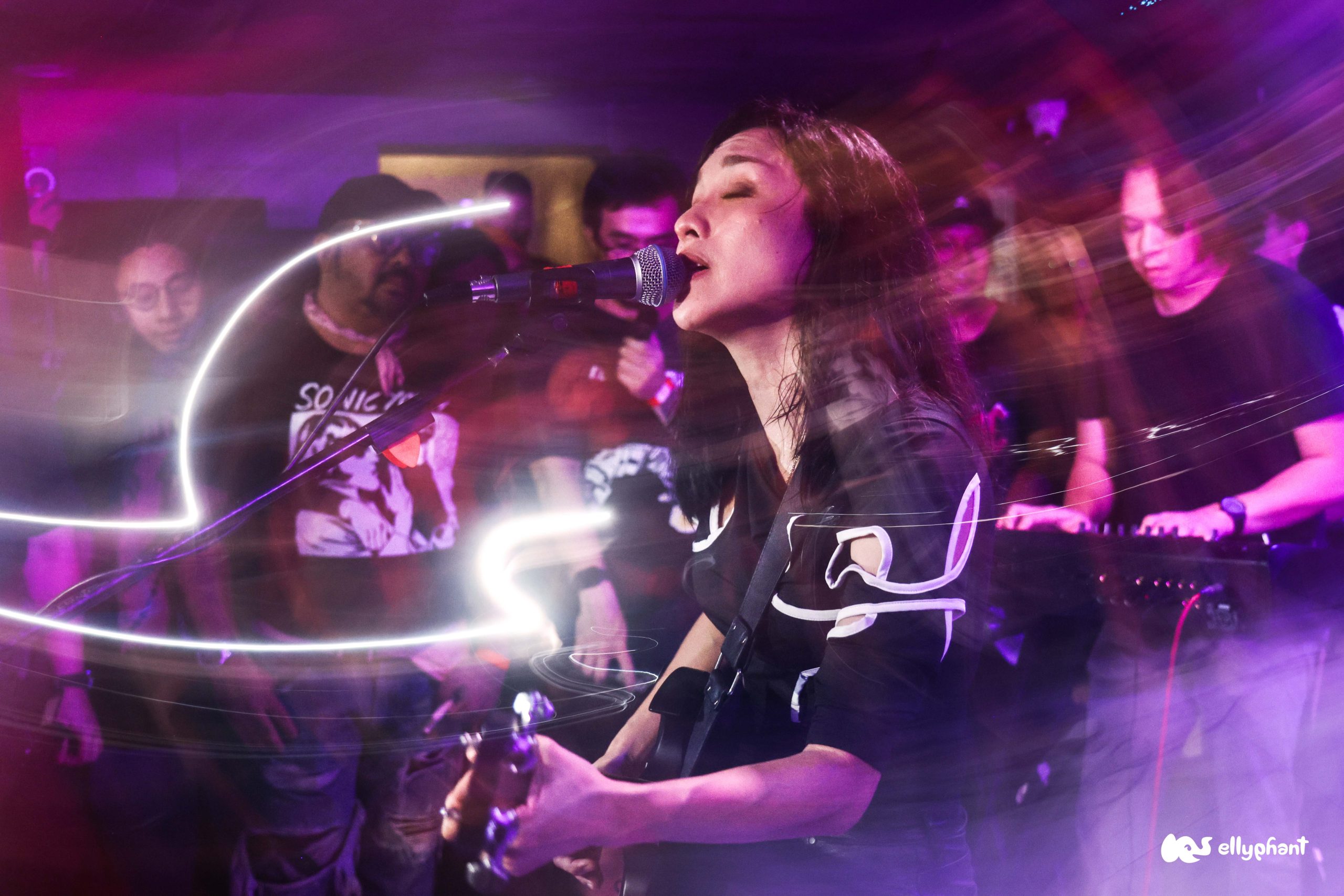
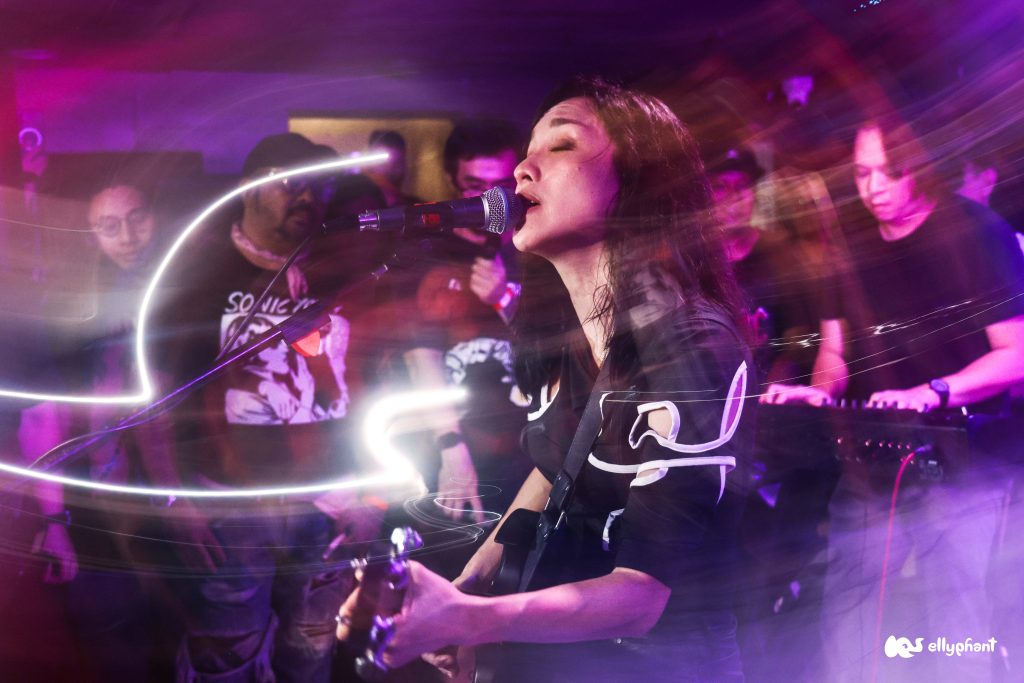
When adversity strikes, Barbie Almalbis’ songwriting prevails; she takes her pain and either releases, soothes, or embraces it through her words, her conversations with her loved ones, and, of course, through her impeccable skills on the guitar. Her reputation throughout the years as one of OPM’s great legends is continuously proven through her playful work ethic; From her experimental approach to her esteemed collection of instruments. It goes without showing, but taking the time to hear her mind in tracks like “Paper Doll” and “Maniwala Ka” from her previous work in Barbie’s Cradle and Hungry Young Poets to beautifully loud and honest ballads “Homeostasis” and “Platonic” found in her latest release, Not That Girl, manifests and greatly displays her genius. Almalbis’ music is for everyone and anyone who has the ability to close their eyes and feel. It is now 8:00 pm at Mow’s Bar, Quezon City.
The night is still young, and sooner or later, the crowd from in and outside Mow’s will be hearing Barbie Almalbis perform the iconic guitar solo from Metallica’s “Master of Puppets” as well as cheering on songs from her latest album. Just beside the smoking area is the graffitied green room where Pikoy, Suyen, and members from (e)motion engine and Moonwlk have laid their bags, water bottles, broken drumsticks, and string instruments. Sitting in the corner is Almalbis and her team; In this interview, the technicolor in the graffiti all around the room comes to life as she takes on girlhood and the guitar unleashes.
*This interview has been edited for clarity and brevity
FA: In celebration of Women’s Month and the release of Not That Girl, who are women in music that you look to when it comes to songwriting?
Almalbis: The earliest ones that I really felt encouraged me to write as well [were] singer-songwriters like Joni Mitchell. My most favorite was Brickie Lee Jones, and they still play up till this day. Seniors na sila, right? [laughs] But they still perform. And then there’s so many artists that they’ve inspired as well, Jewel, Alanis Morissette. There’s just so many women that I looked up to. The Indigo Girls, The Murmurs, Elastica, sobrang dami. It’s a wide range, too. PJ Harvey, Bjork, Tori Amos. I had a Tori Amos cassette that I just played every day over and over. Sean Colton.. I’m so blessed to have lived in a time where there’s just so much representation. So much music that spoke about things that I cared about. And I’ve always felt like there was a space for me as a musician and as a songwriter. So I never felt otherwise because of these artists [who] just spoke their mind and embraced their femininity as well.
Photo from CADM/Facebook
FA: Are there any new and upcoming acts or female artists that you’re very excited for?
Almalbis: Oh, yeah. Yeah, well, here in the Philippines, Ena Mori. A lot of people love her. I love her. Clara Benin. Pikoy, right there. And, yeah, Moonwlk.
FA: So, “I’m not like other girls” is a phrase that has a negative connotation to younger women as the label of “pick-me girls” is starting to arise, especially in the younger generation. Are you familiar with those terms?
Almalbis:Oh, yeah. I mean, “I’m not like other girls”. It’s like they’re pitting us against each other, right? Society has a negative view of girls, and they actually want to infect girls themselves and to think that way about others. And it can happen. It’s sad. We have to, to somehow fight it. We have to go out of our way to support each other.
“I have noticed that the people around me that I get to work with are getting younger and younger.”
FA: In your new album, your title is “Not That Girl”. So what does that mean, Not That Girl? What does not being “that girl” imply?
Almalbis:Well, actually, I do want the music [to speak for itself]. I feel like the songs, the lyrics, the stories in the songs would better explain that. I would rather not define it in just one thing, the thing that I don’t want to be. Something like that. But the album talks about change as well. Somehow in life, you can encounter the same types of trials or the same types of challenges, but you’re not the same person anymore. You may be able to handle it better this time. It’s revisiting the mistakes that I’ve done in the past and having the grace towards myself that I can change. And extending the same grace to people. Yeah, that there’s always hope for [the knowledge] that you can change. So yeah, it’s not really a girl thing. It’s just a person thing. That I’m not that person anymore. I think that’s so beautiful.
FA: You’ve been performing for more than a decade, and your demographic has remained the same. The youth. Why do you think that is?
Almalbis:Oh, really? I’ve just not really done it deliberately or anything. I have noticed that the people around me that I get to work with are getting younger and younger.
It’s like when I was starting, you must have been maybe not yet born. I was like, wow, these people. It’s like the next thing you know. Now we’re giggling with our friends’ kids, you know. It’s fun. I’m happy. I’m happy to do that. I think. My favorite artists are now. Joni Mitchell is probably in her 70s, 80s, maybe. She’s in her 80s. Yeah, right. I mean, but that’s not an age thing, you know what I mean? I mean, I don’t think she’s lost any connection to me with her music, right? I don’t think music has a, what do you call that? An age separation. So maybe that could be. Maybe music is a thing that we can connect through, despite how old we are.
FA: How does it feel to be considered one of the best female OPM icons? Do you embrace that status?
Almalbis: I’m grateful to be a part of that thread because I’m also a fan of music and I really so appreciate that artists who came before me, and I’m sure they’d say the same as well. We’re just happy to be making music, to be able to be free to express our thoughts. Of course, I try to not take that part of [being an OPM icon] seriously. I mean, you have to not believe your own press, right? I mean, sometimes what makes it fun for me is the music making itself and being able to share it in a venue like this tonight. Because that’s how I started out. That’s the reason why I became a musician because I enjoyed writing songs. I enjoyed playing in my bedroom, and then, a few decades ago when I made a job as well, somehow you’re thrust into a scene, right? There’s that pressure and there was a time that people would compare you with others, but over time, I mean, of course, it’s a job, and you have to be faithful with it. You want to have work, and you want your team to have work. All that stuff. I guess at one point, I could see the difference between the machinery and the purity of just loving the music. And I always want to go back to that because that’s the reason why I’m here. I think that mindset has also helped me through the waves of the industry because there was a time when people were so excited about bands, and then there’s a time when nobody was coming to the shows. But we’d play places, and sometimes there’d be five people there. After playing, we played a couple of concerts in Araneta, right? And then a couple of years after that, we would play [at venues such as] Route 196. There’d be ten people there. But I’d come home and I’d be so happy. It’s so thrilling to perform, to play music. So, I mean, I’m happy that right now the scene is so fun. There are a lot of people coming. But it’s hard when you let the success of it dictate things because you’d get sad when it’s down. So, I always just go back to why I started and that’s because I love music. Yeah, the reason why I’m doing it.
FA: You know, a lot of people say, especially people like our parents, they always say to “Never separate your passion from your job.” What can you say about that?
Almalbis: I mean, I guess to each his own. I’m sure there’s going to be some wisdom to glean from that. But for me, I feel like it’s the opposite. If you imagine a world where everybody’s job was the thing that they were passionate about, then you wouldn’t find lawyers who only love money, and then justice is just something that happens along the way sometimes. Or like other professionals. Actually, this is kind of a quote from a book by Tim Keller called “Every Good Endeavor”. He said you’d find doctors whose passion is money and not really healing people or seeing people come to good health. But health just happens sometimes along the way. But can you imagine a world where doctors are those people who are just so passionate? I know doctors who are like that, and they become the best doctors. And lawyers who are like that, who are just so passionate about justice, and they become the best at it. So, for me, my dream is that it’s the opposite. It’s that people would somehow find the freedom and the support to really pursue the thing that they believe in so much that they would do without getting paid.
Photo from CADM/Facebook
FA: Do you think that’s prevalent in your songwriting as well? Or is your songwriting more so diaristic to your own personal experiences?
Almalbis: Can you explain that to me?
FA: So when you’re passionate about music, do you want that to reflect in your songwriting for other people to learn from as well?
Almalbis: Oh yeah, that’s a great topic actually. It’s something that my husband and I talk about a lot. There’s this painter named Makoto Fujimura. I don’t know if he coined it but we heard it from him. But he calls it generative art. So it’s art that generates art in others. Generates ideas and creativity in others. And my husband’s a painter. We’re always on the lookout for artists like that. Those are the artists that we want to follow on Instagram or that we want to watch. You watch their gig or you look at their paintings and it makes you want to paint. And somehow that’s something that we hope that our art and our music does for others as well. That it makes them want to go in their bedroom and write something too. But I hope that it happens naturally.
“You have to have at least one guitar that you can throw around. Pedals, gear, it’s all just toys. It’s inspiration machines.”
FA: There’s actually a movie called “Look Back”. It’s adapted from a manga by Tatsuki Fujimoto. And it talks about two young girls who are passionate about creating manga. And they grow up together, and something tragic happens. And it’s all about the love of art.
Almalbis: Yeah, “Look Back”. I’ll check it out.
FA: Do you view the guitar as a weapon that encompasses your emotions when songwriting? Do you view it as an inanimate child? Or is it merely just an instrument that you love?
Almalbis: Beautiful. I think it’s evolved over the years. Back when I was young, it was my only friend maybe. Speaking about girls and women’s month. I love my family and grew up with my older brother. Maybe seven, eight, around ten. Maybe seven. Boy cousins. I was the only girl in the whole gang. Then I have a sister, but she’s five years younger than me. But during our adolescent and pre-teen years, we were the only girls. When we got around that age, 11 or 12, this was the 80s. People weren’t really into it [girls playing instruments and hanging out with the opposite gender] yet. They left me because I was a girl. I wasn’t allowed to hang out with them. It’s okay, they were doing guy things. That was around the time when I started playing guitar. Every day, that’s what I did. I played guitar in my room. The boys were wherever they were going. I put it down. Every day, I would play guitar. I did that for a couple of years. I started writing songs at 14. Then it became a songwriting tool for me. To this day, among all of your guitars, they’re all your friends I wouldn’t say they’re my babies because I experiment on them a lot. They can take some pain from me. I hack them. I don’t think I have a single guitar that hasn’t been opened up and changed. I want them to be their best. I want to perform using them. Make them useful. I would change things so that it wouldn’t be hard for me.
Photo from ellyphantart
FA: You’re like Mary Shelley and Frankenstein.
Almalbis:[Laughs] I’ve burned the carpet. I’ve destroyed a couple of things. I’ve had guitars that I’ve given up on and come back to. I wouldn’t touch them for 10 years. One of the guitars that I might use tonight is like that. It’s gone through so many lives. I want it to sound good. I’ve experimented with it all these years.
FA: In your Rolling Stone interview, you said that you fell in love with the guitar before music. What advice would you give to someone starting out with the guitar and should they go acoustic first or electric? How do you know when to tap into the world of pedals, amps, and other gears?
Almalbis: I would just advise using a nylon string guitar first because it’s easy on the fingers and so you won’t give up on the guitar. Naturally, your calluses will develop. By the time you move to steel strings, it will be easier. I got my electric guitar when I was 16. The only thing that was a problem with that was that it was so heavy for me at that time. It still is heavy for me, but now I found lighter electric guitars. They always say you have to have a beat-up guitar. That’s the best guitar to write songs on. One that’s not precious. You can throw it, you can put it in your trunk, you can have your car. You have to have at least one guitar that you can throw around. Pedals, gear, it’s all just toys. It’s inspiration machines. Just explore it on your own, whatever you’re curious about.
Just explore it on your own, whatever you’re curious about.
“I’ve burned the carpet. I’ve destroyed a couple of things. I’ve had guitars that I’ve given up on and come back to. I wouldn’t touch them for 10 years. One of the guitars that I might use tonight is like that. It’s gone through so many lives. I want it to sound good.”
FA: Did you face any fears or even insecurities when it came to your guitar playing? Did you try to fix that?
Almalbis: I’m not sure if I would consider it an insecurity, in which it made me sad or fearful. Maybe it is an insecurity, but I didn’t know what I was capable of, what I could do when I was younger. When I was in high school, I started to find music that I loved, which was glam rock at the start. I would listen to Guns N’ Roses and I would watch Slash play, or Eddie Van Halen with Van Halen, and Paul Gilbert with Mr. Big and their shredders. When I would listen to them, I would always say to myself, I could never do that, so I didn’t try.
I just used the guitar mainly as a songwriting tool. I just knew a few chords and I would just write. I wrote the first album of Hungry Young Poets just using chords.
Photo from ellyphantart
I never thought of myself as a guitar player doing lead or anything like that. But I didn’t really want to or something. I was happy doing what I was doing. It was when John Mayer came out. He had a cover song of Stevie Ray Vaughan. This was in 2001, maybe. He had a cover of Stevie Ray Vaughan’s Lenny. I found it really beautiful. It was a bit slow. I just said, “That’s so beautiful, let me try to play it”. I just broke it down to chunks. I realized I could do it. I was so excited, I called my brother into the room and said, “Look what I can do”. Then I approached everything else just like that. If I’m interested in something, I just slow it down, try to learn it. Then I realized I could do it. The things that I thought before weren’t accessible to me, I could build it slowly. But it wasn’t a frustration or anything. It wasn’t like I dreamed of doing that. I thought it wasn’t possible. I guess it was just a fun process for me to learn it and then slowly incorporating it into our music. It’s like leveling up. It’s like a game. It’s like a new thing that I can do. You’re just curious. Then you realize you can do it. Like a guitar or singing, you can keep practicing, you get better and better. I’m sure in some way there is. You can get better at rhyming, or faster at arranging songs, or finding out why this song works or not. But I feel like so many people write so many great songs when they’re just starting out. The beginner’s mind. Like Firewoman, I wrote that. It’s one of my favorites from Hungry Young Poets. I wrote that when I was 19. I hadn’t gone to a songwriting class or anything like that. I had a lot of emotions, and I just poured them out. So for me, even with Not That Girl, it’s probably the 10th or 8th album that I made. But I feel like what I like about it is because I’m able to go back to how writing was like in my teens.
Which is I have so much emotion, and I just want to get it out there. So it’s different from playing guitar, where you develop your skill year after year. For me, it was songwriting. Even the last couple of years, there was a season where I couldn’t write. I was scratching my head. How did I write those songs again? What makes a good song again? It’s like you can’t just really pin it down. Who me? Yeah, so it’s like that. It’s a different journey. Different beast. Actually, with this album, Not That Girl, I’m so happy with the process, working with Nick as well, and writing the album. Because that’s how I remember it. I remember how to write in my teens. It was just [that] I had so many feelings and I just needed to process them through music. I didn’t need to be creative, even to invent anything. I didn’t have to think of a story. I just had to write down what I was going through that day, what I was thinking about. That’s it.
“Our perspective and our experiences are very unique to women.”
FA: Do you think it correlates a lot with girlhood? And womanhood specifically?
Almalbis: Of course. Because I’m really just writing from experience. Our perspective and our experiences are very unique to women.
I’m just expressing that. Of course, my best friends, we laugh about it. We can relate to each other’s songs. We would chat with each other, and we’d say, “I love you”. And then he’d be like, “yeah, platonic. Make sure. Just making sure.” Yeah, because we’d be so effusive with our feelings. I guess we’re at that age where all my friends are like, “I love you so much. I miss you so much.” He’s like, “yeah, platonic.”
FA: There are so many thematic elements in your songwriting, especially in Not That Girl. Even in Hungry Poets era or Barbie’s Cradle. Do you think that in your songwriting, do you always think of the themes?
Almalbis: I don’t. I don’t. In life, I don’t plan. Also, in songwriting or making an album, I have no plan. I don’t sit down and think of a theme. The opposite way would be like, you have an album title and then you have song titles, and then you’d stick to that theme. For me, it’s the total opposite. I’d sit down with no plan and then I’d write the songs one song at a time. I’d finish a song. Sometimes it’s hard for me to pick a title because I have to find something that somehow makes this song sound cohesive. I hope somehow the song ends up being cohesive that I can think of a title. And then at the end of it, when I have all the songs together, I’d be like, I hope I can find an idea that kind of ties them all together.
FA: When people tell you their interpretations of your songs, how does that make you feel?
Almalbis: I’m happy I embrace that. It’s just my experience, but I’m happy to share it with other people. Even for me, I can go back to my old songs and it might mean something different for me now. So I don’t really pin it down to what I thought of, what I was thinking of at the moment I was writing it. I’m open to that. I think you can say the same for guitars as well. Picking them out for the first time, it’s kind of like, just see what works for you, right?
FA: If a younger woman came with you, for example, if someone had you as their guitar hero and you were with them in a guitar store, how would you assist them?
Almalbis: Really, I would just– you have to really try it out and listen to what you like.
Every guitar, even if it’s the same brand or the same model, every guitar has a different voice. That’s why I don’t like ordering guitars online, even if it has all the same specs, because you have to hear it, and if you don’t like that voice, then you’re stuck with it.
FA: If you go to a guitar store, do you play your own songs on the guitar when trying it out?
Gaspari, (also known as Gaspari 777) of Greenhouse Records has quietly become the go-to producer for GHR artists like Sica, SUPAFLY, and Gat Putch, while also gaining traction in wider hip-hop circles through collaborations with NIO, Yuridope, and Lexus.
In a 2023 event to promote their upcoming album, Lexus of OWFUCK, hands on his chest, proclaimed Gaspari as one of his top music producers of choice: Then a relative unknown, he produced several track in the rap group’s EP ACIDIC, including the eponymous lead single. By 2024, Gaspari’s name carried more weight, most notably in Gat Putch’s “Crazy” featuring Sica, of which he has production, mixing, and mastering credits.
Gaspari’s increased visibility wasn’t as much of a meteoric rise as it was a silent encroachment, racking up credits in some of Philippine hip-hop’s brightest and loudest in the past few years. Upon looking at his discography pre-Greenhouse Records, the Filipino-Italian producer began his career as a rapper as well, with one of his singles from this previous era still publicly available on his YouTube channel. It’s unclear which of the two came first, but 2025 marked his resurgence as a listed emcee with SUPAFLY’s “Puff Me Up,” Buddahbeads’ “Rollin,” and two of Gaspari’s own “BLOCKA FREESTYLE.” This resurgence pushed Gaspari into the limelight, and with it, a unique style that has become emblematic of his recent work: Punchy delivery and simple, catchy rhyme drowned out in a drowsy, effervescent voice.
Out of his current discography, Gaspari shines the most in his solo track “KODAK BLU.” Twinkling piano-like melodies layered on a sparse production of synths, 808s, and percussion form a tantalizing instrumental where Gaspari’s viscous flow sticks out. The repetition of the already catchy hook allows “KODAK BLU” to borrow not just from the contemporary hip-hop playbook but also from the so-called algorithm-latching habits of music today.
The same delivery, themes, and lyrics can be seen in his short recent discography; Beyond changes in beats and collaborators, his music struggles to offer variety. Maybe it is the hip-hop artist’s role to create and release permutations of its best qualities to see what sticks, and then abide by it until it wears itself off. By these ends, “KODAK BLU” emerges as the stickiest and most compelling out of Gaspari’s recent verses.
But what’s most interesting about “KODAK BLU” is its title: a nod to Atlanta rapper Kodak Black. In mentioning his name in the title, Gaspari drives the connection between his own body of work and Kodak Black’s apparent. “KODAK BLU” is not an attempt to adapt Kodak Black’s persona to tell a story. There are kernels within the formula he works with that can feel uniquely his, especially as he tries out different flows in the second verse.
Is Gaspari innovating or just borrowing? Both can be true. Hip-hop has always been a genre that thrives on its references, either through interpolation, sampling, or borrowing lines. And if Cardi B can make “No Flockin” into her very own “Bodak Yellow,” there’s space for Gaspari to conjure up the same formula and make it his own. Time will tell if he will wear out his welcome under the trappings he has made for himself in past months. “KODAK BLU,” meanwhile, is his foot in the door to possibly bigger and greater things – granted that he choose to mutate, instead of just permutate.