
Written by Noelle Alarcon
Sexy Jay is a superhero of sorts; barber by day, and Filipino post-punk champion by night. ‘DAGA,’ his debut album, shows that he is the master when it comes to the act of being tongue-in-cheek. It’s 21 minutes of plain, everyday truths that Sexy Jay manages to bring to life with color and bursting synths that show his composing capabilities through unabashed quirk.
While Sexy Jay’s past releases were quite disco-oriented and dreamier, this album is a brighter, more experimental turn in his discography. “Daga,” the opener track of the same name, sets the tone with low, punchy bass and 8-bit synthesizers. “Daga. Daga. Bubwit.” A punchy, vibrant instrumental drags along, interlacing these words with meaning. There’s cleverness in simplicity whenever Sexy Jay tries it on for size. Like many tracks on the album, his unique storytelling is an underrated strength.
The songs in ‘DAGA’ vary in theme, yet they all find their beauty in placing simplicity at their very cores. “Singaw” has a minimalistic synth setup, but it shines when it’s complemented with the drum machine that ever so slightly misses a quarter of a bar or so a few times, and Sexy Jay’s wails and cries of “Ang hapdi mo!” that are like a local carnival barker’s yelps—think: the way Lux Interior of The Cramps sings.
‘DAGA,’ though uniquely Sexy Jay’s, is also a diary of the Filipino experience. Its most timely tracks involve “Pag-asa” and “Baha.” Everyday tragedies that are left by the system to be withstood through resilience roll off the artist’s tongue. “Marami nang naghihirap / ‘di niyo ba nakikita?” and “Baradong kanal / baradong imburnal” are sung in a dazed tone, in contrast to the upbeat pulses, which make for catchy reminders of reality.
There’s no question that ‘DAGA’ is an acquired taste. Others on social media fail to see it as an actual musical effort, but it’s as much of a record as the next one. Though undeniably unconventional, its postmodern take on alternative music is what produces most of its charm. By dousing itself in irony, the songs on ‘DAGA’ challenge what it truly means to create a song; its blatant disregard for convention conveys the act’s sense of creativity. With lyrics so impersonal yet personal at the same time, it’s like Sexy Jay brought back the deed of oral tradition—just in a way that’s more avant-garde.
Repetition is the hammer that nails the irony into the droning wall of sound that wraps around ‘DAGA.’ There are times, though, when the artistic device acts more like a mirror—like the similarities in the instrumentals, as well as the vocal mannerisms and cadence in “Philippines” and “Birthday ko.” Collectively, ‘DAGA’ possesses a strong auditory identity; but when the tracks are listened to individually, it’s like looking at a puzzle that’s not finished yet.
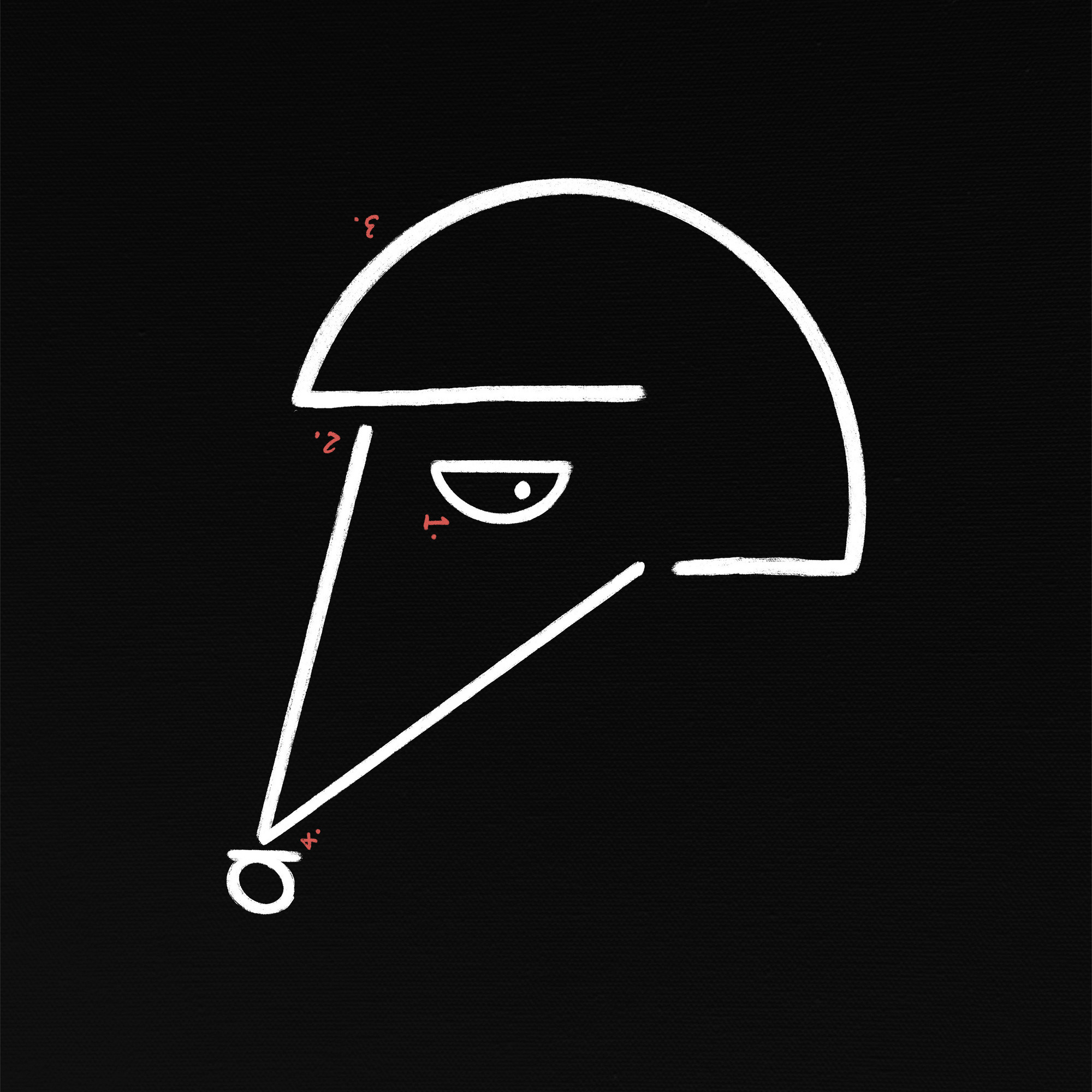
‘DAGA’ is an adventurous manner of utilizing music’s capabilities. It’s one of those albums that broaden your taste and open your mind once you finish listening to it. Though beautifully straightforward, it’s evident that there are years of curation and experimentation that led Sexy Jay to this point as an artist. The album cover may be made up of uniform curves and lines, but its contents are anything but orthodox.
Support the art and the artist: