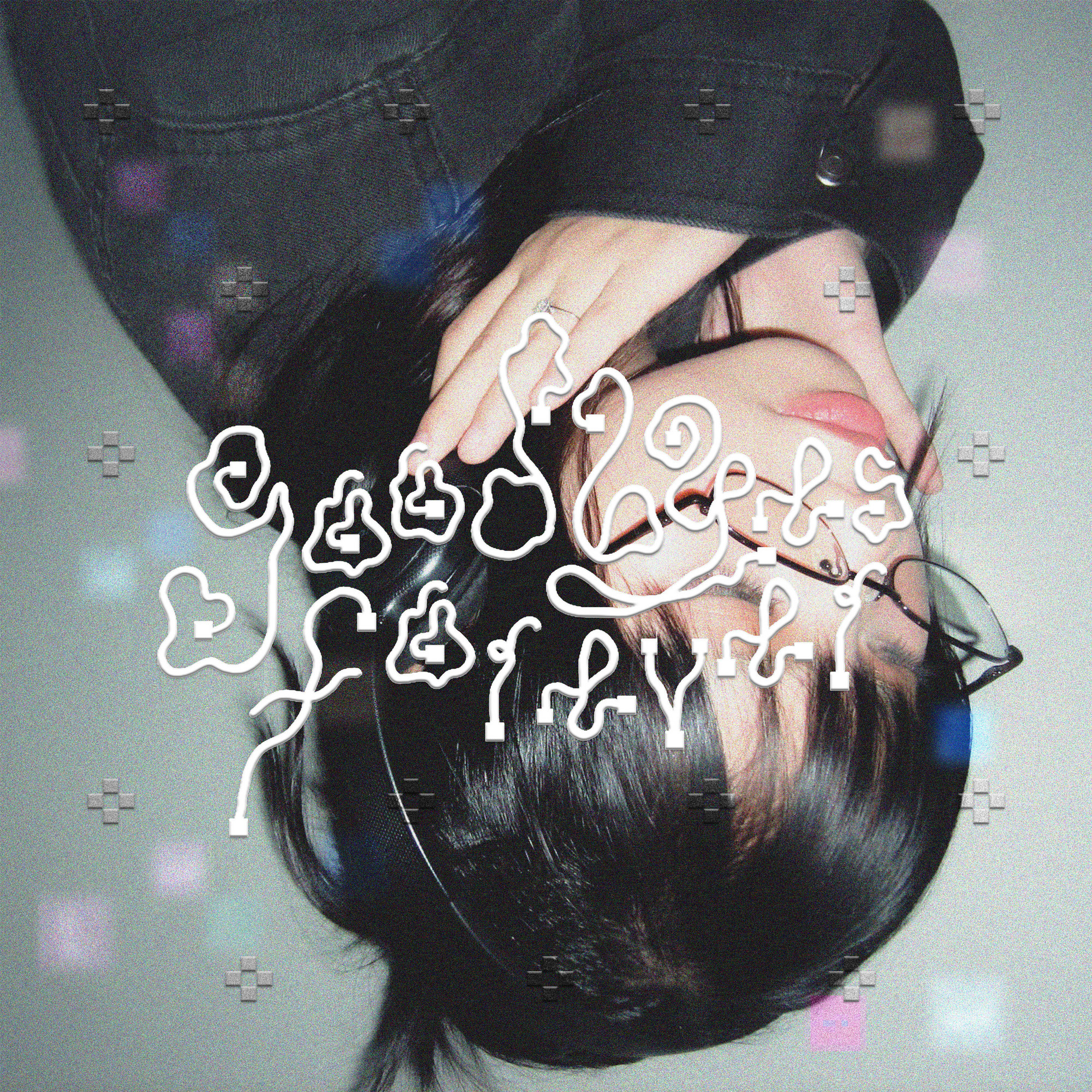
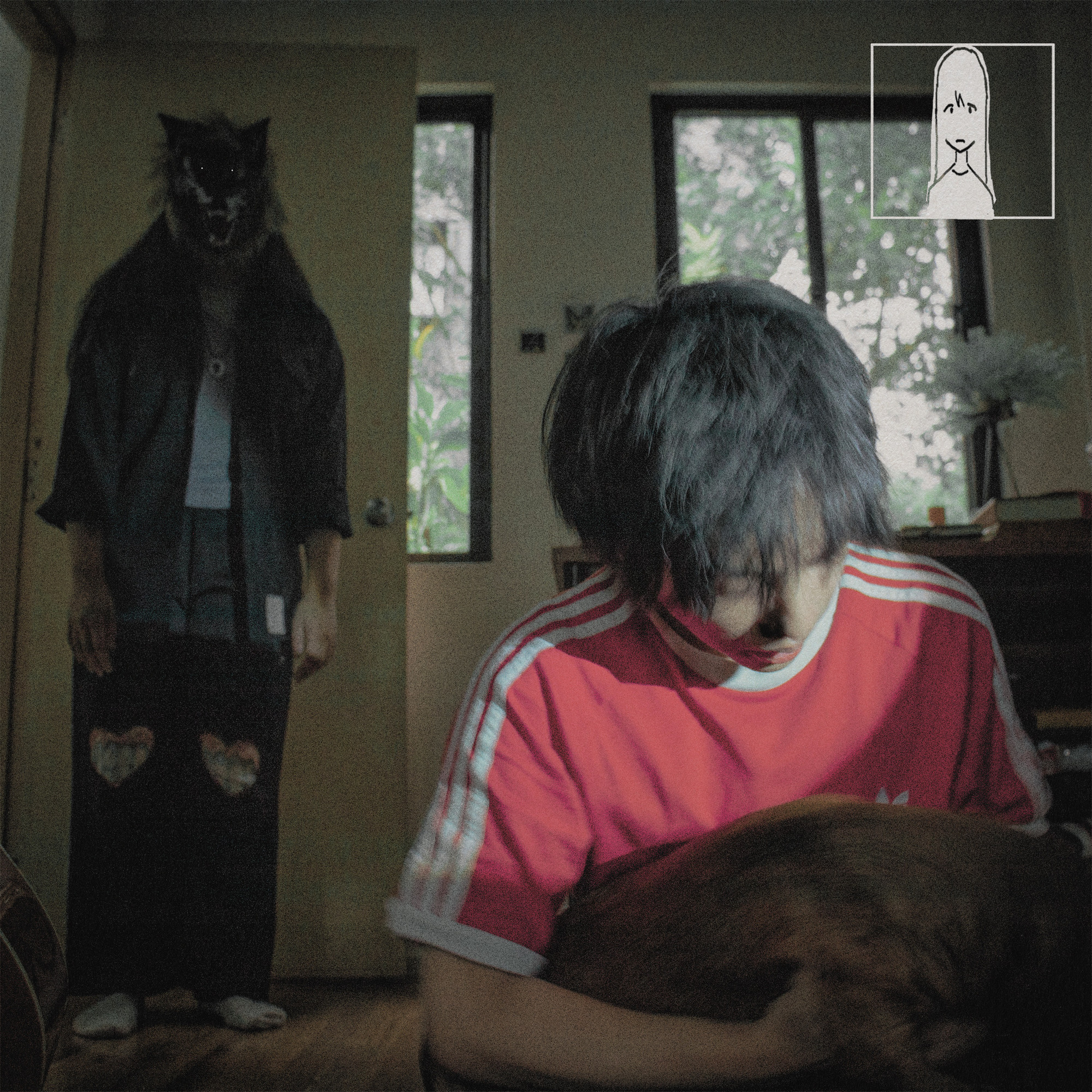
The mind can get so jumbled up that even our own thoughts can be unintelligible to us. What we’re left with is a confusing cacophony of emotion and dissonant ideas, but somehow, aunt robert was able to take theirs and masterfully craft it into music in their new indietronica / indie pop hybrid album ‘Goodbyes Forever.’ We’ve seen EPs and singles from them over the years, but this is their first full-length album. ‘Goodbyes Forever’ takes a brave leap into vulnerability, budging open doors to the mind usually kept shut in order to cope with overwhelming feelings. Spanning across 10 tracks, each song delves deep into specific yet relatable emotions. From isolation and pining, to girlhood and resentment towards a past lover, each song dedicates itself to these specific feelings. It comes across that the album is a hodgepodge of different sentiments, but how better would it be to describe the chaos that the mind can be sometimes?
The theme of mishmashed emotions is also mirrored through the selection of musical genres present in the album. aunt robert has taken this as an opportunity to diversify their sound, branching out to different genres to better illustrate their songs’ message while still holding on to the indie-rock style that fans fell in love with in the first place. This can be seen as early as the first track of the project, “Frount Robert” an upbeat, poptechno-esque track tinged with longing. It’s their classic aunt robert sound accompanied by synths and vocal effects.
The album progresses smoothly, with the next couple of tracks leaning towards indie-rock, including the tracks “Mad” and “Please Say It” which were released as singles last year and have now found a home in the album. It’s such a cohesive arrangement of songs that when the album takes a stylistic turn in “Keepsake”, you realize you’re already at the midpoint of the album. With “Keepsake”, the band slows down the pace of the album and takes on a more intimate, reminiscent approach. Utilising an acoustic and atmospheric sound, aunt robert looks back on a past relationship with its promises unkept and answers to questions left unsaid, all the while still wishing them the best. It’s a beautiful, succinct track that deserves to be highlighted.
The second half of the album showcases the experimentation that aunt robert endeavored, with most of the tracks leaning heavily towards that poptechno tinge we’ve seen in the opening track. The drum machines and synths create such a vibrant atmosphere. The production on these tracks proves to be excellent – they have a lot of elements mashed up with each other without sounding busy. It’s discordant in the most lovely way. As seen in tracks like “Blue” and “I’ll Go Wherever You Wanna Go”. As the album comes to a close, it ends with a hopeful note in “Hoarse (I’ll Get up Like I Always Do)”. The song devolves into high gain crunch towards the end with aunt robert’s voice ringing throughout the breakdown singing the lyrics like “I’ll get up like I always do” and “And I care like I always do. Nothing bad but it’s nothing new” It’s reminiscent of the consoling we sometimes do to ourselves in times of distress, reminding ourselves that we are capable of getting back up no matter what tries to convince us otherwise.
‘Goodbyes Forever’ is an apt name for the album. The whole project was a way to say the unsaid to whoever needed to hear it, so all that’s left is to bid farewell. Its closure and catharsis spread across 10 songs. aunt robert has done these genres before in smaller projects, but in ‘Goodbyes Forever,’ it seems they really dug their nails into it and honed their unique sound, making us excited to see how they develop their arsenal of styles in the future.
What is fascinating about acts that produce music in their bedroom or home studio is the limitation that comes with it: they rely on spare equipment, the ideas in their head, and the sheer will to put something out while letting the raw essence of their music come to life. A common occurrence these days, especially once you dig into a site like Bandcamp, but there are times when the music that was made is filled with intriguing ideas, both in the composition and the writing.
Formed through a 10-year-old rusty MacBook, their love for rats, and their set of guitars, koto, and violins, Djuno spawns ‘Moonrats,’ a record that tousles within homespun spaces, tapping into indietronica, folk, and alternative rock that is cobbled together by Djuno’s dedication to create something out of their resources. Creating ramshackled compositions that their voice plays into really well, sounding like a singer-songwriter that came out of the ’90s. “Maura Crushed” plays into this in a straightforward direction, with fingerpicked guitars nestling their bare vocals within a coddling atmosphere.
But things get interesting once Djuno starts toying around with production. Modifying their voice to sound more blurry, synths and samples chop off or pop into the mix, playing with the mixing in sync with the lyrics; an intended effect that adds more across Djuno’s well-considered melodies and performances. “Beak” comes through with gentle strings and acoustics, but gets sonically interjected everytime they proceed to a certain phrase; “Mentol Song, Dead Horse” submerges into indie rock rubble before letting the synths take over, their voice always shifting throughout, same case goes for “Otkah” that wades across a raw start accompanied by a digital organ, a burly guitar passage that cuts off into choppy vocal stutters, just before ending things off with a string section; “Slump” takes things on a off-kilter segway, layering spare melodies on top of this uneasy text to speech audio, until noisy guitars rupture and then interestingly sampled to tie the song together; and “Prarie Dogs” finishes the record with its 8-minute climax, starting with simple acoustics gradually going through its rush of highs and lows, implementing pummeling drums, wheeling violins, and boiling riffs along the way.
The intent for the mix eventually pinpoints their conflicting identity with Mina that stirs within their writing. Djuno’s love for singer-songwriters—inspirations such as Elliott Smith or Cameron Winter definitely show in spades—shines through in how they write words and phrases, filling the arc with macabre imagery on one hand and metaphors that flow with absence and emotional decay. It’s a characteristic that keeps following Djuno and Mina, where at first, the shift in voices interprets who is singing. The bare vocals represent Djuno, and the processed vocals come from Mina. A back and forth in trying to separate from one another and travel to a place where Djuno and Mina can be safe and sound.
Yet, in reading between the lines, it becomes clear that Djuno and Mina are the same person. Mentions of reflections and limbs make it clear enough: a push-and-pull between identities that care deeply and who push themselves down. It creates the eventual insight where they can’t separate one another because they need each other. To be Djuno or Mina doesn’t matter; what’s important to them is to be elsewhere. Never lying dormant in one space, the process of leaving for somewhere unknown can be scary, but worthwhile. They do have themselves in the end, after all.
With this much thought, it lights up ‘Moonrats’ with so much detail that’s worth looking into, where every bit and piece across its songwriting, sonic palette, and performances become purposeful as a whole. Despite still carrying the singer-songwriter inspirations that can still be refined upon, there’s no denying that Djuno has something going for it in the long run, even despite their initial struggles that come from working on the album on a decade-old MacBook. Just like the moonrat, it may be easy to catch what’s going on, but listen closely, and you’ll find more rawness that’s worth looking into.
When the buzzing synths mimic analog guitar riffs or a drum machine slices through autotuned wails of teenage yearning, you know you’re inside mako badco’s world. On ‘songs from a time,’ that world feels like an endless internet feed—chaotic, messy, oddly moving. It’s the sound of a keyboard tumbling into infinite melodies, sometimes colliding, sometimes euphoric, always glued together by curiosity and instinct.
The project first surfaced in the algorithmic haze of SoundCloud, buried among my recommendations, but what sets it apart is how addictive it becomes once you tune in. mako badco pulls from trance, indietronica, and experimental hip-hop in the vein of Evanora Unlimited, underscores, and deer park, yet reshapes those influences into something less polished but more personal.
Across its quick 19 minutes, ‘songs from a time’ offers surprising range within its lo-fi haze. “someone real,” featuring ivy2k, pairs glitchy crooning with a cracked emotional pulse. “offline!” veers toward overt sentimentality, a yearning for connection in a world that never seems to log out. The highlight, “relieve me of…,” leans on low-pass breakbeats and submerged atmospherics, hitting hard without overstaying its welcome. Each track feels like a fragment pulled from an endless scroll, but together they form a snapshot of what it’s like to be young, wired-in, and searching.
If the project falters, it’s in its looseness—songs sometimes drift without resolution, melodies threaten to evaporate before fully landing. But the imperfection is part of the charm. In between the buzzing synths and cracked vocals is a clear voice brimming with earnestness and restless ambition. It may not yet be fully formed, but ‘songs from a time’ makes one thing clear: mako badco has potential worth watching, grain, noise, and all.
Singaporean musician Jared Lim has been playing a significant role in various mainstay acts over the past couple of years, whether in his local country or elsewhere. Being the guitarist and producer of bands like Sobs and Subsonic Eye, as well as providing production assistance for Blush and The Purest Blue are just some of those notable credits. His ear for production sticks in your ear once you hear it: blissful synth chops, colorful instrumental mixes, and crisp vocal emphasis. A balancing act of sharp melodies and sparkling textures that are never put out of scale. An ability that only comes from very skilled producers who know how to leverage the mix without disruption.
At some point, if he can help produce these songs for these bands, certainly, he can write songs for himself, too. Soon enough, that is what he just did. Donning the solo project Jorud, he pulled together his debut album, aptly titled ‘The Song’. This is Jared Lim expressing the colors that he has brushed over before, now splattered on a sonic canvas that is his own. Whether that be the saturated 80s ambiance on “Am”, speedy waves of breakbeats on “Harm”, chilled out dance beats on “Wannastop”, or the chiptune accents across surfing guitars on “Have It”. He has these soundscapes all layered out.
Of course, it is not just him who gets the play around in these songs. Pauline Rana of The Purest Blue, Cayenne of Sobs, and elo elo provide contributing vocals in most of the album, filling the prismatic space with their friendly presence. Creating this slice-of-life feel where wholesome connections create more smiles along the way—shining the brightest on the title track’s sunny indie pop, “Friend” with its coat of shimmery hyperpop, and the raving, glitchy EDM of “Wideview”.
The word “joyous” is the best way to describe what Jorud has put together with his debut album. A brisk walk in the park is remembered most due to the unabashed display of melodies and textures that are overall jubilant and vivid. These might be just a collection of songs, but once you hear them, you can’t help but turn your frowny days into smiley days.
*The interview is edited with brevity and clarity:
LP: When I hear your artist name, Jorud, I imagine someone who’s chill and lively. What was circulating in your head when you were figuring out the identity of your solo project?
Lim: Actually, this project is kind of the first real music project I ever did when I was 15. I picked a stupid name that I don’t want to change, because I have all the URLs on Bandcamp and SoundCloud or whatever. It started when I was 15, [I was] learning how to use Ableton, and [was] just putting out stuff that I made on SoundCloud. Yeah, [there’s] not much thought to it, but I guess now, it’s been 10 years. So, I just felt like, “Uh, I should kind of do this properly.” See how it feels like to make an album and put it out properly and promote it and stuff like that. Yeah.
LP: You mentioned that you were using Ableton at the age of 15. What invited you to do production work during those times?
Lim: Before I started making my own stuff, I was making chiptune covers of songs. I’ll put them on YouTube. I did a few like CHRVCHES [covers], you know the band CHRVCHES?
LP: Yes!
Lim: Yeah, I did a few chiptune remixes of their songs, and they posted one of them on their Facebook. I was like 14, I was freaking out. Yeah, that’s kind of how it started. I was just making covers for fun, and then it led to making my own stuff.
LP: How long have you been conceptualizing and working on your debut project?
Lim: Some of the songs on it actually started quite a while ago, maybe like a year or two ago. But I didn’t properly think I was making something until, I think, it was December last year. I had the idea to send this instrumental track that I made three years ago to Pauline from [The Purest Blue]. I had that instrumental on my laptop for a few years and didn’t really know what to do with it until I had a sudden spark of inspiration. I decided to send it to her because I thought she would do something cool, and she did. That was December last year, and then from then on, I spent maybe three months combing through old ideas and making new stuff, and I just turned it into an album.
LP:Speaking about those collaborations with Cayenne, Pauline, and Elo Elo. Did you have them in mind while creating the album, or were they a last-minute afterthought?
Lim: [It’s] kind of a bit of both because, honestly, this whole album was like a last-minute afterthought. I made everything really quickly, but I always had those specific vocalists in mind for each song. The song with Elo Elo that actually just came out today [July 10, 2025], [it] originally was a remix I did for fun for this band that I’m working with. And that was more than a year ago. But I liked it too much that I wanted to keep it for myself. And Hui Jun (Elo Elo) heard that remix quite a while ago, and she said she liked it. So when I started working on the album, I was like, “Oh I should reuse that and I’m gonna ask her to sing on it”, and she did.
LP: You said that, for three months, you tried to quickly comb through your ideas for this album. During that process, were you inclined to listen to music a lot, or did you just completely lock in on what you had in mind and never listen to anything that might disrupt those ideas?
Lim: I feel like, generally, just in everyday life, I don’t listen to that much music. For me, my music listening pretty much only happens on a commute. So if I’m not going out [or] if I’m just at home. I’m watching YouTube videos, or working on my own stuff, and listening to my own music, I guess. I don’t really think there was a difference in that time period. I was definitely listening to some things that were inspiring me for specific tracks. But I think in general, when I’m working on something, I’m pretty locked in. I tend to just listen to [what] I’m working on, and when I’m about to go to bed, I export the files, send them to my phone, and listen to it while I’m falling asleep. If I have ideas, I’ll wake back up and work on it again. So yeah, I guess your description was kind of accurate.
LP: Speaking about some of those inspirations, there’s an array of sounds that you’re doing on this debut album. What were some of those sounds that you’re trying to emulate and explore?
Lim: [For] the tracks on the album, there’s 50% guitar indie rock stuff, and then 50% is just like straight-up electronic. I pull from the same inspirations that I have been thinking about with my other projects and stuff. Alvvays, Ivy, AG Cook, of course. This band from France called Tape Worms. Big inspiration. And especially for the guitar songs, I’m also always thinking about my friends’ work and bands like Curb, Carpet Golf, and Subsonic Eye. Seeing what my friends are doing and the kind of instrumentation and things like that. It’s always inspiring to me.
LP: Because you mentioned there’s a lot of music that is 50% guitar and 50% electronic. There’s this observation I have with Rock artists toying with electronica as of recently. Is that the current case for you? Or have you always been embracing rock and electronica for quite some time?
Lim: With my solo stuff, I’ve always tried to make not really like electronic music but electronic music with guitars. That’s always what I’ve been trying to do with my solo stuff, not so much with my other projects, but I feel like with Sobs we’ve lately been trying to do that, combining both things because that’s what we enjoy.
I think it’s also just a circumstance of making stuff by myself at home on my laptop; it’s just easy to make electronic music anywhere on any computer. And the only other tool I have is my guitar and my audio interface, so it kind of made sense to try to do something that feels like both.
LP: Because you basically have those tools for that kind of music.
Lim: Yeah.
LP: How does being in solitude help you out in terms of producing for other acts?
Lim: I think this is a common thing, but I think I do my best work when I’m alone on my headphones with no one around me to hear it hahaha. That’s how I usually mix and arrange for any project I’m in. With Sobs, it’s really just us by ourselves at home working on our individual parts over the internet, so I’m just very used to that workflow. [It] doesn’t help that I get super anxious and second-guess any of my creative decisions when other people are around – I think all this might hinder rather than help me, but it’s worked out so far.
LP: Whenever you play around with your instruments and software, how do you decipher which songs belong to you or to other projects?
Lim: Actually, the title track the one that pauline sings on, I made that track just the instrumental three years ago, thinking that it would be a Sobs song just because at the time it has that same idea of guitar pop, this is what we want to do but it just sat on everyone’s laptops for a while so it didn’t get worked on, so I just decided [that] I’m taking this, I like it too much. If you’re not going to use it, mine! This is like a strange question for me also, because this is the first time I’m intentionally working on solo music and like making stuff with the intention of putting out under my own name. So it’s new to me too.
LP: Once you have the time to listen to music, how does the process make you feel or replicate the sounds that you hear?
Lim: I think there’s always [a] subconscious influence on anything that I do from the music I listen to, but when I’m actively working on it, I try not to think about artists that I like or songs that I like. I’m just sitting down in front of the computer, and I’m making it exactly how I hear it in my head. This is what I want to make right now. There’s definitely influence from everything that I like but when I’m making it, I’m just thinking of how I want it to sound, like how I imagine it in my head. I don’t know if this is a bit cringe, but when I’m working on something right now and I need to go out later, then I’ll listen to the song that I’m working on loop on the way to the thing that I have to go to.
LP: What are some emotions that flow immediately to you once you start wearing your producer hat, especially for this album?
Lim: So, if I’m working on a song for Sobs, I’m thinking about live band arrangements and how we’re gonna play this song live. Trying to make it easily translatable to a live show. I don’t think about that all the time, but it’s in my head. But when I was working on this stuff, I wasn’t making stuff with the intention of anyone else hearing it live or even hearing it in general. I’m just throwing ideas onto the board wherever I can. Literally just whatever idea I have, I’m gonna put it in until it’s a mess. And if I don’t like some stuff, then I’ll take it out. That was the mindset I had going through it.
LP: Do you have a certain plan on performing these songs in a live setting one day? Or is it the kind of project that you’re just gonna keep to yourself in the studio?
Lim: Yeah, I think. I mean, I have done DJ sets and things like that. But, yeah, I think the stuff on this album, apart from the really dancey ones that I can just play at the DJ set, I don’t think I’ll ever do any live thing. I’m not saying never, but it’s not something I think about. Honestly, I was almost just gonna put this all out on SoundCloud and call it a day. But something in me decided to promote it for real. Yeah, I wasn’t thinking about playing. I’m freaked out about that, being by myself.
LP: Unless, Cayenne, Pauline Rana, or Elo Elo are there for the specific songs, right?
Lim: Yeah, yeah.
LP: What track from ‘The Song’ album was most satisfying to complete? Which one of those songs is the toughest to finish?
Lim: I think, Lucky, the eighth track. That song went through quite a long process of the initial demo to where it is now. And I’m really happy with it. Basically, I was working on the title track with Pauline and I was telling her, “I think I’m making an album. I have a bunch of songs.” I sent her a bunch and she really liked this one track that was really unfinished. It was just guitar and drums, and she kind of unprompted, sang stuff for it. And I was like, yes! Her vocals on that song really helped me decide where it needed to go and what it was gonna sound like. When I finished that one, I was like, “Yeah, wow. This rocks.”
LP: It really does, it really does. But back when forums were still a thing, Singapore also had its own music forum called SOFT. What were some of your core memories with that forum?
Lim: Uh, it’s actually still around. I don’t know if it’s really active, but people still go on there to sell gear and stuff. My earliest memory of SOFT was helping my dad sell an old bass guitar that he had. I put up the forum post and everything. Took the photos, uploaded them on Photo Bucket, if you remember Photo Bucket. Yeah, that’s my earliest memory of soft.com.sg. It was doing that. I occasionally still look at the classifieds on there. Cause sometimes there’s stuff that people don’t post on Carousel or stuff like that. All of my first bands growing up [met there]. When I was in school, we’d find each other on SOFT. That’s how I met Celine from sobs. Special website. Awesome website.
LP: Really special one.
Lim: Old internet.
LP: Old internet days, yeah.In your experience, now that you’ve been active within the Singaporean music scene, what’s the special thing you hold dear there?
Lim: I feel like there aren’t that many things that are unique to the specific place that we’re in. But I think it helps that Singapore is so small, and the community of people making music is even smaller than that. So, it’s a lot easier to find the people who make stuff that you align with.
I feel like I’ve been lucky over the years. Joining Subsonic Eye was kind of the start of my whole thing. Meeting a lot of people. People who make similar music and vibe with the same stuff. That’s what I cherish, people around us who are making cool stuff, and I don’t think that’s unique to Singapore. It just helps that it’s such a small scene in a small country. Right now, I think there are, like, three venues.
LP: So, it’s really tightly knit, tightly connected to each other.
Lim: I would say so. Every genre has its group of people. But everyone tends to know each other and hang out at the same places and play shows on the same lineup. That’s what I like about being a musician in Singapore. It’s small, and you can fairly easily find the people who would connect with the things that you do.
LP: What was it with electronic music in general that has captivated so many artists in Singapore?
Lim: This may not be true, but I think it’s also because there’s so little physical space. It’s not like you can form a band and practice in your basement or your garage. Everyone lives in tiny apartments, and it’s pretty easy now to go on YouTube and find a tutorial on how to use the FL Studio or something. I think maybe that might have something to do with it. It’s just that, we are cooped up in our homes.I might not be the best person to ask that because I’m not super familiar with the electronic music scene. Like, I don’t DJ a lot, but I know it’s a thriving thing right now. There are a lot of raves and events and stuff going on. I’m not super tapped in, but there’s a lot of cool stuff happening right now. There’s this collective called Scum Boys. They have a bunch of producers making cool stuff. I think, if you have a laptop, if you have a computer, you can make it. You can just figure it out. And that’s the best part of it. Anyone can do it.
LP: Since this will be the first time that you are releasing your album, what does it say about your identity now that you’re able to have your own voice within the Singaporean music scene?
Lim: I approached this project in a similar way that I approach any other work I’ve done with mixing and producing other artists, so I’d like to think it just reflects what I’m able to provide to others. But I guess I’m also leaning on my direct instinct with the solo stuff in ways that I can’t usually do when working on other projects.
I tend not to think about “the scene” when making stuff because really I’m just used to finishing tracks and immediately uploading them on Soundcloud without the intention of like more than 5 people hearing it. It’s been a weird process putting stuff out under my own name and promoting it, doing the whole rollout schtick when I’m usually so averse to it because I like having people hear my stuff, but I’m still so self-conscious about it. I just try not to think about those things, like my place in the community or whatever
More than anything, I’m glad to have this opportunity to spotlight musicians from other scenes like Pauline and peers like Elo Elo and Cayenne, I feel like it’s just me wanting to make stuff with these people for fun.
LP: Do you consider yourself to be meticulous, or do you let spontaneous ideas carve your work process?
Lim: I think, while I’m making stuff, coming up with ideas and things like that, I’m not super precious about it. I’m just thinking of ideas and putting them down as soon as I can before I forget them. But, when it comes to producing. After the initial idea is done, I’ll get kind of into it.
Cause over the years I’ve been mixing other people’s music and learning a lot of things from doing that. So, when I’m coming back to my own stuff, I’ll get pretty into it, but I wouldn’t say I’m a perfectionist. I just want to get what I imagine in my head. I want to make the song sound like how I imagine it, too. And once I’m close enough, then it’s done. But then again, with other projects that I’ve worked on, I’ll think it’s great [at first]. And then a year later, I’ll listen to it, and [be] like: “fuck, I should have made the kick louder or something.” It’s always like that. But, yeah, I think when I’m in the moment, I tend not to be so particular about that kind of stuff.
LP: If there is a specific sound trend from the past that you want to see get more attention today, what would it be?
Lim: Hmm. Specific sound. I would like to see MIDI strings come back. Just like a long-held midi string note. That’s it. Just one note. Pan a bit to the left. That’s what I want to hear in every genre. Just Midi strings. One note. Weeeee! That’s what I want.
In every scattered, programmed drum loop, bitpop-influenced keys, meddling string section, and vocal delivery, there’s an underlying sensitive theme at play in “To Love Everything Again” — the solo indietronica and chamber pop project of Janpol Estrella. The track exudes a tight embrace and a strong tug at the heartstrings. It’s quiet yet hauntingly melodic; there’s lingering depression yet a playful energy that hangs in balance with a grim foresight. “Jonah” is the debut single you shouldn’t miss.
Singing about sensitive topics such as sudden urges of suicide and the like, Estrella carefully orchestrates an experimental thread of influences: electronica weaving through folk-inspired elements and such. While listeners groove to “Jonah,” it serves as an assuring sign of hope and a reminder of the reality we all must face eventually. The concept of “youth” remains central to the artist and its listeners, as experimentation and pushing the envelope exist on the fold, which is exactly what To Love Everything Ever Again is doing right. “Jonah” is a single that everyone should check out in the year 2024.
Between shouting nyan’s and near-death experiences, what else can you possibly expect from a cat band? Well, after more than a year of anticipating drops; first with the release of “Reflections after Salem”, followed by “Ate Memy’s Halal Patir” and “Smores”, Pasig’s Salem and the Stellar Cats are finally out of the bag to show you just what they’re capable of with the release of their debut ep, “Salem!”.
At its heart, “Salem!” centers on the retelling of songwriter and vocalist Yones’ vibrant life experiences sung in an uncomplicated yet authentic way that would make anti-folk artists of the 2000s proud.
Starting off with a snappy droning guitar in “Ate Memy’s Halal Patir”, the band immediately flaunts their kittenish, tongue-in-cheek qualities. Guitarists Vlad and Kiyan’s easily memorable punk riffs serve to retain the high energy of the next song, “C5”. Here, the tight rumblings of Emman’s drums mimic the busy streets of the famed road as the lyrics, quite literally, meows about an unpleasant experience Yones has encountered in which she fears for her life.
The EP takes a swift left turn in the second half as it slows down yet arguably features the better and more sentimental tracks of the entire release. “Reflections After Salem” brings a sober introspection on life without Salem. The charmingly quirky instrumentals build up to a Wes Anderson-esque mood while the vocals recall Salem’s precious moments in a monologue buried deep within the production. It’s raw and genuine without brooding too much, mature in its own grieving way.
Lastly, “Smores” wraps up the ep with a somber tone. Backed with gorgeous acoustic guitars and single melody synths, its sonically one-note nature only adds to the gut-wrenching and vulnerable musings of an owner missing their feline companion. The track is sentimental and hopeful, strangely evoking the feeling of a peaceful sleep after crying your eyes out.
Equally humorous and melancholic, SATSC may have started as the “neophyte gimmick band”, but their wholehearted passion and sheer dedication to the craft have certainly propelled them forward to the next stage. DIY-ing music from scraps of fur, bedroom pop tunes, and personal anecdotes, “Salem!” marks a promising start for a group of cat lovers who breathe just to create.
Local artists need to straddle between genres more often. It opens a door for many to experiment, find their voice in the noise and maybe even conjure up a new sound that nobody has ever heard before. But there’s a risk in being too odd. It may also lose your sense of identity, playing with more inconsistencies than sticking to a uniform, realized sonic palette. However, singer-songwriter Oz Kabuhat defies those odds in “I Would.”
Processed with VSCO with hb2 preset
Starting out in the electronic/pop realm in their earlier releases, MINT’s own Kabuhat goes beyond the grain in making formulaic pop music. Instead, “I Would” grows apart from its humble beginnings. Synthesizing layers of electronica over crispy snare and kick drums and capitalizing on falsettos that could run for days. There’s gold hiding in the sparse, more subtle moments of the track, but Oz doesn’t settle for less. He settles in maximizing in writing the most bitter-sweet sounding melodies ever known. “I Would” is a track that no one should sleep on.