Written by Louis Pelingen
One main element that tends to surround religious music is its focus on devotion, where praises will be written and sung as a means to allow God’s blessings to reach within the human spirit–a characteristic that becomes a purposeful motif. Generally focused on that universal feeling of letting the holy grace of God seep into every individual singing those songs. Yet, what tends to be rather uncommon is writing religiously themed songs less from a devotional standpoint, but more of a personal confession. A peek inside vulnerability that grounds the religious experience, isolating itself to the individual going through the ups and downs that they encounter throughout their lives.
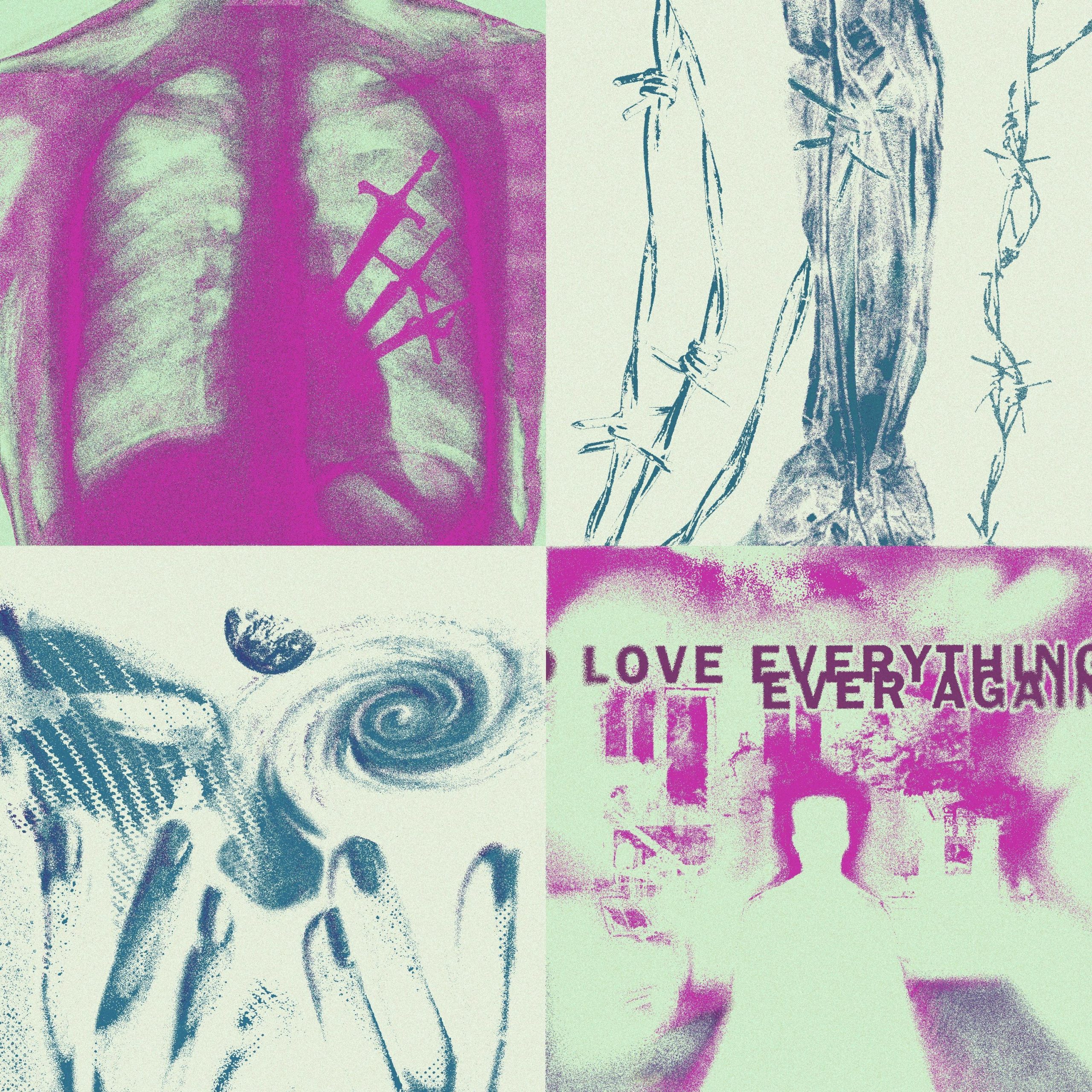
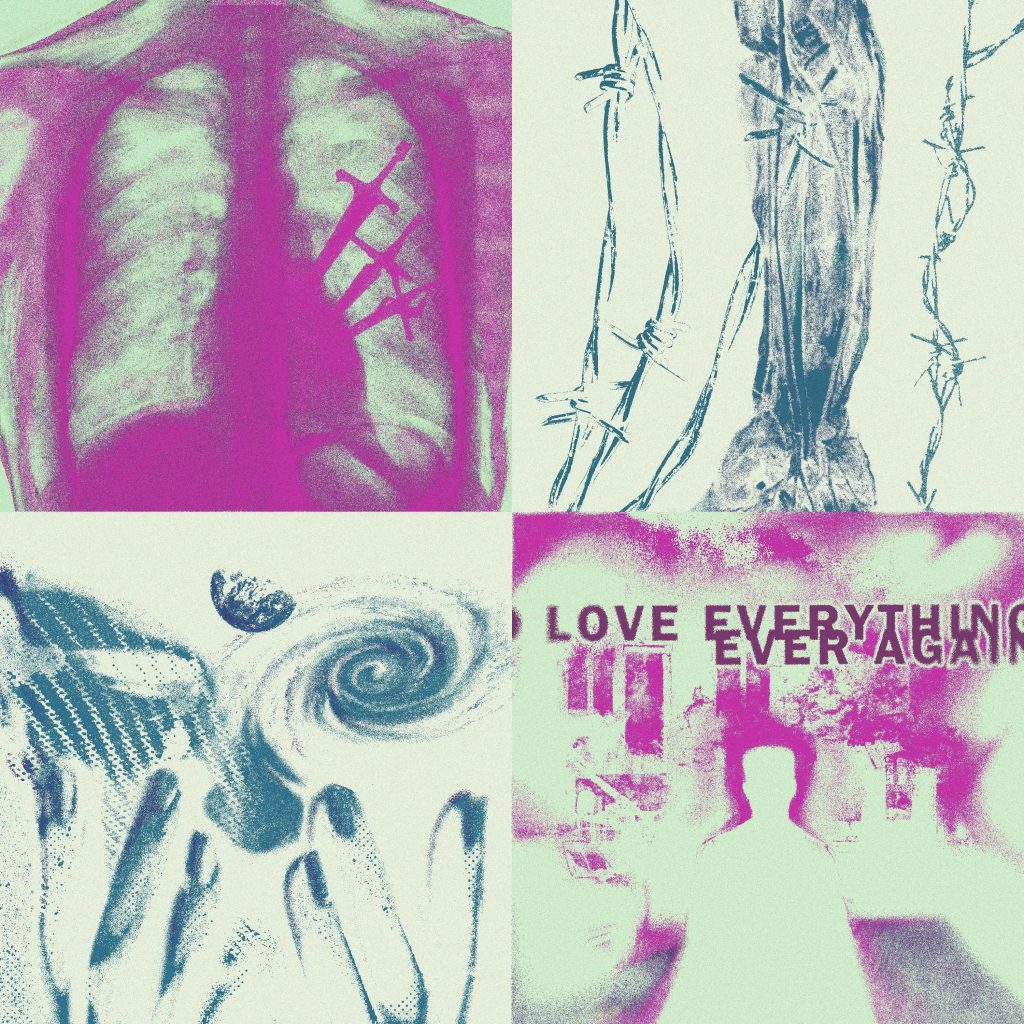
Through Janpol Estella’s solo project, To Love Everything Ever Again, he emphasizes that fractured religious experience. Compiling waves of glitchy synths, hazy vocal effects, and chamber pop flourishes to envelop stories of fluctuating faith with weight. If his debut EP, ‘Nineveh,’ wades upon murky waters, then his debut album, ‘A Post-Overdose Confession,’ swims through it. It’s a case of delving deeper into that struggling abyss, where he confronts his religious fervor as mental health, addiction, and environmental decay become a factor of how he tries – and crashes apart – on holding onto that spiritual belief. Clinging onto it so hard for a hopeful path to come forward as he tries to remind himself of dreams he wants to achieve, until he finds out that it doesn’t come through so easily.
This crushing arc eventually hits its hardest point on the title track and “Nothing But The Blood.” Both songs hit rock bottom as any sliver of peace is very much gone, but how Estella portrays God and Jesus becomes important here. God is this divine being that he thinks has given up on him and becomes the cause of the pain inflicted upon him, and Jesus is this human person whose own struggles he can relate to, and even may be a symbol of light that he could still hold onto. It’s why, despite the rewritten hymn of the latter song describing the ragged acceptance of all that pain that has fractured his faith, hope, and soul, Jesus’ presence becomes a metaphor. A symbol of a peaceful exhale that can allow him to eventually heal.
This narrative perspective colors how the instrumentation and production are presented. Glitchy electronics now shamble across dance-adjacent rhythms, seething vocal effects and synths are implemented to amplify Estella’s emotional throughline, and the brighter chamber pop elements are carefully placed down with intent. An expansion and emphasis of tones that straddle between the lines of bliss and ache, a direction that firmly exposes Estella’s captivating experimental swerving in two lanes. The first is how the glitchier rhythms across “My Own Sodom” to “Need to Control” become curiosities that don’t land their fullest strides. Opening up more melodic flair, yet lacks a strong enough hook to keep it sticking altogether.
The second is how leaning into those synthetic tones and focused melodic flourishes only makes Estella’s songwriting hit like heavy bricks. The scorching distortion clipped around his voice and electronic embellishments on “COP30 (Never Enough)” let his emotions become devastatingly crumbled, bursting out of the seams with every refrains; the stirring one-two punch of the fluttering raw piano recordings of “Perhaps” that transitions to the crackling synth affectations of “A Post-Overdose Confessions” becomes a quaint reflection turning evocatively solemn; the punchier drums on ‘Unreachable Serenity” contrast well around violin swells and gauzy textures; the post-rock swerve of ‘Nothing But The Blood’ that ramps up its melodic prowess, eventually going all out with the blast beats and guitar solos that revs Estella’s version of the hymn to a different level. All of it resting down to the spare organ tune of “God, I’m finally letting this go.” Ending the album where, perhaps, Estella has found that light once more.
What ‘A Post-Overdose Confession’ unveils is an exploration of faith that was broken but can still be recovered, all through Estella’s ways to amplify the stories that felt more personal to him in the long run. Testing the waters on how he can deliver such emotional scope, and landing with it the most striking way possible, fractures and all. A confession as a means to accept the feeling of giving up entirely, until that light starts showing up in the darkness, where hope can blossom once again.
Support the art and the artist: