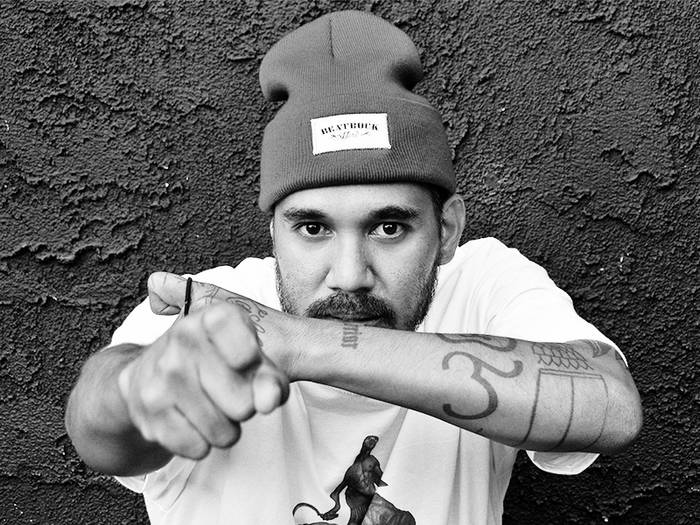
Written by Gabriel Bagahansol The name of the latest album from Filipino-American rapper Bambu is taken from the arrival of Spanish forces in Mexico, who set fire to their ships in a bid to take over the country through bloodshed. There is a web of colonialism that links Mexico to both the Philippines, its fellow former Spanish colony, and Bambu’s hometown of Los Angeles, whose Mexican heritage clashes with the socio-political dominance of the United States. That ever-growing web of international dominance and tyranny is what informs the sentiments within the rapper’s latest project, ‘They’re Burning The Boats.’ The anger spurred in response to gun violence, conservative grifters, raids on immigrants, a tax-funded genocide, and a disproportionate status quo is front and center on ‘It’s Happening, Again,” which acts as a preface for the album. On the next track, “Their Problem, Not Mine,” Bambu calls out Filipino-Americans who have chosen to betray their Filipino roots in exchange for model minority points that won’t protect them from racism. He doubles down with his disgust on unprincipled people in “Righteous, By Design,” where he encourages people to be proud for having militant progressive stances and speaks out against money-driven commentators who manufacture consent for imperialist aggression. Fittingly, on “Burning Manufactured, Alive,” Bambu tells the story of Palestinians and Arab peoples who went about their normal, everyday lives before that normalcy was violently rewritten by Israeli bombs made possible, in part, by United States industries. And on “Inamo, Customs Enforcement,” Bambu talks about the racist violence happening in his own country, ridiculing ICE agents for being class traitors to their own countrymen and reminding them of the grim legacy they will leave behind for their children simply because they needed a paycheck. On this initial set of songs, Bambu plays the role of messenger and critic, with the sharp mindstate of an org leader leading a rally and the charisma of a rapper feeding rhymes to a packed club. His words flow so smoothly over boom-bap beats — provided by longtime collaborator Fatgums — that they help the heavy subject matter go down easily, and with Bambu’s skill in turning his stances into sticky hooks, these songs feel less like a sermon and more of a lively public demonstration. No more are these traits more evident than when Bambu tackles the chaos happening in the motherland. When most rappers would use a beat with snappy drums and warm electric pianos to brag about cruising at night in a flashy car, Bambu instead uses this as an opportunity to warn flood control contractors driving in their flashy cars of the consequences of their greed. “Blood In The Maybach, Patay Sa Baha” puts a spotlight on the injustices happening in our own country, conjuring images of corruption within the government and the media, and how it has affected us Filipinos. On the same song, Bambu delivers another lambasting of Asian-Americans who turn a blind eye to their fellow Asians who suffer back home, and he even calls on people to turn against the antiquated systems that have done so little to help their constituents. The injustices we face will leave us feeling plenty of anger and disgust, and these songs reflect that prevailing sense of doom, but rather than exhausting his rage to the end of the album, Bambu tries to propose that in spite of all of this, we can still make change possible. On “Complicit, Repeat,” instead of regurgitating his disdain towards ignorant people, he attempts to reach out to them, show a common ground in their struggles, and encourage them to speak out. By presenting sympathy to the apolitical who’ve become jaded over time and are now complicit in war by way of their tax money, he reminds listeners of why activism matters in these trying times. But with a closing track titled “It’s Happening, Now,” you’d think Bambu would take this opportunity to mobilize people into the streets after talking about the atrocities of our time in the last seven songs. But instead of giving into such obvious urgency, Bambu is showing love — love for his comrades, love for his fellow Filipinos, and most of all, love for his family. Now in his forties, Bambu’s rage against the machine is as alive as it was two decades ago, but becoming married with children didn’t dilute his energy. The sobering clarity after all the political chestbeating comes from remembering who it is you’re fighting for, and as Bambu makes it clear by the end of this album, he takes to the streets for a better future for his family and families like his. The two songs that close ‘They’re Burning The Boats’ not only prevent the album from becoming a doomscroll in glorious hip-hop, they also complete the purpose of activism and reaffirm the many people that come together in organizations and unions all over the world. Rebellion isn’t just about being angry over a corrupt system and sneering against conformity; it’s also about reaching out and welcoming people to the cause and making your disobedience count towards ensuring your countryfolk will no longer live a life they don’t want. But how do we solve all this, then? At the end of the album, Bambu clarifies that he actually doesn’t advocate for violence, but vows his support for whatever choice the masses will make to end the tyranny forced onto them. Put this album on and do with his words what you will — but keep them in mind the next time the ashes piled up on Manila Bay clog the drain and cause a flood the next time it rains. SUPPORT THE ART AND THE ARTIST: They’re Burning The Boats by Bambu

Tag: Boom bap
TRACK REVIEW: kyleaux – NOTICE ME
Written by Louis Pelingen Stepping outside the dense smoke of his past releases, “NOTICE ME” acts as the next progression for kyleaux’s creative prowess. Replacing rapid warbles with sleeker R&B cadences that compliment his desire for romantic attention, one that requires a level of inviting charisma that Kyleaux proves to handle in potent strides. Paired with the nimble bass groove, shimmering synths, and textured boom-bap percussion, it coalesces to Kyleaux’s melodic arsenal, instantly pulling the attention of the listener into the song. It may be a little bit quaint mixing-wise – especially around kyleaux’s vocals – yet the overall melody coming through his vocals and his instrumental is silk as butter. This results in said quaint mixing becoming a feature rather than a weakness of this whole song, a deceptive magic under kyleaux’s growing bag of tricks. One that’s worth noticing further as he constructs more of these low-key yet delightful songs. SUPPORT THE ART AND THE ARTIST:
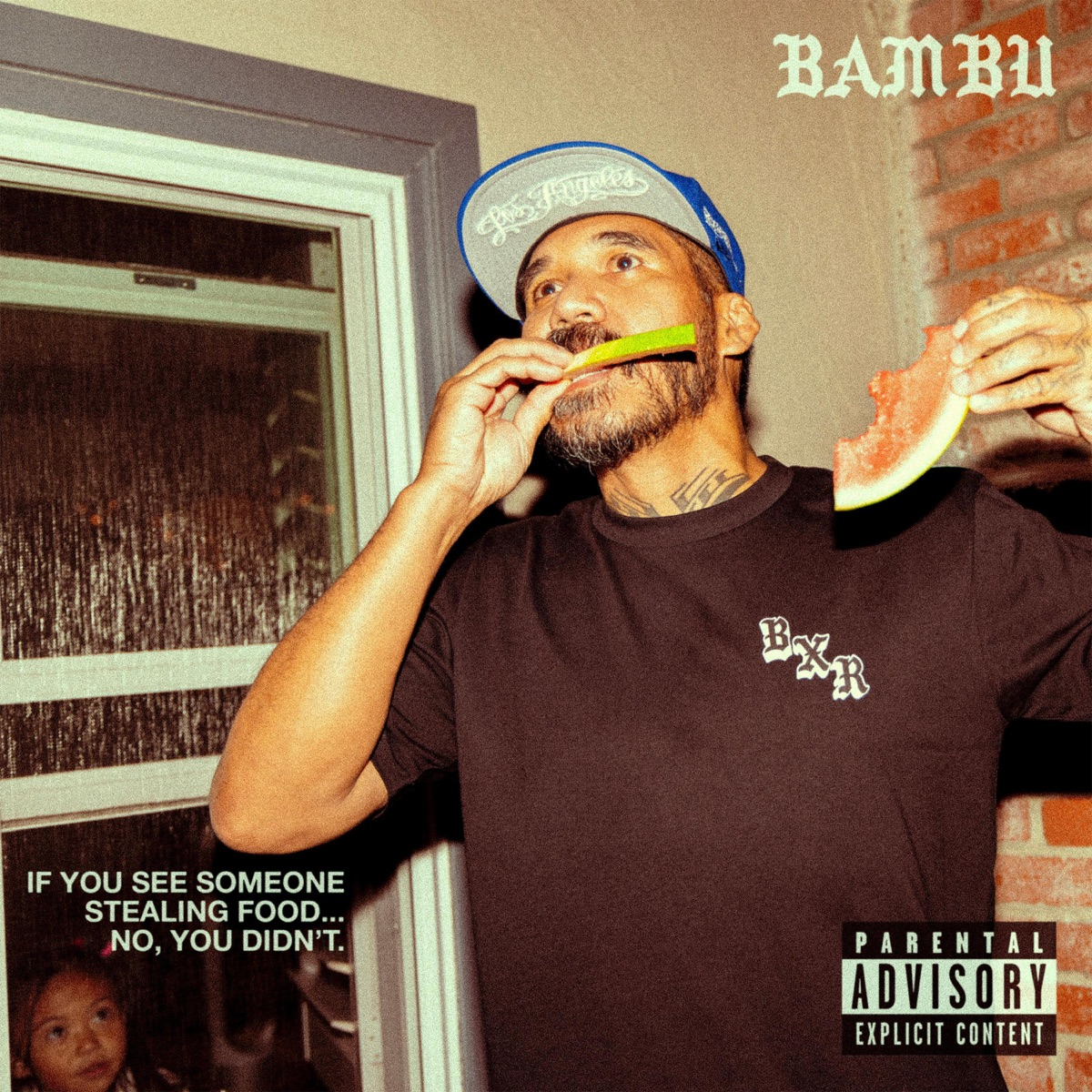
ALBUM REVIEW: Bambu – If You See Someone Stealing Food… No, You Didn’t.
Written by Anika Maculangan One hard-hitting line after the other, Bambu’s words as a rap artist travel oceans just to make it into our eardrums. Timely, relevant, and empowering, If You See Someone Stealing Food…No, You Didn’t is a new release from the LA-based rapper that feels like just what we need right now more than ever. In the album, DePistola tackles issues like workers’ rights, the genocide in Gaza, corruption, and police brutality. He approaches these themes in a way that is direct, precise, and straightforward. He doesn’t sugarcoat his delivery, yet prioritizes the impact that it has to offer. Despite this emphasis, the tracks in this album, notably Steal For A Meal and PI State of Mind II have an immense sense of flow and rhythm. The beats across the tracks are potent, well-measured, and powerful, which better amplify DePistola’s fervent utilizations of tempo and melody. Despite lyrics not being available yet online, upon writing this review, there wasn’t much of a hassle deciphering the words because Bambu articulates each and every one of his messages so legibly throughout this entire album — both in form and content. DePistola raps from the heart of the Filipino-American community, highlighting what it means to have pride in one’s identity, despite geographic barriers. DePistola strengthens his listeners, which at its core, includes the youth in order to encourage them to continue to fight for human rights and social justice later along in the future. Inspiring, thought-provoking, and insightful, the content of DePistola’s most recent album brings light onto societal truths, that urge to be addressed. This exactly is what DePistola provides — a voice for those who are silenced. Through the medium of an album, he makes these stances firmly conveyed, and ensures that it’s accessible to his audience. Accompanied by various tonalities, like for instance, air instruments, even the interludes mixed into the rest of the songs evoke a kind of tough heartiness. It’s clear that DePistola doesn’t leave any empty spaces in his compositions, most, if not all of them, whole with soul and spirit. You can easily tell that he is passionate about his craft, in connection to the things that he stands for. With support from rap movements like the FlipTop community alongside the San Francisco bay area scene, artists like Bambu keep the Filipino perspective alive within this realm. He’s a promise that even abroad, Filipinos can make a name for themselves — despite all the hurdles and challenges that come along their way. DePistola speaks for those who have worked their way up to success, making something out of the value that is found in their personal experiences. Listening to this album, it’s hard not to be so attentive to the lyrics — ultimately, it’s the greatest asset of the entire project. The musicality of the album is just what you would expect from Bambu; skilled and masterful. But what shines the most is the weight that the album carries. It’s a perfect reflection of today’s faced struggles. And no, it does not mourn them, but rather, looks for solutions. However, what Bambu first does is open a discussion about them. This album is if anything, a necessity in today’s day and age. Perhaps DePistola thought it to be essential. Many rappers, local and international, can learn from Bambu’s integration of social issues into his music. He demonstrates that rap music can be used as a tool for advocacy during times of collective hardship. Music like Bambu’s unites people to help and uplift one another. It makes us realize what can be done, and how. It asks questions like “Why is this happening?” and makes the sound we are hearing more than just mere music but rather, a call for action. For that, we thank DePistola. While some tracks felt slightly out-of-place, like Tommy’s Burgers and Crazy Eyes, the album as a complete project doesn’t miss any points. Although others might find some patterns in instrumentality repetitive, one could also presume them to be intentional. Yes, these stories do need to be vocalized over and over again, as they should be until it’s brought us to acknowledge the problems that plague the world with oppression. In this album, DePistol says behind his messaging, that he won’t stop until those being exploited are given justice and recognized for their right to equity. If You See Someone Stealing Food…No, You Didn’t takes what is already there, and introduces it to a broader audience through the universal language of music. Bar after bar, Bambu proves to us that a compact summarization of what is happening currently can be put into words within the measure of 1-3 minute songs. In no way does it reduce these dialogues, but turns up the volume, for them to be reinforced on a more heightened, revolutionary scale. Support the art and the artist:
TRACK REVIEW: Kiyo ft. Yung Peso – Puyat
Written by Elijah P. Pampanga-based rapper Kiyo never really forgot his roots since moving from the ports of Navotas to the north side of Angeles not too long ago. His latest track “Puyat” offers introspection rather than the nostalgia trip of their previous material. Time seemed to run out for the young rapper. It wasn’t too long ago either when he released haranasa – a 15-track debut that overstayed its welcome. The debut showed more filler than a 4-verse solo track. However in “Puyat”, it was more likely that he’s been keeping these verses loaded with more impact. The compactness of these 16-bars are rich with food for thought compared to the aimless reminiscing thoughts of haranasa. Although, the listener would rather frame it this way: “Puyat” is an entry of a more mature Kiyo. The borderline boombap production and hazy pianos ride over Kiyo’s gliding melodies seamlessly. You have the flows of Kiyo complimenting the guest feature Yung Peso in the monochromatic music video; hustling in the skinny alleyways and living the life by skydiving freely. Kiyo didn’t join the rap game for fun; he joined because it made him live life more carefully. “Puyat” has all the breaks for kiyo to showcase his more melodic and lyrical sides. Support the art & the artist: