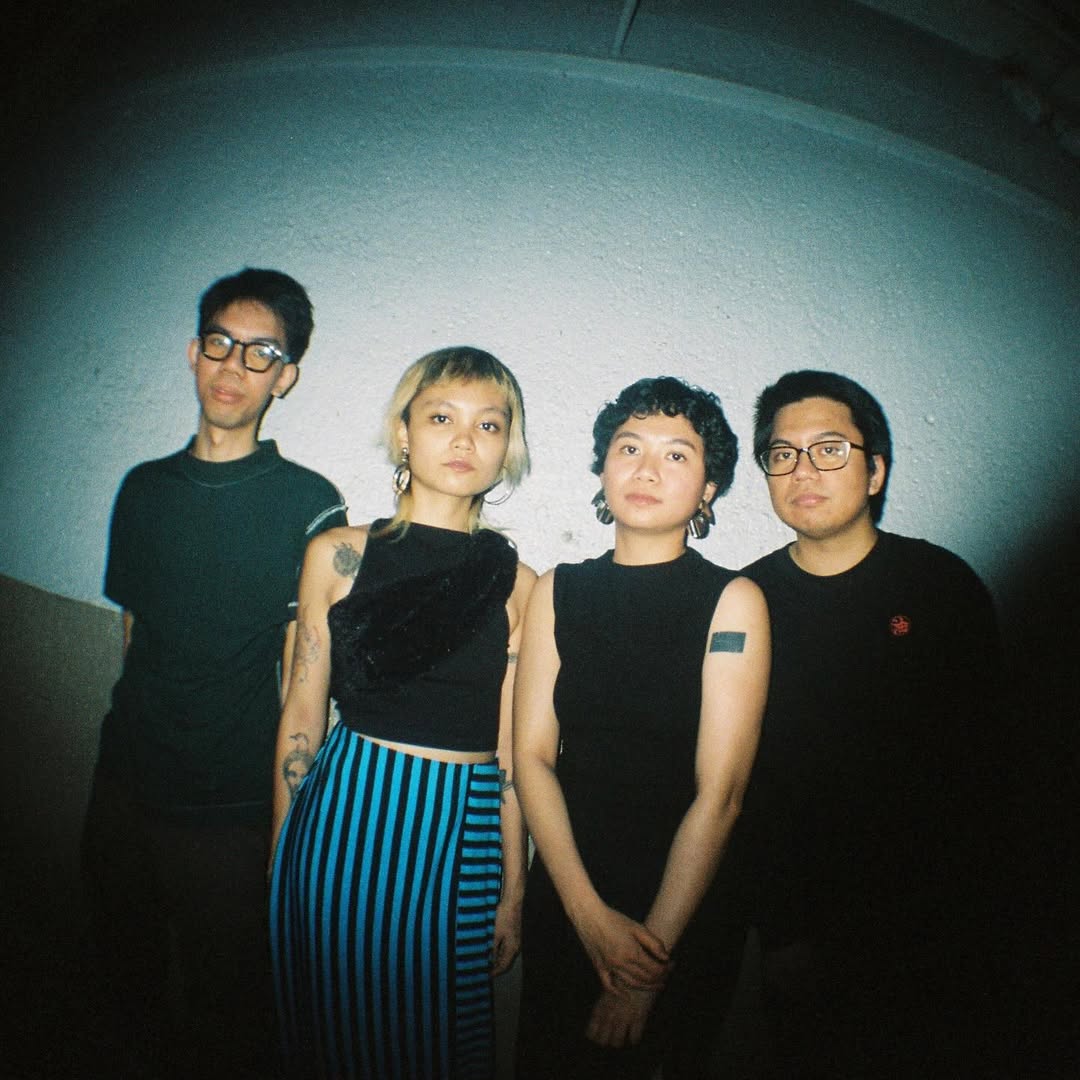
In an industry driven by visibility and speed, Ourselves The Elves embody a DIY ethic that builds on showing up and sustaining community and embracing contradiction across a decade of making music together
There’s a tendency to frame longevity in the local underground scene as triumph, survival as spectacle, and persistence as proof of greatness. However, Ourselves The Elves don’t seem to be interested in that kind of narrative. A decade on from their debut EP, Geography Lessons, the band speaks less like veterans guarding a legacy and more like participants who never left. They’re still booking their own shows, printing CDs themselves, and keep the promise of never attaching to a money hungry music label. “DIY or die” is their stubborn yet gentle manifesto.
Formed in the early 2010s, Ourselves The Elves emerged as a college band in UP during a time when genre borders felt porous and gig lineups were wildly heterogeneous with rock bands sharing stages with DJs, electronic acts, and solo performers. For Ourselves The Elves, the underground has never been an abstract ideal. It’s always been logistical, relational, and deeply emotional; it is as interpersonal as it is intrapersonal.
Celebrating a decade of Geography Lessons, the band speaks of the EP with a mixture of disbelief and gratitude. What began as an exercise in recording and release, self-funded and self-distributed and nearly missing its own launch deadline, has proven unexpectedly enduring. Newer listeners continue to discover it, finding something current in its vulnerability. For Paula Castillo, who was once a fan before joining the band, finds that the EP’s continued resonance reflects the honesty of its songwriting and why it remains meaningful years later.
That honesty has always included contradictions. Despite the band’s name and their later embrace of “self” as a central theme in their music, Cabral is careful to point out that many of their early lyrics are self-deprecating, even harsh. Rather than offering clean affirmations, Ourselves The Elves wrote through the mess of early adulthood: loving and hating oneself simultaneously, navigating friendship, frustration, and moral uncertainty. Throughout their entire discography, self-love is an uneasy conclusion arrived at after sitting with extreme discomfort. It isn’t a simple commute with an extravagant destination. “It’s about embracing the self but it’s also about hating the self,” Aly says. Perhaps that realization is the crux of the Elves’ existence.
When venues close, what’s mourned isn’t just the loss of a stage, but the memories formed there by performers, organizers, and gig-goers alike. As lead guitarist Akira Medina reflects, the survival of any space depends on whether it genuinely serves a community. The emphasis on service–on showing up for one another– runs through the band’s history. Their collaborations, from Petersen Vargas’ film work to community-run gigs and collectives reveal a culture built less on individual ascent and more on shared emotional labor.
Crucially, the band refuses to retroactively professionalize their story. Even now, they hesitate to call themselves pioneers. DIY, for them, was never a branding exercise. They sustained a garden of sound and technicolor. They sustained a way of working where bands double as organizers, collaborators, and caretakers of one another’s creative lives. What Ourselves The Elves has taught the youngins of the scene is to hold on to DIY as a means of retaining agency and not purity politics, or as Ponch Salvador puts it: to be cringe, after all, is to be free.
In an industry increasingly shaped by speed, visibility and metrics, Aly Cabral, Akira Medina, Paula Castillo, and Ponch Salvador exemplify the DIY ethic of not relying on shortcuts nor do they treat it like a hustle. Not mastery, not dominance, care. Care for process, for people, for the slow work of becoming, If their legacy lies anywhere, it’s in proving that staying can be just as radical as breaking through.
FA: What were your highlights from the 2016 era of the music scene that you still wish were prevalent in the scene today?
ALY: I think yung diversity of events at that time, the indie scene was thriving really well– not to say that it’s dying right now, but yun yung time na ang daming lumabas na bagong bands na sabay sabay and ang daming gigs where bands would play in the lineup along with different genres. There were also DJs, there were bands, there were electronic acts, and solo acts. So I guess mas buhay yung time before the pandemic, relatively yung music scene in general.
FA: Do you think that the scene is going through a “recession?”
PONCH: I feel like the crowd just became more inclusive and perceptive towards others that you like.
PAULA: Yeah. And I don’t think that recession equates to things being cancelled and whatnot. Mas nagiging aware [of the scene] na kasi yung kids nowadays. They’re more aware of different things going on.
I think that eventually, if a venue [at risk of closing] will survive, factors like how accessible it is to young people who go to gigs and questioning if it serves a community [will help] keep it alive.
–Aki Medina, Ourselves the Elves
PONCH: I don’t think there’s a [scene] recession going on.
AKI: I think it happens all the time but it’s not really [a recession]. There are always changes– it could be like how active the scene is, yung venues- lalo na yung venues. Personally, we lost a few of our favorite venues due to them closing down.
ALY: I agree with that. I mean, for sure there’s an economic recession pero when it comes to art and music. It’s affecting yung economic positions namin, it’s hard to get together all the time now because we have work and everything but we still find ways. A lot of new young artists now rely on the internet as well and social media so nag adapt yung mga artists.
FA: I want to ask Aki about when venues like Red Verb Studio or Route 196 closed, how did that make you feel then and what do you think about the venue shortage now?
AKI: I’m not sure about now, , I haven’t had the time to go out and explore as much personal connection [within the scene] lately. So when it closed down, I reminisced a lot of memories there with the band and as a gig goer. I think now, I see that there are new venues popping up and a lot of younger people trying to keep these new venues alive. I think that eventually, if a venue [at risk of closing] will survive, factors like how accessible it is to young people who go to gigs and questioning if it serves a community [will help] keep it alive.
FA: It’s been a decade since Geography Lessons was released, what does that album mean to you now both individually and as a band?
ALY: It’s been a decade. It’s been that long. It’s amazing that we were able to sustain this band and that friendship for longer than that. I feel like things are coming full circle because it’s also not just 10 years for our album but also for the film of our friend Petersen Vargas, which inspired the EP. And now, I still get to collaborate with Petersen and I still see him a lot more recently. So there’s a full circle feeling of collaboration and working together and all those years made me appreciate the music more – seeing how we’ve grown then as a band.
PONCH: It’s just wild for me. I didn’t think so many people would like an EP of all things or something like an EP would have stuck with them for so long or if they heard it for the first time. I’m still surprised to this day. Yeah, it just surprises me that people still like it or if they listen to it or it feels so fresh to them if they listen to it for the first time.
AKI: I think from that time it was a good exercise in learning how to be recording and releasing material. Kasi we’re a very independent band so usually we just do our do things talaga ourselves. So a lot of the stuff that we did ourselves were printing the CDs to selling it in shows. I think muntik nang di umabot yung CDs when we released it at the gig so parang it’s a good learning experience in being a band and like from all aspects, especially the songwriting and recording part.
PAULA: It’s amazing to see how it resonates with younger people nowadays. Ako kasi, before even joining the band, I was a fan of Ourselves The Elves as well. So listening to the EP back then, I could tell that it was timeless that the songwriting is timeless and it’s nice to see it resonate with people nowadays parin. So it’s nice that younger people got to still connect with it nung pandemic and there was a need to hear it or see it live. Nowadays it’s nice to experience that.
FA: When I watched Some Nights I Feel Like Walking by Petersen Vargas, I wanted to ask Aly what it was like to score the film with your brother as well as implementing your own personal tastes in music while also including “Force Field” by Ourselves The Elves in the film. How are you able to decipher what goes where?
ALY: It’s mostly on Petersen. Since he’s the director, he guides me a lot with the music that I do. He was actually the one who decided to put “Force Field” there because we were trying to figure out what was the best music for that– whether or not I should do a score for that, so for me, the way that I score my solo compositions is not separate from the music that we do for OTE. Madali naman siya i-connect. For me, the band’s music is a continuation of what I do now as a solo artist.
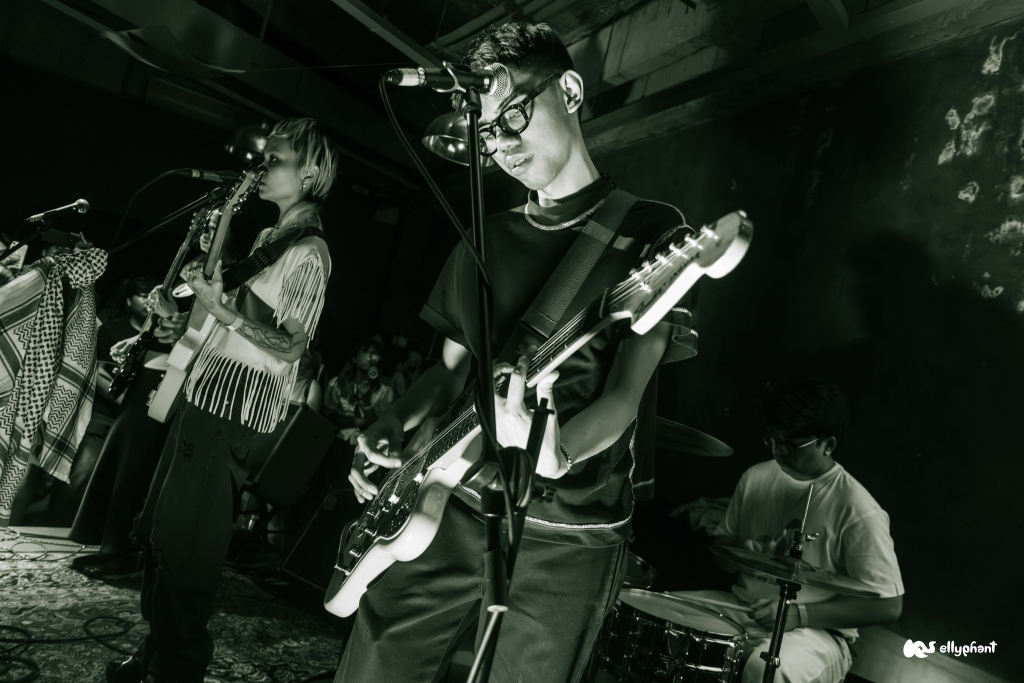
FA: You guys have truly paved the way for the DIY scene that we know today. How do you hold space for your earlier music like the Geography Lessons EP until you released Self Is Universe? How do you feel about the mark that you’ve made on the scene today? Is it something that you guys think about?
PONCH: Personally, I guess it’s because I don’t go out as much probably, I seldom see DIY stuff popping up. If not I mean the shows, you know, people from like Sining Shelter a lot of those are DIY and a lot of the data are DIY. Do we want to call ourselves pioneers of DIY? I don’t think so. I’m pretty sure other people have done that before us. Correct me if I’m wrong, but Eggboy’s record is DIY.
PAULA: Tsaka yung collective nila Mikey, like Ciudad. They’re also DIY. We also learned from them as well. Yeah. We didn’t pave the way in terms of DIY–I mean not us as a band but the scene that we were in before the mid early 2010s. We were not just in bands before kasi we also tried to do shows where we book shows by ourselves, like, nag organize dati si Aly ng shows, nag organize din ako ng shows before, so, it’s not just [Ourselves The Elves], it was the community then before .
FA: How did it feel like to be a part of productions then versus now? Are there things that are different with how bands organize their own gigs?
PAULA: On our last show I was also organizing– we were also running the show. Aly ran the bar and then I was a part of the prod, so, I was making sure things were going on smoothly. But then again, I was still coordinating with my bandmates like their preferences or tending to people. It was really tight knit because of the lineup on that show as well. We’re also bandmates of bands that were there. Now may mga DIY shows the bands would organize it and like run it themselves. Let’s just say like there’s different skills of um shows nowadays as well. So, I can’t disregard DIY band members themselves.
I feel more confident knowing that people actually like the music and the lyrics even if I know my personal point of view. So like there’s comfort knowing that and that definitely helped me become more confident in expressing my feelings not just through music but like generally as a person.
–Aly Cabral
FA: What made the band decide not to hide their true emotions under elves, but moreso, embrace the “self” through lyricism and rhythmic experimentation?
ALY: Thematically, it does deal with embracing the self, but I actually think that a lot of our lyrics then are actually self-deprecating sometimes. So, I feel like it’s showing the reality of how you feel about yourself, especially if you’re going through that [coming of age] we started during college and then we were like making music that expresses your personal lives. So, at that age I feel like I also had a lot of frustration about myself and the world. So I was just trying to convey that honestly with the lyrics. Yeah. It’s about embracing the self but it’s also about hating the self sometimes if you did something wrong.
FA: Were there any like I know unexplainable feelings that you were able to put in songs?
ALY: I think yeah what I just mentioned which is the conflicting feeling of loving yourself and also hating yourself at the same time but in the end having that sort of epiphany or awakening na ‘oh in the end you’re stuck with yourself so self love parin or love wins!’ So right there all these complicated feelings now from early adulthood parang ganon. All mixed feelings like not just love but also friendship and conflicts and everything.
FA: Aly, how did writing and journalism impact your personhood and the things you believe, which are also reflected in songwriting/instrumentation?
ALY: It definitely made me feel more fearless kasi knowing that I could have this channel to express my feelings honestly and share it to the world. So merong feeling of I guess feeling bold but at the same time vulnerable because these are personal feelings. So right now, I feel more confident knowing that people actually like the music and the lyrics even if I know my personal point of view. So like there’s comfort knowing that and that definitely helped me become more confident in expressing my feelings not just through music but like generally as a person.
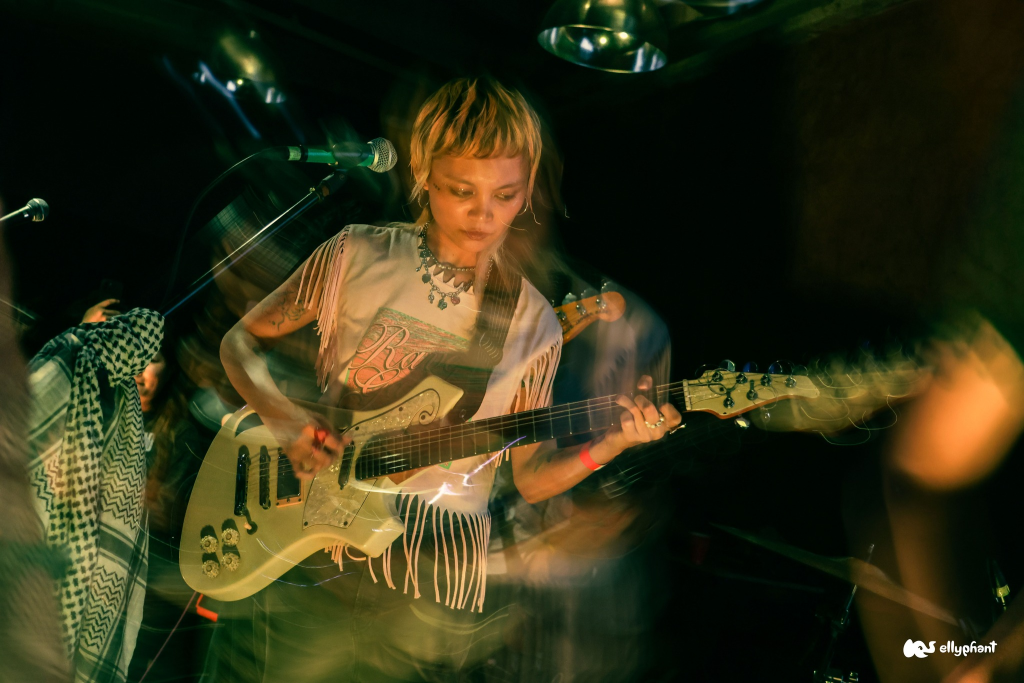
FA: What advice would you give to musicians in the scene who want to have a long impact like Ourselves The Elves?
PAULA: I feel like number one is to find bandmates that are your friends. I feel like yun yung secret sauce namin. We are all now busy nowadays individually but I feel like I could hang out with each one of them outside music and then [my other advice is to] cultivate yung chemistry niyo as people and as bandmates inside of whatever unit that you are in [whether] as friends or as bandmates, dun niyo ma mimix yung creativity niyo or yung talent niyo together seamlessly.
AKI: My answer is more of how to navigate the industry or like the system which people like us operate in. I think it’s important to know [how] set boundaries for yourself and know what you’re comfortable with doing, how you interact with other entities, other organizations or whatever. And if you’re not sure what you want to do, I think you should know what you’re not comfortable doing. I think it’s very important to keep yourself in check and set your own boundaries.
ALY: Find your tribe talaga and collective. At the same time, set boundaries with not just each other or with people in the scene, but also people outside the scene especially. Tas yung take ko naman is that I really believe in DIY honestly. Like yung saying “DIY or die”, I believe in that because we’ve been like that for years and now we’re still like that. We still enjoy it. Of course, may mga pros and cons, but feel like for me it’s the best way to go. And also other than that, it helps to have a clear vision kasi that’s going to have a clear direction where you want your music or your career to go and then everything else will follow.
PONCH: If you want your band to just be blasting music, I think, as much as I want to do it, I’m pretty sure the rest of my bandmates don’t want to do it kasi. And it’s really for a better cause but I guess don’t do lame shit. I guess don’t do whatever seems trendy. I feel like that’s like a one way ticket to just lasting three six months [in a band]. Just be yourself. Kahit cringe siya kasi to be cringe is to be free, you know.
PAULA: That is so you Ponch. [Laughs]