
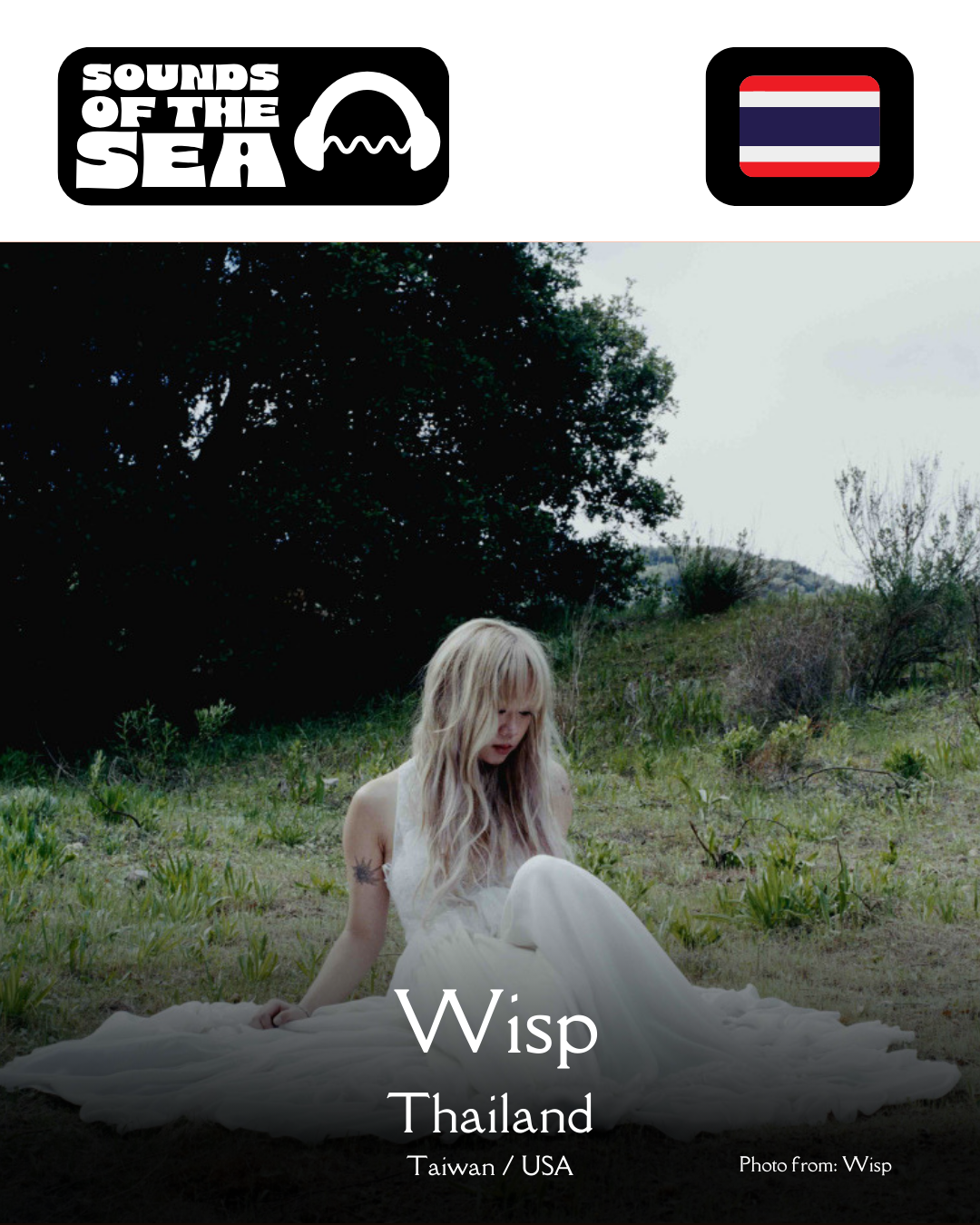
In the middle of the vast ethernet lies a genre that has been stretched, flattened, recycled, and reborn more times than anyone can reasonably count. Shoegaze, once tied to distortion pedals, rehearsal rooms, and subcultural isolation, has since found a second life online, where riffs circulate as presets, moods become templates, and entire scenes form inside comment sections. Out of that churn emerged Wisp, a Thai-Taiwanese American musician whose rise traces how shoegaze slipped from niche fixation into one of the most accessible sounds of the 2020s.
Wisp’s earliest material, dating back to 2023, lived where many young artists now begin: alone in a bedroom, posting short instrumental clips online. Her early TikTok uploads leaned into shoegaze “type beat” structures, dense guitar layers looping into themselves, melodies hovering for the majority of the track. These clips spread quickly because her contemporaries understood how it could function in a compressed, scroll-first environment. Shoegaze became texture first, atmosphere before statement, something listeners could step into alongside a rich story that traces back to influences of noise rock and post-punk in the 80s.
That clarity carried into her first EP, Pandora released in 2024, which marked a shift from small snippets to fully formed songs. Tracks like “Pandora” and “Mimi” expanded her sound, pairing blown-out guitars with soft, hushed vocals that rarely rose above a whisper. Her voice became one of her defining traits, dreamy and lo-fi, sitting low in the mix as another instrument rather than a focal point. It gave the music a sense of closeness, as if the listener had stumbled into something private. At times, stepping into Wisp’s worldbuilding as the wall of noise envelopes the listeners one at a time.
As her audience grew, so did the scale of her work. Wisp’s songwriting eventually sharpened her sensibilities in writing more melodic pieces of music; Her arrangements thickened, and her live presence followed suit. What began as solo bedroom recordings translated into full-band performances capable of filling festival stages, all while keeping the grimy, internet-bred edge intact. Shoegaze, in her hands, did not lose its heaviness as it grew louder. It simply became easier to step into.
That evolution continues on her debut album If Not Winter released in 2025, where newer songs like “Black Swan” or “Sword” lean further into contrast. The guitars hit harder, the structures tighten, and the emotional palette darkens without drifting into excess. The whispery vocals remain, floating over walls of sound that feel heavier and more deliberate than before. It is music shaped by online beginnings yet no longer confined to them.
Wisp’s career reflects a broader shift in how shoegaze functions today. Detached from strict lineage and carried by platforms that reward immediacy, the genre has opened itself to a new generation. Through texture and a clear sense of mood, Wisp helped make shoegaze feel less like insular and more like a shared space for a wider audience, one that listeners could enter from anywhere and stay as long as they liked.
Leave a Reply