
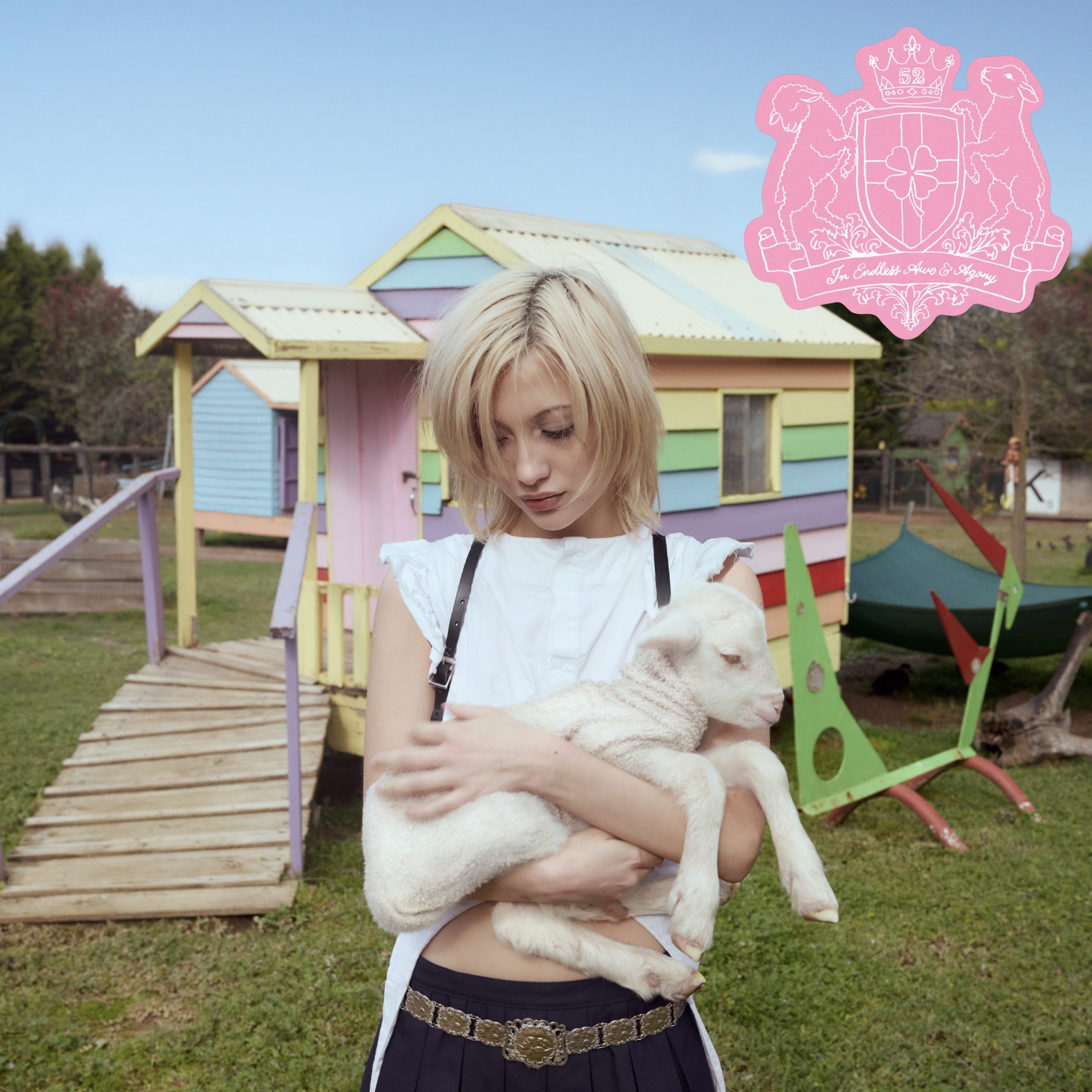
Inside Daine’s artistic psyche, lies a multifaceted dissection of their creative growth.
Australian-Filipino pop artist Daine has been at it as an artist for several years now, but 2026 is the year their debut album will be out for everyone to hear. This is an uncommon instance where the process of a debut album becomes sacred rather than immediate, a representation of an artist still soul-searching and changing along the way.
Their flexibility as an artist has been long documented throughout their work. Previous mixtapes like ‘Quantum Jumping’ and ‘Shapeless’ have them singing across Alternative Pop and Electronic beats, penning down Emo-tinged lyricism, and cultivating atmosphere that simultaneously broods and brightens. Their craft only continues with the looming anticipation of their debut album, ‘In Endless Awe & Agony’.
In this segment of Sabaw Sessions with guest writer Louis Pelingen, he spoke to Daine about their past works, collaborating with millennial producers trading for Gen Z optimism, the cringy “industry plant” term, and what the overall process of birthing their long-awaited debut album. For Daine, the creative process is multifaceted as the concept they’ve built upon it: embracing Jungian psychology as a reflection of their internal self.
[This interview has been edited for clarity and brevity]
LP: I recently saw your short video interview on NME.
You described “PQC” as an emotional portrait from your high school life. What were some of the music that you cherished the most throughout your high school experiences?
D: I loved Teen Suicide, Alex G, Title Fight, American Football. It was very classic Tumblr, indie kid stuff. I could go more niche than that, but I feel like those are the main ones.
LP: Your debut mixtape, Quantum Jumping, has turned four years old this year. What were the characteristics and takeaways that you took and refined since making that mixtape?
D: I think that my writing was a little bit more clumsy then because I was just trying to fill up all of the verses and the choruses and trying to make sure that things rhyme and stuff. But now I’ve realized that I can kind of just write whatever I want.
And back then, I think some of the stuff is, you know, as a teenager, so stuff is a little bit more cheesy, which I kind of like. Some people have told me that that’s their favorite work of mine and that the new stuff isn’t as good. I think there is something magical about how cheesy and unfiltered teenagers are. But I think I’ve matured and refined my craft to the point where you can tell it’s [coming from] the same person, but it’s like, I’m more refined now, I think.
LP: Just looking at your songwriting on each subsequent release, there’s definitely a change in how you build up your emotional tension within those songs. It’s interesting that there are people who prefer more of your older stuff. Why do you think that is, though?
D: I think there’s a lot more ear candy in the older stuff, like the older glitches, the hard 808s, the sort of trap elements in the production. And I think that stuff is very attention-grabbing. But what I mean by refining my sound as I get older is that I’m realizing that things don’t have to be so oversaturated. They don’t have to be so complicated, like simple songwriting with simple [production]. I mean, my music’s always been simple, but things like Auto-Tune and overdrive, I don’t need to drown everything out in these heavy electronic elements. I can just, you know, write a good indie folk song or a good rock song. I think there’s more of a return to classic songwriting, like letting the lyrics and the melodies speak [more] rather than the production.
LP: I see that approach really catering to those teenagers who just want their head speakers blown up and whatnot.
D: And I wanted that too. That’s why I was making that stuff. It’s like when you’re young and chasing a thrill, like that’s the vibe.
It’s okay to keep parts of yourself to yourself and then have your creative persona be this kind of mask that you show to the world. It’s like, you know, a jester is not being himself.
LP: Are you leaning into that approach on your debut album, or are you making a sort of playground when it comes towards the sounds?
D: Yeah, the debut is all over the place, like there is still that [quality], [but] I don’t think I will ever be able to tame the part of myself that is constantly moving between different genres and sounds. There’s a lot going on, but there is sort of a throughline of just strong self-aware writing. And to me, it feels like an authentic indie record, even though the stage I’m on is much bigger at this point. So I’m sure there will be like a lot of industry plant allegations, but I think if people really listen to the music, they’ll hear it. Like it’s real.
LP: It’s such a bullshit term, like the industry plant thing. Because, like, artistic development exists too, you know?
D: Literally! Like the Beatles like made it naturally.
LP: I mean, true, but it is the Beatles too.
D: No, but it’s like, everything has always cost money. Like, did I think Lady Gaga had like no marketing, no marketing budget, nothing?
LP: Oh yeah. Back in her dance-pop stuff in the 2000s.
D: But she totally had help. Like, you know, everybody needs help to get out of the mud. And we were in the mud. We’re making it out.
LP: That’s what I’ve noticed after your 2022 mixtape: you’ve worked with so many sounds from various producers. How do you ensure that you still keep your core voice while going through these different sonic approaches?
D: I’m still struggling to figure that one out, but I also don’t know if it needs to be figured out. Like I think that I sound really different on most songs because I’m working with different people, but now I’m realizing that there’s ways to create throughlines. For example, I got Curtis Everett Pawley to executive produce my record. So even though I like a lot of the songs [that] were made with different producers, at the final stages of tweaking the production, he was tweaking stuff to make it sound cohesive. I think there’s ways of just sprinkling in little sonic elements that are repeated throughout a project. So that’s been really useful, but I try not to think about whether my discography is cohesive when I’m writing because I think that can get in the way of whatever’s trying to come out. So I kind of let myself be all over the place, and then I can choose out of like 20 songs. Like, what are the 11 or the 12 that could exist in the same world.
Honestly, most of the songs that I wrote in this period of late last year [to] early this year are on the album. Like most of them turned out [well]. I was like, “okay, I’ve done it”. I’m not the type of person that writes a lot of songs, but definitely in the earlier stages, there were a few songs that were just like completely different genres. And that we didn’t really use it.

LP: I noticed that in your major releases, there’s always one song that has one lyric about playing pretend. How do you now reflect on being yourself, when it comes towards making and performing music these days?
D: I think it’s a subconscious thing. Like, I am autistic. So I think that to some degree, I’m always pretending, like I’m always masking. And creative expression, whilst it is authentic on some levels, it involves a degree of, you know, theater. It’s a theatrical process of being out there and over the top, and it’s not necessarily an accurate picture of reality.
And I think that’s something that’s really fun. Like I relate to that in a really positive way, but sometimes negative. Sometimes I’m like, “Oh, does anybody really know me? Am I fully authentic?” But for the most part, I think it’s okay to keep parts of yourself to yourself and then have your creative persona be this kind of mask that you show to the world. It’s like, you know, a jester is not being himself. He’s there to entertain the people and express himself in a fun way.
LP: It’s important to have that balancing act, especially within the realms of pop music, where the audience wants to see the authenticity part of it, but also wants the cool persona schtick too, which can feel like a confusing thing for a lot of pop acts to navigate. How do you play around with that dynamic?
D: It’s so hard to balance. And I think it’s also different with niche indie music. I feel like in pop music, people want you to be super good-looking. They want your dancing to be super flawless. They want everything to be on point, which is just not human at all.
Whereas if you are on the more attractive side [and the] more polished side, you have good marketing, and you’re like, pushing niche indie music or underground music, it can have the reverse effect. People actually reject that because they think, “oh, you’re inauthentic”, you know? Like, people associate certain things with authenticity and fakeness, so what works
in pop music doesn’t necessarily work in indie music, and what works in indie music doesn’t necessarily work in pop, like they’re two different realms.
There is something magical about how cheesy and unfiltered teenagers are. But I think I’ve matured and refined my craft to the point where you can tell it’s [coming from] the same person, but it’s like, I’m more refined now, I think.
But I exist in the middle of them, so it’s been really difficult to juggle [them] because, on one hand, the underground is saying like, “this feels fake”, and they think it feels inauthentic, but then a more pop audience might be like, “this doesn’t feel polished or high budget”, so I don’t know if I [fit], [but] I think I can appeal to both, though. Being in the middle is actually like a good place to be because maybe there’s people from both sorts of audiences and obviously there’s overlap so it might not be the worst place to be.
LP: For the past couple of years, you managed to collaborate with artists like Oli Sykes, aldn, Ninajirachi, and Kreayshawn. What got you the opportunity to work with them, and how do you navigate if a song you’re writing would work better with another voice that has a different perspective?
D: Collaborations just need to happen sort of naturally. With Oli Sykes, he dm’d me – I swear this was in lockdown, like that was so long it’s crazy – he just found me on Instagram. Nina and I have been friends for almost six years now, and we made “It’s You”, like, three years ago.
LP: It’s been that long?
D: Yeah, we made it so long ago, and that was sort of natural. She just happened to be in New York when I was staying in New York, and we were like, “Let’s do a session, let’s write something!” and I crashed out. I was like, “I hate this like I can’t write music anymore, I don’t know how to write music, everything I write sounds so bad this sounds terrible”, and now it has five million streams, which is just insane to me, because when I was writing it I thought it was like the worst music in the world. I didn’t think we realized in the moment that it was like [going to blow up]. Like we knew it was a good song, but it took a while for the song to feel actualized and for us to get it finished. That was mostly me though, because I was just lacking so much confidence in that time. My career wasn’t doing well, but that collaboration, like when it finally did come out, I feel like that healed me a lot and seeing people’s response to it was amazing.
Collaboration in general has been so beneficial for my career because community is the thing that gives you longevity, and it’s what makes things feel worthwhile. Achieving things with your friends is like so much better than achieving it alone because you feel supported. Pretty similar situation with aldn, like we did a session when I was in LA finishing my album, and we were like, “actually this is so good like we need to put this on the album”.
LP: Your collaboration with Ninajirachi is just so interesting because it’s the only song that has a feature on her album. That’s like a big statement because all of her other tracks are just her pretty much solo.
D: Yeah, I think that’s really special. It’s cute. I’m very honored.
LP: Even if you wrote it in a place where you’re kind of feeling down, it’s quite uplifting to see that song blow up for a lot of people to hear.
D: It is! I know it’s me, but like I’m inspired. I’m like, “What!?” Like, this is awesome!
LP: I’m still surprised with the Kreayshawn collaboration because you will only know her if you’re terminally online, and just looking at your Twitter and Instagram accounts, you’re extremely online as well. Why do you think that being terminally online has something to do with expanding someone else’s like musical palette or knowledge?
D: I think the internet can connect you to a lot of new communities, and it’s just such a library. It’s a dark place to be, but it’s also just like a really fun place in my opinion, and I’ve always been addicted to finding new sounds and connecting with different communities. I think it’s probably the most crucial, and that’s the main place that people find new music, and it’s completely changed the entire world. Like, even Spotify, that’s the internet. Like, SoundCloud is the internet. Where we get our music is the internet. It’s sad that it’s mostly algorithmic now, but like I still think that there’s a lot of good stuff to be found even if it’s through these evil crazy algorithms.
LP: With you and Ninajirachi, you’ve been in the music space in Australia for around six or seven years. I’m so curious, what’s the electronic pop scene been like in Australia these days? Are there any events that give newer homegrown artists a chance to perform their music?
D: There are like small club nights and events, and they do sell out. There’s good stuff on the weekends, sometimes you can find good DJs and stuff, but I would say that it’s still a very small niche. I feel like globally it’s a pretty small niche, but in Australia especially it’s like quite tight-knit. I would say that Nina, Mallrat, and I kind of are leading the charge here on how Australian alternative pop [and] electronic pop is received globally because I don’t think that there are many other Australians, or at least Gen Z Australians have had much success internationally except us. It’s quite hard to break out, and I just don’t think like that many people are like giving it a shot like we’re quite a small country. I mean obviously there’s people like the Kid Laroi who are like huge but that’s like ‘POP’ pop that’s like mainstream. I think for anything like left-field pop, it’s like quite a tight-knit scene. It’s beautiful, though. There’s so many cool underground artists here, [but] I just think like we need to be given a chance more.
I remember a lot of the Australian music industry were like “Daine’s good, but Daine needs to develop more”, and then now I’ve developed, and it’s too late. I have moved on to an international infrastructure, like my label and everything is signed out of the US, not domestically, but I could have been nurtured in my home country if they saw a place for me here.

But I guess like, I don’t think they do before it’s too late, you know? They’re like, “Oh, we just need to see more development!” and then by the time you develop, you’re already internationally successful. So I had to do that by myself, it took so long!
LP: And it’s been pretty rewarding for you too, you know?
D: I feel like it just started this year and I’m like, “Whoa, what?” Like, what is happening?
LP: Like, Kim Petras shouting you out? whoa!
D: I love Kim! She’s getting her flowers [too]!
LP: I want to question about some of those underground artists like could you can kind of name some that you could kind of recommend or suggest?
D: Okay wait, I have a playlist. So I think Jonny Chopps, biblemami, JesseMelancholy, lyrah gray, koreancrashout, Lonelyspeck. They’re so awesome.
LP: In most cases, a pop star would have an album output in their initial first or second year, but you took more time in pursuing this debut album. Why do you think that this is like the right moment for you to strike, and what’s the difference in crafting this album in comparison with a mixtape like Quantum Jumping?
D: I didn’t feel ready. I didn’t feel like I had a cohesive message yet. I didn’t know what I wanted to say, like I think it was just a confidence thing. I took my time until I felt like [I was ready].
Well, I still don’t feel ready. I didn’t feel ready, but I knew that I had to do it because it was overdue, and I did it! I had to focus, and I had to be really intentional about what kind of vibe I wanted to have if I want it to be a concept album, and I think I executed on that.
LP: So it’s deliberate to just let things simmer?
D: Yeah, and I think it’s really important. I think if I rushed it, like, you only get one shot at a debut album, and it’s so much different from a mixtape on a marketing, promotional, and press level. It’s like so much more intense, so if I was gonna do it, I wanted to do it
big, I wanted to do it conceptually, and I wanted it to be like very tasteful. And I don’t
think I was like that tasteful yet until recently because I was like young and confused and going through a lot of things.
LP: I mean, when it comes to your taste level, you listen to Midwest emo, and just looking at your Spotify bio, there are mentions of tweemo and indietronica there. It’s like, “Oh, they know their shit!”
D: That’s me right now!
LP: You know, when we’re passionate about music, we eventually meet and find more artists that act as our inspirations. Who were some of the musicians that have influenced you for this album?
D: Alex G for sure, like I think it’s quite sonically obvious, but also non-musical artists have inspired me in this process. I re-read some Oscar Wilde and Mary Gateskill in the process, and that was really interesting because those authors touch on a lot of things like over-indulgence, ambition, people’s propensity for violence against one another and those are like the darker elements that I’ve thrown on the record.
So it wasn’t just inspired by musicians, but also different cultural movements. I worked on this record with predominantly millennials, and I wanted it to feel like my childhood, because my childhood was when millennials were having their golden age, like indie music was optimistic and felt really exciting, so I think Gen Z is yet to have like a moment that is like that authentic and fun and cool. So I wanted to really nail that vibe of being cool but still fun and accessible.
LP: How was it like working with these millennial producers?
D: Fucking amazing! They know everything, like I made sure everyone that worked on the record had an encyclopedic knowledge of emo music, like proper second-wave Midwest emo type stuff. So there was like a slightly emo undertone throughout the record, but also that they
understood [these tones]. I mean, they are the pioneers of like the whole indie twee thing, so I knew that they would be able to execute on nailing those sounds. I think some of the reference
points for the producers, I think they were drawing from stuff like The Go! Team and Sleigh Bells, so.
LP: Oh yeah, I see the Sleigh Bells influence!
D: Right? It’s kind of sick, and I feel like that’s not something that anyone in pop music or even the underground, like the scene that I’m in, I don’t think anyone is really like drawing on that vibe. So I was really grateful that I had these elder millennials around me being like, “we should try and make something like this!” you know? It was really inspiring because I was like too young to have heard much of that music, so I feel like I learned a lot, and yeah, it was fun.
LP: Since Midwest emo and that sort of stuff has been your influence for a while, starting on your EP last year you’ve begun to experiment with your vocals through screaming. How did you develop your approach to screaming, and besides “Product of Profit (P.O.P)”, will there be more of those screams popping up on the album?
D: No, that’s the only moment that I let it out, and I think it’s good. It makes the moment like stronger and more singular. But in terms of screaming, like, I love screaming. I haven’t done too much of it throughout my discography, but I do not have the correct technique whatsoever. I just like scream as loud as I can. I let it out of nowhere, like I don’t prepare my voice. I don’t do vocal warm-ups. I’m probably gonna damage my voice one day, but it’s fun, and it’s cute.
LP: You described ‘in endless awe and agony’ as a concept album surrounding contrasting ideas and identities and it’s inspired by Jungian psychology, what pulled you into integrating these concepts in your album and how do they speak to you not just as an artist but also like as person?
D: This is very Jungian to say, but I think it was my subconscious that created this entire process, like I was not consciously being like, “I’m gonna start with this concept and make an album that feels like a full-on head first dive into the different parts of my identity and an individuation arc of integrating all of these negative and positive aspects and like the identity split that various things in life caused me”, but I really just think it was like organic because I was telling the truth and I wasn’t going into the studio like with a plan.
I mean, I had like a loose plan of what I wanted the record to overarchingly be. Like, I was really inspired by David Bazzan’s writing and Elliott Smith for sure. I knew that I wanted millennial dudes who like know emo and stuff, I wanted it to feel awkward, I wanted there to be like truth and forgiveness, and I also wanted to be really honest about failing in all of its glory.
The opening track of the record is like me embracing failure and success at the same time, and “PQC” is that as well. It’s really just like, I’m letting in all of the parts of myself that I had fully rejected, and then when I looked at it, I was like, “Oh, this is what Jung calls individuation!” and that’s why he believed that the most dangerous type of person is someone who’s creatively inhibited.
If you’re creatively blocked, your subconscious is dominating your life. Whereas if you have like, free-flowing, honest creative expression, your psyche actually becomes more integrated, and you become a more emotionally rounded person. And I’m just really grateful for the record in that way because I think it saved my life and saved my mental health because I’m like in a completely different place to where I was when I started it.
LP: Because you mentioned Oscar Wilde and talked about indulgence, and now hearing your overall plans of the album, did you allow yourself to over-indulge, or is there a part of you who thinks, “I think this is a bit too much on the indulgence, I need to reel it back?”
D: I think in my life I’ve definitely oscillated between the two extremes of just totally
living like a monk and totally living like a degenerate. So I think having seen and felt both
sides, that has made me like a better writer because I feel like I’m in a really unique position where I have seen the life of like a normal young person working in a nightclub in Melbourne doing random jobs, living with my parents and all that. And I’ve been in A-listers mansion parties in LA and seeing the games of the rich and famous, and I’ve seen overindulgence in both of those worlds. So I feel like I was able to write the record from this all-seeing place where I have seen all these different phases of my life, of other people’s lives, and I can have like a balanced perspective.
LP: And what’s that perspective if you could expand upon it?
D: I think it’s always changing. It’s pretty fluid because like, how I feel about the industry, my life, my career, the sort of different social standards and expectations that go along with my job. It’s fluctuating day to day and I don’t think it will ever be stagnant.
LP: I feel it’s never going to be stagnant. I feel like it’s always going to be all the ups and downs, like an oscillating wave in music production.
D: Literally, can someone put some EQ on that? Write that down, that is on the record! [Laughs]
LP: With this album coming out in November, how did you get to know yourself deeply within the album-making process and what’s the important realization that clarified your identity as a person and as a musician?
D: I think through forcing myself to do a project as difficult and intense and as rigorous as
writing an album in like three months, I got to see how I collaborate with others and how I work under pressure, and it was really rewarding because I found out what I had to say when I thought I didn’t have anything to say at all. So it was just totally undiluted like what was coming out of my subconscious, and I got to understand my feelings more about my past traumas, my industry experiences, my friendships, my relationship with myself, and success.
Like, I ended up speaking about all these things that I didn’t know how I felt about any of these things. When people ask me like, “How’s your life? How are you?” I’m always like, “I don’t know!” but I think through writing about stuff like stream of consciousness, I was then able to identify how I felt. I didn’t know how I felt until I wrote the record.
LP: Writing music, it really is like a journaling kind of soul-searching process.
D: It’s so weird. You’re like, “Wait, what the fuck?” That makes sense, and then you’re like seeing these [thoughts], and you’re like, “Wait what?” It’s so weird.
LP: How do you feel that it’s now coming out?
D: I’m scared, but it’s like, good. I feel like I’m pregnant right now, you know what I mean? Like, about to give [birth], but we don’t know what it’s gonna be like. This is the first child.
LP: And there will be more of what you will be able to work on in the future.
D: Yeah, oh my god, like what the hell? I’m gonna have to start a second album. Like, that is so crazy to me!
LP: It’s just really important to just ride that wave.
DP: And have fun! Like it doesn’t have to be complicated, and it doesn’t have to be serious.
Leave a Reply