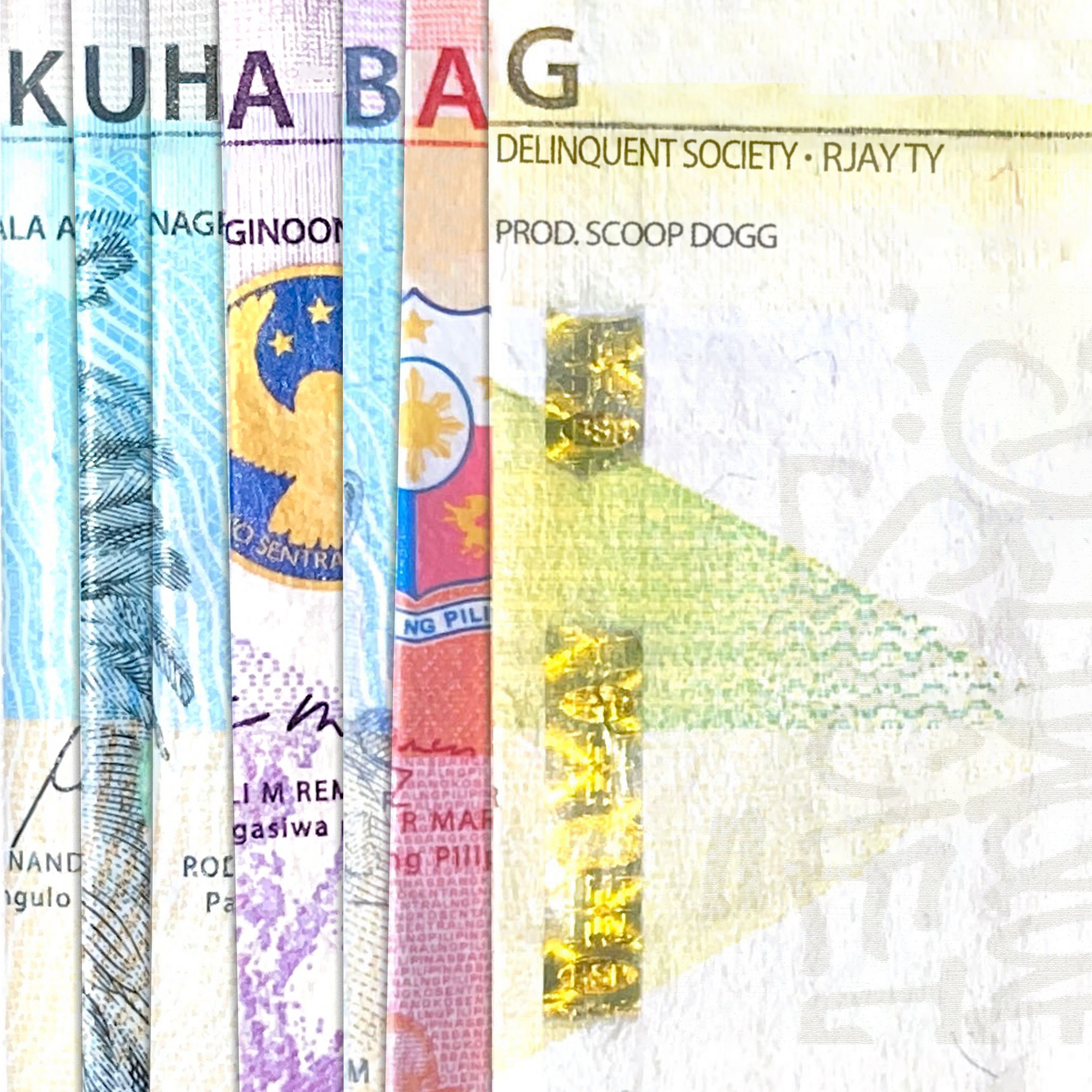
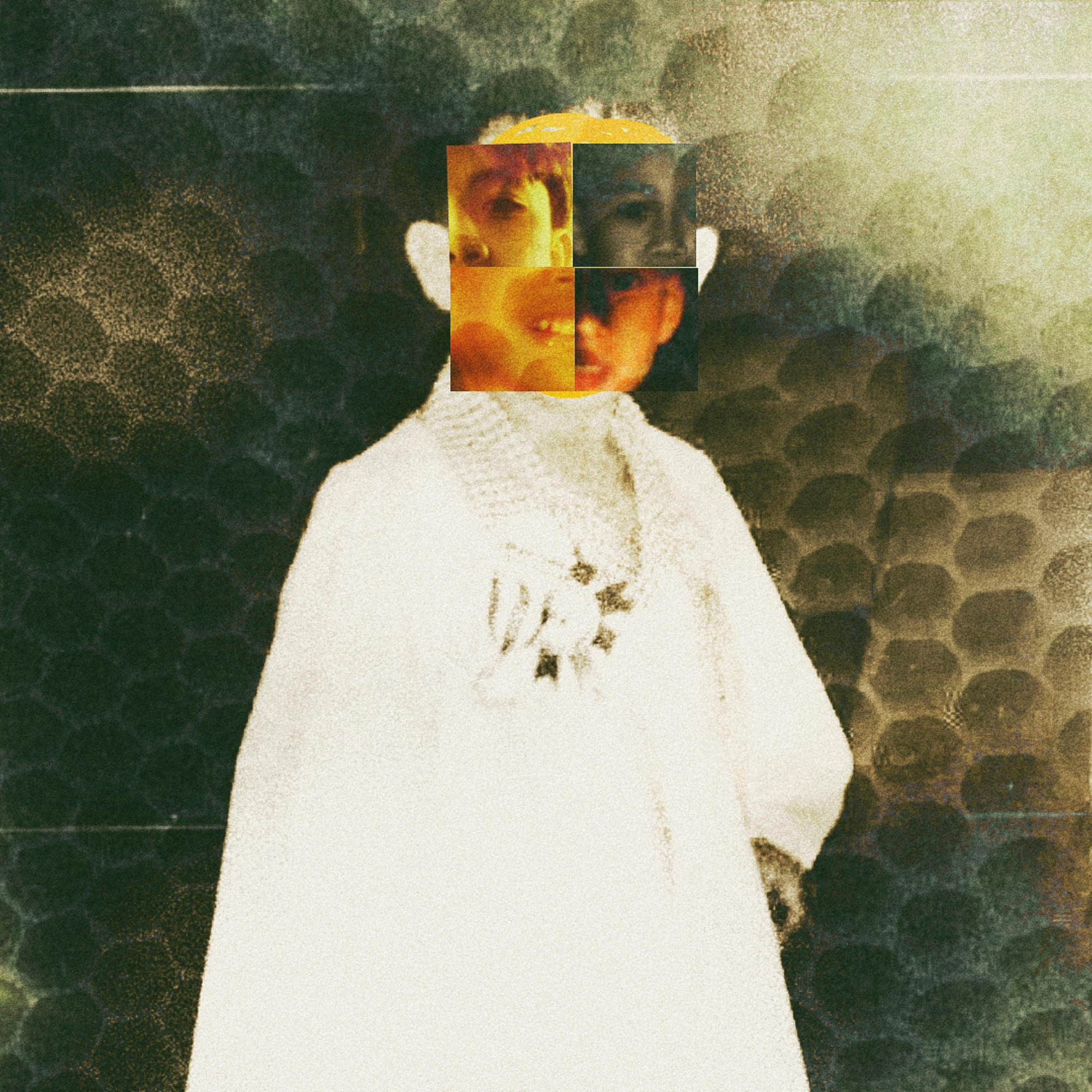
You’d expect a hip-hop track entitled “Kuha Bag” to dead stop at mere materialism, but this one does not. Burgeoning around it are 808s, clipped hi-hats, and even a puny horror-sorrow verve. Formed in 2016 and hailing from Davao City, Delinquent Society continues to attest to its prowess in transcending not only the confines of the hip-hop enclave but also the cultural barriers that traditionally demarcate artistic movements. This gritty act emerges not merely as a linear progression but as a powwow of cultural forces, weaving its way into the collective consciousness of an expansive and diverse audience.
“Kuha Bag,” featuring longtime collaborator Rjay Ty and now a new chapter led by Aud and Contemplate, introduces a creeping tension before the rhythm locks into familiar trap demeanor with frigid beats. Yet producer SCOOP DOGG crimsons those expected elements with layers of distorted electronic texture, an ebbing interference that makes the entire beat feel unstable, almost hacked. Aud’s prose views success as an escape velocity, “Para to sa mga stuck hood and they still there. Now we in the building ‘di mo ‘lam yung feeling”, while keeping the hood in memory although it refuses to just solely be trapped within them. Contemplate muses, “Raming nag hate, alam kasi nila kami favorite ni God. Partida pa nga to hindi pa to sinagad, malala”, with the confidence of someone who has overcome countless doubts that criticism now is just futile background noise. Delinquent Society sounds older now, not tired. Sharpened. Less interested in proving they belong because they never really needed permission.
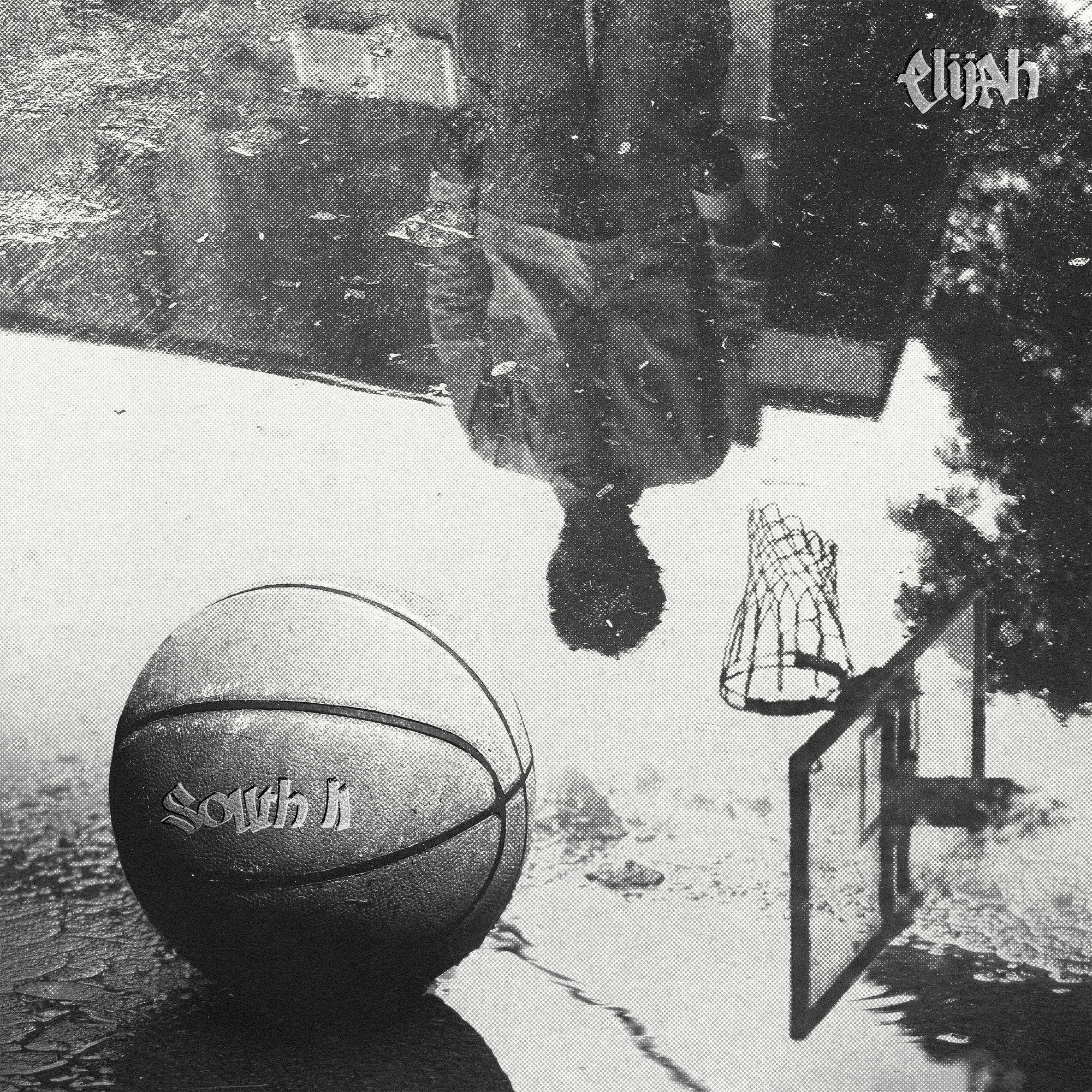
True north is believed to be unwavering, ironclad. We like to imagine there is a fixed point somewhere ahead of us, killing time to vindicate every wrong turn. But on ‘South II,’ Elijah Canlas — or overtly elijah, as he asserts on being known here — offers a different orientation. The title gestures toward a place rather than an aspiration: ‘South II,’ the Cavite subdivision where he spent his formative years. The album doesn’t necessarily seek enlightenment so much as it excavates Elijah’s genesis. It is less concerned with becoming someone; it is, instead, hell-bent on remembering who he was before anyone was watching.
For an actor who has primarily built his public image by inhabiting other people’s roles, ‘South II’ is, in a sense, a form of self-disclosure. “Sa acting… Hindi ako yung pinapanood nila. Ito ako lang ‘to eh. So parang, paano yan, diba? Parang husgaan nyo ako all you want. But I guess that’s the beauty of music”, Elijah remarked while discussing the album’s release with Philstar. Throughout the album’s compact runtime, you’d certainly hear Elijah still learning how to occupy his own voice after years of mastering everyone else’s, with the shadows of Kalel, Cairo, and the many characters that made him one of his generation’s most compelling young actors. And that voice is, admittedly, still finding its footing.
The opening track, “Oras Mo Na Raw,” is intended as a declaration of mission, depicting a moment of awakening after a youth wandered too long, but it comes across more like a sketch than a revelation. The production is simple, and the lyrics are scuffed. It’s a surprisingly understated introduction, giving the impression of an artist who seems ready to introduce themselves but only offers a weak handshake. Still, even the album’s weaker moments reveal something refreshing: Elijah’s refusal to posture, to simply flow ersatz. Unlike many debut rap records, ‘South II’ contains significantly less mythmaking. Elijah hardly ever presents himself as supreme; instead, he ultimately acts as someone who has always been aware of his own immaturity. Whether that humility is instinctive or constructed, it still becomes the record’s greatest strength.
Elijah, then, starts to turn into a firestarter when he’s not trying too hard to rap and instead becomes a storyteller at heart. “Mousetrap,” one of his favorite tracks, captures the kamikaze mythology of South II with enough detail to feel lived-in rather than just nostalgic. In “Asar Talo,” he muses, “I am not OA. I’m just not ok. Dami-daming gago dyan sa tabi mukhang kokey.” It’s ridiculous and brilliant at the same time. And the references fly fast, the enthusiasm faster. You can hear the poet before you hear the rapper, and that distinction matters. “U Wanna Be?” featuring SHNTI is beyond a shadow of a doubt, the album’s first undeniable spark. The production is sharper, more spacious, and substantially more confident. SHNTI’s flair adds an effortless charisma that transforms South II from a promising debut into the record it seems determined to become. By the time “Bituin” arrives, the album reveals what it has been moving toward all along: hope. This final track, based on an unfinished song by Elijah’s late brother JM, unravels the album’s ambition. The inclusion of JM’s original audio recording makes its simplicity all the more moving. In its wake, South II no longer feels solely moored to a subdivision. It belongs instead to the people who continue to linger in it, even in memory.
‘South II’ is an album title that suggests a geographical direction, but its emotional journey points somewhere else entirely. In these songs, Elijah spends his time clawing back old streets, revisiting old mistakes, and speaking to loved ones. By the end, finding your true north has little to do with moving forward; rather, it lies in understanding the south you came from.
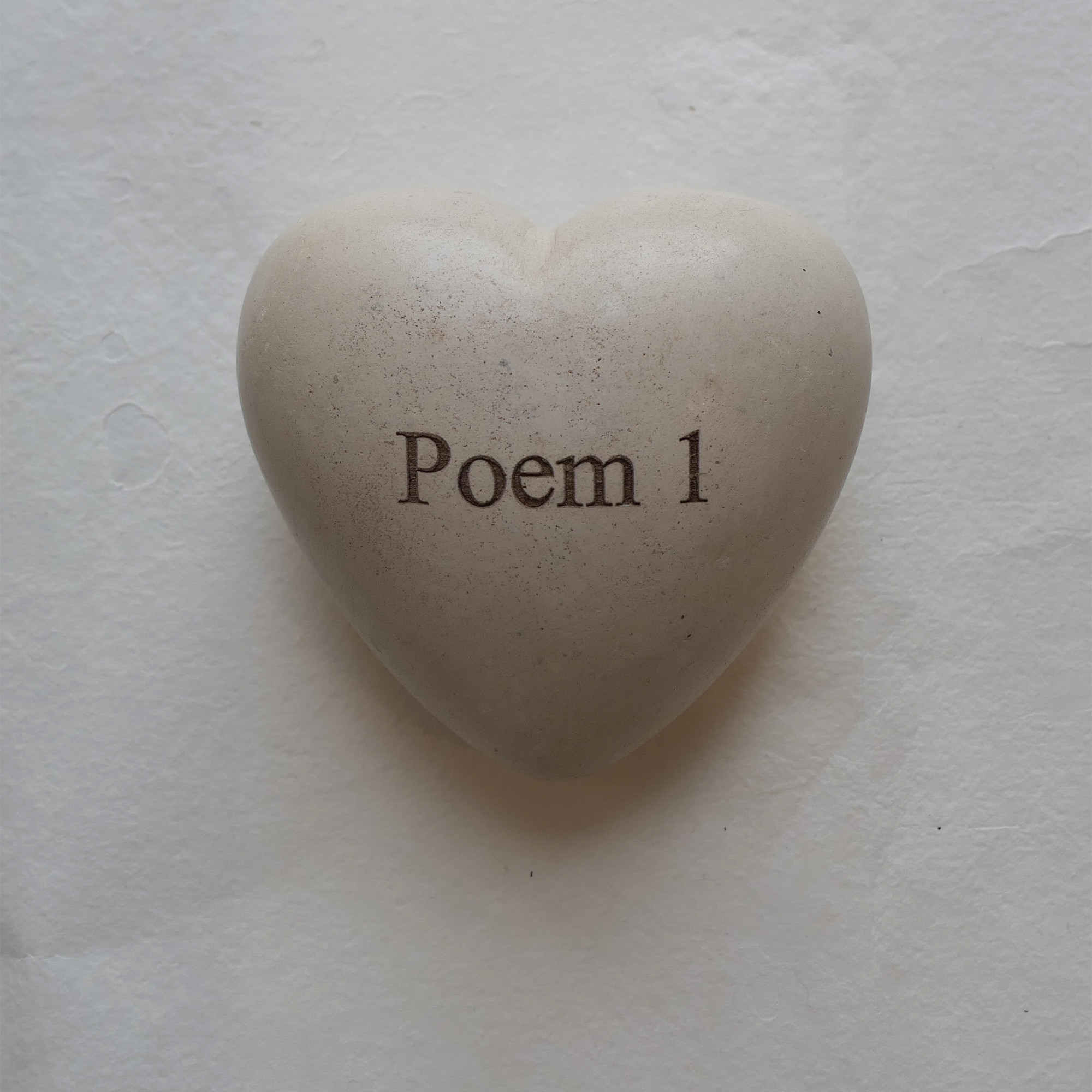
Ambient music’s signet has always been atmosphere, but we often confuse the word with absence, ergo futile. Brian Eno imagined ambient music as ringings that move like weather, both trivial and essential, a crux for emotion rather than narrative. Even so, the best ambient records are not just background music. They are conditions of being. Ana Roxanne’s music craft understands this much like love, poetry, longing—the old weather systems of being alive. Erstwhile, the mental workings of her preternatural were pinwheeled on identity and being intersex, clad in wistful whimsy and flora. “When I learned that most flowering plants are hermaphrodites, that felt significant to me. I saw flowers in this new sense because they’re universally very beautiful.” And now in ‘Poem 1’, the branches of her trees move with sensuous asceticism, you see colors while listening to it: a weathered beige, perpetual periwinkle for penance, and a faithful trace of undying gold lingering with brushes of lush cymbals.
In “The Age of Innocence,” the opening track immediately establishes the album’s crossway. “I wanted to try. And go very far,” revealing existential exile and a desire for newness and transformation, as ambient synths incense the track with slow-moving textures and wuthering tenderness, her voice haunting and leading you into someplace of selfhood across 9 tracks of soundscape salvation. “Berceuse in A-flat Minor, Op. 45” keeps this atmosphere as Ana Roxanne plays with the imagery of fog, making the intangible feel physical but also contained. “My pre-performance ritual is to just be alone with my thoughts in a quiet room,” Ana Roxanne said at The Kitchen in New York with Axel Arigato. You can hear that solitude all over this record, not loneliness, but chosen aloneness: the mind becoming its own room, its own inkwell, its own thunder. One of the album’s visceral nuclei, “Keepsake,” dawns delicate piano chords and a restrained vocal performance. “Oh, I can never reach you. I’ll keep it this way.” Her ‘Ooh’s’ are lush and sensuous, completely angelic. She sings about it not being over, something that we’ve all heard, ignored, and felt before, but Ana Roxanne’s manifesto in yearning is something you cannot look away from. The piano progression permits the track to sing its heart, maybe not out loud, but in a half-formed dream, where she could write the person into permanence, in forever. “I can never reach you. So I’ll keep a piece bеside me,” immortalizing the memory and putting it into a heart-shaped box because turning it into a memento is the safest way of loving it, nothing can break, and it would never leave. But silence has always been the preferred language of longing. “X”, with its ambient echo texture, gives you time to think while the long synth pads give you time to listen. A sound that might be nothing or might be the beginning of the unfailing.
By the 6th track, “One Shall Sleep”, Ana Roxanne has reached deliverance; she’s done remembering, the waves have set her free. “Free of pain. Heaven has ’til morning.” She gives us an experience, a song, poetry, and a promise, the verging violin and the strings lacing together with whisperings of life’s noblesse. The sacral musing continues in one of the album’s strongest tracks, “Cover Me,” with a choral vocal arrangement and a ceremonious synth tone, cradling the ear in wishful prophecy. Praying, not necessarily to a God or a person, but toward the air, toward knowing that we are small-longing beings, but the world saves if you believe.
In helix, the world of ‘Poem 1’ alone narrowly reached skyward nor revealed the spirit it twisted; the figment of it felt like it exists beyond naming, beyond ether — an ache to be one with the wind, to restore the invincible because hope is the thing with feathers, yet, never, in extremity, it begs for a bit of your identity.
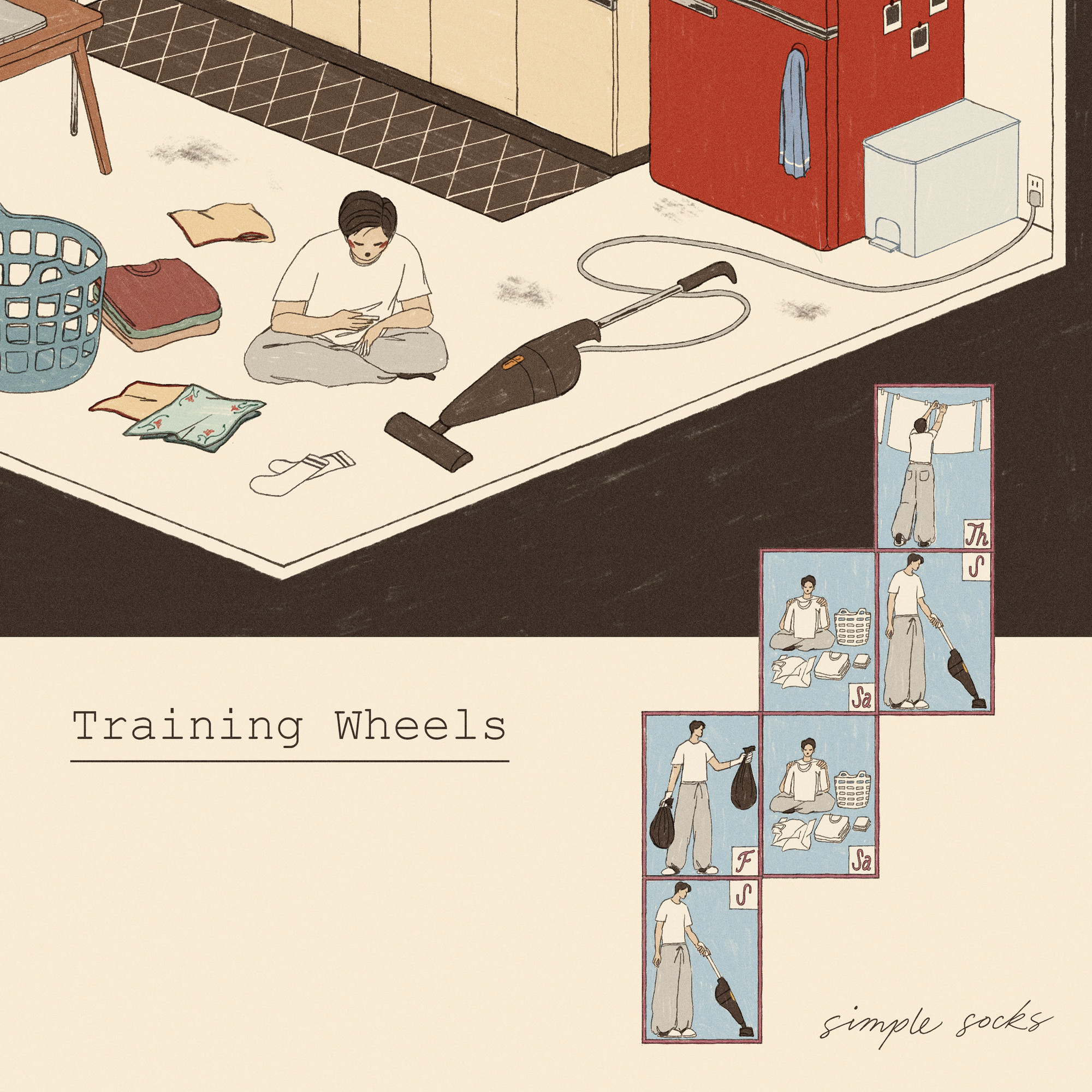
“Training Wheels” begins with the clicking sound of a bicycle’s freewheel. The song pedals a new echelon for Iggy San Pablo, the Toronto-based Filipino musician and Rusty Machines frontman, now recording under the name simple socks. Before the instruments break away in the track, there’s a nervy tick of motion without propulsion, that even after your body has stopped pedaling, your motor memory is still trying to justify itself. A siren shrills within earshot, then someone honks as the voices blur, but the city continues to move, ignoring them all. Then the guitar interrupts the street’s noise, sharp and precise with a crisp rhythm, while the drums stall like an engine refusing to start; every sound seems to hesitate between movement and paralysis. And simple socks’ singing is restrained, as though driven by survival instinct, like the voice of someone desperately and politely trying to suppress their emotions so as not to explode in public.
What makes “Training Wheels” so compelling lyrically is how it consistently frames migration as this never-ending process. Iggy San Pablo writes about distance without romanticizing sacrifice this time. “It’s a long distance away/Still call you anyway” conjures a forlorn intimacy with phone calls from overseas during different time zones. One person is wide awake, while the other is fast asleep on the opposite shore. As the song reaches its midpoint, it becomes clearer that the very essence of conviction is slowly coming into focus, culminating in the lyrics, “The pavement’s rough, but I know I need to move along.” He repeats the phrase “I need to move along,” but it no longer sounds like a source of motivation; rather than an affirmation, it starts to sound compulsory, a survival strategy.
But there is irony at play in all of this. Expressing the alienation of immigrants through English, a language inherited and symbolizing both hope and the scars of colonial rule, is already analogous to surrendering a part of oneself to translation. The memories of diaspora are rarely passed down in their entirety. “Training Wheels” lives precisely within this contradiction. To live between two countries means not fully belonging to either, caught between the homeland from which one grew up and left and the hostland that still treats you as provisional. However, this song refuses to succumb to self-pity. After the final repetition, what remains is not despair, but momentum. The freewheel clicking at the beginning returns as a metaphor for the momentum sustained by past efforts, even if the direction is uncertain. Iggy San Pablo’s greatest strength as a songwriter lies in his restraint. He never exaggerates his experiences into grandiose political revelations, and this stance remains unchanged. The production stays lean and restless, the guitars don’t smooth out the arrangements but rather create gaps, and the drums are always in danger of completely losing their rhythm. “Training Wheels” remains hopeful precisely because it refuses resolution. Iggy San Pablo does not land on wholeness by the end of the track. He simply keeps pedaling. In lesser hands, that ambiguity might feel unfinished. Here, it feels honest.
“Pollen,” composed by Asher, Areli, and Juicingjuicy, is a rumination on a song in which they refuse a memory to be simply remembered. Thus, they go and breathe it all over again, even when it stings. The song turns with the slow, circular logic that endings and beginnings are trick mirrors than stages of the same cycle, and where longing for someone, like pollen, is both natural and difficult to resist. Realized on a skeletal chill-hop rhythm and clad with the flexibilities of Neo-Soul, the trio somberly revels inside the Petri dish of modern R&B, with Asher and Areli’s production leaning towards texture rather than structure. With organic patience, the guitar arrives almost unbeknownst, while the synths forage underneath with velvet layers perpetually glued to the mix. And yet, for all its fawning, there’s something vaguely obscured here. The vocals are often fractionally veiled; phrases fade into texture, and you notice yourself feeling the words first before even fully understanding them. It’s a little frustrating to be able to catch the fragments of the yearning spiel enough to know there’s an intention, but not enough to withhold it fully. But when the song chooses to reveal itself—“I need, I need you so”—it does so with a startling clarity that it almost feels sacramental as if that line alone is intentionally meant to survive the haze and the rest belongs to someone else.
Drawing from the title alone, “Pollen” alludes to a collapse—fallen, yes, but also feathered, dispersed, made airborne. The word blushes a little and hides inside itself: to fall in love again, to have already fallen apart, and to still be suspended somewhere in between. And just like pollen, the pining in the song acts like a natural phenomenon. Our body resists even as it needs, pure animal instinct. Areli gets back to this contradiction without resolving it: desire shaking hands with dependency, tenderness going up against doom. “I don’t trust the time when you’re not around / I’m fallin’ apart again.” It sounds simple and almost childlike, but such straightforwardness is what allows us to let our human sensibilities feel, and that’s the closest we can get to being nearly transformed. We’d be neither healed nor broken, but airborne.