In March, P-Pop girl group Baby Dolls released their debut EP‘ZoomBaby Dolls’ under ABS-CBN Star Music. It hasn’t come up in any press releases, but the septet quietly dropped some of the year’s best rock songs, alongside electronic gems. To be fair, you can’t tell if you only know them from their viral single “Oohh Lala Baby.” The track has the same sugary, harmony-rich sound as MEI MEI’s “Telebong (Hello Po)” and “Alembong”; both girl groups brand themselves as novelty acts, though these songs in particular are heavily indebted to 1960s girl groups like The Marvelettes more than anything.
Although it’s fun to sing along to “Oohh Lala Baby,” the other tracks are more interesting. ‘ZoomBaby Dolls’ opens with “Clap Clap Clap Alright,” a delectable slice of electro-rock containing metal guitar riffs and chiptunes. A weak, twee topline, however, works against the killer production. Fortunately, the next song gets both the vocals and instrumentation right. “Ikembot Mo,” the EP’s first (and in a perfect world, biggest) single, is a mainstream pop act’s most faithful homage to surf rock in the 21st century so far. While the likes of Lana Del Rey (“The Greatest”) and Fall Out Boy (“Uma Thurman”) have incorporated surf elements in a few songs, none have committed to those twangy guitars and Beach Boys-style harmonies quite as much as the delightful “Ikembot Mo.” Instead of relying on its trendy house influences, “Kitang Kita” also keeps things exciting with hard electropop beats.
The closing track “Dulce Tirah Tirah” is a truly transformative take on Blanktape and Diorap’s 2007 song of the same name. The original was a feeble dance tune bogged down by its languid pace and shoddy audio engineering. With a much faster tempo and big, abrasive bass and synths, Baby Dolls’ cover comes closer to “hyperpop” than most of the drab songs that get marketed with the buzzword these days. In their hands, “Dulce” becomes a punk-inflected electroclash banger reminiscent of 3OH!3’s obnoxious but irresistible heyday hits.
Only time can tell if the campy, colorful group will continue such thrilling genre excursions in future releases, or if the popularity of “Oohh Lala Baby” will steer them firmly towards that soft and sweet doo-wop-ish sound. Nonetheless, with ‘ZoomBaby Dolls,’ producers Chris Martinez and Rox Santos have created one of the most sonically adventurous debut records in P-Pop history. Beyond the virality and chart success, it’s another massive accomplishment for Baby Dolls, who are certainly ones to watch.
P-pop is currently enjoying a much-deserved moment in the mainstream spotlight thanks to the nation’s girl group BINI and pioneers SB19. While mostly positive, the increased levels of attention give the new generation of groups a different, much more nuanced, challenge to face: standing out in a scene that’s no longer just fighting for a seat at the table, but one competing to keep it. After a steady stream of singles released over the past year, five-member group VVINK is ready to step up to the plate with ‘It Starts With A Wink,’ a versatile debut album filled with personality and Filipino charm.
Built around the idea of a wink as a silent gesture of connection, the album’s foundation is approachable and relatable storytelling — something that the initial set of singles leading up to its release support. Whether it’s the lovestruck “Tulala,” the earnest anxiety of wanting someone to confess their love on “Kailan Ka Aamin,” or the hopeful, Aladdin-inspired “Tatlong Hiling,” VVINK leans into everyday emotions and experiences, making the album easy to relate to and even easier to sing along with.
That familiarity extends to the production, where VVINK builds their identity by proudly embracing Filipino sounds and reshaping them into something that’s their own. “Baduy,” their DJ Love-produced rendition of budots, shines the brightest by proudly embracing a genre that’s turned into a meme and often overlooked by mainstream pop while simultaneously reclaiming baduy as a badge of confidence. On the opposite end of the spectrum, “Ikaw Ikaw” takes a page out of emotional Filipino ballads with a relatively stripped-down instrumental, allowing tender and heartfelt lines like “Sa oras ng lungkot, ika’y yakap / Sa mga luha, may pag-asa / Sa’yong mga kamay / Pag-ibig ay damang dama” to pay tribute to loved ones who have supported them throughout the years. Then there’s “It’s a Rap,” a high-energy track that serves swagger through anthemic verses that flex the group’s achievements while remaining cognizant of the journey ahead. Together, these songs show a group that’s not simply borrowing from Filipino sounds, but confidently making them part of their own musical identity.
This versatility makes it all the more frustrating when the group’s songwriting settles for easy, formulaic writing. For example, the undeniably infectious and alive “Pag-ibig Fun” has a runtime mostly occupied by the repeating “fun, fun, fun, fun” and “one, one, one, one” refrains. While intentionally designed to be as catchy as possible, the repetition runs thin, leaving the song feeling less clever and not as playful. Unfortunately, similar moments appear elsewhere, where memorable production sometimes has to carry lyrics that can’t always keep up.
Still, ‘It Starts With A Wink’ succeeds because Angelika, Ayaka, Jean, Mariel, and Odri bring enough chemistry, charisma, and youthful energy to make the album feel unmistakably theirs. That’s what makes this debut so exciting. In a P-pop scene growing faster than ever, technical polish alone won’t separate one group from the other — but personality will. Luckily, VVINK seems to have lots of that already. So don’t blink; they’re only getting started.
House music is always a danceable delight; an air of familiarity is constantly present in the candy-colored soundscapes. It just invites your body to move and let the bouncing vibrations thud through your veins and lead you to the dance floor. A rapid attack on all your senses at once, the genre is a vessel for enthusiasm, accented by the occasional syncopated beats and punchy synths.
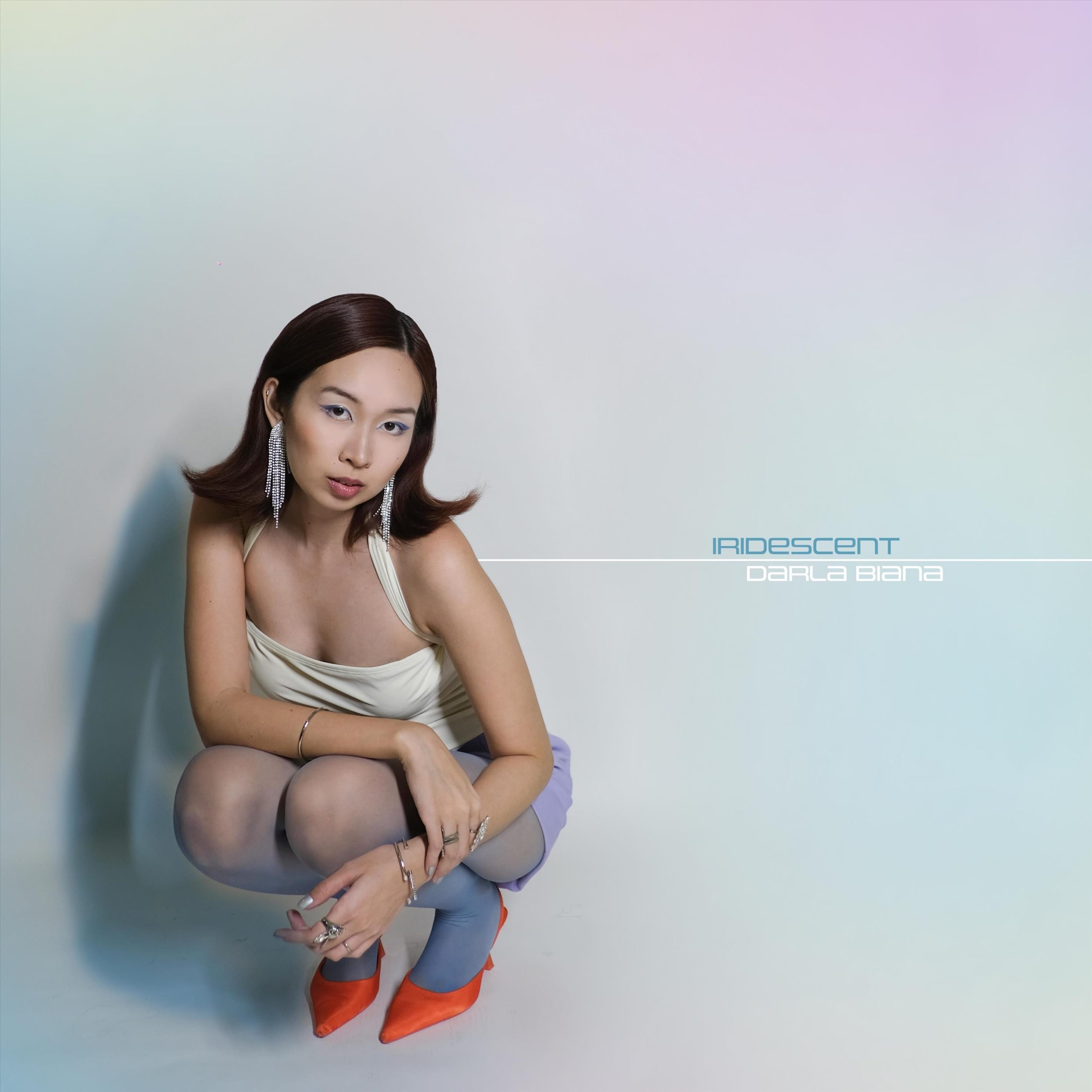
Darla Biana’s debut passion project, ‘Iridescent,’ flickers between the realm of house and the adjacent classifications its wide panorama encompasses; described as the artist’s challenge to herself, created in just three months, it’s an ambitious, headfirst dive into the creativity a deck and a few beats can afford.
There’s a template to the genre Biana pursues throughout the album, which makes her vision easy to audibly sketch out–like the minutiae pleasures of driving across cubed, 3D streets in video games from the early aughts or even the trance-inducing techno horns that are emitted from the complex insides of holographic CDs. ‘Iridescent’ is frank and straight to the point, with Biana’s invitations for romance coated in the relaxed lilt of her voice.
The record doesn’t need a million ways, nor words, to express self-confidence and infatuation; Biana merely uses the music to punctuate what she means and to begin her sentences. In “Love You Down,” she says it like she means it–she will love you down. Plain and simple. The relaxed harmonies that follow the utterance of her promise and the four-on-the-floor beats are enough signs of the commitment she offers to the table.
In accordance with commitment, it’s praiseworthy to note this album’s commitment to pushing Biana’s incredibly specific vibe. There are two interludes in its 33-minute runtime: “Make You Mine,” an appetizing opening that kicks off the album with hypnotizing vocals and pulsing D&B percussion, and “One Day,” a similar, 58-second break that signifies the transition of the album’s subject matter from falling in love to being in love with yourself.
For a debut project, ‘Iridescent’ is like a designer’s first sketch that’s come to life–a piece that knows which elements to take from the avant-garde, and what its limitations can bring to life instead of restricting. However, there are instances when the production overpowers Biana’s vocal color, leaving her vocals floating, wandering across the track instead of becoming one with the music. There’s an admirable devotion to staying musically cohesive, yet it could have touched on the adjacent possibilities of exploring dance aside from sticking to similar beats.
You can never go wrong with the glitzy, bouncy glamour of house–it just so happens that as versatile as the genre is, it’s also one that needs to embrace its malleability and constantly be kept up with. Darla Biana shows in her debut that she can–she just needs that extra boost, that liveliness brought upon by variety to continue. ‘Iridescent’ is house, definitely–but it’s a “house” that’s a little more lived in, a bunch of tracks to dance in your bedroom to.
A decade after he first popped up in the local music scene, Zeon Gomez has worn many masks under his belt through the multitudes of projects and collectives that he has worked on and contributed with, overall showcasing him as a jack of all trades within the local musical circles, namely his other side project Promote Violence; bands like Rome and the Cats, Moon Mask, Spirit Ocean; and collectives like YoungLiquidGang, and BuwanBuwanCollective. Through these jumping points that Zeon has taken from differing acts after another, an important part that needs to be acknowledged is that even as he flits across various side-projects, his knack for venturing within the waves of gleaming synth electronica, stirring pop melodies, and personal lyrical flair has always carried over, developed further under his main musical alias: U-Pistol.
Through his first two albums in the 2010s, his ambition to embrace those characteristics above is shown in their clearest sights, not to mention the features spanning from Sarah Bonito, Aseul, Yikii, and others that reveal his firm stance towards curating Asian artists as he was deeply invested with J-Pop, K-Pop, and C-pop during the time. While he hasn’t donned that mask quite often in the 2020s as he slowly starts working behind the scenes through the music prod Kashira, his growth as an artist over time hints at a sonic shift waiting to happen, especially with his embrace of hip-hop under the U-Pistol and Promote Violence namesakes.
8 years since he put out his last material, Last Splinter is the 3rd long-awaited installment under U-Pistol’s discography, careening through sonic foundations that he propped up in his past projects like “Waste” and “Girlfriend,” but the overall showcase of his brand of synth gleaming electronica has now matured, branching off into an evolved version of his style. Underneath the glassy synth works are an array of elements that create a genre-shifting project where past aspects of his past projects now manifest here, further bringing in blaring guitars and shuffling rhythms that only hone in U-Pistol’s great strength towards creating snappy hip-hop and pop melodies amidst propulsive production within the project’s 35-minute runtime. His performances on ‘Glass Garden’ and ‘Hortensia’ in particular are remarkable, his mellifluous range as he silkily flows across the feet-shuffling soundscape of the former and tenderly sings on the somber acoustics of the latter shows that he has exceeded as a rapper and a singer.
Of course, it’s not a U-Pistol project without a collage of collaborations helping out in this project, settling more towards the local music scene, an intended decision that gets reflected through a specific part of the eventual narrative. Fellow Kashira prod members like Calix and Tatz Maven help crystallize a lot of the colorful instrumental soundscapes as well as the sonic clarity of the project; Hanako and Syn under the old Spirit Ocean band lend their vocals, where Hanako’s prim voice assists on the tuneful albeit instrumentally clunky “Blue-Eyed Grass” and Syn’s stark performance on the reworked version of a previously released Spirit Ocean track “Marigold, in the Afternoon” with additional guitar work from Arkyalina carries the exhausted yearning of the track; VS VIDEOTAPES’ and yx2’s co-production on the light and fuzzy textures of “VS VIDEOTAPES INTERLUDE” and the jersey club groove of “Plum Blossom” respectively are exciting additions that manages to blend within the consistent production scope of the album, allowing the melodies to bounce and fizz a bit more; SHNTI’s sense of effortless cool works in-tandem with U-Pistol’s sleek flows on “Wisteria” and its scratchy beat as “Wilting, if Forever Never Comes” tailors the thematic arc of the project.
The sense of maturation eventually sneaks through in the overall narrative of the project. Conceptualized around the masked man in his glass garden waiting for a certain flower to bloom that acts as a metaphor for U-Pistol’s self-isolation post-break-up, it paints a familiar theme that he has waded upon on his past projects. Namely surrounding the wilted romance that he still yearns and clings to, a connection that he wishes to keep sparking despite knowing that the ex in question now has somebody else entirely. It’s a situation that leaves him conflicted and hurt, the angst pulling him deeper and deeper into melancholy. Yet as the album progresses, he gently picks up past the heartbreak and eventually decides to leave the entire situation as he notices that there’s no benefit in waiting for that flower to bloom. It’s a vivid arc that U-Pistol portrays effortlessly, yet the personal emotional nuance is deepened a little bit further, specifically directed toward the collaborations he pulled in for this project. In ‘The Chained Man Inside the Glass Garden’ interlude specifically, there are these various murmurs from multiple people that call out to Zeon, expressing worry towards his state of ennui, asking him to hang out and telling him if he’s feeling alright. These voices that were heard don’t come from strangers but are the friends, collaborators, and various people that Zeon knew and bonded with personally in his life, placing their overall presence in this specific interlude as an acknowledgment of the support that Zeon has during this eventful turmoil and seeing him not through the U-Pistol name and his various musical works, but under Zeon as the person that they know and care about deeply. It’s a small moment that does so much, recognizing the number of people that Zeon cares about as he acknowledges how much they’ve helped him back in his life, overall making the collaborations of this project feel so much more personally heartfelt and synergistic.
And with that comes the project’s overall blast of sonic mixtures and a case of strong foundations embellished with the well-placed blending of sound textures, styles, and performances from U-Pistol & co paired with neatly arranged compositions and familiar yet deeply invested emotional throughline. As U-Pistol leaves outside of that glass garden, there is another field that opens more space for him to flourish in. Last Splinter shows not the end of U-Pistol, but yet an exciting newfound transformation and revitalization of his eclectic growth.