
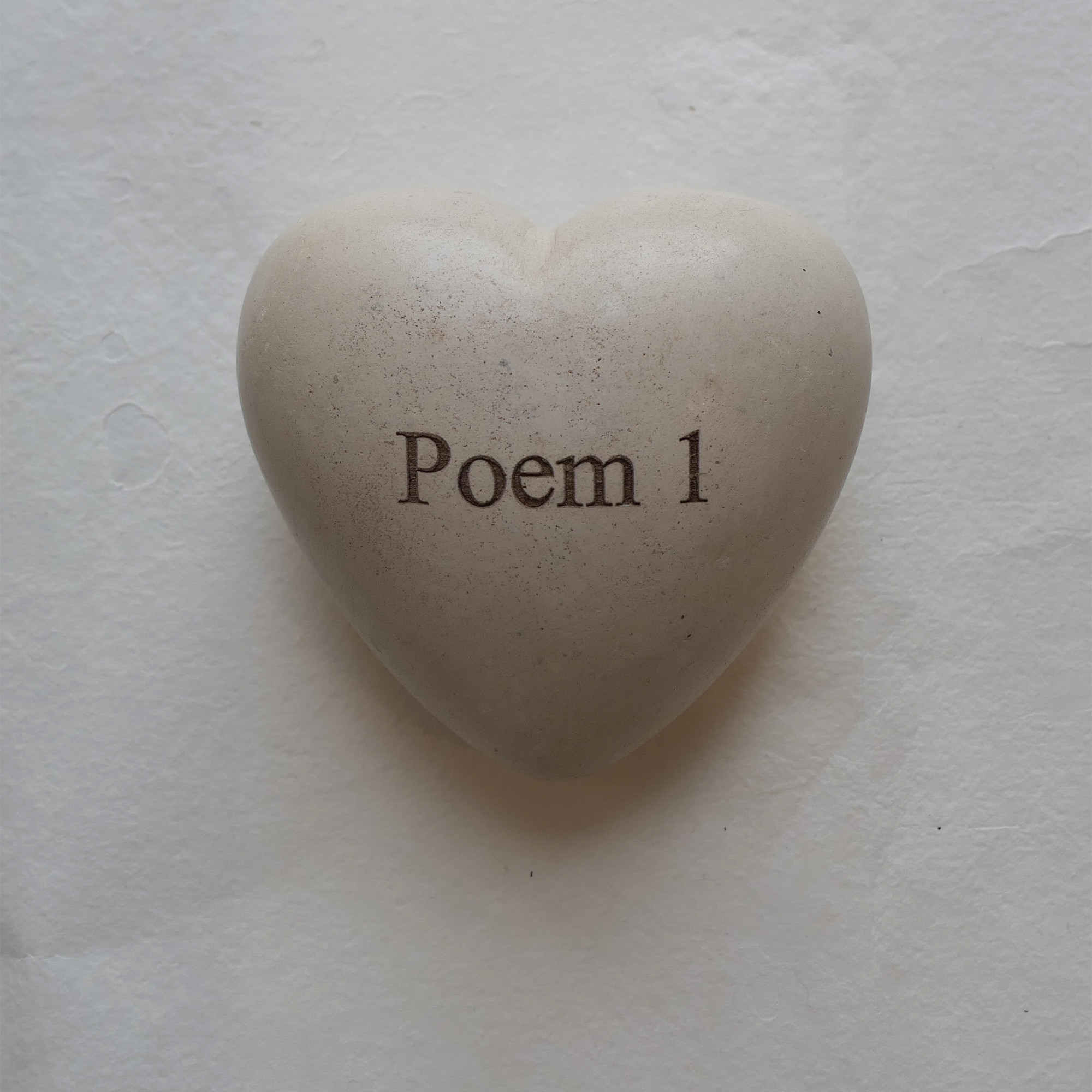

Written by Julia Harumi Kudo
Ambient music’s signet has always been atmosphere, but we often confuse the word with absence, ergo futile. Brian Eno imagined ambient music as ringings that move like weather, both trivial and essential, a crux for emotion rather than narrative. Even so, the best ambient records are not just background music. They are conditions of being. Ana Roxanne’s music craft understands this much like love, poetry, longing—the old weather systems of being alive. Erstwhile, the mental workings of her preternatural were pinwheeled on identity and being intersex, clad in wistful whimsy and flora. “When I learned that most flowering plants are hermaphrodites, that felt significant to me. I saw flowers in this new sense because they’re universally very beautiful.” And now in ‘Poem 1’, the branches of her trees move with sensuous asceticism, you see colors while listening to it: a weathered beige, perpetual periwinkle for penance, and a faithful trace of undying gold lingering with brushes of lush cymbals.
In “The Age of Innocence,” the opening track immediately establishes the album’s crossway. “I wanted to try. And go very far,” revealing existential exile and a desire for newness and transformation, as ambient synths incense the track with slow-moving textures and wuthering tenderness, her voice haunting and leading you into someplace of selfhood across 9 tracks of soundscape salvation. “Berceuse in A-flat Minor, Op. 45” keeps this atmosphere as Ana Roxanne plays with the imagery of fog, making the intangible feel physical but also contained. “My pre-performance ritual is to just be alone with my thoughts in a quiet room,” Ana Roxanne said at The Kitchen in New York with Axel Arigato. You can hear that solitude all over this record, not loneliness, but chosen aloneness: the mind becoming its own room, its own inkwell, its own thunder. One of the album’s visceral nuclei, “Keepsake,” dawns delicate piano chords and a restrained vocal performance. “Oh, I can never reach you. I’ll keep it this way.” Her ‘Ooh’s’ are lush and sensuous, completely angelic. She sings about it not being over, something that we’ve all heard, ignored, and felt before, but Ana Roxanne’s manifesto in yearning is something you cannot look away from. The piano progression permits the track to sing its heart, maybe not out loud, but in a half-formed dream, where she could write the person into permanence, in forever. “I can never reach you. So I’ll keep a piece bеside me,” immortalizing the memory and putting it into a heart-shaped box because turning it into a memento is the safest way of loving it, nothing can break, and it would never leave. But silence has always been the preferred language of longing. “X”, with its ambient echo texture, gives you time to think while the long synth pads give you time to listen. A sound that might be nothing or might be the beginning of the unfailing.
By the 6th track, “One Shall Sleep”, Ana Roxanne has reached deliverance; she’s done remembering, the waves have set her free. “Free of pain. Heaven has ’til morning.” She gives us an experience, a song, poetry, and a promise, the verging violin and the strings lacing together with whisperings of life’s noblesse. The sacral musing continues in one of the album’s strongest tracks, “Cover Me,” with a choral vocal arrangement and a ceremonious synth tone, cradling the ear in wishful prophecy. Praying, not necessarily to a God or a person, but toward the air, toward knowing that we are small-longing beings, but the world saves if you believe.
In helix, the world of ‘Poem 1’ alone narrowly reached skyward nor revealed the spirit it twisted; the figment of it felt like it exists beyond naming, beyond ether — an ache to be one with the wind, to restore the invincible because hope is the thing with feathers, yet, never, in extremity, it begs for a bit of your identity.
SUPPORT THE ART AND THE ARTIST: