How does one hold on to a moment that’s almost palpable but fleeting? How does one express awe in the face of something ethereal? Sometimes, words hold no meaning when the otherworldly presents itself in forms that make you hold your breath. Hailing from Davao, cosmic suns attempt to express these intangible feelings in their debut single, “Ethereal.”
In the world of shoegaze, pedals are tools for creating sensations that go beyond hearing. Cosmic suns know just how manipulate fuzz to achieve textured riffs that explode into microcosms of desire, longing, and turmoil. Their distorted guitars swirl and bend with other instruments while dreamy and distant vocals orbit around them like an invisible knot — connecting each conjured world into a single hazy soundscape. With these elements, “Ethereal” remains loyal to the genre. However, it finds itself treading into skramz territory as the chorus breaks into agonizing screams. But hearing a vocalist desperately screaming in a shoegaze track doesn’t break through the expansive wall of noise but merely complements its obscurity. Drenched in lush reverb and delay, the screams add a haunting effect that only intensifies the heavy emotions the song is channeling. When layered with clean vocals, the result is as visceral as a memory from years ago that leaves a lump in one’s throat. At this point, there’s no need to interpret; we must surrender willfully to the auditory frenzy.
Cosmic suns may still be protostars in the vast shoegaze universe, but they already formed the core of their sound in “Ethereal.” In their evolutionary stage, will they continue redefining the genre’s blueprint? For now, we can only watch as they traverse celestial distances one heavenly song at a time.
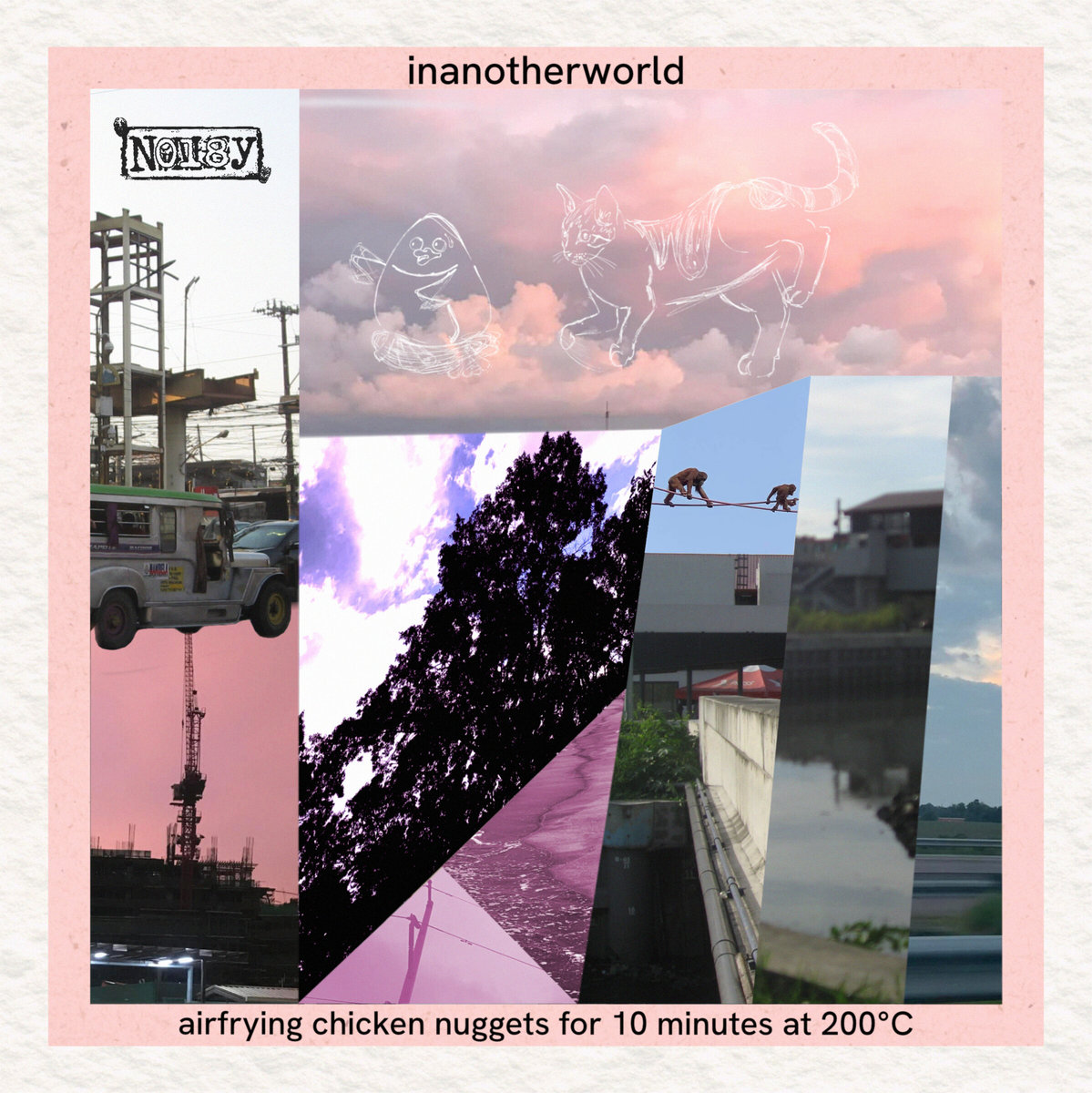
The beginning of the year is programmed for a personal reset. People eagerly work on their resolutions or, at least, plan the next step. But it’s not always how it’s set out to be. Some are still reflecting on the past year, revisiting old wounds to process what needs to be left behind. inanotherworld’s latest single, “airfrying chicken nuggets for 10 minutes at 200°C,” lets us linger in this period of reflection before release.
This five-minute track blends the heavier sound of shoegaze with the slacker tempo and somber composition of slowcore to capture the dissonance of existing in a world that rewards constant movement over stillness. It starts with a chaotic frenzy of drums, pedal distortions, and glitchy frequencies that seem to echo an initial frustration. But it’s nothing that a long walk can’t subdue. This is what the first half of the song feels like. A long walk around the city after coming back from school or work after the holidays. The gloomy tone of the guitars pulls the listener out of their reality to observe what lies beyond the concrete jungle and urban sprawl. Even with melodies meant to evoke a melancholic mood, the track ironically inspires the listener to romanticize life and find serenity amidst the chaos. With beautiful, ghostly vocals accompanying sparse instrumentation, the experience is stretched out into a hundred blissful moments. As seen in the track’s cover art, snippets of the cityscape feel like a much-needed pause to take everything in.
By the second half, “airfrying chicken nuggets for 10 minutes at 200°C” unfurls into a euphoric outburst, bringing banging snares and heavier riffs forward. During this prolonged sequence, a sense of comfort is instilled through sound rather than emotional lyricism. The repetition of downbeat melodies is meditative, healing almost. In this track, inanotherworld morphs common themes of slowcore — defeatism and somber slow burns — into a calm renewal. It turns a normal evening walk into an introspection while everything else moves in linear time.
Reuben Gonzales’ debut project ‘Keepin’ Up’ arrives somewhere between vintage pop nostalgia and the blow-burn sprawl of post-rock. A long-held memory, suspended in a grain of film—pale, worn, and hazy, where Fleeca Atmos invites you to step out of the noise of the present.
Throughout the EP, analog textures, guitars, and synths conjure the ghost of a sun-faded era of pop. Rather than settling for mere retro-worship, Fleeca Atmos pulls at the edge of the sound—widening the frame to let the production breathe. The opening track, “Delorean Drives by the Old Compound,” is a poignant exploration of grief that manifests as a literal desire to outrun the clock, a fantasy of driving back to “Fairview” to bargain for what was lost.
‘Keepin’ Up’ finds its resolution in “Hermeto Hum,” after isolation through the descriptions of ‘life in space’ in “Moon’s Dust.” By going through the past, the void, and the present, the EP goes full circle, where Fleeca Atmos once begged to ‘change time’ to avoid pain, he realizes the only path he has is to change himself (“If I can change then I am free”). Gonzales writes in fragments and images, using repeated lines to act as emotional landmarks rather than a straightforward narrative.
Ultimately, ‘Keepin Up’ functions as a sonic exhaling of the soul. Fleeca Atmos has crafted a debut that is both an ending and arrival. The EP proves that while we cannot drive back to the memories we’ve lost, we can find a profound, sun-drenched freedom in finally choosing to move forward.
Asian Panganay’s debut single, ‘Disconnection Notice, ‘ talks about Filipino family dynamics in an intimate, sobering way, centering on the panganay’s perspectives. As their band name suggests, Asian Panganay is an all-asian, all-Panganay, all-girls quintet. This common attribute allows them to have the personal edge that pops out of their debut single.
Right off the bat, ‘Disconnection Notice’ starts strong and hollow, even vacant, though not in a bad way. A drum beat dragging itself on and simple riffs being fed through delay pedals give a sense of motion without the drive that actually brings it to life. This gives the song more dimensions in how it tackles the subject matter. The line “I don’t have anything to say/You never hear me anyway” distills all those years of neglect, accompanied by vocals that draw the line between ache and exhaustion. In a way, it acts as a parallel to the times when eldest daughters are expected to keep carrying on, even as fatigue eats them inside.
For such a bold entry, the song has already generated a brand that audiences can look forward to. This can either be a pro or a con, depending on whether the band leans into it or decides to switch it up for their upcoming releases. For now, releasing ‘Disconnection Notice’ as their debut single was a necessary move to solidify the band’s striking presence in the current scene.
Now that they’ve given a voice to the unheard heroes of a Filipino family, where will Asian Panganay steer the ship next?
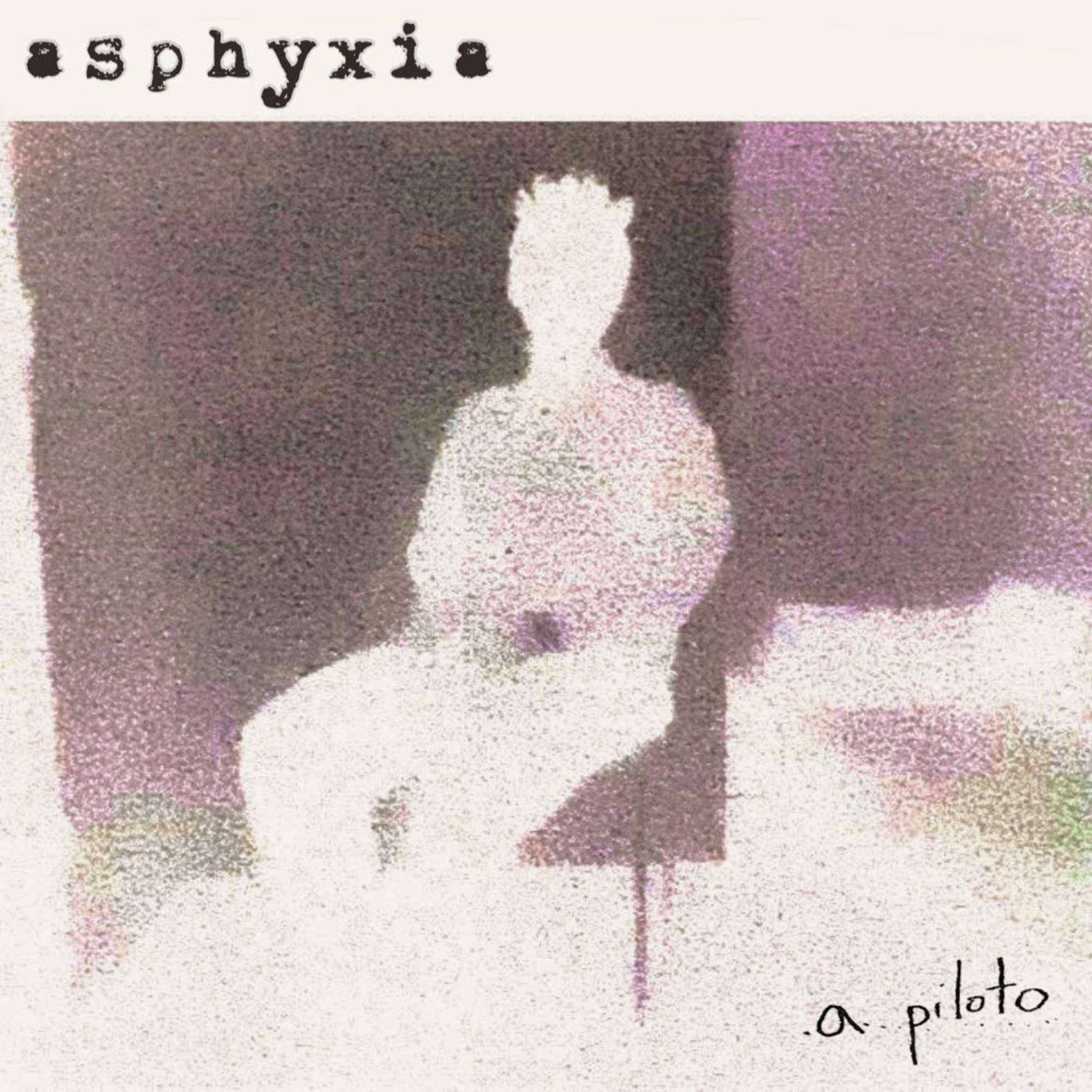
A Piloto’s comeback song since the past two years immediately wrestles with a shocking surprise splattered through his writing: an old friend just died near his neighborhood. The chills that he encounters through that information fill his entire nerves, wracking him with a desperate plea for connection that turns into solemn avoidance at the end. It’s emotionally haphazard that A Piloto expresses well, with his raw vocals just storming through all that tense situation.
The frigid indie rock spirit allows “Asphyxia” to rhythmically heave, as the grooves just charge through with shaky guitar maneuvers that explode onto the chorus. It never loses its raucous flair from the start, up till its very ending. Foggy ambience and gentle guitar atmospherics now give enough space for A Piloto. He now gets to simmer what has come to pass, calmly taking his time to breathe before moving onwards, even with the ache still weighing on his shoulders.
What would inevitably become an interesting talking point later down the line is how the next generation – in this case, the Gen Alphas – will eventually carve their paths through a lot of the music spaces thriving right now. While it is early to say how they will respond and evolve past the local indie and mainstream music zeitgeists, observing how they’d touch upon the sounds and tones to assess their craft is enough to look into. At least for the time being.
Case in point, the past few releases that 15 year old mrt has released last year immediately pull a lot of the alternative rock and screamo influences – think acts like Sintasan, North Sentinel, and Walktrip – that swerved into lo-fi, raw fidelities. Those two EPs – ‘hermosa’ and ‘bokeh’ – certainly tiptoed towards those tones, from mrt’s attempts to sing and scream across shambling production, to post-breakup wallowing that is peppered across his lyrics.
Now, what “all roads lead to cubao (or wherever my grave may be instead)” does is sharpen his melodic instincts amidst an exercise in dynamics. It starts off with a lilting guitar passage contrasted with his composed screams, then the song breaks out into fuzzed-out shoegaze while mrt leans more on moodier singing. It effectively reinforces the emo-tinged emptiness that is buried in this track.
All in all, mrt still has ways to go before he eventually hammers down the strengths in his songcrafting, yet the intrigue to do a bit more in this song does show some promise. The projects that he has currently pulled off might not blow things away, especially with how the alt-rock and hardcore scenes have only developed into fascinating nooks and crannies; there’s nothing wrong with testing things out. At the very least, he’s familiarizing himself by trying, and that’s good enough for now.
Addy Pantig heeds the listener with one thing: a warning. “Sandstorm” is an admonition explored through metaphor, showcasing the pitfalls of lost time, delivered through soulful blues rock, and with this being her debut single, it’s as gutsy as it is dramatic.
Sandstorm paints a picture of gravitas and intensity, each line like a brush stroke to the canvas. The song is set in a room that’s slowly filling up with sand, and a girl, frozen in fear, realizes it’s too late. Addy has a knack for narrative, and her lyrics are a testament to that. Her “show, don’t tell” method of songwriting set the scene so well, and because of that, the experience lof istening to the track is nothing short of cinematic. The anxiety that comes with time running out rings through in her words and is further highlighted with the dramatic instrumental.
Starting slowly with a steady acoustic guitar and vocals, with added elements joining in the setup as each bar progresses: an eerie violin, the muted drums, and the bass to carry the whole track, as if each new instrument is another grain of sand filling up the room. Then the build-up comes to fruition in the chorus, crashing down like a sudden moment of realization. The blues rock style complements the storytelling style of the lyrics well, which is prominent in blues.
“Sandstorm” is an exemplary showcase of the magic she weaves into the music she has a hand in: Addy’s lyrics that bring with them storytelling and narrative, paired with the quiet yet intense passion that gilds her vocal performance. We’ve seen elements like this in her past work in different projects, and it’s refreshing to hear them still standing strong in her solo work. This track is the first of hopefully many, and will no doubt lay a great foundation for any tracks she releases in the future.
After years of hosting in queer circles as well as frequently featuring on certain songs across other artists’ projects, Kumare Harvey’s debut single, ‘VILLAIN,’ is nothing short of astute. Across the neptunes-esque beat with burly guitars adding edge to his bars, Kumare Harvey lets everyone know first and foremost that he’s not one to be played around. He takes down those who try to talk shit and villainize him, but can only go so far as saying it online. He never softens down throughout; his attitude remains confident all across.
Of course, it’s through Kumare Harvey’s performance that sells such a bombastic song, with a clear-cut delivery, an efficient flow, and a swaggering energy that struts with ease. His overall magnetic presence gives the song its glorious punches, especially to those who might try to pull him downwards and fail in miserable fashion. Haters gonna hate, as they all say.
Around this time two years ago, Hev Abi had control of half of the top 10 spots in Billboard’s Philippines Songs chart. After emerging as a sleeper hit towards the end of 2023, he received commercial success and critical acclaim as a baby-faced lover boy with a playful charm and a hint of naughtiness — along with an occasional gangsta persona who reps the Tomas Morato area. With a good ear for beats and interpolations, a pen that flows out nothing but swag, satisfying feature appearances for other artists, Hev Abi’s tales of mischief and romance set in downtown Quezon City made a hit artist out of him, and helped kick off a landmark year for OPM in 2024.
But last September, in the comments section of one of the loosies he’d been uploading to YouTube, someone complained that his new music won’t appeal to the masses. His response? “Pasabi sa masa wala nakong pakielam.”
Those loosies, it turned out, were his explorations toward hazy, AutoTune-drenched mumble rap. Pivoting away from the soulful beats and smooth rapping that sent him to superstardom, he began an artistic transformation that also set off that all too familiar phenomenon of Filipino listeners clinging to familiarity, to the point where they end up stifling an artist’s creativity. But after hustling for close to half a decade as an MC, he definitely needed to explore different musical horizons that match the lifestyle he’s writing about now, and these experiments culminate in the release of his highly-anticipated second album ‘Maduming Timog’.
A nod to the seedy nightlife within Timog Avenue – and, perhaps, to the Dirty South hip-hop genre that birthed the trap music and mumble rap that make up this album’s artistic DNA, this album sees Hev Abi indulge in the impulses that fuel the Kyusi underbelly. On “WELCOME2TIMOGMAGULO,” he reintroduces himself as the man who gets every party started, the street-scarred host who’s got all the drinks and drugs for everyone who’s itchin’ to sin. But as he clasps his numbed hands to confess himself to the Lord, he admits that he does all this to escape his loneliness – a foreshadowing that would come to haunt this album as it progresses.
But what does he do with this bit of self-reflection in the meantime? If the next two tracks are any indication, it seems that Hev Abi has made up his mind in continuing these bad habits. For “AYUSIN ANG SIRA,” he gets in his R&B bag to belt about never wanting to let go of his demons. The seductiveness he usually reserves for his most romantic declarations works so well when he talks about the joys of getting high, and the autotune in his voice adds to the zoned-out bliss of his drug-induced numbness.
After pre-gaming in the first four songs, Hev Abi kicks off the party in earnest on the album’s lead single, “ALL NIGHT LONG,” a bouncy synth-funk track whose echoes of golden age hip-hop bring a feel-good atmosphere to a set of already-loaded songs. His romantic pursuits in this joint also commences a run of the kind of songs he usually does best, except the consummate lover boy is hardly anywhere to be seen. Sure, Hev Abi can still turn on his charm and try to be devoted to just one woman, as heard on tracks like “ISANG GABI LANG,” and on the Jess Connelly collab “AWAY,” where the R&B singer’s calm, breezy singing is a pleasing response to Hev’s frantic platitudes for a girl he swears is the only one he’s seeing.
But the Hev Abi we’ll be hearing throughout the album is a callous heartbreaker who answers to his most wicked impulses and won’t think twice about seeing other women. His hedonistic pursuits are best captured on “WALANG HIYA,” where Hev Abi keeps up his prowess in putting his rendezvouses – unbridled debauchery now included – into some of the smoothest and most cinematic rhymes in OPM. (“Di ka nagmamahal pero andito ka parin nagbababad / Sa usok na binuga ko, binuga nya, binuga mo, bilog ang buwan”)
Halfway through the album, however, we get to a set of songs that continue the vibe of a delightfully devilish night out but doesn’t do much to progress the narrative the start of the album had suggested. Past the Manila Sound-sampling “ASO’T PUSA” interlude, we hear Hev Abi and frequent collaborator LK brag about racing down the Skyway on “SIZZLING,” and on a rare all-English number in “FADED OFF” with Manila Grey, Hev Abi tries once again to make amends for his sins.
But while the latter track is a fairly decent collaboration, it’s clear that Hev Abi has a long way to go in writing English lyrics that are as dynamic and exciting as his writing in Tagalog. Furthermore, while tracks like “LIL SHWTY” and “NAGHAHANAP SILA” have memorable samples and hooks, it really feels as though we’re beginning to hear the party wind down to what should be its natural conclusion.
Except it doesn’t. In the rage track “2PACCIN,” Hev Abi tries to restart the excitement by enumerating everything that makes up his idea of party, but all it does at this part of the tracklist is make everyone who can sense an incoming hangover leave. It does seem he can sense this, too, though: the last three songs on ‘MADUMING TIMOG’ see him telling his lover that he’s choosing his hedonistic lifestyle over her.
This non-resolution would’ve been alright for the kind of character he’s portraying – if only he hadn’t jumped the shark after meandering for so long. “HANGGA’T MAY ORAS PA ‘KO” lacks the slightest bit of sincerity that would’ve made up for the necessary absence of his aura, and the strain in Hev Abi’s voice as he’s trying to channel 808s-era Kanye West isn’t helping either. And listening to “FROM TIMOG MAGULO, WITH LOVE” and “HONEYMOON” feels like drying out in the Timog Avenue sunrise, listening to the chatter of a man who won’t let the night die while you deal with a hangover and the boredom of being a junkie.
At the end of ‘MADUMING TIMOG,’ Hev Abi claims he’s no longer a rookie. While that may be true, his attempt to present a new persona in his artistry ultimately got caught up in its excess, and he winds up looking like an amateur again by the end of it. Listening to the final stretch of ‘MADUMING TIMOG’ is like witnessing a crash without a flame – a wasted-but-still-promising athlete struggling to make it to the finish line. But by the time Hev Abi gets there, people have already switched their TVs to play yet another AI-generated cover of “Alam Mo Ba Girl”.
For the most part, We Are Imaginary has played along the ballpark of noise pop, shoegaze, and jangly lo-fi when it comes to their sound. Each of their last four albums plays with the formula in different ways – a reflection of the band’s changing members. Early on, sometime before the release of 2010’s ‘One Dreamy Indeterminate Hum,’ the band even had to change its name. With its latest release, We Are Imaginary settles on something new and interesting, enough for it to be a self-titled album, with the record to be sold on vinyl via Eikon Records.
Not only is ‘We Are Imaginary,’ their fifth album, a feat in “remaining true” to their sound, so to speak, but it is also a symbolic act to release their fifth album as a self-titled full-length album 17 years since their debut. As if to say that the band has planted an anchor against the currents of time that bears their name – a sign of confidence. It’s worth mentioning that this is supposedly the last by their longtime bassist Vhall Bugtong, who migrated to North America. The new setup includes Ahmad and Khalid Tanji as the band’s twin backbone, joined by Jerros Dolino of Megumi Acorda and Spacedog Spacecat.
We Are Imaginary’s self-titled album is worth listening to not because of their proximity to bands we already enjoy–they do wear their influences on their sleeves in interviews–but to see how they’ve planted their feet in their musical journey. The band knows how to be both emotionally evocative and earnestly relatable, and it shows. The album’s sonic palette is primed by the singles that were released prior: “Pinkish Hue,” kept in their pockets since 2015, puts the band’s romantic lyrics at bay with fierce mood-driven fuzziness. “Stockholm” and its happysad structure don’t resolve themselves despite soaring up in energy. The same with “Object Of My Affliction” and its nuanced breakdown two-thirds of the way. “Greatest Kill” emerges as a track that I keep going back to; it’s built for detached navel gazing.
Throughout the album, I feel a poignant dissonance. As a whole, the album comes across as concrete and certain, and well curated, thanks to its one year in preproduction. But why do I feel a permeating sense of melancholy while listening? How can the album talk about surrender and yearning while remaining measured, almost clinical, in its arrangement?
Both can exist, in music and in life, which is a testament to the band’s own songwriting. Frontman Ahmad’s lyricism cut through the production in a way that they have always done it: abstract, unfettered, and accepting of its own feelings. This time, the result feels more cohesive when looked at as a full project. This band setup, this new approach to their sound, just feels right.