

Written by Nikolai Dineros
A debut album would typically symbolize an artist’s effort to mark a creative turning point in the medium from which they can branch off, or mark a point in time at which they were at their most unfiltered and relentless.
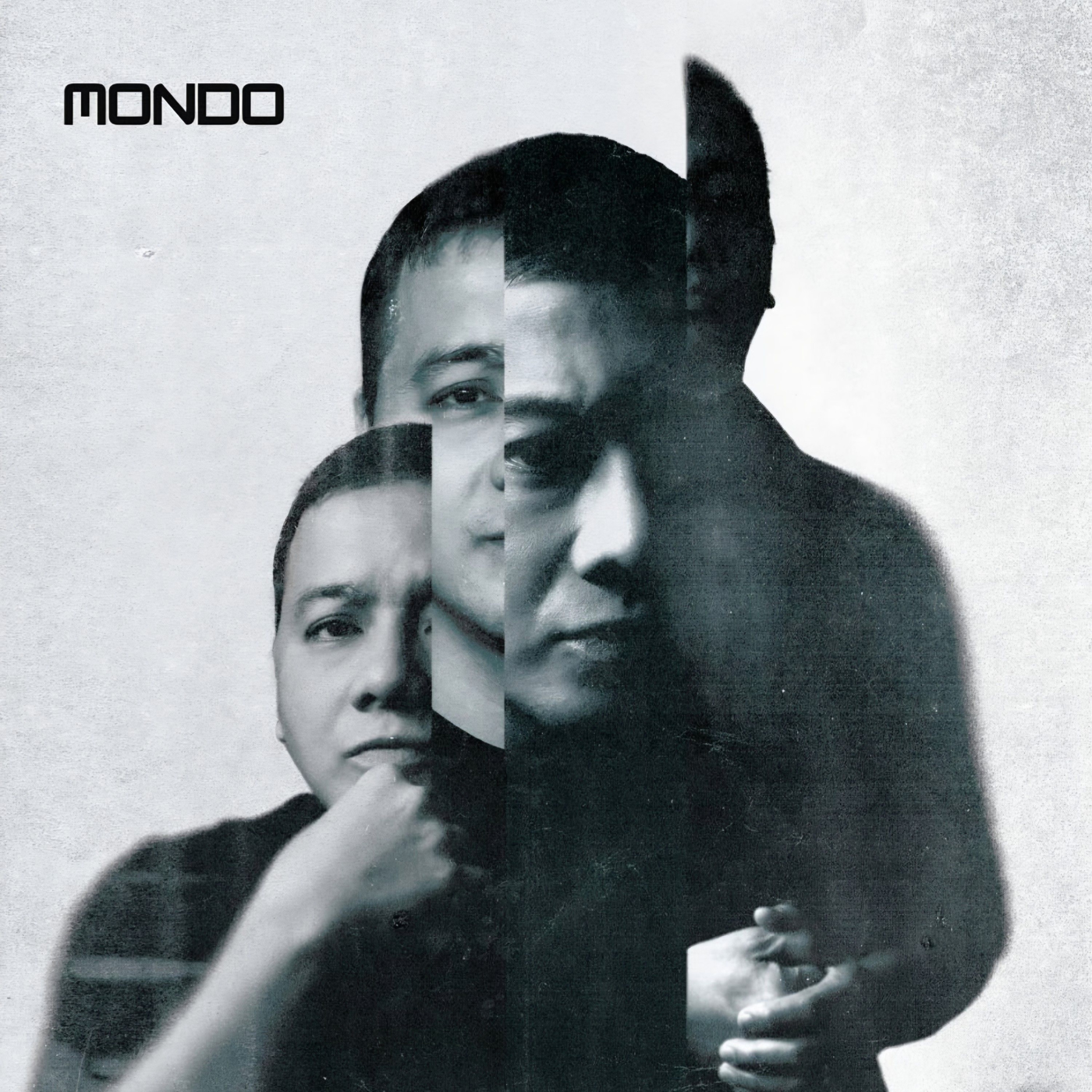
But it’s a different case for Mondo de Castro, the man behind the eponymous band MONDO and its eponymous debut album, who decided to flip the script and turned his debut album into an imprint of his creative assemblage. To him, who staked his name on this album, is what all his 20+ years of work in the industry have been leading up to.
As an artist, Mondo has been in the industry for several decades, having played for The Pinup Girls and collaborating with heavy hitters like Francis Magalona, Diego Mapa, and Kitchie Nadal. E Nick Lazaro is involved in the production side of things
All this to say that Mondo’s resume is a decorated one, and his grasp of the technical side of songwriting and music production is out of the question—all that’s left to mull over from ‘MONDO’ is in its ethos and creative process.
On his debut album, Mondo leans toward British rock and Britpop, with Gospel themes as the occasional thematic hook. His faith is most apparent in “A Thousand Voices,” in which he shares the spotlight with Kitchie Nadal and Diego Mapa. On the one hand, an electronic track with an ambient trip-hop feel, and on the other, an acoustic ballad that serves as the penultimate album closer rather unceremoniously, especially since the closing track is a rendition of another song on the album.
On the other side of the tracklist is “Fire Buns Brighter” and “Awaken,” a pair of upbeat rock ensembles that do not hold back from evoking kinetic energy. Besides sharing a similar stylistic makeup in its employment of a modern take on the British invasion of the late ‘60s, these two openers are indicative of what aspect of the creative process Mondo prioritizes most (sometimes to the benefit of his work, sometimes to its detriment): risk aversion.
The biggest fetter in ‘MONDO’ above all is its overreliance on tried-and-tested formulae, especially on a genre that is already known for its steady progression tropes. While such an approach is not inherently at fault per se, the lack of unpredictability in a song (or rather an air of excitement brought to the fray by fresh, unconventional ideas) and excessive sanitizing of sound may make for material that is seemingly uninspired. The album’s more raw outputs resonate more with the artist’s core intent.
In contrast, ‘MONDO’ shows a lot of competency in its lyrical output. The aforementioned “Fire Burns Brighter,” while overshadowed by its heavy composition, shows Mondo’s spiritual side in a tasteful way, making use of imagery to add mystique to the song. The same can be said about “The Second Coming,” but with a better (and slightly more subdued) melody to accompany it.
But the album’s highlights are seen in the middle, with “If I Tell You Why” (both versions) and “The Second Coming” being the biggest highlights of ‘MONDO’. This is in large part because of Mondo’s penchant for sheen not getting in the way of his intuition for making good riffs and emotionally potent melodies—a feat that is apparent throughout the album, but is neutered in its weaker moments. “Isang Libong Araw” is another well-composed song that strikes a better balance between the explosiveness and restraint of a rock anthem meant to uplift the audience, at least when compared to its faux-sibling, “Fire Burns Brighter.”
‘MONDO’ is fundamentally a showcase of the artist’s well of knowledge in his decades-long journey as an artist. Now with the resources to operationalize his songwriting process like one would a client brief, he is keen on getting the best people on board to make it happen—a highly ambitious endeavor, one that is hindered by the smorgasbord of ideas left unregulated, and can be improved on by having a clearer sense of direction, regardless of who is involved in the making of his work.
Support the art and the artist: