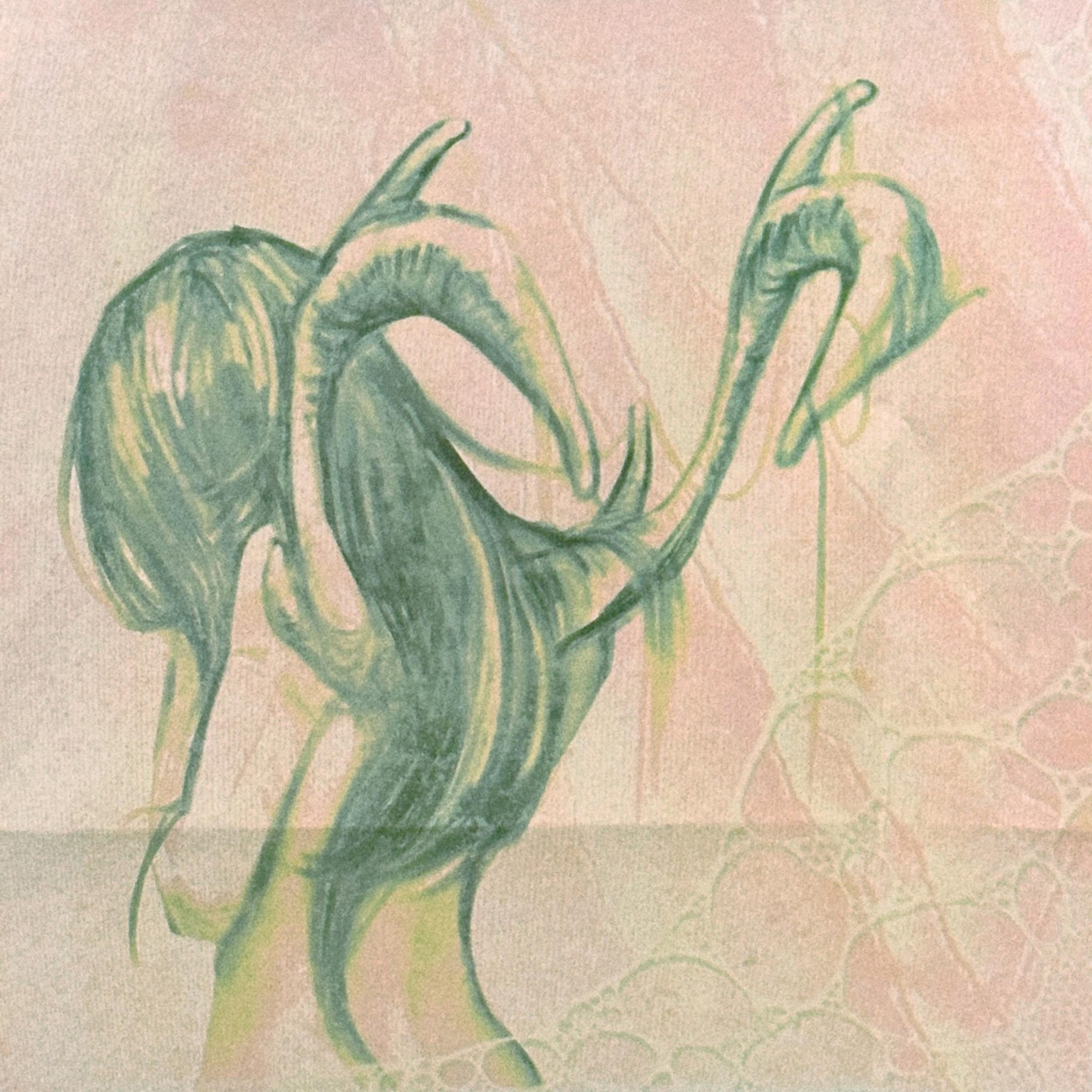
After their mixtape last year, orteus isn’t yet done crafting more music. “Deersong” lands on the very first day of January 2026, serving as the lead single for their upcoming debut album, which is charged with delightful experimentation. The drums gallop rhythmically over sweet vocals, soothing soundscapes, and rumbling bass notes that create a whirring experience, yet keep the overall melodies clear enough to be heard, gratifyingly landing the explosive bombast that comes up at the end of the song.
The overwhelming nature still persists within its structure, taking more time to simmer before it finally clicks. But through the refinement in mixing balance and expanded curiosity in sound textures, ‘Deersong’ lays down a path that is worth following down the line. Potentially having more surprises that end up with us becoming like deer in the headlights.
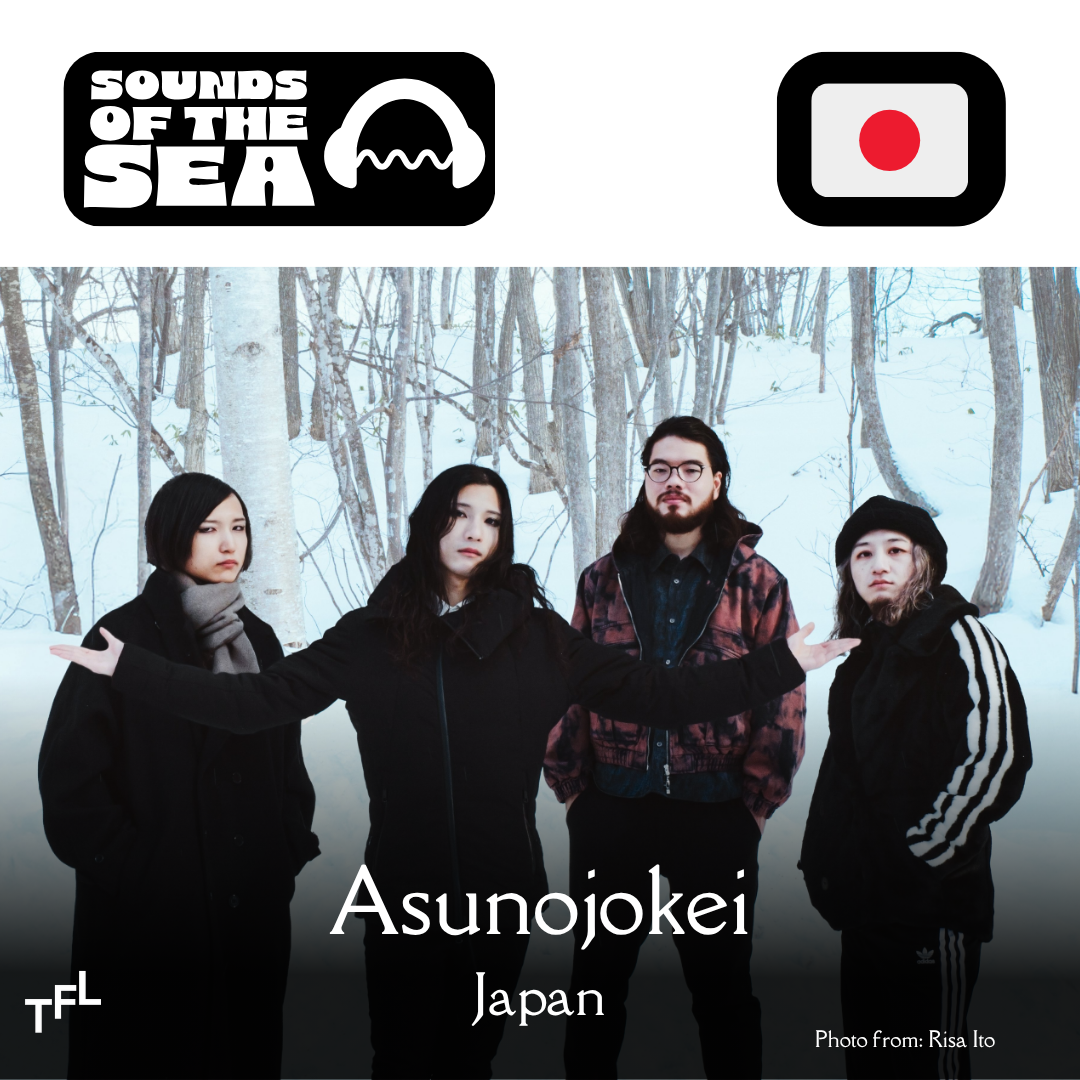
Within the populated stretches of Tokyo, Japan, lies the flood of acts and bands that start by crafting music, pursuing their own identity that continues to grow year by year. Coming from such a place is a band named Asunojokei, a four-piece blackgaze band that was formed back in 2014. Takuya Seki (bassist), Kei Toriki (guitarist), and Seiya Saito (drummer) were close friends since their teenage years, only meeting up with their vocalist, Daiki Nuno, through social media after watching a video of him covering a Converge song. Since then, they stuck together, starting their musical journey that will continue to break their limits.
While they started with a two-track demo release back in 2015, it is through their first EP in 2016, ‘A Bird in the Fault,’ that informs the start of what soundscape, melodic tone, and writing style they’ll keep building up into. Howling screams; pummeling streaks of blackgaze, post-hardcore, and other metal stripes; and numbed melancholic poetry are immediately attached to this band’s palette. Songs like “Silent Tears” go through their post-metal motions with these solemn guitars, just before Nuno starts shrieking and the wail of blast beats and stormy riffs that come afterward. And “Easy” tips the line within depressive black metal, most notably with the gloomy first few minutes, cultivating this downbeat atmosphere that continues getting more cavernous and stinging.
Two years later, their 2018 debut album, ‘Awakening’, amplifies what the band showcased beforehand and expands upon melodic prowess that caters to more potent songcrafting, with writing that consists of pushing past dour emotions despite feeling hopeless and lonely within a momentous city. Leaner cuts like “Double Quotation Mark” and “Ugly Mask” indulge within thunderous black metal passages on the former and shimmering rock tones on the latter, carving out Nuno’s ability towards spoken word, singing, and screaming. “Bashfulness of the Moon” and “Thin Ice” maximize their post-rock structures to a different level, where lilting cooldowns lead to explosive blackgaze turmaturges, with Nuno sounding guttural and snappy in his wails.
After releasing a couple of EPs throughout 2019 and 2020, they eventually took a bit more time before putting together ‘Island’, their sophomore record, which took a different direction in the way they compose their tunes. Said direction comes in the manner of implementing J-rock progressions to their post-hardcore and blackgaze roots, a blend of sound that this band manages to synergize in a big way. “Chimera” and “Diva Under The Blue Sky” simultaneously sound harrowing and magnetic all at once, bleary riffs and crushing screams become a bit brighter amid the accompanying J-rock melodies. There is happiness and company that’s worth looking forward to: A sign of forward momentum that is essential to the album’s songwriting, gently realizing that, despite the internal gloom that the protagonist is overwhelmed by.
That is not to say the straightforward blackgaze tones are left behind, as cuts like “The Forgotten Ones” and “The Sweet Smile of Vortex” sound more ferocious with the band’s refinement across production and songcrafting. Nuno’s howls and spoken word are crushing and emotive as ever, clawing across frigid blast beats and melodic crescendos that kept building up into a punchy resolution. A characteristic that carries the momentum of this album from front to back, allowing compositions to sound heftier and stickier than ever.
The seeds that came from that specific direction paved the path to their recent record this year, ‘Think of You’. Even moving further into that J-rock and J-Pop influences and leaning more into concise melodic structures, formulating a shorter, winter-themed album where the production and composition refinements are on full display. Said influences overall strengthen their signature blackgaze and post-hardcore bread-and-butter, crystallizing phenomenal melodic earworms that this band lands with gusto. “Magic Hour,” “Angel,” and “Stella” are invigorating as it is showstopping, with Nuno pulling out all the power into screams and the rest of the band pulling off dazzling melodic throughlines. “Dogma” still shows that, despite going in this direction, the band doesn’t forget their roots, with that blackgaze wall of sound combusts through its roaring riffs. So does the rampant rhythms of “In The City Where Cobalt Falls” with the soaring guitar passages and blast beats piercing through the skies.
This level of vigor proceeds to how frosty and brighter the album sounds, a tone that complements the yearning, thoughtful sensibilities that are plastered on its songwriting. Always finding hope and confidence, an uplifting energy that echoes through “The Farewell Frost” and “Tomorrow is Your Day”. Utilizing gleaming atmospherics, cavernous vocals, and fiery compositions to drive that tender optimism higher.
With each passing record, Asunojokei keeps flapping their wings and gradually crafting their own unique identity amidst Japan’s historic background towards its circulation of black metal and post-hardcore bands. Never leaving behind what they used to be in the past, just taking new steps to find a space that is their own. With an optimistic thoughtfulness being embraced that keeps shining brighter, the way that they’re going is up, flooding the skies with howls that put everyone awake.
The hip-hop scene in Singapore only continues to grow with every passing moment. Groups such as Construction Sight, Triple Noize, and Urban Xchange marked their impact in the 90s and the 2000s, yet it took quite some time before the culture flourished throughout the country. In the 2010s, more artists such as Akeem Jahat, Yung Raja, THELIONCITYBOY, ShiGGA Shay, and Masia One eventually made their name in the mainstream, carrying and shaping what is there to be shown in Singapore’s Hip-Hop space.
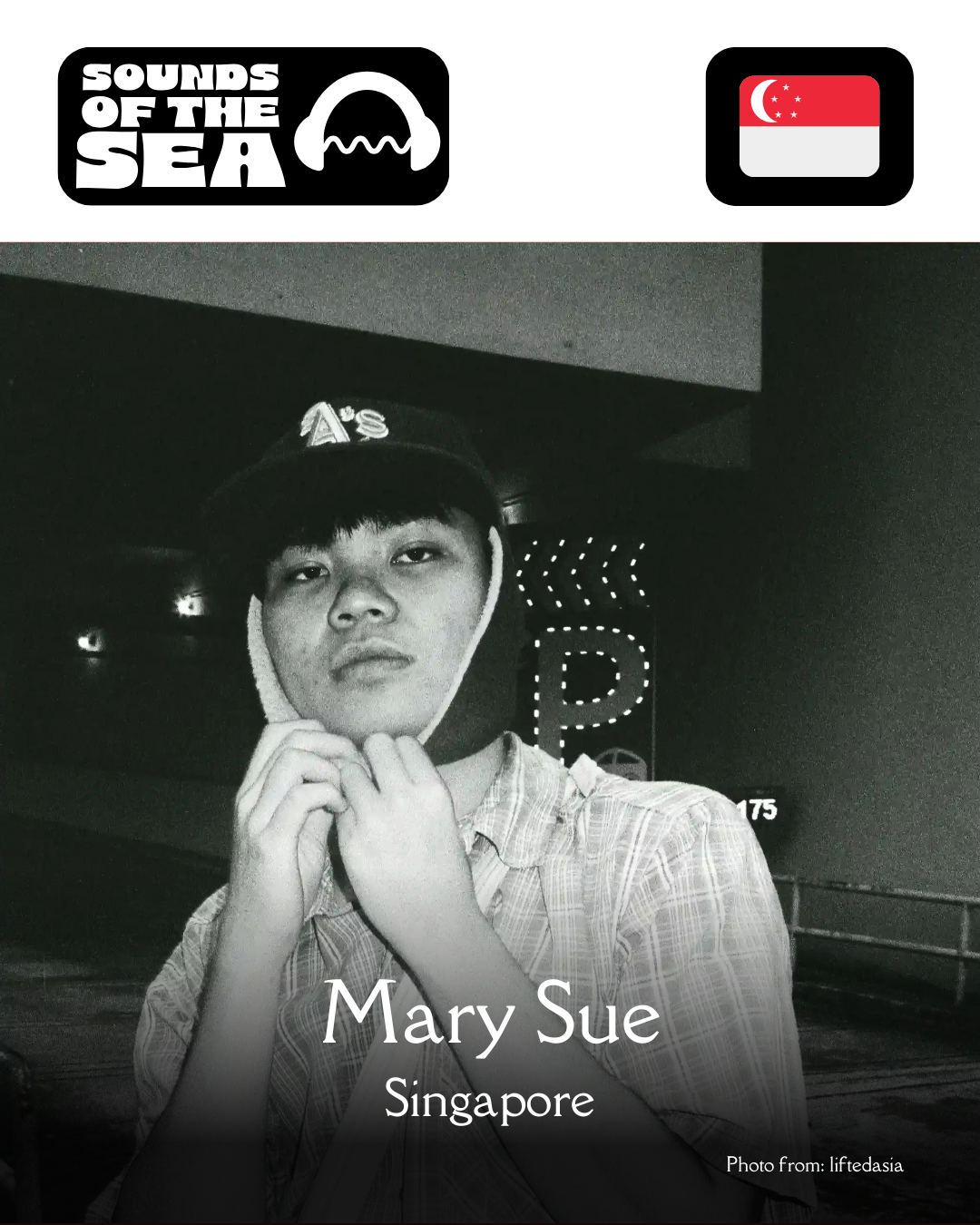
Once the 2020s hit the surface, there came an artist who struck an abstract niche within the underground. Due to the isolation brought back in the pandemic, Siew Png Sim – with his love for acts like MIKE, Earl Sweatshirt, MF DOOM, and Navy Blue – dons the Mary Sue moniker and starts to illustrate his sound. Rougher beats, decisive flows, and pensive storytelling are the name of the game. He slowly shaped those foundations through EPs across 2020 to 2021.
Those EPs are just a preparation for what he will be putting out since then. In 2022, he dropped his debut record, ‘KISSES OF LIFE’. Here, Mary Sue, alongside the insane row of producers and features across the world, establishes his creative tendencies in full as he lets loose personal experiences of grief and recovery, wading through the loss of his grandfather and the struggle with his grandmother’s dementia. It’s a reflection with memories that pulls him back and pushes him forward, swirling around production that’s simultaneously light and dark. “Moving On!” and “Spirits/Name” stretch out samples to a distressingly glitchy degree, whilst “Cavalry” and “Paper Generals” stall in muted but lighter beats. A juxtaposition that Mary Sue’s weathered delivery passes through without any trouble at all, like a conflicted spirit going through shades of grey.
The following year sees him expound on his creative streak, with three albums that were released within a few months of each other. ‘For Sure’ replaces abstract collages with tangible instruments, a backdrop that soothes the ragged introspection he evokes in his bars. ‘OK!’ follows suit, a collaborative effort with other South East Asian beatmakers and musicians (Cravism, ABANGSAPAU, etc) to construct a breezier record, adorned with boom bap and pop rap to set the vibe. In contrast, Mary Sue’s collaboration with UK producer Psychedelic Ensemble flips into experimental territory on ‘CACOPHONOUS DIGRESSIONS, A RECORD OF MOMENT IN TIME,’ where the beats blare and crackle in every space, yet never smother Mary Sue’s presence on the microphone.
His constant work ethic is showcased even further through the “Voice Memos” releases that he pushes out, where even in the midst of traveling to a foreign place, his knack for writing never stops. Recording 2022’s ‘VOICE MEMOS ACROSS A COUPLE BODIES OF WATER’ when he was in New York City for two weeks, and 2024’s ‘Voice Memos From A Winter In China’ when he was on a winter tour in China with Singaporean jazz quintet, Clementi Sound Appreciation Club. His wandering thoughts during those times are now encapsulated within these projects, containing a well of memories that he’ll cherish long-term.
2025 is an important year that shows Mary Sue’s growth as an overall artist. With the help of the Clementi Sound Appreciation Club, these two forces managed to craft a unique spirit that shines within Mary Sue’s overall discography, ‘Porcelain Shield, Paper Sword’. In comparison with most of his works thus far, he wields a keen disposition behind live instrumentation, a distinction that propels Mary Sue’s performances and lyric-making to the next level. Diverting away from his influences and embracing a style that he can call his own.
The album’s major perspective on a time-traveling oracle observing the ambiguous and chaotic histories of the world is greatly reflected in the writing and sound that informs this character concept. Mary Sue’s observant insight and assured delivery resonate with the Clementi Sound Appreciation Club’s burnished melodic contributions. Gentle acoustics nimble across spare horns and keys of ‘Thief and the Bell’, creating serenity curtaining the ignorant thief who stole from the village. Rumbling guitars and drums are emphasized on ‘Haste’ and ‘Minesweeper’, creating stabs of heaviness that unveil the violence unspooling past centuries. ‘Horse Acupuncture’ is swallowed up with haunting gongs around burly guitar passages, fitting Mary Sue, Agung Mango, and Nakama.’s observations of people who are shunned by those who get to control the perception of others.
With the release of this record, it only shows Mary Sue on an upward stream; his craft within Singapore’s underground hip-hop only gets more acknowledgement and refinement. His grounded experiences only give him more to speak about, a hopeful presence that shines amidst the swarm of darkness that surrounds him. With his newfound sword and shield equipped, his thoughtful wisdom leads to wider ground being shown, then gradually explored with a taut mindset.
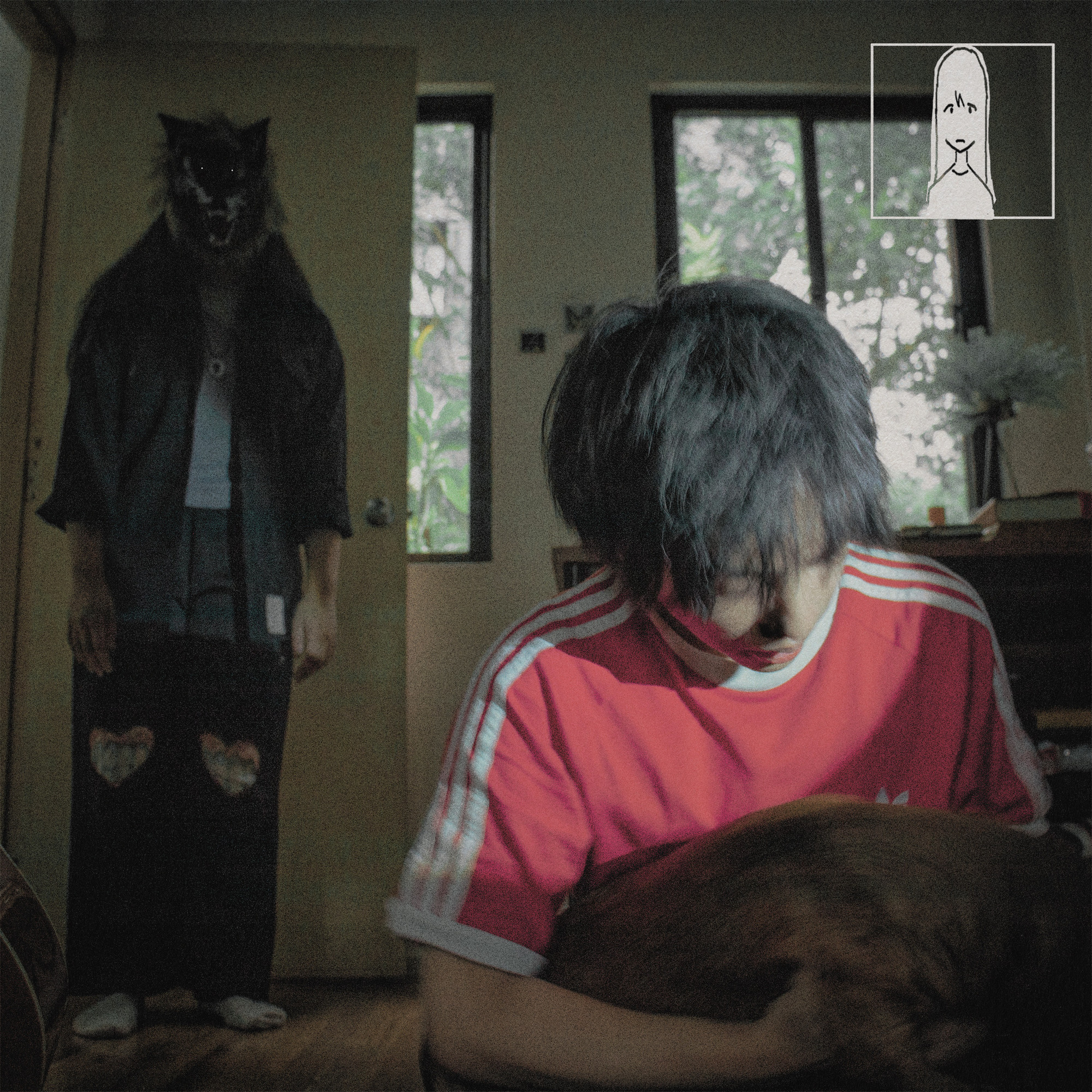
The story of how Unflirt, the stage name of Christine Senorin, started is pinpointed within the universal isolation of the lockdown. With her guitar in hand, she eventually proceeded to write and sing down her thoughts. Moments of flickering romance are contained within her 2023 EPs, ‘Bitter Sweet’ and ‘April’s Nectar’, which reflect Unlfirt’s sonic identity: cozy folk acoustics and shimmering indie pop that nestle around her girlish coos, with enough melodic sharpness to lend her presence some weight and tact. Despite solidifying that she is still warming up, there is potency to be located in those EPs.
‘Fleeting’ is yet another step to Unflirt’s growing aptitude as a musician. Written during her time spent in parts of London, LA, and Brazil, there is a maturity that she has undergone through her writing. Her reflection not only comes through in dealing with a long-distance relationship, but also in processing time and distance itself. Something that she now values even further in her life, grasping its ever-changing flow and factoring that in how she writes. The yearning she carries from past EPs is still retained, but she now considers the sifting presence of time passing by on her mind.
In terms of overall compositions, there is also some progress in finding polish and expansion, adding more atmospheric and instrumental detail that, for the most part, flatter Unflirt’s soft vocals well. “Sea Song” carries some of that bedroom pop sheen, with textured programmed drums complementing some sharper guitars. “Sweet Sweet Time” and “Something Familiar” are lilting as it is tasteful, with the former’s pulpy grooves amid gentle strums and the latter’s string accents weaving around folksy effervescence. “Next To You” is a welcome addition to Unflirt, this blistering pop-rock tune that could have been made back in the late ’90s, all brimming with glimmering melodies backed by riffs that flare and echo throughout the song.
However, just like with those past EPs, Unflirt is still in a position where she is continuing to find her own space amidst the frankly prevalent array of pop acts that are following adjacent soft, hushed vocal styles and glossy pop-rock tones. There may be forward motion in her writing and refinement in production this time around, but she is still finding her own groove amidst the overall sound. Trying to grip the wheel and see where she can steer with full confidence.
‘Fleeting’ is an apt title for the current state that Unflirt is configuring. An acknowledgement of time and distance that affects parts of her life, where she is now trying to move forward and consciously consider how they will change her wholeheartedly. Yet it is also a reflection of the songs that, at best, Unflirt have shown more promise and end up sticking, and, at worst, become too familiar and pass by.
What is fascinating about acts that produce music in their bedroom or home studio is the limitation that comes with it: they rely on spare equipment, the ideas in their head, and the sheer will to put something out while letting the raw essence of their music come to life. A common occurrence these days, especially once you dig into a site like Bandcamp, but there are times when the music that was made is filled with intriguing ideas, both in the composition and the writing.
Formed through a 10-year-old rusty MacBook, their love for rats, and their set of guitars, koto, and violins, Djuno spawns ‘Moonrats,’ a record that tousles within homespun spaces, tapping into indietronica, folk, and alternative rock that is cobbled together by Djuno’s dedication to create something out of their resources. Creating ramshackled compositions that their voice plays into really well, sounding like a singer-songwriter that came out of the ’90s. “Maura Crushed” plays into this in a straightforward direction, with fingerpicked guitars nestling their bare vocals within a coddling atmosphere.
But things get interesting once Djuno starts toying around with production. Modifying their voice to sound more blurry, synths and samples chop off or pop into the mix, playing with the mixing in sync with the lyrics; an intended effect that adds more across Djuno’s well-considered melodies and performances. “Beak” comes through with gentle strings and acoustics, but gets sonically interjected everytime they proceed to a certain phrase; “Mentol Song, Dead Horse” submerges into indie rock rubble before letting the synths take over, their voice always shifting throughout, same case goes for “Otkah” that wades across a raw start accompanied by a digital organ, a burly guitar passage that cuts off into choppy vocal stutters, just before ending things off with a string section; “Slump” takes things on a off-kilter segway, layering spare melodies on top of this uneasy text to speech audio, until noisy guitars rupture and then interestingly sampled to tie the song together; and “Prarie Dogs” finishes the record with its 8-minute climax, starting with simple acoustics gradually going through its rush of highs and lows, implementing pummeling drums, wheeling violins, and boiling riffs along the way.
The intent for the mix eventually pinpoints their conflicting identity with Mina that stirs within their writing. Djuno’s love for singer-songwriters—inspirations such as Elliott Smith or Cameron Winter definitely show in spades—shines through in how they write words and phrases, filling the arc with macabre imagery on one hand and metaphors that flow with absence and emotional decay. It’s a characteristic that keeps following Djuno and Mina, where at first, the shift in voices interprets who is singing. The bare vocals represent Djuno, and the processed vocals come from Mina. A back and forth in trying to separate from one another and travel to a place where Djuno and Mina can be safe and sound.
Yet, in reading between the lines, it becomes clear that Djuno and Mina are the same person. Mentions of reflections and limbs make it clear enough: a push-and-pull between identities that care deeply and who push themselves down. It creates the eventual insight where they can’t separate one another because they need each other. To be Djuno or Mina doesn’t matter; what’s important to them is to be elsewhere. Never lying dormant in one space, the process of leaving for somewhere unknown can be scary, but worthwhile. They do have themselves in the end, after all.
With this much thought, it lights up ‘Moonrats’ with so much detail that’s worth looking into, where every bit and piece across its songwriting, sonic palette, and performances become purposeful as a whole. Despite still carrying the singer-songwriter inspirations that can still be refined upon, there’s no denying that Djuno has something going for it in the long run, even despite their initial struggles that come from working on the album on a decade-old MacBook. Just like the moonrat, it may be easy to catch what’s going on, but listen closely, and you’ll find more rawness that’s worth looking into.
“No Way Now” is a song that has more weight to geiko than anyone else. A change in tone and sound where she confronts a connection that used to be endearingly close but is now tousled and cut away, a narrative ruffled through shuffling, dreamy pop-rock flutters that’s additionally produced by Jad Lara. Adding light percussion, glossy synths, and reverbed guitars that complement geiko’s more somber singing, just before the guitar solo swerves and she starts releasing her anger at that past relationship.
Whilst not exactly a remarkable song – drums sound lighter than they should, chorus doesn’t hook strongly, and geiko’s release of anger stumbles more than it is anguishing – the gradual change of her sound ever since the release of “Palapit Sa U” offers growth for her as a musician. Perhaps, in wading through the past, she ends up somewhere refreshing. Growth ends up like that, after all.
LA-based musician RamonPang is a lover and educator of electronic music. His short-form content alone shows his firm testament to providing a history of the development of electronic music. He imparts curiosity for everyone to keep an eye out for experimental music and bridges a space for new people towards the beauty and ethos of the genre. All delivered with insight, open-approachability, and passion that drives him forward, especially as a Filipino making waves within a mostly westernized genre such as IDM.
Those characteristics also apply to his music as well. Major influences such as Aphex Twin and Four Tet have paved to what he wants to create in his own music: colliding unpredictable edges of IDM with the inviting structures of EDM. A staunch set of elements that never breaks apart within every project that he has pulled together thus far. 2021’s ‘Nature System’ is sleek and eclectic in its flexible melodies and otherworldly textures; 2022’s ‘Third Places’ focuses more into the communal space, sweeping up soulful samples and saturated mixes into nervy dance grooves; and 2024’s ‘Life Cycle Waves’ is elastic and varied, where walls of prickly IDM and meditative ambiance contort on one hand and meld on the other.
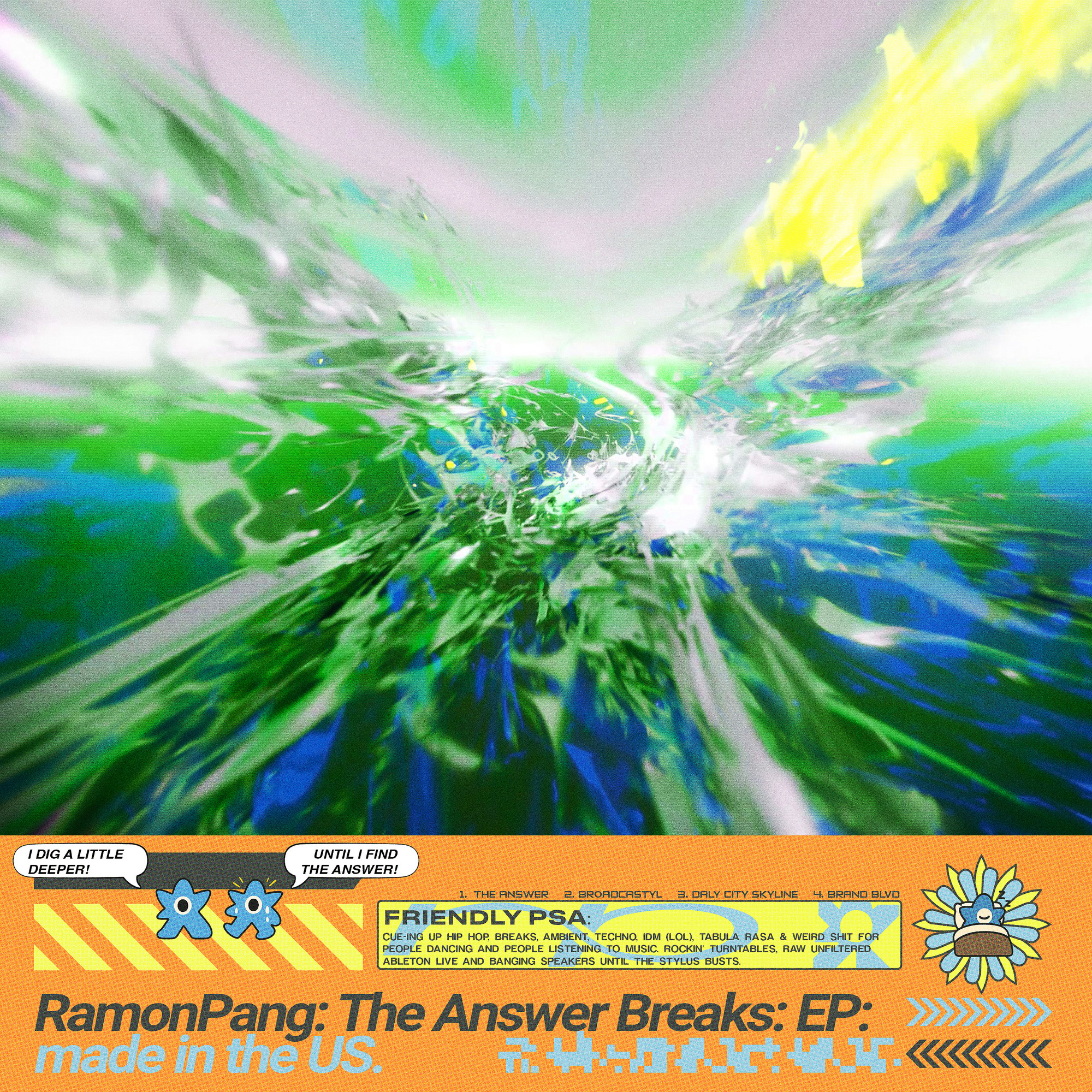
A year later, what does the ‘The Answer Breaks’ EP add to RamonPang’s discography? Simple: a set of lean, accessible cuts that’s just as shiny and punchy as ever. Each track transports to a grounded, yet breathtaking soundscape. “The Answer” hypnotizes with that female vocal looping across textured drums and fizzy synth lines. “Broadcastyl” is dreamy and energetic in its buildup. Shimmering synth pads and jazz samples allow the steady breakbeat to unleash its energy, capitalized further through the guitar passages that rev in its melody. “Daly City Skyline” sets the stage for ’90s breakbeats to slide in. Pulsating acid synths and crashing drum rhythms gradually energize, similar to a race car willing to exhaust all of its gas just for a thrilling chase. ‘Brand Blvd’ puts everything into a calming finish, where inclusions of kalimbas add a playful charm around rapid rhythms and swells of glacial synth waves.
While the sonic display of electronica that RamonPang exports into the EP doesn’t expand much in comparison to his past works, the tight approach to melodic making is a focus worth highlighting. An experimentation that never leaves RamonPang’s lucid soundscapes, only deepening the way he arranges his compositions. The answer may not exactly break new ground, but its compact structure is enough to leave a pleasant impression.
The moment that Arkyalina — also known as Tavin Villanueva — put out “readmymind” last year, it showcases just how much young acts like him are willing to synthesize different points of influence and make it their own. Cementing their own sonic identity and stylism that never compromises their passion and their intensity as musicians, both in recording and live performances. As someone who has seen him perform live, intensity is indeed the emotion that he pulls off well, all paired with scarlet red visuals and a sharply detailed mask that complements the jagged guitar work, skittering beats, and burnished vocals that he exposes in his performances.
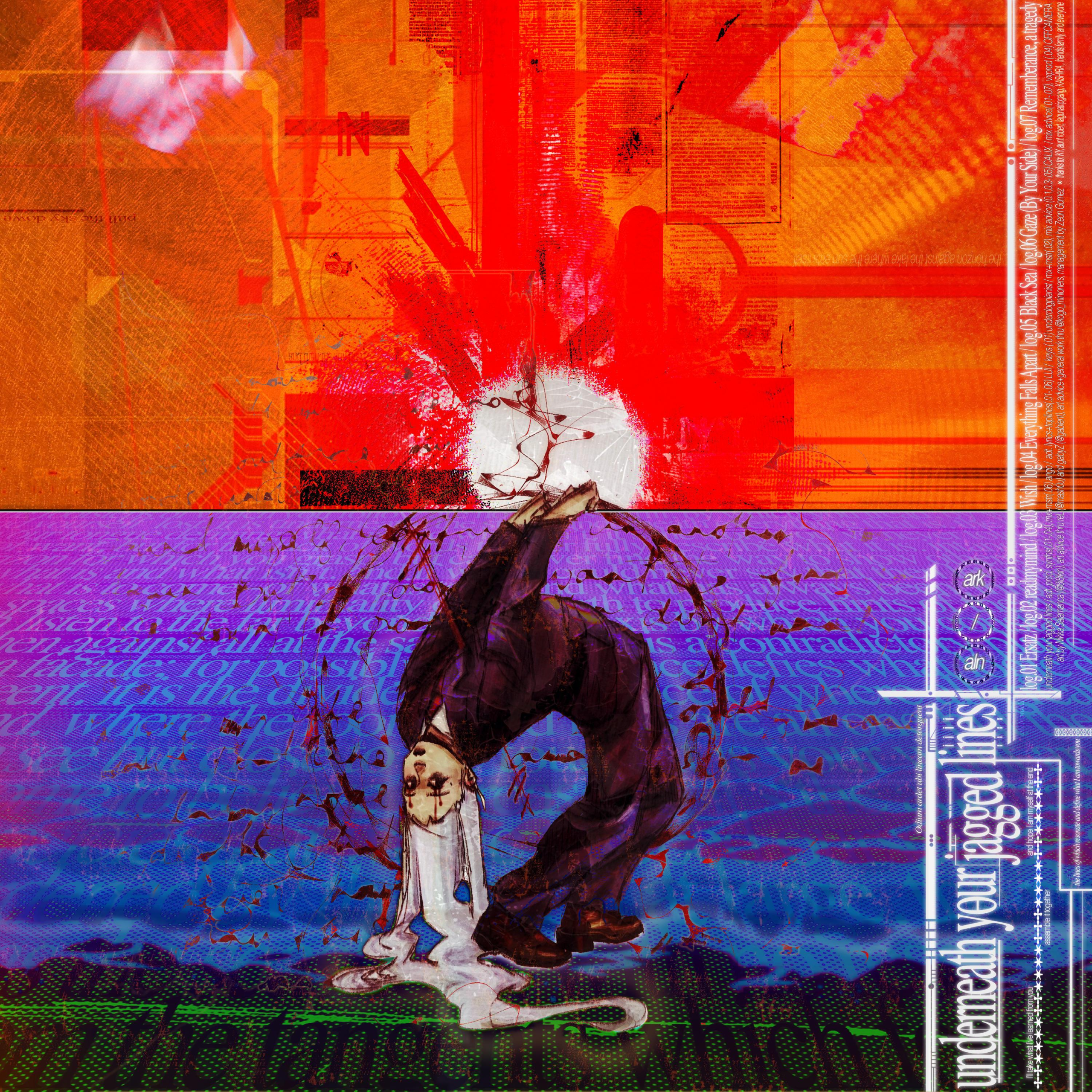
After releasing a couple of singles that now lead to his debut EP, ‘Underneath Your Jagged Lines’, something has shifted between last year and now. There is an adjustment towards how Arkyalina delivers as a vocalist and as a producer, providing more emphasis on build-ups and pulsating electronics to give his voice more space to play off with. The rhythmic shuffle of “Gaze (By Your Side)” and the squealing EDM pads of “Wish” are prime examples of this, where Arkyalina pairs back his intensity and allows himself to unravel in it, carefully crafting sharper melodies along the way.
Of course, that guitar-driven, vocally fervid side of him is still here. Besides the already stellar “readmymind” with all the layers of chalky drums and blurry swells of strings that give Arkyalina soar vocally, “Ersatz” and “Remembrance, a tragedy” deliver in this front as well. The former’s rampage of guitar riffing leads to one glowing crescendo, and the latter’s weighty drums and guitar rumbles only amplify his anguished singing and screaming.
Those contrasts do make some sense as Arkyalina unveils the tension within his writing. Detailing a post-breakup relationship that’s weighed on a lot of give and takes, with him giving so much of himself to the point that he is stuck in a rut. Never exactly willing to let go, as he reminisces on the time that he and his ex have spent together and reminisces about the moments where both of their flaws have been shown. It leads to Arkyalina constantly being in this push and pull stasis, constantly stretched apart by his internal angst and melancholy, but even then, he shows that he still cares about that relationship at the end of the day. As noted on the last track, “Remembrance, a tragedy”, he tries to reach out, acknowledge his mistakes, and hope that there’s still a chance to recoup from those mistakes. Even if such chances of reconnecting might be too late to be considered.
While this overall theme can justify why Arkyalina’s decisions in his vocal mix and delivery are a bit more meticulous and submerged as he is swimming through his own emotional headspace, it can also lead to those choices exposing some of the EP’s weaknesses. “Ersatz” is lacking one more verse to really make its crescendos hit even harder; the glitchy, gauzy flair on “Everything Falls Apart” blurs so much that the melody washes out from one way to another; and the attempt for this weary vocal timbre amidst the heavier production mix on “Black Sea” becomes one note, especially as Arkyalina’s delivery doesn’t exactly vary and the buildup to that scream on the end of the song is so faintly heard.
But, overall, ‘Underneath Your Jagged Lines’ is defined by choices and shifts that are intentionally thought out. Filled with meticulous mixes and vocal tones that emphasize the EP’s reddish intensity and bluish melancholy, all of which put Arkyalina in a space where there is still a lot of traversing to go into, recognizing the highs and lows that he must confront and refine upon. In wading underneath those lines, the waves will smooth their jagged edges, turning them into a more resplendent texture.
In every new song that Gabriel Lazaro puts out, there is a drift that pulls him into a sandstorm. His hand at experimental jazz and rock continues to be tested at every turn. “Slam dance” is no different, as all the galloping drums and layers of ragged acoustics and electric guitars build towards a melodic crescendo that explodes, and eventually breaks off into a wall of gentle vocals that repeats their soft mantra.
Besides the warping progression it creates, Gabriel Lazaro does not get subsumed, more so, keeps his foot on the ground as his raw tone provides a chilling command within the conversational poetry. Singing like a preacher, spreading absolute knowledge to those who will hear. Telling the listener to go through various changes and decisions, one that will set them free from the evils that they hide within themselves.
For all that buildup, “Slam Dance” still feels like a part of Gabriel Lazaro’s journey in terms of truly landing the sound and mood that he’s been trying to craft for himself, where his direction with his compositions and intensity keeps wandering rather than truly hitting its mark. It’s a song that stumbles on pulling off its chaotic and serene dance, but does provide a semblance of hope towards getting close to a slam dunk.
Singaporean musician Jared Lim has been playing a significant role in various mainstay acts over the past couple of years, whether in his local country or elsewhere. Being the guitarist and producer of bands like Sobs and Subsonic Eye, as well as providing production assistance for Blush and The Purest Blue are just some of those notable credits. His ear for production sticks in your ear once you hear it: blissful synth chops, colorful instrumental mixes, and crisp vocal emphasis. A balancing act of sharp melodies and sparkling textures that are never put out of scale. An ability that only comes from very skilled producers who know how to leverage the mix without disruption.
At some point, if he can help produce these songs for these bands, certainly, he can write songs for himself, too. Soon enough, that is what he just did. Donning the solo project Jorud, he pulled together his debut album, aptly titled ‘The Song’. This is Jared Lim expressing the colors that he has brushed over before, now splattered on a sonic canvas that is his own. Whether that be the saturated 80s ambiance on “Am”, speedy waves of breakbeats on “Harm”, chilled out dance beats on “Wannastop”, or the chiptune accents across surfing guitars on “Have It”. He has these soundscapes all layered out.
Of course, it is not just him who gets the play around in these songs. Pauline Rana of The Purest Blue, Cayenne of Sobs, and elo elo provide contributing vocals in most of the album, filling the prismatic space with their friendly presence. Creating this slice-of-life feel where wholesome connections create more smiles along the way—shining the brightest on the title track’s sunny indie pop, “Friend” with its coat of shimmery hyperpop, and the raving, glitchy EDM of “Wideview”.
The word “joyous” is the best way to describe what Jorud has put together with his debut album. A brisk walk in the park is remembered most due to the unabashed display of melodies and textures that are overall jubilant and vivid. These might be just a collection of songs, but once you hear them, you can’t help but turn your frowny days into smiley days.
*The interview is edited with brevity and clarity:
LP: When I hear your artist name, Jorud, I imagine someone who’s chill and lively. What was circulating in your head when you were figuring out the identity of your solo project?
Lim: Actually, this project is kind of the first real music project I ever did when I was 15. I picked a stupid name that I don’t want to change, because I have all the URLs on Bandcamp and SoundCloud or whatever. It started when I was 15, [I was] learning how to use Ableton, and [was] just putting out stuff that I made on SoundCloud. Yeah, [there’s] not much thought to it, but I guess now, it’s been 10 years. So, I just felt like, “Uh, I should kind of do this properly.” See how it feels like to make an album and put it out properly and promote it and stuff like that. Yeah.
LP: You mentioned that you were using Ableton at the age of 15. What invited you to do production work during those times?
Lim: Before I started making my own stuff, I was making chiptune covers of songs. I’ll put them on YouTube. I did a few like CHRVCHES [covers], you know the band CHRVCHES?
LP: Yes!
Lim: Yeah, I did a few chiptune remixes of their songs, and they posted one of them on their Facebook. I was like 14, I was freaking out. Yeah, that’s kind of how it started. I was just making covers for fun, and then it led to making my own stuff.
LP: How long have you been conceptualizing and working on your debut project?
Lim: Some of the songs on it actually started quite a while ago, maybe like a year or two ago. But I didn’t properly think I was making something until, I think, it was December last year. I had the idea to send this instrumental track that I made three years ago to Pauline from [The Purest Blue]. I had that instrumental on my laptop for a few years and didn’t really know what to do with it until I had a sudden spark of inspiration. I decided to send it to her because I thought she would do something cool, and she did. That was December last year, and then from then on, I spent maybe three months combing through old ideas and making new stuff, and I just turned it into an album.
LP:Speaking about those collaborations with Cayenne, Pauline, and Elo Elo. Did you have them in mind while creating the album, or were they a last-minute afterthought?
Lim: [It’s] kind of a bit of both because, honestly, this whole album was like a last-minute afterthought. I made everything really quickly, but I always had those specific vocalists in mind for each song. The song with Elo Elo that actually just came out today [July 10, 2025], [it] originally was a remix I did for fun for this band that I’m working with. And that was more than a year ago. But I liked it too much that I wanted to keep it for myself. And Hui Jun (Elo Elo) heard that remix quite a while ago, and she said she liked it. So when I started working on the album, I was like, “Oh I should reuse that and I’m gonna ask her to sing on it”, and she did.
LP: You said that, for three months, you tried to quickly comb through your ideas for this album. During that process, were you inclined to listen to music a lot, or did you just completely lock in on what you had in mind and never listen to anything that might disrupt those ideas?
Lim: I feel like, generally, just in everyday life, I don’t listen to that much music. For me, my music listening pretty much only happens on a commute. So if I’m not going out [or] if I’m just at home. I’m watching YouTube videos, or working on my own stuff, and listening to my own music, I guess. I don’t really think there was a difference in that time period. I was definitely listening to some things that were inspiring me for specific tracks. But I think in general, when I’m working on something, I’m pretty locked in. I tend to just listen to [what] I’m working on, and when I’m about to go to bed, I export the files, send them to my phone, and listen to it while I’m falling asleep. If I have ideas, I’ll wake back up and work on it again. So yeah, I guess your description was kind of accurate.
LP: Speaking about some of those inspirations, there’s an array of sounds that you’re doing on this debut album. What were some of those sounds that you’re trying to emulate and explore?
Lim: [For] the tracks on the album, there’s 50% guitar indie rock stuff, and then 50% is just like straight-up electronic. I pull from the same inspirations that I have been thinking about with my other projects and stuff. Alvvays, Ivy, AG Cook, of course. This band from France called Tape Worms. Big inspiration. And especially for the guitar songs, I’m also always thinking about my friends’ work and bands like Curb, Carpet Golf, and Subsonic Eye. Seeing what my friends are doing and the kind of instrumentation and things like that. It’s always inspiring to me.
LP: Because you mentioned there’s a lot of music that is 50% guitar and 50% electronic. There’s this observation I have with Rock artists toying with electronica as of recently. Is that the current case for you? Or have you always been embracing rock and electronica for quite some time?
Lim: With my solo stuff, I’ve always tried to make not really like electronic music but electronic music with guitars. That’s always what I’ve been trying to do with my solo stuff, not so much with my other projects, but I feel like with Sobs we’ve lately been trying to do that, combining both things because that’s what we enjoy.
I think it’s also just a circumstance of making stuff by myself at home on my laptop; it’s just easy to make electronic music anywhere on any computer. And the only other tool I have is my guitar and my audio interface, so it kind of made sense to try to do something that feels like both.
LP: Because you basically have those tools for that kind of music.
Lim: Yeah.
LP: How does being in solitude help you out in terms of producing for other acts?
Lim: I think this is a common thing, but I think I do my best work when I’m alone on my headphones with no one around me to hear it hahaha. That’s how I usually mix and arrange for any project I’m in. With Sobs, it’s really just us by ourselves at home working on our individual parts over the internet, so I’m just very used to that workflow. [It] doesn’t help that I get super anxious and second-guess any of my creative decisions when other people are around – I think all this might hinder rather than help me, but it’s worked out so far.
LP: Whenever you play around with your instruments and software, how do you decipher which songs belong to you or to other projects?
Lim: Actually, the title track the one that pauline sings on, I made that track just the instrumental three years ago, thinking that it would be a Sobs song just because at the time it has that same idea of guitar pop, this is what we want to do but it just sat on everyone’s laptops for a while so it didn’t get worked on, so I just decided [that] I’m taking this, I like it too much. If you’re not going to use it, mine! This is like a strange question for me also, because this is the first time I’m intentionally working on solo music and like making stuff with the intention of putting out under my own name. So it’s new to me too.
LP: Once you have the time to listen to music, how does the process make you feel or replicate the sounds that you hear?
Lim: I think there’s always [a] subconscious influence on anything that I do from the music I listen to, but when I’m actively working on it, I try not to think about artists that I like or songs that I like. I’m just sitting down in front of the computer, and I’m making it exactly how I hear it in my head. This is what I want to make right now. There’s definitely influence from everything that I like but when I’m making it, I’m just thinking of how I want it to sound, like how I imagine it in my head. I don’t know if this is a bit cringe, but when I’m working on something right now and I need to go out later, then I’ll listen to the song that I’m working on loop on the way to the thing that I have to go to.
LP: What are some emotions that flow immediately to you once you start wearing your producer hat, especially for this album?
Lim: So, if I’m working on a song for Sobs, I’m thinking about live band arrangements and how we’re gonna play this song live. Trying to make it easily translatable to a live show. I don’t think about that all the time, but it’s in my head. But when I was working on this stuff, I wasn’t making stuff with the intention of anyone else hearing it live or even hearing it in general. I’m just throwing ideas onto the board wherever I can. Literally just whatever idea I have, I’m gonna put it in until it’s a mess. And if I don’t like some stuff, then I’ll take it out. That was the mindset I had going through it.
LP: Do you have a certain plan on performing these songs in a live setting one day? Or is it the kind of project that you’re just gonna keep to yourself in the studio?
Lim: Yeah, I think. I mean, I have done DJ sets and things like that. But, yeah, I think the stuff on this album, apart from the really dancey ones that I can just play at the DJ set, I don’t think I’ll ever do any live thing. I’m not saying never, but it’s not something I think about. Honestly, I was almost just gonna put this all out on SoundCloud and call it a day. But something in me decided to promote it for real. Yeah, I wasn’t thinking about playing. I’m freaked out about that, being by myself.
LP: Unless, Cayenne, Pauline Rana, or Elo Elo are there for the specific songs, right?
Lim: Yeah, yeah.
LP: What track from ‘The Song’ album was most satisfying to complete? Which one of those songs is the toughest to finish?
Lim: I think, Lucky, the eighth track. That song went through quite a long process of the initial demo to where it is now. And I’m really happy with it. Basically, I was working on the title track with Pauline and I was telling her, “I think I’m making an album. I have a bunch of songs.” I sent her a bunch and she really liked this one track that was really unfinished. It was just guitar and drums, and she kind of unprompted, sang stuff for it. And I was like, yes! Her vocals on that song really helped me decide where it needed to go and what it was gonna sound like. When I finished that one, I was like, “Yeah, wow. This rocks.”
LP: It really does, it really does. But back when forums were still a thing, Singapore also had its own music forum called SOFT. What were some of your core memories with that forum?
Lim: Uh, it’s actually still around. I don’t know if it’s really active, but people still go on there to sell gear and stuff. My earliest memory of SOFT was helping my dad sell an old bass guitar that he had. I put up the forum post and everything. Took the photos, uploaded them on Photo Bucket, if you remember Photo Bucket. Yeah, that’s my earliest memory of soft.com.sg. It was doing that. I occasionally still look at the classifieds on there. Cause sometimes there’s stuff that people don’t post on Carousel or stuff like that. All of my first bands growing up [met there]. When I was in school, we’d find each other on SOFT. That’s how I met Celine from sobs. Special website. Awesome website.
LP: Really special one.
Lim: Old internet.
LP: Old internet days, yeah.In your experience, now that you’ve been active within the Singaporean music scene, what’s the special thing you hold dear there?
Lim: I feel like there aren’t that many things that are unique to the specific place that we’re in. But I think it helps that Singapore is so small, and the community of people making music is even smaller than that. So, it’s a lot easier to find the people who make stuff that you align with.
I feel like I’ve been lucky over the years. Joining Subsonic Eye was kind of the start of my whole thing. Meeting a lot of people. People who make similar music and vibe with the same stuff. That’s what I cherish, people around us who are making cool stuff, and I don’t think that’s unique to Singapore. It just helps that it’s such a small scene in a small country. Right now, I think there are, like, three venues.
LP: So, it’s really tightly knit, tightly connected to each other.
Lim: I would say so. Every genre has its group of people. But everyone tends to know each other and hang out at the same places and play shows on the same lineup. That’s what I like about being a musician in Singapore. It’s small, and you can fairly easily find the people who would connect with the things that you do.
LP: What was it with electronic music in general that has captivated so many artists in Singapore?
Lim: This may not be true, but I think it’s also because there’s so little physical space. It’s not like you can form a band and practice in your basement or your garage. Everyone lives in tiny apartments, and it’s pretty easy now to go on YouTube and find a tutorial on how to use the FL Studio or something. I think maybe that might have something to do with it. It’s just that, we are cooped up in our homes.I might not be the best person to ask that because I’m not super familiar with the electronic music scene. Like, I don’t DJ a lot, but I know it’s a thriving thing right now. There are a lot of raves and events and stuff going on. I’m not super tapped in, but there’s a lot of cool stuff happening right now. There’s this collective called Scum Boys. They have a bunch of producers making cool stuff. I think, if you have a laptop, if you have a computer, you can make it. You can just figure it out. And that’s the best part of it. Anyone can do it.
LP: Since this will be the first time that you are releasing your album, what does it say about your identity now that you’re able to have your own voice within the Singaporean music scene?
Lim: I approached this project in a similar way that I approach any other work I’ve done with mixing and producing other artists, so I’d like to think it just reflects what I’m able to provide to others. But I guess I’m also leaning on my direct instinct with the solo stuff in ways that I can’t usually do when working on other projects.
I tend not to think about “the scene” when making stuff because really I’m just used to finishing tracks and immediately uploading them on Soundcloud without the intention of like more than 5 people hearing it. It’s been a weird process putting stuff out under my own name and promoting it, doing the whole rollout schtick when I’m usually so averse to it because I like having people hear my stuff, but I’m still so self-conscious about it. I just try not to think about those things, like my place in the community or whatever
More than anything, I’m glad to have this opportunity to spotlight musicians from other scenes like Pauline and peers like Elo Elo and Cayenne, I feel like it’s just me wanting to make stuff with these people for fun.
LP: Do you consider yourself to be meticulous, or do you let spontaneous ideas carve your work process?
Lim: I think, while I’m making stuff, coming up with ideas and things like that, I’m not super precious about it. I’m just thinking of ideas and putting them down as soon as I can before I forget them. But, when it comes to producing. After the initial idea is done, I’ll get kind of into it.
Cause over the years I’ve been mixing other people’s music and learning a lot of things from doing that. So, when I’m coming back to my own stuff, I’ll get pretty into it, but I wouldn’t say I’m a perfectionist. I just want to get what I imagine in my head. I want to make the song sound like how I imagine it, too. And once I’m close enough, then it’s done. But then again, with other projects that I’ve worked on, I’ll think it’s great [at first]. And then a year later, I’ll listen to it, and [be] like: “fuck, I should have made the kick louder or something.” It’s always like that. But, yeah, I think when I’m in the moment, I tend not to be so particular about that kind of stuff.
LP: If there is a specific sound trend from the past that you want to see get more attention today, what would it be?
Lim: Hmm. Specific sound. I would like to see MIDI strings come back. Just like a long-held midi string note. That’s it. Just one note. Pan a bit to the left. That’s what I want to hear in every genre. Just Midi strings. One note. Weeeee! That’s what I want.