Tag: Electronic

  • EP REVIEW: Slinky Fever – Feverish

    EP REVIEW: Slinky Fever – Feverish

    Written by JK Caray

    Slinky Fever, Megumi Acorda’s recently announced solo side-project, goes online with its synthpop debut EP ‘Feverish’ as the musician’s fresh venture into electronic music. Best known as the frontwoman of one of the local underground’s most successful dreampop acts, a move like this that seems to have completely come out of nowhere. Thus, it puts into view a few questions, with the most obvious one being: does the magic in her main band still carry into a project like ‘Feverish’?

    Opening with “Factory Girl, E.S.”, the world of ‘Feverish’ is introduced as a tasteful homage to the 80s New Wave that once dominated the airwaves. It’s got all these trademarks of glittery pads and dance drum loops with the added flair of feeling like you’re alone inside a dark room, solely lit by neon disco lights. In a way, ‘Feverish’ manages to make synthpop sound intimate with the tiniest bit of claustrophobia, in part due to the confessional lyrics and the electronic atmosphere, a decision that makes the EP more compelling.

    Initially created as a dump for Acorda’s music homework back in college, it has since been an outlet for the artist’s production practice. For the most part, the release being a “practice” makes sense. A few issues make it clear that she’s still finding her footing within the style of ‘Feverish’, most notably with the latter part of “There You Go Again”. Alongside the obsessive lyrical narrative, the juxtaposition between the unfeeling drum loops and the airy synths does not evoke the effect it’s attempting to give. 

    Performance-wise, Acorda’s signature soft, dreamlike vocals remain a welcome constant during the bulk of the EP. On tracks like “Heaven” and “Away”, these create a liminal environment that amplifies the longing and the neediness found within the tracks. However, it leaves more to be desired for the other tracks “There You Go Again” and “Factory Girl, E.S.”, both of which needed a more dynamic vocal presence to elevate their mood.

    Nevertheless, the handful of lows do not discredit the Slinky Fever’s promising experimentation into electronic pop. In the current sea of industry plants and trendhoppers, seeing a renowned musician risk their credibility to explore a different take on their artistry means a lot for budding artists scared to put their work out for the general public to scrutinize. 

    After all, Megumi Acorda and Slinky Fever are just two sides of the same coin; it’s still the same gentle voice, the same affective yearning. So, as long as the artist continues to authentically express their conceptual world, whether in different genres or mediums, that same magic will still be found in whatever kind of art they produce.


    Support the art & the artist:

  • EP REVIEW: Tarsius – Vikslotov

    EP REVIEW: Tarsius – Vikslotov

    Written by JK Caray

    Six years after their last album ‘Culture Cow’ in 2020, a few sets at international festivals, and appearances on a lot of compilation albums, Tarsius makes a long-awaited comeback with the release of their new EP ‘Vikslotov.’ In letting the tracks evolve and marinate, the Manila-based duo has surprisingly come out with a release reminding us that one of the electronic scene’s most acclaimed acts is still here to innovate.

    As the opening track, “Autophagy” doesn’t waste time introducing the plane of existence it belongs to. Arguably the EP’s standout track, “Autophagy” exists in different phases of a cerebral journey, guided by Jay Gapasin’s precise percussion work. In general, drum loops are used extensively throughout the EP, with the track “Oui” ditching traditional acoustic drums for more compact drum machine beats that sync with the song’s alienating leads and occasional vocal chops. Speaking of, “IKR”s more engaging use of chopped vocals does the heavy lifting in giving the track its own identity, leaning more on its playful, almost sassy sonic profile. Lastly, “Vagabond” rounds off the EP with a satisfying aural shift towards Melodic House beats after the tense, rhythmic push-and-pull present in “Spectrum”.

    At a distance, ‘Vikslotov’ looks like a release that came from the mix of different styles Tarsius has dabbled in after a long period of inactivity. With the risk of seeming like an “All must go” kind of EP, ‘Vikslotov’ may not be the duo’s most cohesive collection, but it’s the breathing, ever-present rhythm living inside these tracks that holds the release together. Building on that groove, ‘Vikslotov’ shows us the different forms Tarsius is capable of taking shape in. Though it may cause whiplash from the differences between the tracks’ personalities, it is a welcome change since Tarsius knows how to make each song interesting. Besides, when stripped down to its most basic form, isn’t electronic music simply about making insane drum beats and doing tons of experimentation?


    Support the art & the artist:

  • EP REVIEW: WILHELMINA — Book of Spells

    EP REVIEW: WILHELMINA — Book of Spells

    Written by Noelle Alarcon

    The Philippines has an incredibly rich, complex history—despite the multiple attempts to put down the Filipino identity, it is the spirit of resistance that has pushed us to continue fighting, time and time again. 

    For Filipinos outside of the homeland, that sense of pride, of kinship, can look a little different, although the thought remains intact: we have always had our own world and will stick by it no matter what, unnecessary foreign interventions aside. In New Jersey-based producer WILHELMINA’s latest EP, “Book of Spells,” he summons these roots and blends them into webs of jersey club and hard drum.

    Akin to being possessed by the spell of a babaylan, “Book of Spells” is over 20 minutes of thumping transcendental beats. Shrouded in mysticism and the promise of a good time, booming 808s are showered in hard kicks and the sound of indigenous Filipino instruments. WILHELMINA trades the more clean, polished sounds of percussion for drums that have more of a roaring echo, contrasting with calming prayers and various sounds of brass that accent each beat.

    The EP stands out from the rest, and not just because of its Southeast Asian roots. It is not merely confined to the genres that describe it; it doesn’t have to force or impose its identity upon the listener, and it executes its brashness magnificently. Its trance-inducing basslines are reminiscent of the hypnotic nature of budots, and so are the different ways he uses the sounds found in rituals to exaggerate and build up to certain points in each track. There are standout tracks, like opener “Divine Hand,” which samples Kelis’ “Milkshake” and weave it with indigenous drum beats that become more complex as its runtime moves forward. “Booty Hypnosis” is true to its title; the bass-boosted murmurs become louder and louder until the track finally shifts its gears and mesmerizes with its array of sounds.

    There are plenty of ways to play with jersey club, its template being a flexible canvas that will take on anything painted upon it well. However, there are points in the EP where the repetitiveness becomes an element that drags the track on for longer instead of expanding on its sonic possibilities. It’s a tricky endeavor to figure out how to piece these sounds together, and WILHELMINA’s attempt to incite spells of dance works well, for the most part.

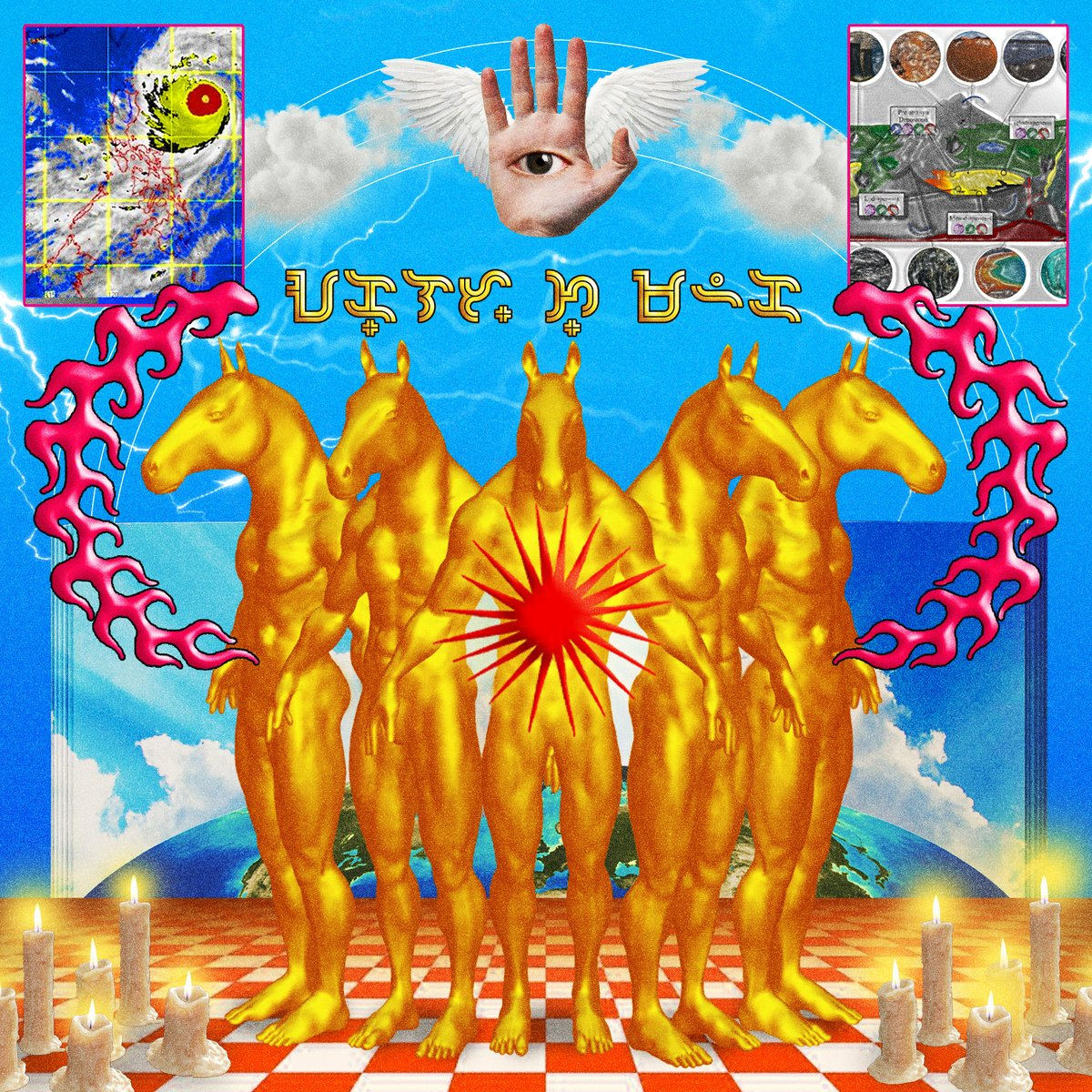
    The EP’s cover is an array of golden tikbalangs, and the mysteries of Philippine occult—in superstition, they are mythical creatures that lead travelers astray. That’s what this collection of breaks and beats does to the listener; “Book of Spells” unlocks an experience that can only be felt beyond the physical realm, hauling you across a bewitching journey of wonder that has been inside you all along. What joy it is to make the most out of being spellbound.

    Artwork by kosmos.khaos

  • ALBUM REVIEW: Lecx Stacy – The Folkhouse

    ALBUM REVIEW: Lecx Stacy – The Folkhouse

    Written by Lex Celera

    For Los Angeles-based singer-songwriter Lecx Stacy, sonic experimentation is no longer just an exercise but a recurring theme in his body of work. Pallid shades of ambient, breakcore, emo, and folk are rendered onto the canvas, resulting in something that can’t be neatly put into a single category. His work has been found somewhere between the gravitational pulls of Clams Casino, A.G. Cook, Jean Dawson, Deb Never, and Code Orange Side Project NOWHERE2RUN.

    Beyond genre shifts, the intention is clear: his sound is a refraction of his personal and shared history – as a first-generation Filipino American, as an artist exploring what he calls “inherited memory” – rendered in its full palette. 

    In both form and approach, the layers across each track come and go in measured amounts, almost as if they were solidified like shards. Of what they could represent, the artist leaves just enough room for it to take shape in the listener’s mind.  

    If his debut EP ‘Face Plants’ serves as an antechamber to the world of Lecx Stacy, ‘The Folkhouse’ is an inner dwelling that retains a sliver of its original foundation, sort of like a game of Betrayal at House on the Hill. Vestiges of past work form a resemblance to the bricks that have been laid out in ‘The Folkhouse.’ 

    As Stacy explains in a press release, “The album as a whole explores grief, heartbreak, and eventual acceptance, all framed through a parallel between my life and my father’s.” In ‘The Folkhouse,’ Lecx Stacy vacillates between textured abstraction and lucid instrumentals, drawing on a broad range of influences to further explore something personal. His body of work, then, is a response to stimuli, an answer to a call, expressed in song. 

    The opening track “Feign Death, I Await Her,” settles on abject atmospherics from the jump to set the tone, and serves more as an interlude, similar to “…” Meanwhile, “In a Hail of Bullets, She’s the Gun” comes across as central to the whole project in its robustness of sound; it has a bit of something for everyone that has found a taste for Lecx Stacy’s sound, similar to “Thine Own Accord” in his previous project. 

    In fact, the guitar instrumentation is foundational to ‘The Folkhouse’ and draws the most attention across the whole project: “Winter, A Wilted Flower” and “In A Hail of Bullets, She’s the Gun” develop this idea most. The guitar work in “Safe In Your Hands, I Clasp” gives the track buoyancy amid the weight of the drums. Meanwhile, the use of tremolo in “Testament, A God Fear & Rifle” suggests another dig at his history as a Filipino transplant in America, as built on from his recent projects, most especially his 2021 EP ‘Bundok.’ It’s the tightness of this intention that gives Lecx Stacy’s body of work tensile strength beyond navel gazing.

    But as ‘The Folkhouse’ and his previous projects have shown, this drive towards finding answers comes across as asymptotic: close, but not completely there. Nothing is entirely resolved; the shards remain shards. In fact, one might argue that the thematic backbone feels more pronounced in his body of work compared to this latest album. Which opens up the question: how long will this exploration last, and what can be excavated beyond what is already found?  


    Support the art and the artist:

  • ALBUM REVIEW: D Waviee – Epitome

    ALBUM REVIEW: D Waviee – Epitome

    Written by Jax Figarola

    One should always listen to a trance album with an open mind, open heart, and an open area to move freely and dance. D Waviee’s ‘Epitome’ reads less like an album than a carefully staged rite of passage. Rite of passage (detachment, liminality, incorporation) in a way that the album stages a formal emotional transition for its listeners. Only at first, it might seem like a collection of tracks produced over time by D Waviee and simply arranged for the release of her sophomore album, but the first few tracks already interrupt the flow of mundane daily sounds.

    As an independent producer, she fashions her sets into ecstatic incantations; on record she does the same and invites listeners to a manufactured liminality of a dissolving material world. Yet, the texture of music, as an art form, remains in this world. The opening title track performs this perfectly: voices layered like organ lines, a fractal cascade, and a wind that seems to hug and lift you, until you register that you are not dancing alone, but part of a constructed sociocultural matrix that accepts music as cathartic like the rave scene. “Blizzard,” a techno-trance wink at Far East Movement’s “Like A G6,” and the light “Moody,” steer the album to a Jersey-club glitch vogue realness, which feels like walking into liminal geography. And if rave culture has always flirted with ritual, the album makes that flirtation explicit. There’s a temporary suspension (or detachment) of the social selves that makes it possible to enjoy yourself with a new sense of belonging.

    Therefore, midway through, ‘Epitome’ sharpens into a focused body of art. “Put It Down – Femme Queen Edit” in its Jersey-club, explicitly queer choreography, and vogue-ish punctures pivots into her most dangerous and most thrilling track “Electric Erotica,” which as a track feels like being fucked in all holes by a bionic octopus. Here, the body transforms into a site of ambiguous desire. The track is not sexual, but it is sexualized in a way that feels intentionally destabilizing, suggesting that the body in trance is neither wholly male nor female, but a porous, androgynous surface for electronic music to latch on. That interface is programmed to give temporary liberation, just as the track is programmed to put you into a sexual-psychedelic trance.

    Thus, the concept coheres from the fifth track to the eleventh. D Waviee’s techno flip of Pette Shabu’s “COA” starts the sequence to the project’s most successful continuity exercises. “Shot Para Igat” is libidinal and kinetic with all the moaning sounds and it feels like reaching the climax. However, the record jolts toward an awkward “Green Light (Extended Mix),” almost like an interstitial pop serenade in the middle of a ritual, as “818” and the ending “Bleach & Tone” tilt the project toward memory work. The latter, with its dusted PS2-era textures and pre-rendered nostalgia, performs the incorporation phase: the collective spirit, after its temporary detachment, returns altered to the world and carries a residue of the night as memory. There is a delicate, enchanted quality here — an insistence that communal dance can rewrite how we relate to technological and cultural memory, as if those PS2 textures remind us of the manufactured nostalgia’s power to anchor us back into our own living reality.

    The project may occasionally feel disembodied, and it’s a part of its strategy as much as its weakness. This made the opening songs read more like experiments. Further, sounds and the self become more fidgety, and the records become very danceable. In this sense, ‘Epitome’ is less about individual tracks, but about what the listener performs for themselves. The album becomes a mirror for how one carries the energy to a liminal space that they enjoy. Like any other dance album, it’s a highly participatory work. D Waviee’s performance ethos posits that euphoric dance is something made, not merely found. Raves’ socially unrestrained atmosphere already captures the spirit of trance music. It is through the act of assigning memory to her music that the listening experience shifts into something more joyous and sustaining than simply dancing. Lastly, there is a sense of alchemy in how D Waviee, as a producer, turns influences of different genres (Jersey club, acid trance, techno) into tools for communities to use to map the sounds that reconfigure social intimacy.

    If trance is a practice of temporary unmaking, D Waviee’s ‘Epitome’ is the night’s manual. It needs you to surrender your social script, to accept a shared illusion, and to step back into the world with a new, quieter devotion to your body, to the people who moved beside you, and to whatever tenderness the music carved through your night. D Waviee was able to turn sexiness into cathartic communal love for electronic dance music. It’s the reason why trans is a near-homophone of trance.


    SUPPORT THE ART AND THE ARTIST:

  • EP REVIEW: RamonPang – The Answer Breaks

    EP REVIEW: RamonPang – The Answer Breaks

    Written by Louis Pelingen

    LA-based musician RamonPang is a lover and educator of electronic music. His short-form content alone shows his firm testament to providing a history of the development of electronic music. He imparts curiosity for everyone to keep an eye out for experimental music and bridges a space for new people towards the beauty and ethos of the genre. All delivered with insight, open-approachability, and passion that drives him forward, especially as a Filipino making waves within a mostly westernized genre such as IDM.

    Those characteristics also apply to his music as well. Major influences such as Aphex Twin and Four Tet have paved to what he wants to create in his own music: colliding unpredictable edges of IDM with the inviting structures of EDM. A staunch set of elements that never breaks apart within every project that he has pulled together thus far. 2021’s ‘Nature System’ is sleek and eclectic in its flexible melodies and otherworldly textures; 2022’s ‘Third Places’ focuses more into the communal space, sweeping up soulful samples and saturated mixes into nervy dance grooves; and 2024’s ‘Life Cycle Waves’ is elastic and varied, where walls of prickly IDM and meditative ambiance contort on one hand and meld on the other.

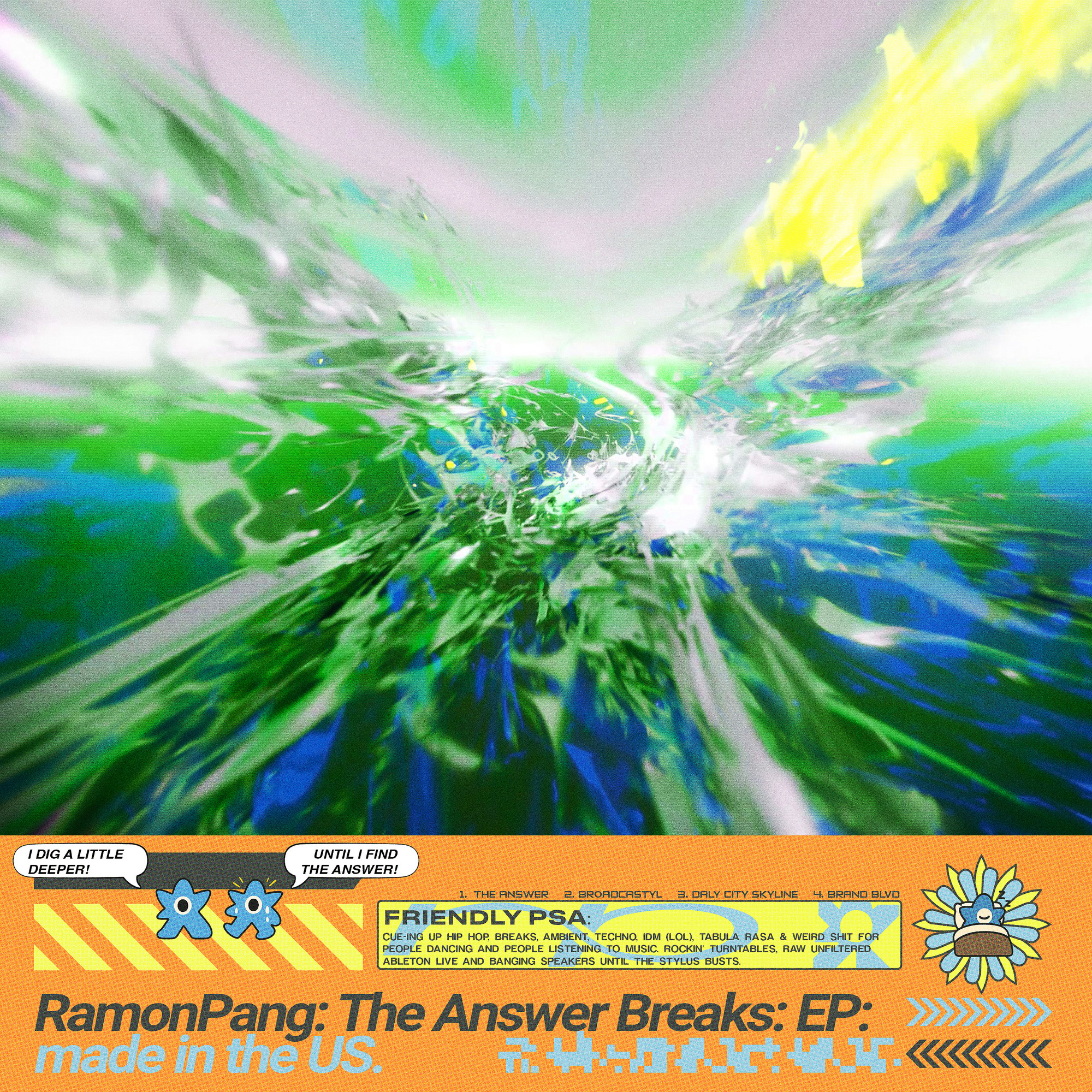
    A year later, what does the ‘The Answer Breaks’ EP add to RamonPang’s discography? Simple: a set of lean, accessible cuts that’s just as shiny and punchy as ever. Each track transports to a grounded, yet breathtaking soundscape. “The Answer” hypnotizes with that female vocal looping across textured drums and fizzy synth lines. “Broadcastyl” is dreamy and energetic in its buildup. Shimmering synth pads and jazz samples allow the steady breakbeat to unleash its energy, capitalized further through the guitar passages that rev in its melody. “Daly City Skyline” sets the stage for ’90s breakbeats to slide in. Pulsating acid synths and crashing drum rhythms gradually energize, similar to a race car willing to exhaust all of its gas just for a thrilling chase. ‘Brand Blvd’ puts everything into a calming finish, where inclusions of kalimbas add a playful charm around rapid rhythms and swells of glacial synth waves.

    While the sonic display of electronica that RamonPang exports into the EP doesn’t expand much in comparison to his past works, the tight approach to melodic making is a focus worth highlighting. An experimentation that never leaves RamonPang’s lucid soundscapes, only deepening the way he arranges his compositions. The answer may not exactly break new ground, but its compact structure is enough to leave a pleasant impression.


    Support the art and the artist:

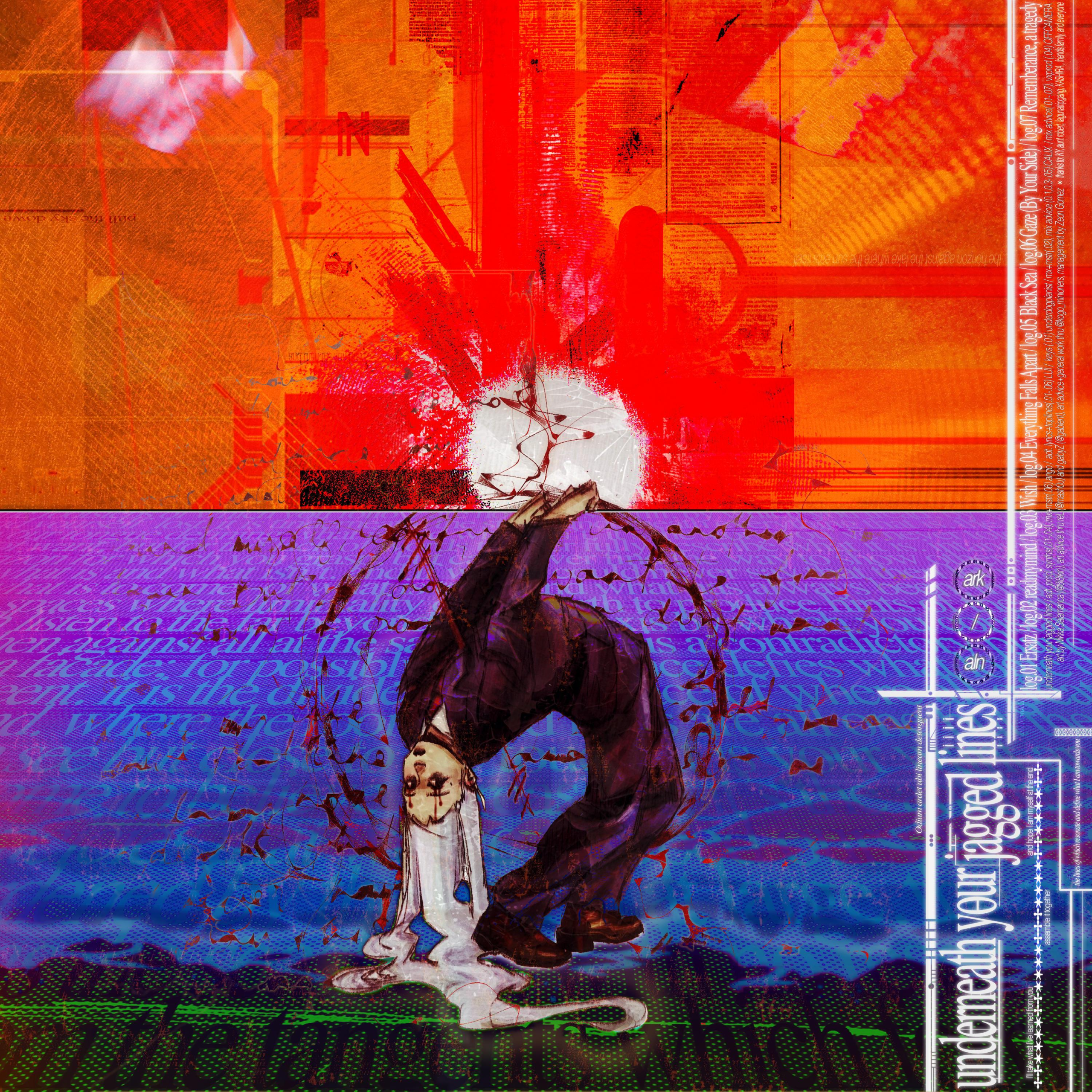
  • EP REVIEW: ARKYALINA – Underneath Your Jagged Lines

    EP REVIEW: ARKYALINA – Underneath Your Jagged Lines

    Written by Louis Pelingen

    The moment that Arkyalina — also known as Tavin Villanueva — put out “readmymind” last year, it showcases just how much young acts like him are willing to synthesize different points of influence and make it their own. Cementing their own sonic identity and stylism that never compromises their passion and their intensity as musicians, both in recording and live performances. As someone who has seen him perform live, intensity is indeed the emotion that he pulls off well, all paired with scarlet red visuals and a sharply detailed mask that complements the jagged guitar work, skittering beats, and burnished vocals that he exposes in his performances.

    After releasing a couple of singles that now lead to his debut EP, ‘Underneath Your Jagged Lines’, something has shifted between last year and now. There is an adjustment towards how Arkyalina delivers as a vocalist and as a producer, providing more emphasis on build-ups and pulsating electronics to give his voice more space to play off with. The rhythmic shuffle of “Gaze (By Your Side)” and the squealing EDM pads of “Wish” are prime examples of this, where Arkyalina pairs back his intensity and allows himself to unravel in it, carefully crafting sharper melodies along the way.

    Of course, that guitar-driven, vocally fervid side of him is still here. Besides the already stellar “readmymind” with all the layers of chalky drums and blurry swells of strings that give Arkyalina soar vocally, “Ersatz” and “Remembrance, a tragedy” deliver in this front as well. The former’s rampage of guitar riffing leads to one glowing crescendo, and the latter’s weighty drums and guitar rumbles only amplify his anguished singing and screaming.

    Those contrasts do make some sense as Arkyalina unveils the tension within his writing. Detailing a post-breakup relationship that’s weighed on a lot of give and takes, with him giving so much of himself to the point that he is stuck in a rut. Never exactly willing to let go, as he reminisces on the time that he and his ex have spent together and reminisces about the moments where both of their flaws have been shown. It leads to Arkyalina constantly being in this push and pull stasis, constantly stretched apart by his internal angst and melancholy, but even then, he shows that he still cares about that relationship at the end of the day. As noted on the last track, “Remembrance, a tragedy”, he tries to reach out, acknowledge his mistakes, and hope that there’s still a chance to recoup from those mistakes. Even if such chances of reconnecting might be too late to be considered.

    While this overall theme can justify why Arkyalina’s decisions in his vocal mix and delivery are a bit more meticulous and submerged as he is swimming through his own emotional headspace, it can also lead to those choices exposing some of the EP’s weaknesses. “Ersatz” is lacking one more verse to really make its crescendos hit even harder; the glitchy, gauzy flair on “Everything Falls Apart” blurs so much that the melody washes out from one way to another; and the attempt for this weary vocal timbre amidst the heavier production mix on “Black Sea” becomes one note, especially as Arkyalina’s delivery doesn’t exactly vary and the buildup to that scream on the end of the song is so faintly heard.

    But, overall, ‘Underneath Your Jagged Lines’ is defined by choices and shifts that are intentionally thought out. Filled with meticulous mixes and vocal tones that emphasize the EP’s reddish intensity and bluish melancholy, all of which put Arkyalina in a space where there is still a lot of traversing to go into, recognizing the highs and lows that he must confront and refine upon. In wading underneath those lines, the waves will smooth their jagged edges, turning them into a more resplendent texture.


    Support the art and the artist:

  • EP REVIEW: Horseboyy – Horsepowah

    EP REVIEW: Horseboyy – Horsepowah

    Written by Anika Maculangan

    Writer and scholar McKenzie Wark once said, “To rave is to forget your name, to forget the logic of the market, to move without the burden of being anyone in particular.” In her book Raving, she describes it as more than an action: a living practice, shaped by bodies, rhythm, and movement. “Raving is stepping outside the everyday,” she writes, “without needing to know or care what will replace it.”

    What one feels when they listen to Horsepowah is more or less similar to this kind of energy that Wark explains in her work: vibrant, liberating, and full of life. Every pulse throbs with a collective sense of euphoria. A feeling that makes you leave the skeleton of your body. This is the most notable quality of Horsepowah:  the way it moves as its own organism, creating a world with no hierarchy other than the steady law of the beat. You give yourself over to it, piece by piece, until you’re nothing but sweat and oxygen, the crowd fused into a single mass of heat and motion, pulling you deeper the more you move and shift to its tempo. 

    Horsepowah doesn’t offer the kind of out-of-body drift sold as escapism. It’s not about vanishing from the world, but about occupying it differently. Leaving the body here doesn’t mean abandoning it; it means loosening its borders, and letting its edges blur — a tendency that’s easily recognized in some of Horseboyy’s earlier works, namely his contribution to Sounds Nais, Vol.4 and collaboration with Pette Shabu on BINGO! in 2023. Such projects that, without a doubt, prove he is no stranger to crafting surreal soundscapes.

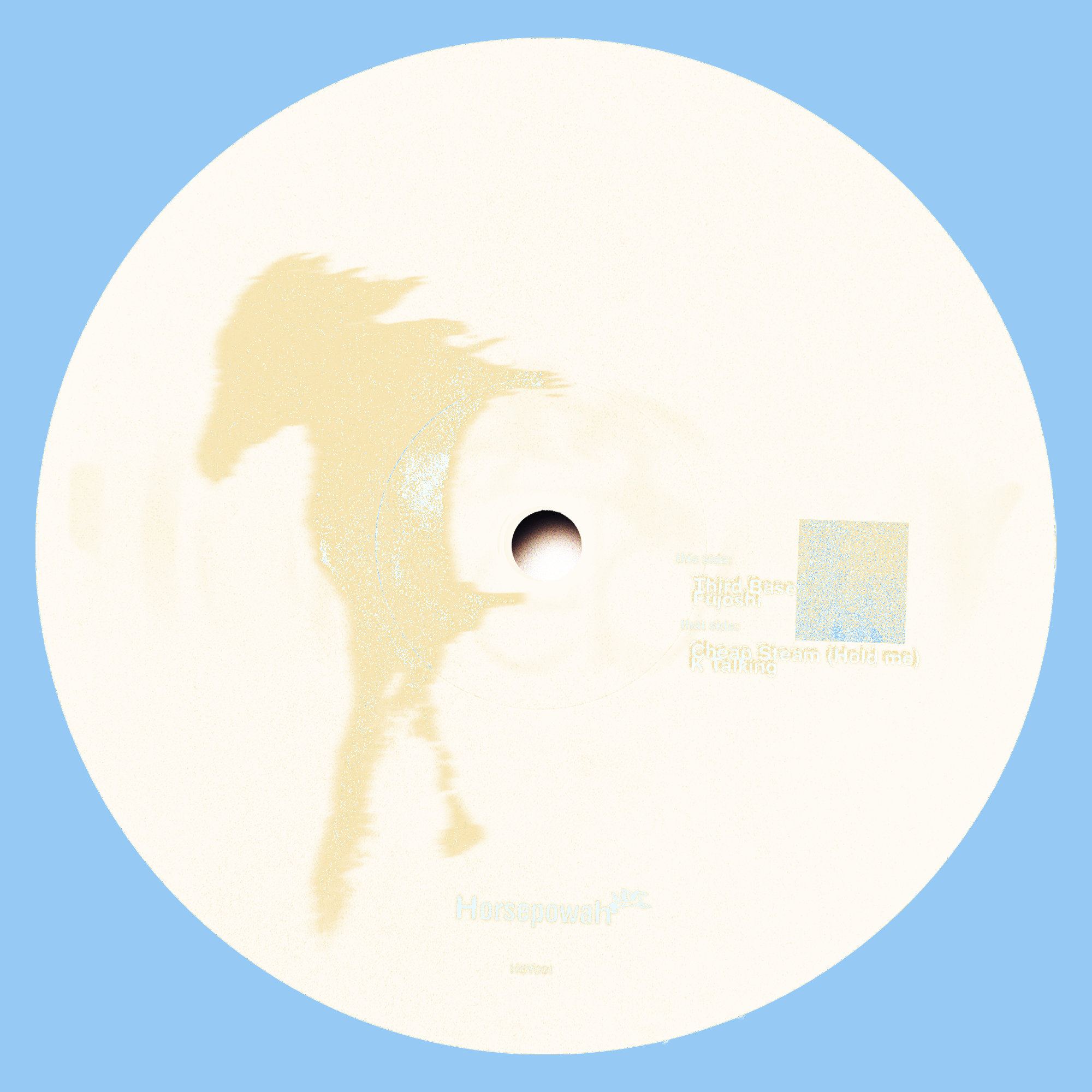
    The debut gains its charged but unhurried effect by sculpting an atmosphere around tropical warmth, distilling its brightness into a slow, saturated glow. One that finds its perfect counterpart in Gal Costa’s voice, floating through the air like a light breeze, curling into the cadence of ’90s house and techno, all the while stepping into the laid-back quality of the beach. Look on to tracks like “Cheap Steam (Hold Me)”, one of the lengthier songs in the EP, which glides at a gradual pace, but is easy to sink into. A similar feature that is just as prominent in “Third Base”, a track you can get lost in while not getting too carried away. All of which embody the constant, but fluctuating patterns of the rest of the EP’s trajectory. Although one could find themselves craving for sharper edges, these subtleties are also what happens to make each track so immersive, always making sure to keep the listener at arm’s length. In fact, when interviewed by Jacob Mendoza for Mixmag Asia, Horseboyy himself stated that he wanted to “slow it down a bit.” A statement that leads one to believe that all along, this was the goal. And in that sense, Horsepowah succeeds almost effortlessly, not in overwhelming you with volume or density, but allowing for time to be taken at every step of the way.

    Out of this comes an EP that feels free-flowing yet intentional, balancing spontaneity with precision in a way that invites engagement without losing direction, drawing you deeper into its world until you’re no longer just listening, but breathing in its essence; a state of momentum you end up taking with you beyond the dancefloor.


    Support the art & the artist:

  • MIXTAPE REVIEW: orteus – surgery

    MIXTAPE REVIEW: orteus – surgery

    Written by Anika Maculangan

    As digicore begins to rise above its niche alcove with more artists like quinn, ericdoa, and blackwinterwells are starting to take on the genre. In surgery, orteus rides on the wave of Silent Hill’s aesthetic of liminal decay, implementing grunge tonalities that complement those glitchy overtones, we so often hear in hyperpop. While the thematic elements are depressing, dark, and bleak, fast-paced drum loops and maximalist synth lines counteract the gloominess that is rather highlighted, creating reactions that are antithetical to one another, but somehow complementary. Jam-packed with strong distortion and vocaloid, it’s almost eerie and unsettling to hear such distressing lyrics accompanied by such sweet instrumentals. But isn’t that the point of ‘eyestraincore’? Be vastly chaotic? Much like the internet, these facets are deliberately made to be in opposition to one another in hopes of creating that purposeful clash.

    With atmospheric qualities that are in reference to medical diction, layers of deep bass and snappy percussion, these elements amplify the depth, which allude to such concepts of artificiality and post-dystopia. In surgery, orteus collaborates with other artists, who mostly become evident in the treatment of vocals — some scaling from high-pitched, to more ‘soundcloud rap’ adjacent. This range among the tracks orchestrates a sense of diversity, which ensures that the flow doesn’t remain too monotonous to the standard rhythmic chops of 808s and pixelated effectors.

    Looking at songs like “you can’t just wait to be in a coma”, which have words that start to mish-mash into one another, the auditory mayhem is most recognizable, practically wreaking havoc on our ears, but in a fashion that’s considerably inspired and expressive. Incorporating these exaggerated motifs, while including such features as pronounced auto-tune and emphasis on trap-like inflections, the EP fits in well with the rest of the genre’s offerings.

    It isn’t inherently anything new or fresh, for its recycling of overused processes and manipulations within digicore, but it does take after the movement successfully, and guarantees that it treats it with respect. However, it goes without saying that the EP is more reflective of nightcore and crunkcore, especially since it focuses so much on steampunk-derived sensibilities. But one can wish that digicore projects may eventually try to be more daring in their progression as they evolve, since the whole point is to essentially employ a new approach to pop music. What bold nature would there be if we stick to the same accents? orteus could make do with further amplifying their usage of certain characteristics like the sharpening of reverb or application of intentional static in specific breaks. These are all modes of execution that, if better utilized, could make their sound more sonically creative.

    However, orteus was able to demonstrate a slight edge to her music: the abrupt pauses in between the tracklist. These random bouts of open air instigate a pause that leaves the listener cautious of when the next abrasive but dreamy beat may drop.

    Going through the album, the listener is constantly presented with an extensive span of oscillations. Although with a new digicore artist, there is always more potential and possibility for inventive patterns that either modify or disrupt the pre-existing.


    Support the art and the artist:

  • ALBUM REVIEW: Pette Shabu – SPRAK

    ALBUM REVIEW: Pette Shabu – SPRAK

    Written by Jax Figarola

    The word “sprak” means rage, and rage, after all, is and can be feminine. For centuries, masculinity has been associated with strong emotions like anger and aggression, but realizing that women are always subjected to restrictions and objectifications and all the other painful suffering a woman must endure, then rage is exactly feminine.

    Pette Shabu’s SPRAK is experimental, transgressive, and confrontational. She wears the beats of industrial hip hop and electronic sounds of techno, metal, hard dance, and then struts, rampages, and jerks us off unapologetically into her frenzied world. The trans goddess asserts herself in the world that her art stems from navigating a violently gendered world, all of which are etched into every synth, every guttural scream, and every angst-laden bar born from personal struggles as a queer woman.

    With Pette’s lyricism and wordplay cutting sharply reminiscent of FlipTop rap battles and her sound similar to Death Grips, every track demands attention to the lyrics. Naturally, what makes SPRAK so electrifying is her unrelenting commitment to confront the uncomfortable, the violence – the local political landscape, genocidal world leaders, misogyny, and patriarchy. With beats from known local producers in the scene like T33G33, Horseboyy, and Dwaviee, the intense lyrics create an even more abrasive and harsher sounds that seem aggressive to the ears. Yet, listening to her rap over the beats feels like consuming a familiar unknown ulam. You eat them anyway because suddenly you are interested in figuring out that ulam, only to find out that it’s a one of a kind food only available at a specific time and place. No one does it like her. The quick repetitive beats become listenable only because she proves that she’s the only artist capable of rapping on them. But all of this also means that not everyone wants to eat her food, as one’s first listen to Pette Shabu may be surprised with how unorthodox her art is, especially for the wider audience in the Philippines.

    Nevertheless, her instructions are clear: to cleanse the world of ugliness. She reclaims “pangit” and “ugly,” not as descriptors of physical appearance, but as metaphors for the different faces of her oppression. She rebukes these ugliness with extreme rage, especially after being used to describe her art by those who don’t understand her.

    The tracks build toward the techno track POKPOK for its climax, a personal favorite, as she spits bars that are both irreverent and deeply personal, reclaiming slurs and shoving them in the faces of those who weaponize them. Beneath the pounding bass and metallic overtones, there’s a catharsis in embodying her anger and emotions with the act of active listening to her rhymes and wordplay. And then, the momentum carries into XDEAL O BARIL and NATURAL HIGH, both techno-heavy songs that sound as though the world is teetering on the edge of collapse. The beats in these closing tracks become euphoric acts of reclaiming and manifesting, which perfectly captures the album’s push and pull between destruction and rebirth. These outro feel like a mirror to SPRAK’s broader themes of queer resistance.

    Therefore, it ends as violently as it begins. Pette’s art is not for passive listening, as she demands and commands us to witness her narratives of structural violence through her lens. In the chaos, there’s catharsis. In the rage, there’s declaration. And in the rawness, there’s power. The goddess rebirths the world and ascends above it, now she’s untouchable and incomparable. But then again, with such gospel from her, it’s guaranteed to have heathens who would not challenge the self to listen through the queer, chaotic sounds that she’s been through. It’s all because she’s the highest, and there’s no else like her in the Philippines. It’s because she’s Pette fucking Shabu.


    Support the art & the artist: