Category: TFL Columns

  • SABAW SESSIONS: Michael Seyer

    SABAW SESSIONS: Michael Seyer

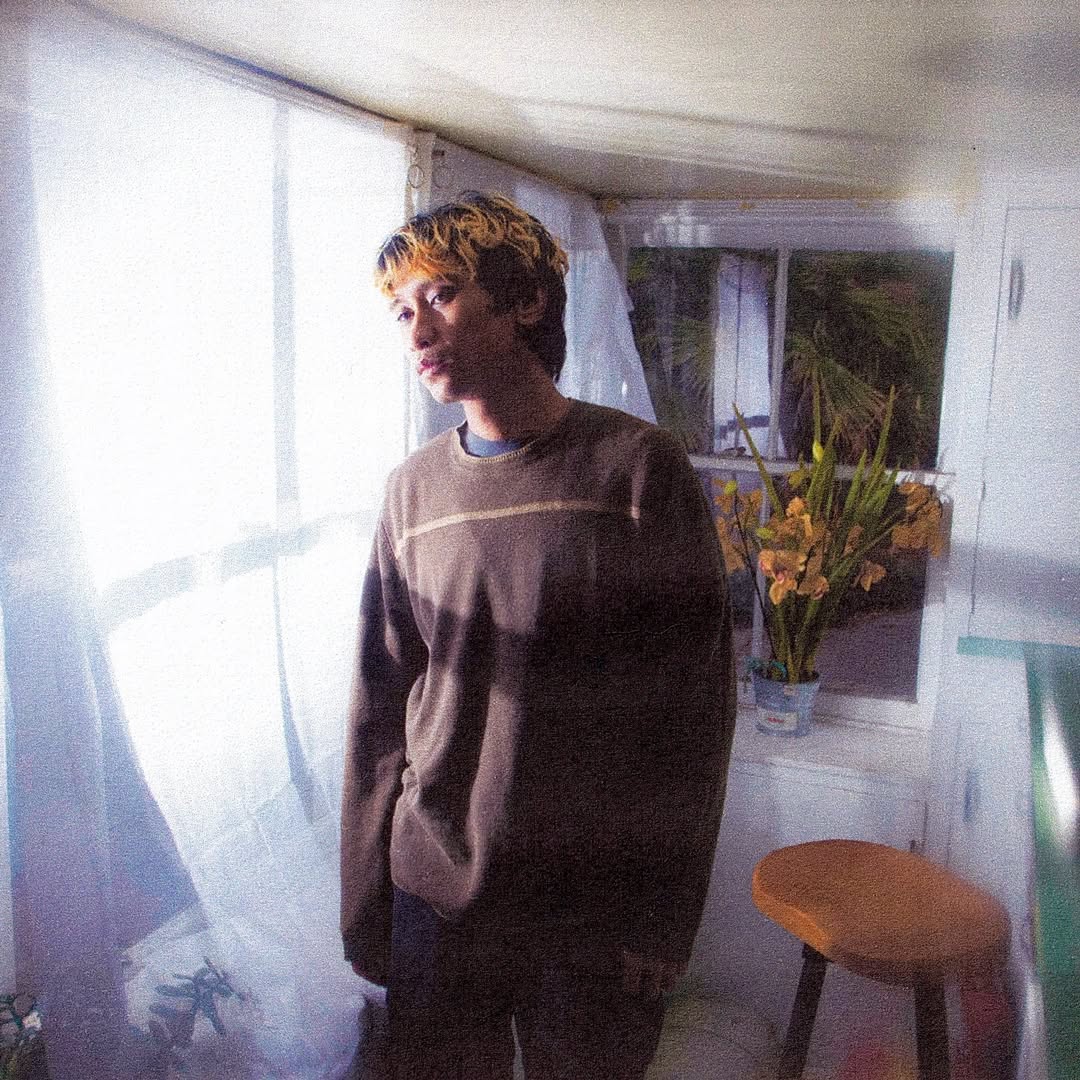
    Michael Seyer, Do You Have What It Takes To Be A Man?

    Interview by Faye Allego

    Music has been a diary for songwriters for centuries, and Michael Seyer is no different. But how does a man write his legacy?

    Memory is ever-changing and sometimes fails to hold still. However, when used in music, we can preserve them forever. In his latest release, Michael Seyer introduces an amalgamation of his memories and experiences on boyhood vs manhood, family, love, and ghosts in Boylife. For nearly a decade, Seyer’s rise from the bedroom music scene has been unhurried and steadily paced – his distinct lo-fi, jazz-tinged dreampop and vintage soul sound originated from his 2016 debut album, Ugly Boy, and is further intensified in 2018’s Bad Bonez. Seyer’s diaristic lyricism, as well as sentimental textures of Japanese city pop and the reminiscent glow of early OPM influences in his 2021 album Nostalgia and throughout his discography, he never strays away from an inward gaze of his identity and perception of love. Talking to Michael Seyer from one bedroom to another at different sides of the Earth felt like catching up with an old mentor from high school, you really learn the essence of ‘dudes just being dudes’ who are really in tune with their passion. During the interview,  he mentions that music is all he really knows, and it was said in the same way that Alex G thinks he’s a very boring person, from the receiving end of things, it’s honestly far from the truth. 

    **This interview was conducted in June 2025 and has been edited for clarity and brevity.

    FA: Do you know what Lugaw is?

    Seyer: That sounds familiar. You know what? I love the Philippines. I was born there, but I left when I was three or four. So yeah, I just, I didn’t do my very best to keep the good look in my mind. 

    FA: So, Lugaw is Porridge. Where in the Philippines were you born?

    Seyer: I was born in Manila. 

    FA: Is nostalgia a recurring theme in your work? What role does memory play in how you write music or understand yourself? 

    Seyer: I write about memory for sure, but it’s not the most overtly “themed”. It’s more in the sense that I write [about] my experiences. So, in that kind of really far stretch of my experiences, are my memories. Mostly, I’m writing about me looking back at certain things, how I am now, you know? Memory drives the music. I tend to write songs or do things in a way where it’s the music that I have found the most fond in my memory; I try to make my music sound in that way, that whole nostalgia EP, I was really into a lot of the Japanese city pop and even a lot of OPM music. I have always been listening to that kind of stuff. Even as a kid, I remember listening to it. I would take things from music that have really affected me in the past and then use that as a jumping-off point. I guess for this recent album, I was writing… a good amount. One of the songs on the new album, “1995”, that’s the year I was born, [and] I wrote that song specifically about the Philippines. The way I remember the Philippines is not– I don’t have a very concrete memory of it. I left when I [was] really young, and I came to America. So, a lot of the stuff that I do remember from the Philippines is really just abstract, senses, taste, and maybe the few images that I do remember, they almost feel like an old film reel that’s [a] really colorful and nothing is really graspable. It’s really ethereal. I was trying to write a song about the Philippines with my very limited memory and my really abstract memory about it. So those are a few ways, I guess, nostalgia or memory comes into play. 

    FA: Are there any Filipino artists that are from the past or present that you’re curious about, in terms of musical influence, and your new record label, Seyerland?

    Seyer: Yeah, that’s a tough thing, right? We’re in a kind of an interesting situation with Filipino visibility, right? There aren’t many artists to really pick from, especially in my lane of music [in the West]. We have that Filipino Pride…Once anyone’s a fucking drop of Filipino, we claim it. That being said, there’s nothing there’s not much range that I could pick from. Obviously, I love all kinds of music. So I am always listening to everything, especially with OPM, Hotdog, and Bong Peñera. My parents would always play Parokya Ni Edgar, Eraserheads. Yeah, it’s… A lot of old stuff. I would love to find some artists that are more contemporary in that lane, and we don’t have that many options to pick from. So I’m just always trying to find new music. and I definitely want to encourage Filipino artists to carve out a lane for themselves, and I want to discover more artists who are Filipino [and are inclined to make] great music. Because we’re a fucking–we’re a musical culture. Nine out of ten of us can kill it in karaoke and belt out of nowhere. 

    FA: You released your new album under your new independent label, Seyerland. Are there any lessons and niches you have gained in the behind-the-scenes process of starting your own DIY label? 

    Seyer: Well, you know what? I am only a month into it. I’m not sure if I have any lessons to give anyone, but [a] part of the reason why I want to do this is because I’ve been doing [music] for a really long time– almost 10 years now, and through that process of being forged to release on my own [music], because I haven’t really had any connections. I was just someone who threw a project on the internet and then fell into this. I saw maybe a few people appreciate it, and then at the same time, this is what I love doing. I don’t have any skills besides making music. Since I’ve been doing it independently, I at least would really love to step in and give back to locally based smaller musicians and maybe equip them with small tools that help them slowly build a sustainable career that is pretty self-sufficient because I’ve atleast been able to do that, in some way, it might be relatively modest compared to what other artists have put out for themselves, but I can feel confident to say that I’ve done it myself and I own my own music, I hold no allegiance to a record label or any industry thing. And it is hard as fuck, but I think it’s worth it. In my formative years, I’ve met a lot of super impactful artists, who were cut from that same cloth, where they were like “Oh, we’re doing it ourselves, this is how you do it!” And I [am] definitely taking a page from their book in some ways. I’d love to do that for another artist.


    I think you should you should always let yourself be. Especially with being an artist or not even being an artist, but being a person, being a human. I don’t think there is a means to an end to justify humanity. I think it’s a means in itself, just by virtue of experience; there is no end goal to experience or humanity. It’s simply to be.


    FA: Boylife is an album that doesn’t insist on resolving the chaos of boyhood, but instead, embraces it. What did boyhood or “manlife” mean to you while making this album? 

    Seyer: When I wrote the first few songs for Boylife, I remember, I think one of the first ones I wrote was “Boylife”, and it had that little chorus around just saying “Boy Life” over and over again. I love that word. I don’t know why. I think it’s really random, but one of my favorite words is “boy” for some reason. I don’t know, it resonates with me, Ugly Boy. Boylife. And then I wrote that song. Usually, at least for my experience, the album process is you write the first few songs and then some of the first few songs inform the sound and the theme, and then from there, it just comes into fruition by itself. [Then,] you start to write about generally the same stuff. So I wrote the “Boylife” song, and I guess I was in a mood where I was writing a lot of stuff that was pretty related to how I see myself from a formative perspective, coming into a much older person. I just turned 30,  so it was a big one, and I’ve been doing this for a really long time, so that was on my mind. So I just continued to write about themes of youth and growing up and maturation, which is always a present [theme] in my work. There’s always that recurring theme that an artist always writes about– I’m always interested in writing about how someone’s experiences also informed who they’ve become, really.

    FA: Do you ever feel pressure to define who you are as an artist, or do you allow yourself to remain in that space between becoming and just being? 

    Seyer: Very ethereal question, huh? There’s always pressure for an artist to kind of prove themselves to other people or whatever it is, even not at a non-artist level, we always have something to prove, right? Whether it’s in a workspace or a social dynamic or an existential way, I think just us as human beings, we’re always inherently thinking about our place in the world, and it gets even worse when you’re an artist. Because sometimes your artistry is really just intimately connected with what you think and your purposes. Obviously, that’s the case for a lot of things, but I have learned that that’s not necessarily the best thing. I think you should you should always let yourself be. Especially with being an artist or not even being an artist, but being a person, being a human. I don’t think there is a means to an end to justify humanity. I think it’s a means in itself, just by virtue of experience; there is no end goal to experience or humanity. It’s simply to be. I think we should live our life that way, and it might help us be a little more radically present if we kind of approach it that way. 

    FA: That’s some George Harrison ass answer, dude. I love that. 

    Seyer: Yeah, I don’t know, man. I mean, I was, yeah. It’s my college. It’s my college fucking background. It’s fucking critical thinking and shit,

    FA: What did you major in? 

    Seyer: Creative writing. 

    FA: That’s so cool. 

    Seyer: I guess, well, I’m not doing shit with it. […] but, yeah, I fucking love college, to be honest. It’s like, you get to meet just the most random fucking people who are just the biggest weirdos! You meet people and you’re like, “dude, what the heck? Why are you this way?” I don’t know. [Laughs] Yeah, and you start to love whatever the hell is wrong with people. It’s great. 


    Whenever I go into a church, there’s always this sick ass fucking piano and a sick ass organ, and then the ceilings are so high that there’s natural reverb and acoustics that are really good. Even though I don’t believe in religion, I love the overall atmosphere. I think that is the same thing with ghosts. I don’t believe in it, but I love the idea of it. 


    FA: When you’re trying to translate something so internal into sound, melodies, chords, and rhythms, you mentioned earlier that there is that pressure to it. So, when you’re an artist, that pressure seems to amplify ten times more because it’s also essentially displaying your work in front of people to listen to and see. So, how does your songwriting process look?

    Seyer: It’s different every time, really. Sometimes I start on the guitar, sometimes I start on the piano, sometimes I have a phrase or there’s something I want [just] to write about. It really differs so greatly between songs that I really could not tell you one definitive answer. I think it always starts with making the time to do the “thing”, right? So, yeah, I’m pretty good at that. I mean, I was better when I was younger, for sure. Now I’m just like, you get old and you have baggage. But I think, generally, I’ve been pretty good with– no matter what it is–taking the time to allow yourself [to create] a time frame to put yourself in front of whatever it is– the computer, the guitar, the piano, just to do your due diligence and let the thing come out, I guess. 

    FA: Yeah, practice makes perfect or intense lore! You mentioned a while ago that “boy” is your favorite word and that it’s just something that kind of reappears in your head. I also noticed that one of the people in your comment section on Instagram commented that in your other songs, you use the word “ghost” a lot. Is that on purpose?

    Seyer:  I mean, I guess it’s on purpose, but it’s not intentional. There’s just some things we gravitate towards, I think most artists have these revisited themes that they go through. And I don’t know. I just, I really love the fucking imagery of a ghost and what it means just on a symbolic level. Or just the iconography of ghosts throughout. Yeah. Just fucking various cultures and shit. It’s just such a potent word. 

    FA: Do you have any ghost stories that you might want to share? 

    Seyer: No, actually, I don’t really believe in ghosts. I’m explaining this in a roundabout way, but I grew up Catholic– I don’t want to gravitate towards religion at all. Even when I was young, being brought to mass, I was a six-year-old and already thinking, “this is so fucking boring, I don’t want to be here.” When I entered the church, the air felt heavier. But I love going into churches now as an adult because even though I don’t really believe in Catholicism or Christianity, the iconography of churches, the stained glass windows, and the murals of Jesus on the cross, and the wooden pews. Yeah. All of it, there’s this atmosphere that [now] feels really great. Even being a musician, whenever I go into a church, there’s always this sick ass fucking piano and a sick ass organ, and then the ceilings are so high that there’s natural reverb and acoustics that are really good. Even though I don’t believe in religion, I love the overall atmosphere. I think that is the same thing with ghosts. I don’t believe in it, but I love the idea of it. 


    Music has always been just this overarching theme of my life that I will always have unconditional love for, but especially in making different albums, I have to constantly remind myself why I fell in love with this. And I think we can do that with a lot of things. And I think it’s a thing to remind yourself that’s worthwhile of why you love these things. 


    FA: It’s a very Filipino phenomenon to grow up practicing Catholicism. It’s also a very Filipino trait to be family-oriented, and this applies to the family dynamics, too. This is reflected in your discography in songs such as “Father”, “Chemotherapy”, “For Mother”, and even your cover of “Raindrops  Keep Fallin’ On My Head”, which was uploaded onto your YouTube Channel. What keeps you grounded with your culture, and how do you think that reflects in your music? 

    Seyer: Yeah, I mean, yeah, [cultural influences are reflected] in my music because I’ve obviously written songs about my family. I think it’s always been positive. I’m one of the lucky ones. I know there’s a lot of chaos and sadness in the world, where sometimes you don’t get the privilege to say that I have this really great relationship with my family. I really feel for that because I think anyone who is [alive and] living has someone close to them; friends, partners, whatever it is, and they see that come into play very vividly. I don’t take it for granted because I had a really great childhood, and my parents were the best. They loved me. Whenever there was something that I needed, they provided, they worked hard, and I’m truly indebted to them for making me the person that I am. They always encourage me with music, even though they were not really encouraging. They were half and half, where they said, “Okay, that’s cool, do this thing you like, but also go to school.” I think that’s reflected because most of my songs are extremely positive, and they made it pretty easy for me to feel really close to them because they were awesome parents. My parents were always very encouraging, and they made it really easy for me to be vulnerable. Obviously, I can be better. There’s always something. There’s always a next threshold to aim for. And I guess music is the way that I do it.

    FA: What has writing boy life taught you about love, not just romantic love, but familial or self or even artistic love?

    Seyer: I think even on all levels–whether it’s artistic love or loving another person or a general, platonic idea of love. And this is just speaking for me, everyone has their own philosophy that they could abide to. But I truly think love is active. I think love for anything, whether it’s in someone or an art, I think it is effort. You have to put in effort. You have to put in the time to nurture that love. Obviously, on some level, there is that unconditional love that is just working as a passive mechanism. But I think that only is nurtured when you put yourself in front of it and show up for it and are actively, radically present with giving that love some weight, you know? So, yeah, a lot of the time, making an album for me is trying to remind myself why I love music. Again, you make the thing, and then you fuck off. You go do the other stuff and experience whatever, and then you kind of at some point are, “Oh, I gotta do it again.” And it’s always this process that’s maybe, at least for me, somewhat grueling. And then you have to slowly remind yourself, “Why do I love doing this?” And then you get to this moment where you write a song, and then you go “Oh, I LOVE this, I’m kind of getting high off of this. ” Then you’re making more songs that build off those songs, and then you’re reminded again why you fell in love with this in the first place. So that music has always been just this overarching theme of my life that I will always have unconditional love for, but especially in making different albums, I have to constantly remind myself why I fell in love with this. And I think we can do that with a lot of things. And I think it’s a thing to remind yourself that’s worthwhile of why you love these things. 


    Where we are at, it’s much harder, especially with a lot of the venues– if you compare how many venues there are now to back then that are operating on a DIY level, we’re [now] living in a post-Live Nation post-Spotify realm.


    FA: How do you decipher which mediums to publish your art in? 

    Seyer: That kind of [medium] asks you to do it a certain way, to be honest. If there’s a song that I write, you can write it in, but I think at some point in making the song, there’s going to be some point where the song is asking you to do it a certain way, right? So I think that’s what dictates what medium or  at what certain process the thing needs to be made; I remember there are a few songs that I have in my catalog that were poems, […]I would just write it and I’d think: “This is kind of sucks as a poem”, and I remember taking the poem and just based off of the lyrics and put it onto a song instead. It at least felt to me a little more natural in that place. I think sometimes you can kind of tell, especially if you’re getting a little comfortable with creating art, whether or not something necessarily works in that medium. I guess I just try to trust that intuition of “Maybe it needs this certain thing and it’s not necessarily thriving in this kind of lens, so let’s put it on! If you want to put it on, you can just trash it if you want,” but yeah, I’ve done that quite a bit where it [would start as] poems and then it’s not working out and then I put it in songs or vice versa. So, yeah, just trust it, you’re good.

    FA: You once mentioned in an interview that you started making music in your mom’s garage in California. Did you dive into different underground scenes there? How do you compare that to touring? 

    Seyer: It’s interesting because I kind of grew up in a DIY scene, but I wasn’t as invested as other folks. I [gained] a little taste from DIY scenes, and then I put out my first project, and then from there, it was mostly focused on the internet DIY scenes. But, yeah, just being around music as much as I can, I’ve had the liberty to be in a lot of places and experience other people’s social bubbles. I like so many different ranges. And it’s really cool to see that little bubble and how those people operate in some way. I’d love to just experience that again. In this day and age, there’s not a lot of support, I would say. That sucks to say, right? And maybe I’m not tapped in that way because I’m sure there’s always going to be an underground DIY thing that’s operating. But I feel like, as of right now, where we are at, it’s much harder, especially with a lot of the venues– if you compare how many venues there are now to back then that are operating on a DIY level, we’re [now] living in a post-Live Nation post-Spotify realm. And also, things are just astronomically so much more expensive compared to [DIY]. Even just the idea of touring is not conducive unless you have a lot of I don’t know, support capital or whatever you want to fucking call it. So yeah, I’d love to see [the DIY scene] encouraged a bit more. It’s hard as fuck right now because we’re living in the late-stage capitalist time frame. I’d love to see the scene more encouraged because when you do see it, when you see a self-sufficient underground DIY scene, it’s really special. 

    FA: What made you want to work with Justin Quinell for the cover art of Boylife? 

    Seyer: Even before I started making the album, that [image art later used for Boylife] was one of my favorite photo images; there’s something intimate about it, but also really unsettling. It’s almost like it’s something intimate and not intimate at the same time because of how surreal it looks. That image deeply resonated with me. I was almost keeping that image in my head while I was writing these songs: what would the soundtrack to this image sound like? It was a really big help on trying to trying to craft the general sound for the album. Because I always go a little differently every album! We were entering to a more acoustic-oriented folk territory. But yeah, I really love that image, and he’s one of my favorite artists in photography. I remember when I finished the album, I was pretty head set on having that image in there because it felt so formative to what the music was sounding like. I reached out to him, and I guess he was a fan of my work too. I was really happy that he resonated with my music, and I resonated with his photography, and there was a good mutual exchange between artists that are just fucking liking each other’s work. He’s a super cool guy. 

    FA: Do you still resonate with your lyrics from your previous albums?

    Seyer: I like to page through this artist that I really love. A lot of [Boylife] is influenced in certain ways by him. I love Cody Chestnut, and he put out this album called “Boy Life in America”. Or actually, no, that’s the first track in the album. Cody Chesnut put out the album called The Headphone Masterpiece. I remember watching this interview because I love that album, and he was just talking about whenever he listens to it and when he was making it, he just heard a young man who feels that felt lost and is trying to find their place in the world. In a lot of ways, that’s how I feel when I listen back to Ugly Boy. I hear a lost young man trying to just figure himself out. I guess in that journey created some music that maybe resonated with some other folks who felt the same way. In a lot of ways, I guess this new album was a love letter to that of my first album. It’s revisiting that theme of feeling lost, but now that I’m older, I ask myself what other insights can I gain from that same sentiment? because things are really different. But very similar at the same time. 

    FA: That feeling of being lost is so evident at the end of the 6th track, “Manlife”, I’m sure that’s the interlude portion of the album, and there’s a voice call at the very end that’s, I believe, from your dad. It points out the redefining moment of reassuring yourself that you’re okay, and it’s okay to be lost. When there’s so much rubble and noise around you, there’s that one familiar voice that makes you think, “Oh, okay, I’m safe.”

    Seyer: Oh, for sure, because, you know, I think that’s such a fucking, it’s such a loaded question to unpack of what it means to be a man, you know? But at least from my experience, when I try to think about what a man is, there’s very superficial answers to that; a man could be someone who has power. A man could be someone who makes a lot of money. A man could be someone who gets chicks or whatever, I don’t know. And that’s not any of the things that informed what manhood [truly] is. I’ve had to learn that the hard way, being a young, misguided boy who struggled with masculinity and misinforming themselves of, “maybe if I get this,” or “if I do this, it will make me more of a man,” even though that’s not really how I am inside. I’ve had to learn that, and I think most kids had to grow up and realize, and mature. When I think of what a man is, I think of my dad, because he’s just kind. He’s in touch with his feelings. He’s always been really mindful of others. I guess that’s what I was trying to do with the “Manlife” interlude. I see [my dad] as the epitome of manhood in some ways. Hearing that voice at the end is the most grounding thing when you think about such a heavy question that just bounces around in your head.

    FA: You mention on your Instagram story that John Lennon’s solo work, particularly the album Plastic Ono Band, heavily inspires Boylife and the rest of your discography. Is John Lennon your favorite Beatle? 

    Seyer: You know what? I feel on paper, it should be Paul McCartney. I like more Paul songs. But for some reason, just John is the GOAT. That’s all I gotta say. He has that thing in him when he makes a song that just feels really good. Something that an artist would make, right? So, yeah, I think technically, maybe Paul, but I love–really intensely– a lot of John Lennon songs. 

  • SOUNDS OF THE SEA: jorud (Singapore)

    SOUNDS OF THE SEA: jorud (Singapore)

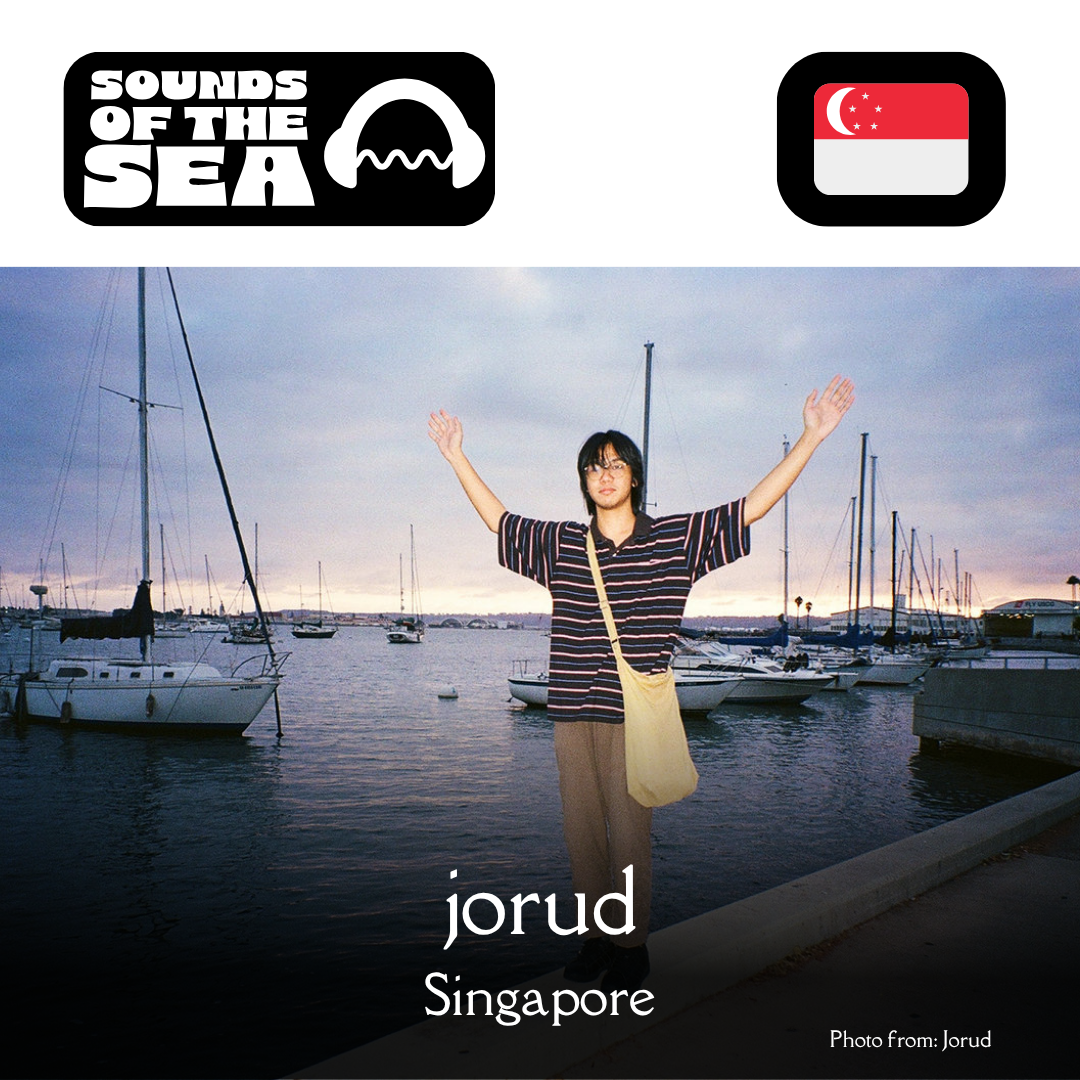
    Singaporean musician Jared Lim has been playing a significant role in various mainstay acts over the past couple of years, whether in his local country or elsewhere. Being the guitarist and producer of bands like Sobs and Subsonic Eye, as well as providing production assistance for Blush and The Purest Blue are just some of those notable credits. His ear for production sticks in your ear once you hear it: blissful synth chops, colorful instrumental mixes, and crisp vocal emphasis. A balancing act of sharp melodies and sparkling textures that are never put out of scale. An ability that only comes from very skilled producers who know how to leverage the mix without disruption. 

    At some point, if he can help produce these songs for these bands, certainly, he can write songs for himself, too. Soon enough, that is what he just did. Donning the solo project Jorud, he pulled together his debut album, aptly titled ‘The Song’. This is Jared Lim expressing the colors that he has brushed over before, now splattered on a sonic canvas that is his own. Whether that be the saturated 80s ambiance on “Am”, speedy waves of breakbeats on “Harm”, chilled out dance beats on “Wannastop”, or the chiptune accents across surfing guitars on “Have It”. He has these soundscapes all layered out.

    Of course, it is not just him who gets the play around in these songs. Pauline Rana of The Purest Blue, Cayenne of Sobs, and elo elo provide contributing vocals in most of the album, filling the prismatic space with their friendly presence. Creating this slice-of-life feel where wholesome connections create more smiles along the way—shining the brightest on the title track’s sunny indie pop, “Friend” with its coat of shimmery hyperpop, and the raving, glitchy EDM of “Wideview”.

    The word “joyous” is the best way to describe what Jorud has put together with his debut album. A brisk walk in the park is remembered most due to the unabashed display of melodies and textures that are overall jubilant and vivid. These might be just a collection of songs, but once you hear them, you can’t help but turn your frowny days into smiley days.

    *The interview is edited with brevity and clarity:

    LP: When I hear your artist name, Jorud, I imagine someone who’s chill and lively. What was circulating in your head when you were figuring out the identity of your solo project?

    Lim: Actually, this project is kind of the first real music project I ever did when I was 15. I picked a stupid name that I don’t want to change, because I have all the URLs on Bandcamp and SoundCloud or whatever. It started when I was 15, [I was] learning how to use Ableton, and [was] just putting out stuff that I made on SoundCloud. Yeah, [there’s] not much thought to it, but I guess now, it’s been 10 years. So, I just felt like, “Uh, I should kind of do this properly.” See how it feels like to make an album and put it out properly and promote it and stuff like that. Yeah.

    LP: You mentioned that you were using Ableton at the age of 15. What invited you to do production work during those times?

    Lim: Before I started making my own stuff, I was making chiptune covers of songs. I’ll put them on YouTube. I did a few like CHRVCHES [covers], you know the band CHRVCHES?

    LP: Yes!

    Lim: Yeah, I did a few chiptune remixes of their songs, and they posted one of them on their Facebook. I was like 14, I was freaking out. Yeah, that’s kind of how it started. I was just making covers for fun, and then it led to making my own stuff.

    LP: How long have you been conceptualizing and working on your debut project?

    Lim: Some of the songs on it actually started quite a while ago, maybe like a year or two ago. But I didn’t properly think I was making something until, I think, it was December last year. I had the idea to send this instrumental track that I made three years ago to Pauline from [The Purest Blue]. I had that instrumental on my laptop for a few years and didn’t really know what to do with it until I had a sudden spark of inspiration. I decided to send it to her because I thought she would do something cool, and she did. That was December last year, and then from then on, I spent maybe three months combing through old ideas and making new stuff, and I just turned it into an album.

    LP: Speaking about those collaborations with Cayenne, Pauline, and Elo Elo. Did you have them in mind while creating the album, or were they a last-minute afterthought?

    Lim: [It’s] kind of a bit of both because, honestly, this whole album was like a last-minute afterthought. I made everything really quickly, but I always had those specific vocalists in mind for each song. The song with Elo Elo that actually just came out today [July 10, 2025], [it] originally was a remix I did for fun for this band that I’m working with. And that was more than a year ago. But I liked it too much that I wanted to keep it for myself. And Hui Jun (Elo Elo) heard that remix quite a while ago, and she said she liked it. So when I started working on the album, I was like, “Oh I should reuse that and I’m gonna ask her to sing on it”, and she did.

    LP: You said that, for three months, you tried to quickly comb through your ideas for this album. During that process, were you inclined to listen to music a lot, or did you just completely lock in on what you had in mind and never listen to anything that might disrupt those ideas?

    Lim: I feel like, generally, just in everyday life, I don’t listen to that much music. For me, my music listening pretty much only happens on a commute. So if I’m not going out [or] if I’m just at home. I’m watching YouTube videos, or working on my own stuff, and listening to my own music, I guess. I don’t really think there was a difference in that time period. I was definitely listening to some things that were inspiring me for specific tracks. But I think in general, when I’m working on something, I’m pretty locked in. I tend to just listen to [what] I’m working on, and when I’m about to go to bed, I export the files, send them to my phone, and listen to it while I’m falling asleep. If I have ideas, I’ll wake back up and work on it again. So yeah, I guess your description was kind of accurate.

    LP: Speaking about some of those inspirations, there’s an array of sounds that you’re doing on this debut album. What were some of those sounds that you’re trying to emulate and explore?

    Lim: [For] the tracks on the album, there’s 50% guitar indie rock stuff, and then 50% is just like straight-up electronic. I pull from the same inspirations that I have been thinking about with my other projects and stuff. Alvvays, Ivy, AG Cook, of course. This band from France called Tape Worms. Big inspiration. And especially for the guitar songs, I’m also always thinking about my friends’ work and bands like Curb, Carpet Golf, and Subsonic Eye. Seeing what my friends are doing and the kind of instrumentation and things like that. It’s always inspiring to me. 

    LP: Because you mentioned there’s a lot of music that is 50% guitar and 50% electronic. There’s this observation I have with Rock artists toying with electronica as of recently. Is that the current case for you? Or have you always been embracing rock and electronica for quite some time?

    Lim: With my solo stuff, I’ve always tried to make not really like electronic music but electronic music with guitars. That’s always what I’ve been trying to do with my solo stuff, not so much with my other projects, but I feel like with Sobs we’ve lately been trying to do that, combining both things because that’s what we enjoy.

    I think it’s also just a circumstance of making stuff by myself at home on my laptop; it’s just easy to make electronic music anywhere on any computer. And the only other tool I have is my guitar and my audio interface, so it kind of made sense to try to do something that feels like both.

    LP: Because you basically have those tools for that kind of music.

    Lim: Yeah.

    LP: How does being in solitude help you out in terms of producing for other acts?

    Lim: I think this is a common thing, but I think I do my best work when I’m alone on my headphones with no one around me to hear it hahaha. That’s how I usually mix and arrange for any project I’m in. With Sobs, it’s really just us by ourselves at home working on our individual parts over the internet, so I’m just very used to that workflow. [It] doesn’t help that I get super anxious and second-guess any of my creative decisions when other people are around – I think all this might hinder rather than help me, but it’s worked out so far.

    LP: Whenever you play around with your instruments and software, how do you decipher which songs belong to you or to other projects?

    Lim: Actually, the title track the one that pauline sings on, I made that track just the instrumental three years ago, thinking that it would be a Sobs song just because at the time it has that same idea of guitar pop, this is what we want to do but it just sat on everyone’s laptops for a while so it didn’t get worked on, so I just decided [that] I’m taking this, I like it too much. If you’re not going to use it, mine! This is like a strange question for me also, because this is the first time I’m intentionally working on solo music and like making stuff with the intention of putting out under my own name. So it’s new to me too.

    LP: Once you have the time to listen to music, how does the process make you feel or replicate the sounds that you hear?

    Lim: I think there’s always [a] subconscious influence on anything that I do from the music I listen to, but when I’m actively working on it, I try not to think about artists that I like or songs that I like. I’m just sitting down in front of the computer, and I’m making it exactly how I hear it in my head. This is what I want to make right now. There’s definitely influence from everything that I like but when I’m making it, I’m just thinking of how I want it to sound, like how I imagine it in my head. I don’t know if this is a bit cringe, but when I’m working on something right now and I need to go out later, then I’ll listen to the song that I’m working on loop on the way to the thing that I have to go to. 

    LP: What are some emotions that flow immediately to you once you start wearing your producer hat, especially for this album?

    Lim: So, if I’m working on a song for Sobs, I’m thinking about live band arrangements and how we’re gonna play this song live. Trying to make it easily translatable to a live show. I don’t think about that all the time, but it’s in my head. But when I was working on this stuff, I wasn’t making stuff with the intention of anyone else hearing it live or even hearing it in general. I’m just throwing ideas onto the board wherever I can. Literally just whatever idea I have, I’m gonna put it in until it’s a mess. And if I don’t like some stuff, then I’ll take it out. That was the mindset I had going through it.

    LP: Do you have a certain plan on performing these songs in a live setting one day? Or is it the kind of project that you’re just gonna keep to yourself in the studio?

    Lim: Yeah, I think. I mean, I have done DJ sets and things like that. But, yeah, I think the stuff on this album, apart from the really dancey ones that I can just play at the DJ set, I don’t think I’ll ever do any live thing. I’m not saying never, but it’s not something I think about. Honestly, I was almost just gonna put this all out on SoundCloud and call it a day. But something in me decided to promote it for real. Yeah, I wasn’t thinking about playing. I’m freaked out about that, being by myself.

    LP: Unless, Cayenne, Pauline Rana, or Elo Elo are there for the specific songs, right?

    Lim: Yeah, yeah.

    LP: What track from ‘The Song’ album was most satisfying to complete? Which one of those songs is the toughest to finish?

    Lim: I think, Lucky, the eighth track. That song went through quite a long process of the initial demo to where it is now. And I’m really happy with it. Basically, I was working on the title track with Pauline and I was telling her, “I think I’m making an album. I have a bunch of songs.” I sent her a bunch and she really liked this one track that was really unfinished. It was just guitar and drums, and she kind of unprompted, sang stuff for it. And I was like, yes! Her vocals on that song really helped me decide where it needed to go and what it was gonna sound like. When I finished that one, I was like, “Yeah, wow. This rocks.”

    LP: It really does, it really does. But back when forums were still a thing, Singapore also had its own music forum called SOFT. What were some of your core memories with that forum?

    Lim: Uh, it’s actually still around. I don’t know if it’s really active, but people still go on there to sell gear and stuff. My earliest memory of SOFT was helping my dad sell an old bass guitar that he had. I put up the forum post and everything. Took the photos, uploaded them on Photo Bucket, if you remember Photo Bucket. Yeah, that’s my earliest memory of soft.com.sg. It was doing that. I occasionally still look at the classifieds on there. Cause sometimes there’s stuff that people don’t post on Carousel or stuff like that. All of my first bands growing up [met there]. When I was in school, we’d find each other on SOFT. That’s how I met Celine from sobs. Special website. Awesome website.

    LP: Really special one.

    Lim: Old internet.

    LP: Old internet days, yeah. In your experience, now that you’ve been active within the Singaporean music scene, what’s the special thing you hold dear there?

    Lim: I feel like there aren’t that many things that are unique to the specific place that we’re in. But I think it helps that Singapore is so small, and the community of people making music is even smaller than that. So, it’s a lot easier to find the people who make stuff that you align with.

    I feel like I’ve been lucky over the years. Joining Subsonic Eye was kind of the start of my whole thing. Meeting a lot of people. People who make similar music and vibe with the same stuff. That’s what I cherish, people around us who are making cool stuff, and I don’t think that’s unique to Singapore. It just helps that it’s such a small scene in a small country. Right now, I think there are, like, three venues.

    LP: So, it’s really tightly knit, tightly connected to each other.

    Lim: I would say so. Every genre has its group of people. But everyone tends to know each other and hang out at the same places and play shows on the same lineup. That’s what I like about being a musician in Singapore. It’s small, and you can fairly easily find the people who would connect with the things that you do.

    LP: What was it with electronic music in general that has captivated so many artists in Singapore?

    Lim: This may not be true, but I think it’s also because there’s so little physical space. It’s not like you can form a band and practice in your basement or your garage. Everyone lives in tiny apartments, and it’s pretty easy now to go on YouTube and find a tutorial on how to use the FL Studio or something. I think maybe that might have something to do with it. It’s just that, we are cooped up in our homes. I might not be the best person to ask that because I’m not super familiar with the electronic music scene. Like, I don’t DJ a lot, but I know it’s a thriving thing right now. There are a lot of raves and events and stuff going on. I’m not super tapped in, but there’s a lot of cool stuff happening right now. There’s this collective called Scum Boys. They have a bunch of producers making cool stuff. I think, if you have a laptop, if you have a computer, you can make it. You can just figure it out. And that’s the best part of it. Anyone can do it.

    LP: Since this will be the first time that you are releasing your album, what does it say about your identity now that you’re able to have your own voice within the Singaporean music scene?

    Lim: I approached this project in a similar way that I approach any other work I’ve done with mixing and producing other artists, so I’d like to think it just reflects what I’m able to provide to others. But I guess I’m also leaning on my direct instinct with the solo stuff in ways that I can’t usually do when working on other projects.

    I tend not to think about “the scene” when making stuff because really I’m just used to finishing tracks and immediately uploading them on Soundcloud without the intention of like more than 5 people hearing it. It’s been a weird process putting stuff out under my own name and promoting it, doing the whole rollout schtick when I’m usually so averse to it because I like having people hear my stuff, but I’m still so self-conscious about it. I just try not to think about those things, like my place in the community or whatever

    More than anything, I’m glad to have this opportunity to spotlight musicians from other scenes like Pauline and peers like Elo Elo and Cayenne, I feel like it’s just me wanting to make stuff with these people for fun.

    LP: Do you consider yourself to be meticulous, or do you let spontaneous ideas carve your work process?

    Lim: I think, while I’m making stuff, coming up with ideas and things like that, I’m not super precious about it. I’m just thinking of ideas and putting them down as soon as I can before I forget them. But, when it comes to producing. After the initial idea is done, I’ll get kind of into it.

    Cause over the years I’ve been mixing other people’s music and learning a lot of things from doing that. So, when I’m coming back to my own stuff, I’ll get pretty into it, but I wouldn’t say I’m a perfectionist. I just want to get what I imagine in my head. I want to make the song sound like how I imagine it, too. And once I’m close enough, then it’s done. But then again, with other projects that I’ve worked on, I’ll think it’s great [at first]. And then a year later, I’ll listen to it, and [be] like: “fuck, I should have made the kick louder or something.” It’s always like that. But, yeah, I think when I’m in the moment, I tend not to be so particular about that kind of stuff.

    LP: If there is a specific sound trend from the past that you want to see get more attention today, what would it be?

    Lim: Hmm. Specific sound. I would like to see MIDI strings come back. Just like a long-held midi string note. That’s it. Just one note. Pan a bit to the left. That’s what I want to hear in every genre. Just Midi strings. One note. Weeeee! That’s what I want.


  • The Recipe For Madness: Fitterkarma’s Destined Love for Blood and Hugot

    The Recipe For Madness: Fitterkarma’s Destined Love for Blood and Hugot

    The latest hardworking buzz band from Benilde are bringing you inside info on how to write horror-love songs, never hearing about Ethel Cain, adoring all the memes, and plans for the new, bloody exciting debut album

    Fitterkarma are known to engineer nightmares. The Manila-based band, led by vocalist and conceptualizer Joao De Leon, has carved out a niche where horror, heartbreak, and OPM sensibilities coexist with J-rock’s frenetic energy. Their breakout track, “Ang Pag-ibig ay Kanibalismo Part II,” has become inescapable, spawning TikTok memes, school cafeteria covers, and even a cosign from BINI Maloi via Instagram. But beneath the viral chaos lies a band dead serious about their craft.

    Every element of Fitterkarma’s work oozes with intention. Orchestrated by pianist and co-vocalist Addy Pantig, drummer Sanders Bayas, guitarist Calvin Borja and bassist Sophia Miranda, the screamo-infused tracks and heavy metal riffing lurch between melodic hugot and visceral noise, while their visuals—blood-saturated cover art, eerie imagery—feel ripped from a cult horror flick. This isn’t your typical theater-kid spookiness with Final Destination death scene compilations projected over the walls of a school screening; it’s the sound of a generation that grew up on 3 a.m. city dread and internet surrealism.

    Even their creative process mirrors their aesthetic. Drummer Sanders (or “Ders” to the scene) balances homework while the interview was happening, while Joao draws inspiration from Texas’ bleak landscapes during his U.S. stay, literally waking up minutes before the interview started. Multi-instrumentalist Soph juggles session work and concert tech gigs, applying that hands-on expertise to Fitterkarma’s precise chaos. What separates them from typical college bands is their commitment to the bit. Every snare hit, every vocal shriek, every drop of fake blood in their visuals serves the larger nightmare. In a scene often obsessed with being relatable, Fitterkarma dares to be unsettling—and Manila’s youth are eating it up.

    [This interview has been edited for clarity and brevity]

    Elijah: Gusto ko matanong each and every one of you, ano yung paborito niyong horror movie? 

    Joao: Oh yeah. Lately, ano ba? Dami. Sobrang dami. Siguro top of my head nga yun yung Skin of Mariquen. Yung analog horror na sobrang slow-paced. I like slow-paced horror kumpara sa mga jumpscare, puro jumpscare na nanggugulat lang. Bukod sa pag-slow horror, especially sa mga Japanese horror na slow horror, yung music din parang instead of giving the tension na palapit na yung jumpscare, it gives you an eerie feeling. Lately, not just horror movies but horror games as well. I’m loving yung soundtrack ng, like forever is in my head lagi yung soundtrack ng Siren Blood curse na video game.

    Elijah: Oh wow. Sobrang underrated yan para sa akin kasi may third-person view ka, you could switch cameras from different characters. That’s something that Resident Evil doesn’t do.

    Joao: Silent Hill also. 

    Elijah: Yeah, Silent Hill. Too bad di tumuloy yung PT. Does anyone else in the band have their favorite horror movie in mind? 

    Calvin: Ako actually, di ako super hilig sa horror movies. I mean, I’m not like an avid horror watcher. I guess yung consumption ko ng horror is like from movies or from series or books. It’s all from YouTube lang. Yung mga, it’s always the icebergs and stuff like that. So wala akong specific pero I guess na-expose din ako somewhat to those ideas. Tsaka video games din. But I’ve never actually played one the whole way which is sayang nga. I think I should do that. 

    Addy: Sorry. Okay, I’m not very into that, I mean, I would like to watch a lot more horror and play a lot more horror games as well. But like, it gets scary. I would like to play it nung may kasama. It’s so much fun that way na you can just laugh it off. But if I were to answer yung favorite horror movie, since I don’t, I haven’t really seen a lot, I would say it’s Alien because I am also very into science fiction stuff and like 70s, 80s films. So yeah, that would be my answer. 

    Soph: Sa totoo lang takot na takot ako sa mga horror movies so walang masasabihin. Pero may experience ako na parang I have to score a film na psychological horror so nanonood ako ng mga conjuring kahit ano talagang medyo nakakabaliw for me. Ngayon lang naman, hindi ako maalam sa horror. 


    I was listening to lots of love songs. Love songs ng Japan, mga J-pop, J-rock. And grabe sila magsulat ng love songs. Kung i-translate mo ito English, ang ganda ng translation. Sobrang poetic, sobrang I don’t know, like they’d literally die for you.

    -Joao, fitterkarma


    Elijah: Parang that would come off as a surprise na parang ang macabre yung tema niyo lagi atsaka very color driven yung banda niyo na tapos it turns out yung mga members hindi avid na horror fans. That sort of contrast interests me kasi when I try to at the very least spot your live shows, how do you come up with those masks etc. Yung parang thematic yung dating? Sino yung nag-mastermind dun?

    Calvin: Para sa akin, kay Joao talaga nagsisimula lahat. I’m sorry hindi kita binobola but in terms of live, for the most part, si Joao yung may vision. I feel like the other members, kaming ibang members sa band, siyempre we have some. We have these notions naman of how to play good live shows. I mean, lahat naman kasi kami music prod so we’re supposed to know that, I guess. But si Joao talaga yung nag-conceptualize. Parang siya yung nagsisend palagi ng mga pegs na I don’t know if ili-leak ko. I don’t know if that’s allowed, Joao? [laughs] So it’s either like sabihin natin yung si Bon Iver ganun, like the samples or the backing tracks if we want that aspect and then we’re gonna look into J-Rock and how they dress and how the lights work and how everything is like coordinated. So yun I think si Joao talaga yung is the one who conceptualizes talaga kung ano yung dating ng band when it comes to live.

    Joao: Well, nung kasi nagsimula yung concept, napansin ko lang kasi when I’m writing songs, I always use dark imagery. Parang may imprint parin yung dark humor na sisingit ko dun sa songwriting ko. Some of the songs sa album was intended for the thesis. So dahil thesis siya, nag-isip ako ng concept.  Gawain ko kasi make something original, especially sa music. I gather influences from different sources. I think of it like a cocktail. So if you combine like alcohol and soft drinks sa isang drink, you get a new drink, diba? And ayun, pinagsama ko dahil medyo inspire din sa culture ng natin sa Pilipinas. Kasi music natin puro maraming love songs, maraming hugot. Kahit may times na nagkasawa tayo, may nagkakaroon ng time na uuwi parin tayo sa love songs. And then there’s this, you know, the Filipino folklore that we all know na puro aswang, puro mga manananggal and witchcraft. Sinubukan ko ipagsama into one like horror and romance. Like there’s always this horror movie na may love interest sa loob. Tapos meron din naman on the disturbing side ng mga love stories na may horror elements bigla na magpapatayan sila bigla. And then the one thing na I thought, which ano bang nagkocombine ng love tsaka horror into one action? Naisip ko lang ah! cannibalism lang! Kasi around that time I’ve been watching too many disturbing movies din. And then at the same time, I was listening to lots of love songs. Love songs ng Japan, mga J-pop, J-rock. And grabe sila magsulat ng love songs. Kung i-translate mo ito English, ang ganda ng translation. Sobrang poetic, sobrang I don’t know, like they’d literally die for you. 

    Elijah: That’s really one good way to put it. The J-rock element to your songs, sometimes melodrama could get in the way, but that’s the whole point of a love song. You can get really melodramatic and at the same time, there’s some poetry to this melodrama. And that to me is what sticks out in the whole project as a band. Because I’ve noticed, I mean I’ve been, I’ve had friends in Benilde for I guess more than half a decade now. And observing these different kinds of generations of Benilde, like CSB musicians. They have this history of brimming talent. Sila Obese.Dogma.777, si no rome, Manila Magic, ena mori, Loner.

    And now yung bagong henerasyon ng mga Benilde musicians din. Like say, yung mga co-bands nyo, yung mga ibang bands nyo, being the next generation. How do you guys manage to stick out thematically, concept-wise, within that circle?

    Joao: When it comes to creating for ourselves. We, ano lang, sarili lang talaga namin yung iniisip namin, like for us yung kung paano namin conceptually sarili namin, di namin isipin din yung sasabihin ng tao. Basta sa tingin namin, oh this is cool, so gawin natin, yun lang. 

    Elijah: Yeah, that’s really very admirable to hear because I’d like to ask your other bandmates, what’s it like to balance different projects? 

    Calvin: I guess when it comes to balancing lang, really whichever just feels right at the moment. So, like for example ngayon, I wanna focus on Fitter right now na parang, wala, that’s how it is. Kasi everyone’s active, everyone’s like pushing right now. Especially with,yung small success ng Cannibalism part 2 and things like that. And like yung minention ni Joe na may we’re trying to finish the album. So, syempre yun yung priority. Di naman siya necessarily competing in terms of like the creative juices. Kasi like it’s nice to have another outlet din para iwas sa burnout. Yung naging hectic lang yung schedules pag nagbabangaan yung mga skeds.

    Addy: Well, for me kasi I’m very into different things, it’s like a wide range of genres. And I find it very fulfilling that I get an outlet for those different genres. So, for example, for theatre, it’s a lot of more rock stuff and a lot of heavier stuff relatively. And then I also have another outlet where it’s more like we’re very 70s, 60s influenced. And it doesn’t make it hard to balance the two because they’re just really different from each other. I find it nice to be able to express those different interests of mine. But of course, my priority is always Fitterkarma.

    Ders: If may nagtatanong sakin na artist if I’m available to play, I always check my schedule muna if pasok siya sa schedule ko. Like, manage ko talaga siya one by one. And if it’s feasible, sure, I’m down. And agree din ako sa sinabi ni Addy kanina na priority nga is Fitterkarma. Same rin sakin kasi Fitterkarma is my first ever band. 

    Soph: Aside from na sinabi niya na to have his schedule right, is knowing kuha may nag-offer saka ng session, knowing what the genre is, and if magugustuhan ko ba siya or parang hindi ko mabibigay yung best. So tatanggihan ko po ganun. Kasi parang I would like to treat that art of theirs na talagang mapaperform ko well, so aside from scheduling is knowing that kung kakayanin ko yung work. And same din sa Fitter. Usually pag may mga collaborations, lahat kami naman mag-input, what if ganito, what if ganyan. So I think meron naman kaming creative direction. Kaya naging ganun yung mga outputs ng song namin.

    Elijah: I think Sof mentioned na you’re based in Houston specifically. How does it work out adjusting creatively? How do you guys communicate? 

    Joao: Feeling ko parang di rin naman kami nag-adjust that much kasi our process kahit naman sa Philippines pa ako madalas. I mean, like, most of the year. Our process kasi [is] I write the songs from my room or on my own. I do the arrangements, structure na song. I record the demo and then I send it to them. And yan. Doon na mangyayari magic. And hindi rin kami like strict sa time zone kasi anytime, kahit anong oras basta libre ako. Or kahit kung anong oras man ako makahanap ng time. Kahit ungodly hour or kahit early morning or during the afternoon. Basta ma-feel ko yung urge to create, gagawin ko. 

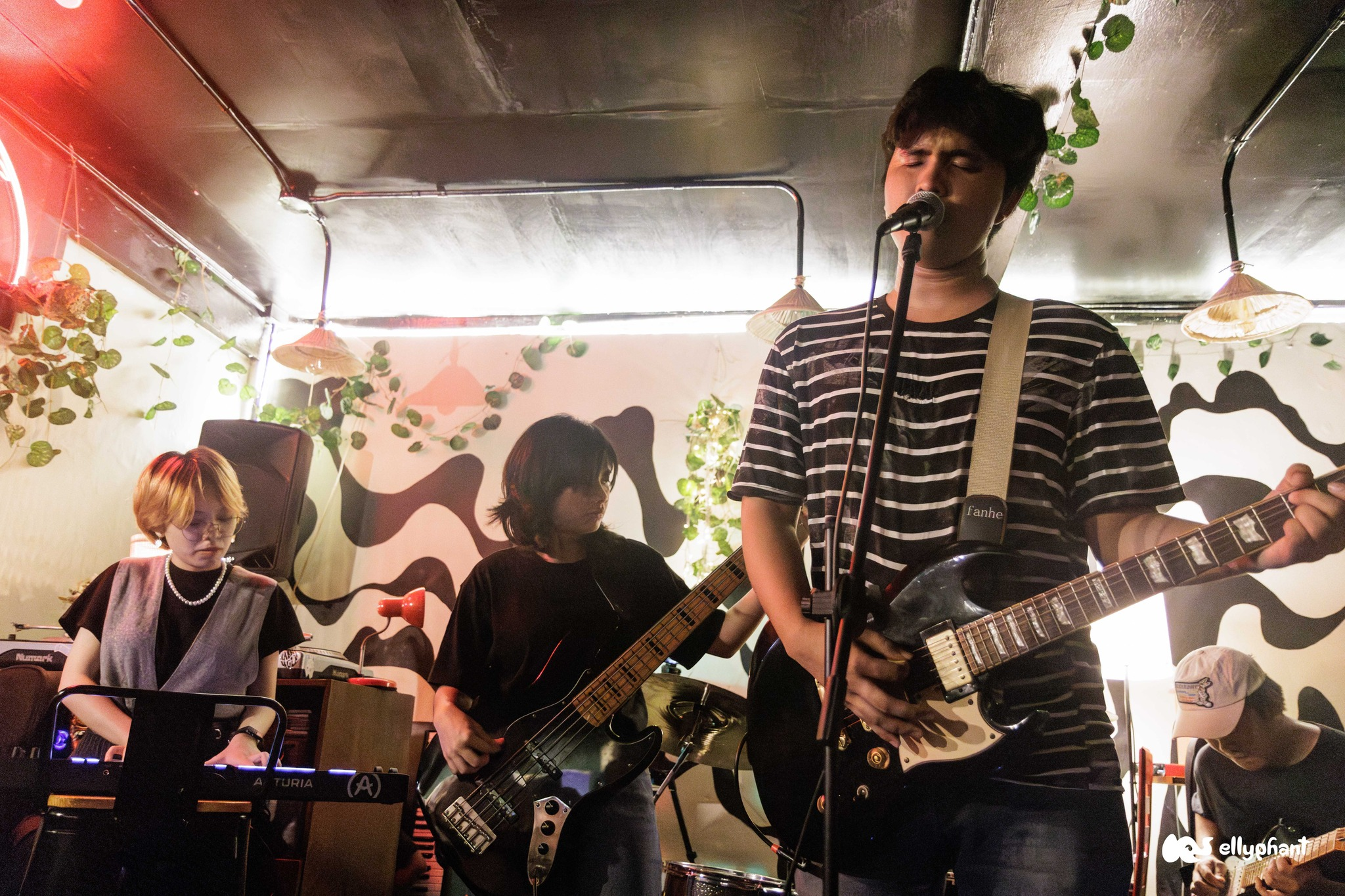
    Elijah: Actually, nadiscover ko kayo last year January sa Rabbit Hole ato yun. Oh yeah. At doon si Ellyphant, she took pictures of you guys.

    Joao: Oh yeah, I remember. Yeah, yeah.

    Elijah: Actually, Elly and I were talking like, nireko niya saan yung, aside from you guys sila, Iluna sa lineup na yun. I think it was a birthday. Yeah, if I remember correctly, birthday gig ato yun tapos.. 

    Joao: Yeah. Claire, yes. Oh yeah. 

    Elijah: And siguro after that parang sinubaybay ko na kayo sa social media noong meron pa kayong isa pang gig na parang Karma Hits back pa. Sa Kalapastangan na EP launch. And right now, this year, siguro nire-release niyo yung Kannibalismo noong February. Tapos nag-pick up siya noong Steam noong April.

    I just like to know ano yung mga reaction niyo sa mga memes? Kasi sobrang lakas niyo sa music memes.

    Joao: Ako natatawa ko sa reaction nila. Kasi while I was writing this song, I didn’t think na magiging ganun reaction ng tao. Like when I was writing it in this very room where I am right now, nakala ko like same sa magiging reaction ng mga professor namin na baka magiging weird siya. Kasi yung lyrics ko palang dun like sobrang brutal. Yung inodobo mo yung tao. So actually, I was just writing it for fun.

    Yung sa reaction ng tao, tinanggap nila. Hindi sila nagweirduhan sa amin. Medyo ano rin, like prior releasing the song din kasi yung mga friends namin, kating-kating sila amin na i-release namin yung song. Kasi pinakinggan nila sa Google Drive. Na-LSS na sila lahat. Tapos di pa namin re-release. Dahil kinukulit kami doon din ako nagkaroon ng lakas sa loob na i-release siya.


    It’s a nice new world to enter when we expose things to each other

    -Addy, fitterkarma


    Elijah: For Addy, what’s it like to take vocal duties on that track? 

    Addy: Actually, when Joao first told me that he wrote the song with me singing it in mind, I was a bit excited then to see how I can put myself into his writing. And like me, I joined the band not as a singer, even though I do sing. So, I was really excited to have that opportunity to do that for the band.

    And yeah, I think Calvin was saying something related. 

    Joao: I forgot to mention kanina kasi and sasabihin ko nalang dito kasi feel ko ito yung timing para masabi. Tawa ko sa mga, nababasa ko yung mga fan theories. Well, una na surprise ako nagkura ko may fans because of memes. And nagkakaroon sila yung theories regarding na tawa kami ng tawa, buong banda dito. Well, tuwa din kami. Kasi they were starting theorizing na the song was inspired by.. Ano yan? Sino yan? 

    Elijah: Isn’t it like the movie,“Bones and All”? 

    Joao: Yeah, and yung Yellowjackets and yung Ethel Cain? Like guess what man? Di namin kilala lahat ng yan. None of us know those stuff, those songs. Meron din nag-comment sa YouTube na sabi niya, na-realize daw niya na inspired by yung Ethel Cain. Tapos tawa ako ng tawa. I don’t even know that, dude. Pero we took it lightly. Natuwanan din kami kasi yun pala yung nagagawa ng music sa tao. Yung may kanya-kanya silang interpretation sa gawa mo. We welcome that. We’re very open to that. At least dahil doon may natutunan din kami from other people. Like may ganito pala, may series pala, may ganito. Actually, binalak din namin panoorin ng paking ganyan. Di pa yata namin nagagawa. Ako di ko pa nagagawa. Ewan ko sa kanila. 


    Dati wala nga kaming mga screamo na arrangement noon. Tapos lately meron tayong mga screamo na in-incorporate sa mga songs which is natutuwa din ako kasi everyone of us is eager to learn.

    -Soph, fitterkarma


    Elijah: Amazing job on that, by the way. Parang doon mas, I guess, nag-widen yung scope yung band. When everyone else just contributes, not just a non-singer or like a singer-keyboardist, everyone else, there’s like this synergy that’s existing. And glad to see how growth just sort of like innately exists in every band, in every step of the way. Siguro, a question for you, Joao. Anong film score that you wish you did?

    Joao: Yung All Quiet on the Western Front. I loved how they used electronic music on a film na, anong tawag doon? Sa unang panahon yung setting, ganun. And it worked. So, yeah, sobrang solid nun. And especially yung message nung song. Ay, song nung film. It’s an anti-war film. It’s not those sugar-coated Hollywood films na sobrang Americanized. Yan talaga sobrang straightforward anti-war. Wala kang inapakabala sa gyera. Ito lang. So, yan. Yung message nung film, the same score. Dinala yan rin sobra. 

    Elijah: How do you guys define Fitterkarma as the band where you guys combine pop elements, metal elements? So how do you sort of define that as a whole with all these genres?

    Joao: Siguro best way to define it is lahat ng gusto namin gawin, ginagawa namin sa music namin. Anything that inspires us, na mag-inspire sa amin, gumawa rin, gagawin namin. Kahit pop man yan, metal, classical music, film scoring. Kasi doon magsisimula yung mga magagandang output siguro pag di mo pinipigilan sarili mo or di mo kine-cage sarili mo. Recently, on loop sa akin mga album ni Bad Bunny. Tapos kinabukasan, black metal lamang papahingaan ko. Tapos kinabukasan, j-rock. Tapos kinabukasan, soundtracks ng films And then makikinigaw ko ng mga songs for the piano, yung mga Bach.

    Iba-iba. Tapos ganoon din natin yung set sila. I think Soph loves Shoegaze.

    Kaya ano ba yung mga trip ni Music? Halo-halo din eh kami. So yeah, minsan Radiohead, men, uuwi ako sa Radiohead. Jeff Buckley, yung 90s. Bjork. I love Bjork so much. Especially yung isang recent album niya na biglang nagbudots. Sobrang solid. Never expected Bjork to do that. 

    Ders: Sinabi din na madami kaming genres in mind and tinutugtugan ng genres. So, balak namin na ipag-combine lahat since nasabi nga ni Joao noon na gusto din maging experiment yung band. And it turned out well naman. And yeah, I think that’s it.

    Addy: I think it’s really just finding something that we all agree on. Since we all have different influences, then we can share those influences with others. Like me, I was exposed to a lot more music because of joining FitterKarma, because of Joao, because of Calvin and stuff. And it’s a nice new world to enter when we expose things to each other. 


    As a songwriter, I listen to music as a listener. I listen to music without minding the genres. Kung ano lang yung ma-enjoy ko, yun lang. Yun lang yung papakinggan ko. Susundan lang kami sa puso namin.

    -Joao, fitterkarma


    Soph: Last siguro is Fitter Karma is, parang for me, it’s so special na pag pinagsama-sama mo yung mga tinutugtog namin since iba-iba mga subjects namen. And meron din kaming subjects sa college noon na parang ensemble which we can perform a lot of genres. Sige natin, jazz. Pero we end up here na we like to touch the experimental side of music. Dati wala nga kaming mga screamo na arrangement noon. Tapos lately meron tayong mga screamo na in-incorporate sa mga songs which is natutuwa din ako kasi everyone of us is eager to learn. And siguro nandun talaga yung parang collaborative spirit namin kaya hindi kami nahihirapan mag-adjust sa mga new additions dun sa mga ginagawa namin songs.

    Ayun lang, parang more of collaborative talaga. 

    Joao: And to add din, ang ganda rin sa reaction ng audience or ng tao whenever you’re being unpredictable in terms sa music mo. I remember watching Radwimps noong tumugtog sila sa Araneta. I think a lot of people went there, alam lang nila yung sa soundtrack sa Your Name and Weathering With You. Tapos ako, I came there, I’m aware of their discography. Marami silang genre, they rap, they pop, they do pop, they do metal as well. Typical J-pop, J-rock experiment na akong kulit. Tapos biglang yung mga katabi ko dun kasi nasa Gen Ad lang ako so feel ko iba nung nanood lang for the vibe. And then gulat na gulat sila nag-metal na yung Radwimps, biglang nag-rap, biglang mag-reggae next song. Ang kulit. I like that vibe na being unpredictable and hindi rin siya nakakaumay. Me, myself, as a songwriter, and me playing music kasi I listen to music as a listener. I listen to music without minding the genres. Kung ano lang yung ma-enjoy ko, yun lang. Yun lang yung papakinggan ko. Susundan lang kami sa puso namin.

  • SOUNDS OF THE SEA: Thee Marloes (Indonesia)

    SOUNDS OF THE SEA: Thee Marloes (Indonesia)

    A close look at Indonesia’s rich history reveals specific moments in its music deemed significant in the past. The Pop Kreatif scene in the 70s – 80s, the existence of bands and musicians like Koes Plus and Chrisye, and the distribution of bootleg tapes of foreign music that influenced so much of Indonesian music, are big examples of that. Despite the negative economic effects that came from the harsh political climate throughout the Old Order and New Order regimes as well as shaky record label deals that stifled the proper archival of older Indonesian music, the modern methods of compilations and online uploads of records and songs released in the 60s – 70s still gave them their spot to echo. Once a figment of the past, it is now slowly being brought to the present once more.

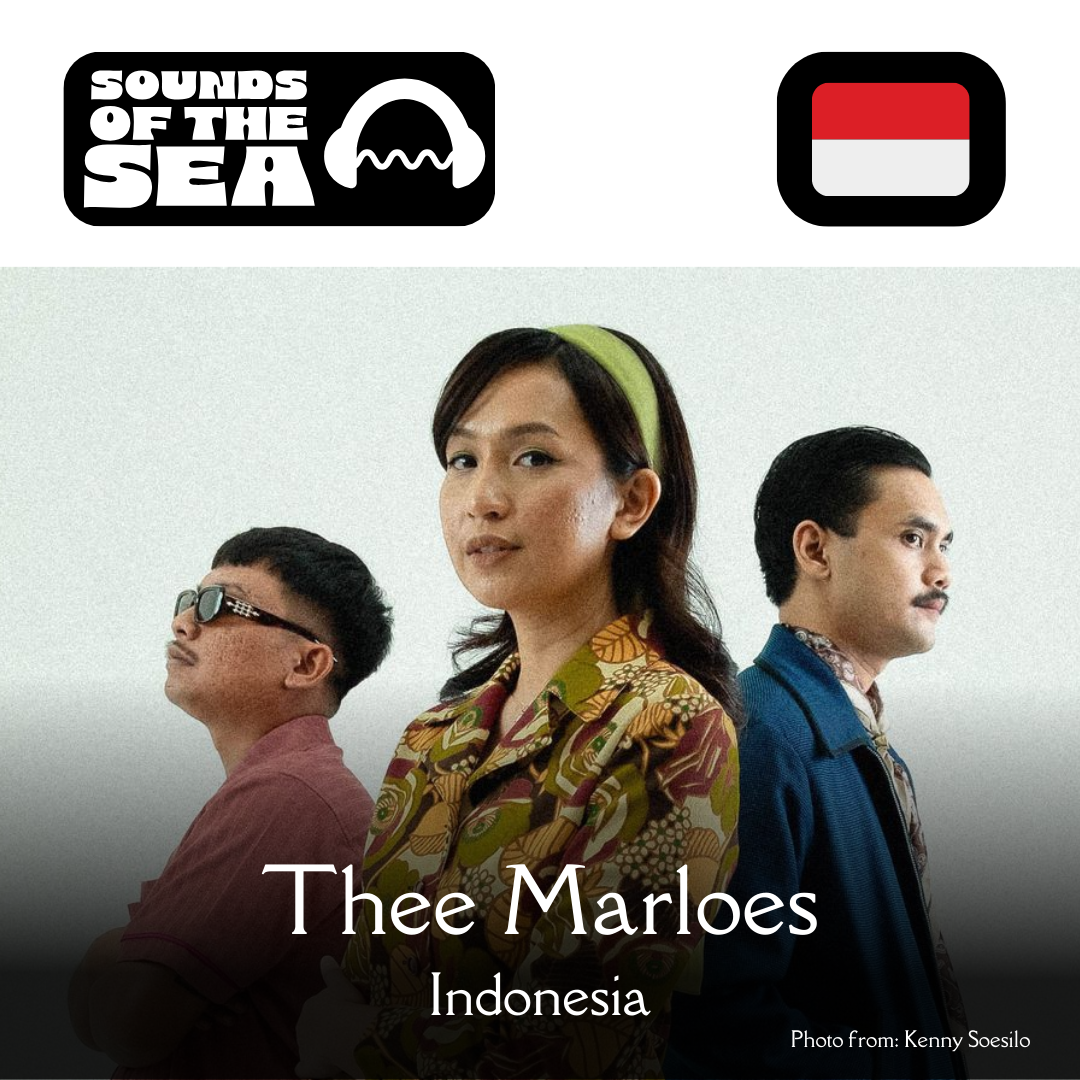
    In the city of Surabaya, Indonesia – a home to significant names of the Indonesian music scene such as Ervinna and Dara Puspita – lies the band Thee Marloes, signed under the Big Crown Records label. Comprised of Natassya Sianturi (vocalist & keyboardist), Tommy Satwick (drummer), and Sinatrya “Raka” Dharaka (guitarist & producer), the members crossed paths through their passion for music, Natassya’s performances in local shows and Tommy and Sinatrya’s constant band & DJ pursuits have allowed their paths to meet. Natassya’s love for retro soul and pop has established what Thee Marloes will eventually become: classic soul with the city of Surabaya filling its identity.

    ‘Perak’, their debut album, becomes the band’s firm statement of who they are and what they bring to Indonesia’s musical landscape. Lush soul with scoops of jazz rhythms and pop hookiness, all tied by the fragments of love-driven stories that light up the streets of Surabaya’s cityscape. A combination of local and universal elements held together through warmly cushioned production and especially Natassya’s serene singing. Her voice deftly weaves across English and Malay, bringing such kindling flair to songs like ‘Over’ and ‘Nona’ where she soars around pretty backing vocals, and ‘True Love’ where she opts for an alluring voice that effectively pulls you into the song’s humid atmosphere.

    But, of course, the band’s instrumental chemistry is also something to behold. Their flexibility allows more supple charm to be embossed in these compositions. Whether that be the shuffling rhythms shown off in the drum and bass rumbles of ‘Midnight Hotline’ and ‘I Know’, the psychedelic dazzle of ‘Logika’ coming through the organ sounding keys and simmering grooves, and the relaxing affirmation of ‘Not Today’ with the soulful layers of bright keys, simple drum patterns, and gentle guitars. Their melodic variations add more elegance, leaving more color to stew within the record.

    The album title, when translated, means ‘silver’. An apt word for what Thee Marloes has displayed with their debut album thus far, approaching the spirit of the city of Sarubaya and the familiar beauty of soul and R&B with malleability, further shaping themselves in the process. ‘Perak’ only adds another page to Indonesia’s vibrant music history. A reminder of soul, disco, and funk music that once permeated their past, giving life for those genres to breathe with excitement today.

  • SABAW SESSIONS: OZO

    SABAW SESSIONS: OZO

    Learning to be Complete: Oz on OZO

    Interview by Hannah Manuel

    Beginning in the pandemic confined inside his bedroom in Quezon City, one must imagine that Oz Kabuhat did not have the premonitory insight of the artistry he was to grow into years down the line. 

    After all, who possesses a foresight of that magnitude at eighteen? 

    What Joshua Kabuhat did possess, however, was the guts to experiment with sounds and musical collaborators, providing the musician with a colorful portfolio of projects long before the Oz Kabuhat name was ever uttered. OZO’s own Luis Peczon and Pat Pagsuyuin, along with Joshua himself, once made up Anacreous, a psychedelic rock band that released tracks like “Killer Ape Theory”, “Celestials”, “The Cataract”, and “The Moon from Sicily” from 2020 to 2021. Scrounging the depths of Soundcloud procures __bamm.sakk, Kabuhat’s project with Brennan Ng, who would later come to be OZO’s lead guitarist. The experiential soundscape that “MAMBO” produces is the most experimental release that Kabuhat has put out to date, while traces of the artist’s signature falsetto appear in “All I Feel”. His deliberate nonconformity was impressive, but all the while oblique and aloof toward the listener. 

    Stepping foot inside OZO’s EP launch of That, I Know, you are immediately hit with a sense of homecoming. Kabuhat is a warm host, greeting guests who come up to him with congratulations as he darts through the venue, getting last-minute preparations ready for the first act of the night. Inadvertently, the collective that gathers on this one rainy evening in Chino Roces takes the shape of a retrospective of a body of work and life;It is this retrospective that Kabuhat and the rest of OZO seem to be continually inspired by. That, I Know is a classically experiential EP and traditionally avant-garde in the way that has since become expected of Kabuhat’s endeavors. But, there is a truthfulness that lives within the entire band, inducing a coming together of musical minds that proves even greater than the sum of its parts. 

    Kabuhat finally gives way to a simple honesty with OZO, and this honesty speaks for itself in That, I Know. Schoolmates, peers, mentors, and supporters all gather this evening, almost as a visual manifestation of the EP’s thematic core, which is experiencing life as life happens. It all goes to show that no man is an island, but he may be in a swimming pool with his friends, making the best music you’ll hear this decade.

    *This interview has been edited for clarity and brevity

    Hannah: You’ve shed the solo act in favor of a band—a family, as you’ve called it before. Talk to us through it.

    Kabuhat: These songs [started] with me and Luis, our bassist—we write together a lot. That’s the very beginning of the entire process, it starts with songwriting talaga…Hindi siya linear process for me na it has to start with songwriting, but this EP all started talaga with songwriting. I write it, I give a demo, they add their stuff, and then that’s what happens. It’s just as mundane as working on it together and passing it to the next bandmate.

    Hannah: Your vocal talents, which have taken us through the best of the different iterations of Oz Kabuhat, are a signature of your sound. How do you work with an asset as distinctly attributed to you while keeping things different?

    Kabuhat: I’m not really trying to brag in any way, but the challenge for me or maybe my band as well, is less of making my voice work but more on making sure that whatever experiment we do, is still us. We don’t consider my voice something difficult to apply to experiments; it’s really just more of how truthful our artistry is, no matter the experiment.

    Photo from Phoenix

    Hannah: OZO is made up of musicians who have paved their own paths in music over the years. Is there any discourse that goes on when sharing creative reign over a song with such a varied mix of musicians?

    Kabuhat: We have really different influences. Pat is really heavy on classical piano, Brennan is on the Bossa side, Jaime is a folky drummer, tapos me, experimental and electronic talaga. Honestly, you’d be surprised that there’s rarely any conflict in that creativity sense. As the producer, I think I have the capability to ensure na we have one direction and no matter how diverse the bandmates are, we produce the songs in a way na we can utilize their strengths. If that makes sense. When you think about it, there’s no clash because everyone’s using their skills in the songs, and I think that’s what makes the EP experimental. It’s really just because of the pursuit of our own artistry and being as honest as possible. It’s the umbrella for our music, honesty, and authenticity. It really makes everything work for us, especially since we’re all diverse.


    I’m not really trying to brag in any way, but the challenge for me or maybe my band as well, is less of making my voice work but more on making sure that whatever experiment we do, is still us.


    Hannah: You’ve also mentioned in the past that your genre-bending is motivated by “serving the song”. How does being nonconforming aid or provide difficulty in distinguishing yourself from past eras of yourself musically? 

    Kabuhat: There’s definitely some form of anxiety as to whether or not we’re gonna be perceived as a non-conforming band, because truth be told, we’re not. Our goal is not to be fluid in [the] sense that we have no focus. The EP is pretty experimental, and it edges whatever bound of genre the particular songs are in. But genre to us nowadays is just a tool that we utilize, because our main thing is emotion. That’s the genre in our head, if that makes sense. We just utilize genres to help the emotion that the EP is trying to portray, because like what we said, the EP is about life. It’s a general assumption of life, so the journey that the EP takes you is meant to reflect life. So, as much as possible, we really try to prioritize the emotions, and that leads us to experiment a lot. If it’s hard, yes, it’s a bit hard nga. Stripping away the genre of each song, there is one genre we’re following, which is jazz fusion and electropop, but since we prioritize the emotions per song, it tends to go heavier on this subgenre and heavier on that subgenre.

    Photo from OZO

    Hannah: You’ve described OZO as an act whose creative growth coincides with the band’s personal growth. Talk us through the creation process of “That, I Know” and how OZO grew as people while making the EP. 

    Kabuhat: I guess it took us almost a year writing and producing everything, the first [track] being “That I Know,” and then the last one we made was “Online”. And it’s six songs so nakakaintimidate, para na ‘tong album. I think kaya matagal din is because we were writing—I was writing—from the freshest emotions, like that was happening to me at that moment. It reflected my life because I was writing at that point in my life, if that makes sense. I wrote “Carefully” during the time my lola was going through something. It reflects our growth because we were writing [the EP] as we were just experiencing life as it happened, we wrote about that.

    Hannah: If anything, what is the one track you would pick that would reintroduce the band? 

    Kabuhat: “Only You”. Before, yes, I was writing from honesty and from the heart, but there were extra steps, so many extra steps I wanted to take because I wanted to sound very, very unique. Now, I just stripped all of that off and I’m just pursuing what’s real and what’s fun to us, and making music that we enjoy while being honest. I think it encapsulates that because that was the most fun I’ve had making a song, and it’s just gonna hopefully be the main priority from here on out, really just trying to make honest music and making music that we enjoy. In that way, I would reintroduce us with “Only You”.


    There’s definitely some form of anxiety as to whether or not we’re gonna be perceived as a non-conforming band, because truth be told, we’re not. Our goal is not to be fluid in [the] sense that we have no focus.


    Hannah: Emotions are what run the mechanisms behind this EP. What emotions of yours were the loudest leading up to the release of this EP?

    Kabuhat: Syempre, from a brand and business standpoint, there was undoubtedly a lot of anxiety and fear as to if this was gonna be received well or not. But I don’t think anyone gave it much thought, din. There was anxiousness, but were all just driven by how honest the work we did was and we were just so glad that we were making music that we truly enjoy and music that’s like wearing no masks on just us and just us enjoying our honest, if you know what I mean, We’re just pursuing our true selves like no matter what happens. So, it was a rollercoaster of emotions, but at the end of the day, it felt better knowing that we were putting out something that was like no masks on, just truth and honesty, and so much more fun than before.

    Hannah: How does collaborating with trusted collaborators and close friends unlock a new level of honesty?

    Kabuhat: Oh, yeah. That’s something I super duper advocate for, like any day of the week. You have to choose the people you work with on a daily basis. I think it’s common knowledge naman na if you’re really close to a good level with those you’re in a band with, I think it’ll resonate with your art that you guys are making music out of love, and out of joy. And it’s not just a job for you guys, alam mo yun? It’s not just some project, it’s something you guys are enjoying doing together. We try to reflect that specifically in this debut EP na we’re just—like our cover art. We’re just swimming, we’re hanging out. So, you want to be caught candidly living lang. That’s the whole theme of everything, it’s just us, we’re living, and the importance of being with a trusted group of people is something I keep advocating talaga. It’s super duper important for me and I think it shows with the work we put out and how close we are with each other.


    It was a rollercoaster of emotions, but at the end of the day, it felt better knowing that we were putting out something that was like no masks on, just truth and honesty, and so much more fun than before.


    Hannah: You’ve been making music with your current bandmates as early as senior high. Anacreous and __bamm.sakk, namely, were projects you took on with Luis, Pat, and Brennan, respectively. How do these past sounds and identities contrast with the most recent OZO?

    Kabuhat: I’m sure may hatak from my personal life yung mga ginagawa ko before. But yung highest priority ko before was to carve out something so unique and odd and new. No matter what genre I was in, I got into alt rock, I got into pop, a lot of electronic stuff. Before, my highest priority was to carve out something so unique na I’m not comparable to others. And how it contrasts to now, it’s just very different.

    Hannah: What did you choose to leave and take with you when you entered this new era with OZO?

    Kabuhat: Feeling ko hindi to sinasadya, it was just natural kasi diverse nga kami, pero the experimentalness [of the band]. I involuntarily brought that with me because it’s something we can do to make sure na everyone’s expressing well talaga sa band. Parang, it’s hard to follow a very conventional genre if we’re a very diverse group of artists. I think that’s something we naturally brought along with us in this new era, that experimental fusion of everything which is present in everything ever since bamm.sakk. If there’s something I left—I don’t want to call it pretentiousness eh, it’s just that pursuit of being different, that’s something I really let go. Before, I enjoyed being vague with lyrics, and even if it’s still vague now in some sense, I definitely left the intentionality of being vague and odd. Right now I’m trying my best to communicate talaga. 

    Photo from Phoenix

    Hannah: What was it like taking the EP to the live stage for the first time? 

    Kabuhat: Disclaimer lang, we’re still learning about everything din. But yeah, we practiced a lot, talaga. And… I think it’s harder for us din because andami nating gear. Kasi ayun nga, very maximalist yung production namin, and we try to reflect that as truthfully as possible, live. All the sound effects, yung DJ namin, Daboy, he’s actually doing it live. It took us a lot of practice, siguro even predating the ones specifically for the EP launch. It’s really just hours of figuring cables… and that is what I would say is the biggest struggle, managing all the electronics. That’s still taking us a long time to optimize. In preparation for the EP show, we tried to make sure we were in a good big space that has all the gear we need to help us optimize our rehearsals and syempre nauna namin yung how loud each person is, which is a big challenge because we’re also a big band. So deliberate runs through the songs lang, and then one by one natin ifeflesh out who should be louder, who should be softer, what should be happening here, and what shouldn’t.


    That’s the whole theme of everything, it’s just us, we’re living, and the importance of being with a trusted group of people is something I keep advocating talaga.


    Hannah: What is your approach to the inevitable conversation of becoming more marketable?

    Kabuhat: It’s really great to feel all of the support, especially being under the radar. And as growth-oriented individuals, it’s a necessary growth for us to hit bigger markets. So, ayun, what I feel about it is that I really wanna do it. And I think we have the capacity to especially now. I feel like we’re gonna speak to a lot more people, we’re gonna inevitably be able to communicate to a bigger crowd, mainly because of a change in our approach. So yeah, I’m excited for it, I’m hopeful for it, and we want it. [laughs]

    Hannah: In terms of plans and next steps for OZO, what should people be looking out for? 

    Kabuhat: We’re just gonna show more of ourselves and the music, really just introduce ourselves in a non-music way talaga. Everywhere else is also just ozo.online, but where we’re gonna reply immediately, most [likely on] Instagram, and we’re gonna be very active there. YouTube is gonna be very active for us as well! Because we’re gonna do a lot of stuff to showcase [ourselves] inside and outside of music.

    Hannah: Is there anything left you’d like to say to your listeners, new and old?

    Kabuhat: It’s so scary to show your true self on social media with so much stuff happening, but I think it’s our duty as artists not just to create, but to be honest in a world full of so much hate and lies. A lot of bad people think artistry is non-essential. I totally disagree, because I think we have a big responsibility in being honest for the world. 


  • SOUNDS OF THE SEA: Voision Xi (China)

    SOUNDS OF THE SEA: Voision Xi (China)

    Shanghai is a bustling area in China, a dazzling cultural cradle where so much creative artistry has thrived the most. Music, especially, had a prominent presence in the place since the 1920s, acting as the origin place of Shidaiqu – a genre that intertwines Chinese folk and Hollywood film music – as well as the main area for Western jazz to proliferate in the country. Those western influences never strayed, but kept in close distance within so much of Chinese music. Despite the difficulty in opening up people’s perspectives towards Jazz, the jazz scene in Shanghai continues to prosper and branch out into its own territory, letting newer musicians experiment with the genre and bring something unique out of it.

    Enamoured with the Jazz scene in Shanghai, Voision Xi has set a mission to immerse herself within it, eventually heading there after college to explore her musical endeavors. Despite being self-taught, meeting various musicians while working behind the scenes of JZ Club has trained and taught her immensely, allowing her to jump out into the spotlight in 2015 with Little Happiness Group, a small jazz band that comprised of her and other jazz musicians such as guitarist Zhang Xiongguan and Xiao Jun, saxophonist Li Shihai, and others more. Working together for 3 years has eventually led to their only release in 2018, ‘DEBUT’. A short EP that twists the melodic foundations of tracks like Nick Drake’s “River Man” and Stevie Wonder’s “Cause We’ve Ended As Lovers” into something vibrant. Brewing these classic songs with a different arrangement altogether, a variation done well by Voision Xi alongside the rest of the fellow jazz musicians that have worked with her on this EP.

    That experimentation only goes deeper, following things up in 2021 with the ‘4 loops in her way’ EP that displays her curiosity with ambient soundscapes. Using nothing but the OP-1 synthesizer and the Ableton Live software to create small, yet expressive ambient pieces. A testing point to her progression as an artist, a tease to how she’ll eventually blend her jazz influences with ambient tapestries.

    All of this eventually leads to Voision Xi’s debut album in 2022, ‘Lost For Words’. A grand self-expression that pulls so much from her gradual exploration as an artist, bringing so much of her experiences, emotions, and voices that swirl into a lot of fascinating ventures across ambient, folk, and jazz palettes, releasing so many words and expressions worth hearing. Further accompanied by various musicians – names like Kaidi Tatham, ILL MO, and Little Happiness Group being some of them – that amplify the album’s thematic concept. Providing so much distinctive moments across the otherwise impeccably rich record, from the vocal thrills that’s accompanied by nimble guitars and delicate woodwinds on “Monday Spirit”, Voision Xi’s spoken word and ILL MO’s rap flow blending immaculately across the lush jazz flourishes of “Butterfly, A Hyaline Beauty”, the soaring rock crescendos that gives “Magnetic Field” its pulsing rhythm and “Turn on the Planet” a spacious expanse across its lilting ambience, the jazzy freakout that occurs on “Hypnotist”, the lilting samba jam on “Ladders”, and the hypnotic ambient escapades that opens up on “Wolverine (Silent Chaos)” and “Crystalline Improv”. Skyrocketing Voision Xi’s artistic potential into the stratosphere. Her unique experimentation holds no bounds.

    Her approach to her sound continues to flourish two years later, following up with her sophomore album, ‘Queen and Elf’. It’s a record that still embraces her jazz roots, but there’s more focus on soothing walls of ambient electronics that colors the melodies with quaint pensiveness, one that makes sense within Voision Xi’s introspection surrounding holding onto our overall emotions amidst the process of letting go and coming back, a constant experience that inevitably comes with getting older. It’s a tangled emotion, yet Voision Xi manages to create a clear picture of that feeling through the set of lively electronica and gorgeous Bjork-inspired a cappella that blushes up the tender jazz compositions. Songs like “Birdling”, “Prelude To A Fortune”, and “Southern Shanghai” are trickled with liquid soundscapes, with electronic bits and swells adding more to their ethereal aura. Jazz leaning cuts such as the Bossa Nova of “Leaf Sheep”, the sweeping instrumentation of “No.8 Signal”, and the buoyant rhythms of “Muse (For Joyce)” are vivid in their melodic compositions, Voision Xi’s masterful production work amplifies the organic texture that the melodies bring to the table.

    The most entrancing moments in the album are the slow-building ambient tunes that open to an even evocative section. “How Do You Hold A Moonbeam?” is laced with cooing harmonies, accompanied by bright pianos and grooves just before Voision Xi’s vocalizations push further into the forefront. “We Could Be Shy” brings along woodwinds and pianos that gently accompany the drawn-out vocal lines, leading to the back half where the jazz restraint breaks apart into this post-rock progression with plenty of bright crescendos and soaring vocals. And “Kagi” takes its 6-minute excursion to explore, with cascading synths and pianos enveloping the vocals into a mystical cocoon, giving the path for the woodwinds to swoon. Eventually lifting up the grooves and the vocal harmonies to a heavenly sway.

    Voision Xi’s overall discography can only come from someone whose passion for jazz and electronica is treated in a way where experimentation and thoughtful observation are a must. An expression of her unique creative spirit that passed through so many experiences working in the Shanghai jazz scene and learning with jazz musicians in the local and international scenes, finally giving her the confidence to voice out her extraordinary talent and pulling together some of the vibrantly impressive jazz records in the 2020s. Constantly playing and touring, Voision Xi never stops exploring enticing soundscapes, opening more ears to what Shanghai’s jazz scene has to offer.

  • SABAW SESSIONS: BARBIE ALMALBIS

    SABAW SESSIONS: BARBIE ALMALBIS

    Give A Girl A Guitar And She Will Show You Girlhood

    An Interview with Barbie Almalbis

    by Faye Allego

    When adversity strikes, Barbie Almalbis’ songwriting prevails; she takes her pain and either releases, soothes, or embraces it through her words, her conversations with her loved ones, and, of course, through her impeccable skills on the guitar. Her reputation throughout the years as one of OPM’s great legends is continuously proven through her playful work ethic; From her experimental approach to her esteemed collection of instruments. It goes without showing, but taking the time to hear her mind in tracks like “Paper Doll” and “Maniwala Ka” from her previous work in Barbie’s Cradle and Hungry Young Poets to beautifully loud and honest ballads “Homeostasis” and “Platonic” found in her latest release, Not That Girl, manifests and greatly displays her genius. Almalbis’ music is for everyone and anyone who has the ability to close their eyes and feel. It is now 8:00 pm at Mow’s Bar, Quezon City.

    The night is still young, and sooner or later, the crowd from in and outside Mow’s will be hearing Barbie Almalbis perform the iconic guitar solo from Metallica’s “Master of Puppets” as well as cheering on songs from her latest album. Just beside the smoking area is the graffitied green room where Pikoy, Suyen, and members from (e)motion engine and Moonwlk have laid their bags, water bottles, broken drumsticks, and string instruments. Sitting in the corner is Almalbis and her team; In this interview, the technicolor in the graffiti all around the room comes to life as she takes on girlhood and the guitar unleashes. 

    *This interview has been edited for clarity and brevity

    FA: In celebration of Women’s Month and the release of Not That Girl, who are women in music that you look to when it comes to songwriting?

    Almalbis: The earliest ones that I really felt encouraged me to write as well [were] singer-songwriters like Joni Mitchell. My most favorite was Brickie Lee Jones, and they still play up till this day. Seniors na sila, right? [laughs] But they still perform. And then there’s so many artists that they’ve inspired as well, Jewel, Alanis Morissette. There’s just so many women that I looked up to. The Indigo Girls, The Murmurs, Elastica, sobrang dami. It’s a wide range, too. PJ Harvey, Bjork, Tori Amos. I had a Tori Amos cassette that I just played every day over and over. Sean Colton.. I’m so blessed to have lived in a time where there’s just so much representation. So much music that spoke about things that I cared about. And I’ve always felt like there was a space for me as a musician and as a songwriter. So I never felt otherwise because of these artists [who] just spoke their mind and embraced their femininity as well.

    Photo from CADM/Facebook

    FA: Are there any new and upcoming acts or female artists that you’re very excited for? 

    Almalbis: Oh, yeah. Yeah, well, here in the Philippines, Ena Mori. A lot of people love her. I love her. Clara Benin. Pikoy, right there. And, yeah, Moonwlk. 

    FA: So, “I’m not like other girls” is a phrase that has a negative connotation to younger women as the label of “pick-me girls” is starting to arise, especially in the younger generation. Are you familiar with those terms? 

    Almalbis: Oh, yeah. I mean, “I’m not like other girls”. It’s like they’re pitting us against each other, right? Society has a negative view of girls, and they actually want to infect girls themselves and to think that way about others. And it can happen. It’s sad. We have to, to somehow fight it. We have to go out of our way to support each other.


    “I have noticed that the people around me that I get to work with are getting younger and younger.” 


    FA: In your new album, your title is “Not That Girl”. So what does that mean, Not That Girl? What does not being “that girl” imply? 

    Almalbis: Well, actually, I do want the music [to speak for itself]. I feel like the songs, the lyrics, the stories in the songs would better explain that. I would rather not define it in just one thing, the thing that I don’t want to be. Something like that. But the album talks about change as well. Somehow in life, you can encounter the same types of trials or the same types of challenges, but you’re not the same person anymore. You may be able to handle it better this time. It’s revisiting the mistakes that I’ve done in the past and having the grace towards myself that I can change. And extending the same grace to people. Yeah, that there’s always hope for [the knowledge] that you can change. So yeah, it’s not really a girl thing. It’s just a person thing. That I’m not that person anymore. I think that’s so beautiful. 

    FA: You’ve been performing for more than a decade, and your demographic has remained the same. The youth. Why do you think that is? 

    Almalbis: Oh, really? I’ve just not really done it deliberately or anything. I have noticed that the people around me that I get to work with are getting younger and younger.

    It’s like when I was starting, you must have been maybe not yet born. I was like, wow, these people. It’s like the next thing you know. Now we’re giggling with our friends’ kids, you know. It’s fun. I’m happy. I’m happy to do that. I think. My favorite artists are now. Joni Mitchell is probably in her 70s, 80s, maybe. She’s in her 80s. Yeah, right. I mean, but that’s not an age thing, you know what I mean? I mean, I don’t think she’s lost any connection to me with her music, right? I don’t think music has a, what do you call that? An age separation. So maybe that could be. Maybe music is a thing that we can connect through, despite how old we are. 

    FA: How does it feel to be considered one of the best female OPM icons? Do you embrace that status? 

    Almalbis: I’m grateful to be a part of that thread because I’m also a fan of music and I really so appreciate that artists who came before me, and I’m sure they’d say the same as well. We’re just happy to be making music, to be able to be free to express our thoughts. Of course, I try to not take that part of [being an OPM icon] seriously. I mean, you have to not believe your own press, right? I mean, sometimes what makes it fun for me is the music making itself and being able to share it in a venue like this tonight. Because that’s how I started out. That’s the reason why I became a musician because I enjoyed writing songs. I enjoyed playing in my bedroom, and then, a few decades ago when I made a job as well, somehow you’re thrust into a scene, right? There’s that pressure and there was a time that people would compare you with others, but over time, I mean, of course, it’s a job, and you have to be faithful with it. You want to have work, and you want your team to have work. All that stuff. I guess at one point, I could see the difference between the machinery and the purity of just loving the music. And I always want to go back to that because that’s the reason why I’m here. I think that mindset has also helped me through the waves of the industry because there was a time when people were so excited about bands, and then there’s a time when nobody was coming to the shows. But we’d play places, and sometimes there’d be five people there. After playing, we played a couple of concerts in Araneta, right? And then a couple of years after that, we would play [at venues such as] Route 196. There’d be ten people there. But I’d come home and I’d be so happy. It’s so thrilling to perform, to play music. So, I mean, I’m happy that right now the scene is so fun. There are a lot of people coming. But it’s hard when you let the success of it dictate things because you’d get sad when it’s down. So, I always just go back to why I started and that’s because I love music. Yeah, the reason why I’m doing it. 

    FA: You know, a lot of people say, especially people like our parents, they always say to “Never separate your passion from your job.” What can you say about that?

    Almalbis: I mean, I guess to each his own. I’m sure there’s going to be some wisdom to glean from that. But for me, I feel like it’s the opposite. If you imagine a world where everybody’s job was the thing that they were passionate about, then you wouldn’t find lawyers who only love money, and then justice is just something that happens along the way sometimes. Or like other professionals. Actually, this is kind of a quote from a book by Tim Keller called “Every Good Endeavor”. He said you’d find doctors whose passion is money and not really healing people or seeing people come to good health. But health just happens sometimes along the way. But can you imagine a world where doctors are those people who are just so passionate? I know doctors who are like that, and they become the best doctors. And lawyers who are like that, who are just so passionate about justice, and they become the best at it. So, for me, my dream is that it’s the opposite. It’s that people would somehow find the freedom and the support to really pursue the thing that they believe in so much that they would do without getting paid. 

    Photo from CADM/Facebook

    FA: Do you think that’s prevalent in your songwriting as well? Or is your songwriting more so diaristic to your own personal experiences?

    Almalbis: Can you explain that to me? 

    FA: So when you’re passionate about music, do you want that to reflect in your songwriting for other people to learn from as well? 

    Almalbis: Oh yeah, that’s a great topic actually. It’s something that my husband and I talk about a lot. There’s this painter named Makoto Fujimura. I don’t know if he coined it but we heard it from him. But he calls it generative art. So it’s art that generates art in others. Generates ideas and creativity in others. And my husband’s a painter. We’re always on the lookout for artists like that. Those are the artists that we want to follow on Instagram or that we want to watch. You watch their gig or you look at their paintings and it makes you want to paint. And somehow that’s something that we hope that our art and our music does for others as well. That it makes them want to go in their bedroom and write something too. But I hope that it happens naturally. 


    “You have to have at least one guitar that you can throw around. Pedals, gear, it’s all just toys. It’s inspiration machines.” 


    FA: There’s actually a movie called “Look Back”. It’s adapted from a manga by Tatsuki Fujimoto. And it talks about two young girls who are passionate about creating manga. And they grow up together, and something tragic happens. And it’s all about the love of art.

    Almalbis: Yeah, “Look Back”. I’ll check it out. 

    FA: Do you view the guitar as a weapon that encompasses your emotions when songwriting? Do you view it as an inanimate child? Or is it merely just an instrument that you love? 

    Almalbis: Beautiful. I think it’s evolved over the years. Back when I was young, it was my only friend maybe. Speaking about girls and women’s month. I love my family and grew up with my older brother. Maybe seven, eight, around ten. Maybe seven. Boy cousins. I was the only girl in the whole gang. Then I have a sister, but she’s five years younger than me. But during our adolescent and pre-teen years, we were the only girls. When we got around that age, 11 or 12, this was the 80s. People weren’t really into it [girls playing instruments and hanging out with the opposite gender] yet. They left me because I was a girl. I wasn’t allowed to hang out with them. It’s okay, they were doing guy things. That was around the time when I started playing guitar. Every day, that’s what I did. I played guitar in my room. The boys were wherever they were going. I put it down. Every day, I would play guitar. I did that for a couple of years. I started writing songs at 14. Then it became a songwriting tool for me. To this day, among all of your guitars, they’re all your friends I wouldn’t say they’re my babies because I experiment on them a lot. They can take some pain from me. I hack them. I don’t think I have a single guitar that hasn’t been opened up and changed. I want them to be their best. I want to perform using them. Make them useful. I would change things so that it wouldn’t be hard for me. 

    Photo from ellyphantart
    Photo from ellyphantart

    FA: You’re like Mary Shelley and Frankenstein.

    Almalbis: [Laughs] I’ve burned the carpet. I’ve destroyed a couple of things. I’ve had guitars that I’ve given up on and come back to. I wouldn’t touch them for 10 years. One of the guitars that I might use tonight is like that. It’s gone through so many lives. I want it to sound good. I’ve experimented with it all these years. 

    FA: In your Rolling Stone interview, you said that you fell in love with the guitar before music. What advice would you give to someone starting out with the guitar and should they go acoustic first or electric? How do you know when to tap into the world of pedals, amps, and other gears? 

    Almalbis: I would just advise using a nylon string guitar first because it’s easy on the fingers and so you won’t give up on the guitar. Naturally, your calluses will develop. By the time you move to steel strings, it will be easier. I got my electric guitar when I was 16. The only thing that was a problem with that was that it was so heavy for me at that time. It still is heavy for me, but now I found lighter electric guitars. They always say you have to have a beat-up guitar. That’s the best guitar to write songs on. One that’s not precious. You can throw it, you can put it in your trunk, you can have your car. You have to have at least one guitar that you can throw around. Pedals, gear, it’s all just toys. It’s inspiration machines. Just explore it on your own, whatever you’re curious about. 

    Just explore it on your own, whatever you’re curious about. 


    “I’ve burned the carpet. I’ve destroyed a couple of things. I’ve had guitars that I’ve given up on and come back to. I wouldn’t touch them for 10 years. One of the guitars that I might use tonight is like that. It’s gone through so many lives. I want it to sound good.”


    FA: Did you face any fears or even insecurities when it came to your guitar playing? Did you try to fix that?

    Almalbis: I’m not sure if I would consider it an insecurity, in which it made me sad or fearful. Maybe it is an insecurity, but I didn’t know what I was capable of, what I could do when I was younger. When I was in high school, I started to find music that I loved, which was glam rock at the start. I would listen to Guns N’ Roses and I would watch Slash play, or Eddie Van Halen with Van Halen, and Paul Gilbert with Mr. Big and their shredders. When I would listen to them, I would always say to myself, I could never do that, so I didn’t try.

    I just used the guitar mainly as a songwriting tool. I just knew a few chords and I would just write. I wrote the first album of Hungry Young Poets just using chords.

    Photo from ellyphantart

    I never thought of myself as a guitar player doing lead or anything like that. But I didn’t really want to or something. I was happy doing what I was doing. It was when John Mayer came out. He had a cover song of Stevie Ray Vaughan. This was in 2001, maybe. He had a cover of Stevie Ray Vaughan’s Lenny. I found it really beautiful. It was a bit slow. I just said, “That’s so beautiful, let me try to play it”. I just broke it down to chunks. I realized I could do it. I was so excited, I called my brother into the room and said, “Look what I can do”. Then I approached everything else just like that. If I’m interested in something, I just slow it down, try to learn it. Then I realized I could do it. The things that I thought before weren’t accessible to me, I could build it slowly. But it wasn’t a frustration or anything. It wasn’t like I dreamed of doing that. I thought it wasn’t possible. I guess it was just a fun process for me to learn it and then slowly incorporating it into our music. It’s like leveling up. It’s like a game. It’s like a new thing that I can do. You’re just curious. Then you realize you can do it. Like a guitar or singing, you can keep practicing, you get better and better. I’m sure in some way there is. You can get better at rhyming, or faster at arranging songs, or finding out why this song works or not. But I feel like so many people write so many great songs when they’re just starting out. The beginner’s mind. Like Firewoman, I wrote that. It’s one of my favorites from Hungry Young Poets. I wrote that when I was 19. I hadn’t gone to a songwriting class or anything like that. I had a lot of emotions, and I just poured them out. So for me, even with Not That Girl, it’s probably the 10th or 8th album that I made. But I feel like what I like about it is because I’m able to go back to how writing was like in my teens.

    Which is I have so much emotion, and I just want to get it out there. So it’s different from playing guitar, where you develop your skill year after year. For me, it was songwriting. Even the last couple of years, there was a season where I couldn’t write. I was scratching my head. How did I write those songs again? What makes a good song again? It’s like you can’t just really pin it down. Who me? Yeah, so it’s like that. It’s a different journey. Different beast. Actually, with this album, Not That Girl, I’m so happy with the process, working with Nick as well, and writing the album. Because that’s how I remember it. I remember how to write in my teens. It was just [that] I had so many feelings and I just needed to process them through music. I didn’t need to be creative, even to invent anything. I didn’t have to think of a story. I just had to write down what I was going through that day, what I was thinking about. That’s it. 


    “Our perspective and our experiences are very unique to women.” 


    FA: Do you think it correlates a lot with girlhood? And womanhood specifically?

    Almalbis: Of course. Because I’m really just writing from experience. Our perspective and our experiences are very unique to women.

    I’m just expressing that. Of course, my best friends, we laugh about it. We can relate to each other’s songs. We would chat with each other, and we’d say, “I love you”. And then he’d be like, “yeah, platonic. Make sure. Just making sure.” Yeah, because we’d be so effusive with our feelings. I guess we’re at that age where all my friends are like, “I love you so much. I miss you so much.” He’s like, “yeah, platonic.”

    FA: There are so many thematic elements in your songwriting, especially in Not That Girl. Even in Hungry Poets era or Barbie’s Cradle. Do you think that in your songwriting, do you always think of the themes?

    Almalbis: I don’t. I don’t. In life, I don’t plan. Also, in songwriting or making an album, I have no plan. I don’t sit down and think of a theme. The opposite way would be like, you have an album title and then you have song titles, and then you’d stick to that theme. For me, it’s the total opposite. I’d sit down with no plan and then I’d write the songs one song at a time. I’d finish a song. Sometimes it’s hard for me to pick a title because I have to find something that somehow makes this song sound cohesive. I hope somehow the song ends up being cohesive that I can think of a title. And then at the end of it, when I have all the songs together, I’d be like, I hope I can find an idea that kind of ties them all together. 

    FA: When people tell you their interpretations of your songs, how does that make you feel? 

    Almalbis: I’m happy I embrace that. It’s just my experience, but I’m happy to share it with other people. Even for me, I can go back to my old songs and it might mean something different for me now. So I don’t really pin it down to what I thought of, what I was thinking of at the moment I was writing it. I’m open to that. I think you can say the same for guitars as well. Picking them out for the first time, it’s kind of like, just see what works for you, right? 

    FA: If a younger woman came with you, for example, if someone had you as their guitar hero and you were with them in a guitar store, how would you assist them? 

    Almalbis: Really, I would just– you have to really try it out and listen to what you like.

    Every guitar, even if it’s the same brand or the same model, every guitar has a different voice. That’s why I don’t like ordering guitars online, even if it has all the same specs, because you have to hear it, and if you don’t like that voice, then you’re stuck with it. 

    FA: If you go to a guitar store, do you play your own songs on the guitar when trying it out? 

    Photo from CADM/Facebook
  • SOUNDS OF THE SEA: YO

    SOUNDS OF THE SEA: YO

    Written by Louis Pelingen

    Amidst the lunge in the 2020s, the alt-rock scene has been slowly pulling all the stops in the corners of South Korea, slipping itself knee-deep in the various alternative rock facets such as shoegaze, dream pop, and especially post-rock. Through tightly-knit connected dreamers and nugazers like Parannoul, Brokenteeth, and Della Zyr, you see how they piece together those influences into their personal musical avenues. For Parannoul, he embraced cutthroat, massive walls of shoegaze flair in his breakthrough project To See the Next Part of the Dream which has now been simmered down for a delicate air on his 2023 project, After the Magic, just before he embarked once more on that massive soundscape for his 2024 record, Sky Hundred. For Brokenteeth, he emphasized the power of that shoegaze sound to create a saturated dredge in his albums. Della Zyr stretches apart more of her dream pop embellishments across her debut and her EP, filling in more atmosphere within that floating expansion.

    In the year 2024 comes another dreamer that expands that compositional complexity and scale into their debut project that just came out in the early days of January through every listener’s favorite activity: scouring through Bandcamp. Within Yo’s affirmed debut album, 희망열차를 타고 우주로 가요 (Hopetrain to Universe), he glides through the vastness of the universe and delves his alt-rock influences closer to progressive rock, full of entrancing bright tones and ascending progressions with the accented gleaming pianos, organs, wurlitzers, and trumpets offering an enthralling listening experience across the entire record. These imbue Yo’s raw performances, knacks for melodic swells, and diaristic songwriting approaching pain, nostalgia, and hope in the spaces of love with spacious scale where that yearning is launched across the grand kaleidoscopic beauty of the universe, brimming more light and color as it travels at farther distances. On songs like “Tilikum” and “Hopetrain to Universe,” there is a blazing flair from the keys, drums, and guitars paired with their ascending compositions that erupt and bloom into their joyous forms. Yet the scale on certain cuts takes on a different scope entirely. “3:16” takes a bumpy trek on the overall soundscape with its rougher, blown-out bombast as the track’s internal structure starts on a glossy sheen before it succumbs to the bellowing abyss. “Sweetrain” and its riveting coats of impassioned atmosphere put you into a state of skyward excitement, immersed through palpable progressions amidst frothing beds of horns all around. And “God’s Gift” with its glorious stuffy layers of organs, choral vocals, and Yo’s distant yet echoing performance illustrates the essence of what the album is aiming for, shooting for the stars and beyond to clasp a sense of long-lasting hope that paves a lilting way forward.

    Another step in branching out South Korea’s fledgling dreamers and nugazers to the mass of alt-rock palettes, Yo certainly takes a shot to reach for the stars and eventually linger within the exciting ventures that he can go across the infinite spaces around him. Through his embrace of progressive rock tapestries, he’s putting another mark on South Korea’s exciting new acts in their growing flock of alt-rock talents thus far, slowly making waves with a live show alongside fellow South Korean act khc back as well as an in-depth interview by poclanos back in February. Don’t forget to get a ticket to a journey of a lifetime, you might also want to take a chance of feeling these glimpses of optimistic hope.